Latest News

Opinion

Letter to the Editor

The current situation in Queer McGill (QM) is one of corruption and infighting which continues to push the organization further and further towards irrelevance. In Tribune columnist, Abraham Moussako’s article “Safe Space Strife” on March 26, he outlined how I had been dismissed from my position as QM Treasurer due to violations of its anti-transphobiamandate by SSMU Equity as claimed by QM Political Action Co-ordinator, Libby Bouchard. While the SSMU Equity recommended my resignation, they have yet to provide any reasoning for their recommendation.

What Moussako failed to mention is that this was the last of several attempts to remove me. Notable among these is, one week after my election, call for an investigation by a disciplinary body by Kevin Paul, former QM Treasurer who claimed I had misappropriated $18.10, despite not yet knowing its accounting system. Another involved an email from QM Administrator, Francesca Buxton, claiming that there was some accusation against me by someone for which a Disciplinary Committee would be struck and that I could resign immediately or fight the unknown allegation.

Queer McGill is an organisation which has strayed far from its mandate. It provides little in the way of social or support services, yet finds the time and money out of its $35000 budget to support anti-police riots, the current protests over tuition hikes, or $250 sushi dinners and an $1100 hotel for executives. Last semester, three executives resigned in frustration. Maybe it’s time for Queer McGill to stick to its mandate: serving and listening to the queer community.


Brian Keast

News

As exam period nears, students still on strike

On Monday, April 2 the McGill Social Work Student Association (SWSA) voted in favour of renewing their unlimited strike against the Quebec government’s proposed tuition fee increases, with 49 for, 30 against, and 2 abstentions. As of today, SWSA has been on strike for four weeks.

Over the past several weeks, the SWSA has seen open support from the Canadian Association for Social Work Education, the Canadian Association of Social Workers, and the Ordre professionnel des travialleurs sociaux du Quebec (OPTSQ). In addition, SWSA has gained support from some tenured faculty members.

“We were the first department [sic] to go on an unlimited strike and I feel like that was instrumental in helping other departments that choose to do so,” Leah Freeman, a first year social work student, said.

Radney Jean-Claude, one of two VP externals for SWSA, noted that support for the strike grew as time progressed.

“We’re supporting this [strike] because we’ve been mandated to do so, regardless of how we feel about it,” Echo Parent-Racine, SWSA’s  other VP external, said on student support for the strike.

However, Jean-Claude pointed to the lack of support from McGill faculty members for the student strike.

“At McGill the dynamic is different, the professors are willing to  accommodate at the discretion of the student, however, there’s no real open support for the strike as it is,” Jean-Claude said.

Other student groups saw mixed reactions following Quebec minister for education Line Beauchamp’s statement on April 5 that Quebec would be improving the loans and bursaries program for students. McGill’s Association des étudiant(e)s en langue et littérature françaises inscrit(e)s aux études supérieures (ADELFIES) has been on unlimited strike for four weeks.

“People mostly think it’s a proposition that would benefit the banks more than the students, who would only be even more indebted,” ADELFIES President Mathieu Simard said in an email to the Tribune.

“I think that it just shows [Beauchamp is] starting to listen,” Freeman said. “I don’t think it’s going to bring anybody from striking to not striking, but I do think that it’s a sign the government’s starting to reconsider its position and is open to talking with student groups.”

“I think it’s going to galvanize the groups,” Freeman added. “We’re going to stay strong because of that; it just shows that our activities are working.”

“I don’t think it’s a proposition we necessarily want to jump on because it will only indebt students,” Jean-Claude said. “The reason we’re on strike is to exactly prevent …  people from getting indebted because they want to pursue post-secondary education.”

The next strike renewal vote will happen today. “I don’t see any reason why social work students would vote now to not continue. I think we’re encouraged by our beliefs and by other departments and by the province-wide activities,” Freeman said.

With the end of semester quickly approaching, another topic of discussion will be on what the SWSA strike’s end goal will be in order to determine how and when they will end the strike, outside of a renewal vote.

“A lot of the student associations throughout Quebec are willing to stop striking at least when the government opens up dialogue on the tuition fees, not on Quebec loans. So maybe we will go that way,”  Jean-Claude said.

However, until the discussion opens, it remains to be seen exactly what will happen.

Simard expressed the same plan with regards to the ADELFIES  strike, stating that they would continue their strike activities past the end the semester until the Quebec government agrees to stop tuition increases.

Freeman remained optimistic about the coming weeks.

“It’s been a short amount of time in the context of the whole strike and I’m encouraged by these gains and I think in the next week we’ll see more collaboration and activities from McGill as a whole,” she said.

News

QPIRG, online GA ratification questions on ref. ballot

Polling for SSMU’s exceptional referendum period opened  on Tuesday, April 10.  The voting period features two referendum questions—one regarding the existence of the Quebec Public Interest Research Group (QPIRG), and the other concerning the online ratification of motions passed by the SSMU General Assembly (GA). Created following a two-thirds majority vote in SSMU Council, the exceptional referendum period runs until Monday, April 16, when Elections SSMU will announce the results.

QPIRG

QPIRG’s referendum question asks students to support the existence of the organization. Student support for QPIRG will allow the organization to enter into negotiations with the administration over the renewal of its Memorandum of Agreement (MoA), allowing QPIRG to keep its office space and student fee collection for the next five years.

Members of the organization have worked all year in preparation for their current MoA’s expiration on May 31. Students voted in favour of an existence question that QPIRG ran in the fall referendum period, but the administration invalidated the results, stating that the single question dealt with two separate issues—the organization’s existence and its bid to become opt-outable offline.

To avoid another invalidation, the administration proposed the wording of QPIRG’s new question, which asks only that students support the organization’s existence. Student fees will remain opt-outable only online.

Lena Weber, QPIRG board member and member of the ‘Yes’ committee, said that the most important challenge QPIRG faces this referendum period will be reaching quorum during such a busy time of the semester.

“We’re very confident that we have student support, but we [have] to get people out to vote,” she said. “Fortunately we have the campaign from last semester to build off of, [when] we reached out to a lot of people.”

According to Weber, if the question does not pass, QPIRG will cease to exist as a McGill organization and will no longer have access to their office space. They could try to return as a new student service, but that bureaucratic process could take a long time.

Even if students support QPIRG’s existence in this referendum period, Weber said that the organization will continue to struggle with increasing student opt-outs, and will be forced to scale back on their programming.

“We’re excited to put all of this behind us and then just continue to work on how we’re going to sustain ourselves as an organization,” she said.

However, chair of the QPIRG ‘No’ committee Elissa Brock argued that student money should not support the specific political views of organizations like QPIRG. She also said that only 39 per cent of QPIRG’s money supports student life on campus.

“The whole point of [McGill student] groups is to unite students on campus,” she said. “QPIRG didn’t start as a campus group. We think that the fee levy program should be going to student-run activities that support student activity on campus.”

Last week, the QPIRG ‘No’ committee received two sanctions from Elections SSMU, both dealing with online campaigning. One sanction dealt with “slanderous campaigning” for posting false information about QPIRG on the committee’s Facebook event, and the other  was for sending Facebook messages promoting the ‘No’ committee events page to ‘friends’ of the QPIRG opt-out Facebook profile. Brock declined to comment on the sanctions.

 Online ratification

The second referendum question proposes that all motions passed at the SSMU GA should be submitted for online ratification, and that the quorum of these ratifications be fixed at 10 per cent. The referendum was prompted by a survey in the fall, when 88.8 per cent of students indicated support for moving the final vote in the GA online.

Chair of the ‘Yes’ committee Kathleen Sheridan pointed to the current GA’s many problems, including the current unrepresentative nature of the GA, where quorum is only 100 students.

“The idea that 0.4 per cent can make a binding resolution on the other 99.6 is insane,” she said. “Feeling like my voice is being silenced because of my schedule feels innately wrong to me. Online voting will give me my voice back.”

Sheridan emphasized that the referendum will not change the basic nature of the GA and that students will still be able to debate and propose amendments in the GA before the motion is submitted for ratification.

“We think that this online voting system will actually strengthen the results coming out of the GA,” she said. “In fact it may encourage more people to get more involved in politics as they see these motions coming out of the GA.”

However, chair of the ‘No’ committee Chris Bangs suggested that 10 per cent quorum would be difficult to reach for non-controversial motions, and that this kind of online ratification will weaken the motions passed by SSMU since the majority of voters will not be engaged in the debate.

“A general assembly is a very community-based political choice,” he said. “You are there to make a decision as an individual, but you do so in the context of an event that’s shaped by a narrative and an experience that’s defined by the groups that [are] there. If you’re sitting at a computer screen clicking ‘Yes’ or ‘No,’ that is an individual experience.”

Bangs said online ratification would create additional bureaucracy and make time-sensitive motions impractical. Bangs suggested other ways of making the GA more effective, such as simultaneous online voting, secret ballots, and proxy voting.

“I think there are really good ways to make General Assemblies more representative so that more people show up and vote at them,” said Bangs. “I think that we should explore those first, without going to extreme and radical steps like this.”

Student Life

An educational outing with a sweet twist

The island of Montreal is encircled by sugar shacks. Every spring, workers tap into the melting, sugary ichor of the maple tree, and together produce 77 per cent of the world’s maple syrup. This year, a mild winter and an early burst of heat may have put a damper on the bottom line profits that harvesters can expect, both from their trees and the people that leave the island to see them. Sugaring off just isn’t the same when the snow you’re using to cool hot syrup for the stick has been dragged out of a freezer.

A visit to a sugar shack has become a rite of passage, a must-do for anyone in the city during the maple season. The sugar shacks have responded accordingly, vying for attention by specializing in certain types of maple experiences. You can have a massage with your syrup at the Handfield sugar shack, enjoy orchard apples on the side at the DenisCharbonneau maplery, or play sports to work up an appetite at the Sucre des Sportifs. Maple has even been elevated to a gourmand ingredient, slathered throughout the offerings at L’Hermine Maître Sucrier and Au Pied de Cochon.

While fun, the flash of these places does little to put our Canadian maple pride in its crucial historical context, reducing culture to consumption. There are alternatives that provide an authentic experience, one which nourishes as much as it pleases your sweet tooth, leaving you with something more to chew on.

The First Nations Culture House (La Maison des Cultures Amérindiennes) is located at the foot of the St. Hilairemountain, which is a UNESCO biosphere reserve in addition to being a time-honoured symbol and source of legend for both the Algonquin people and colonists. The setting is idyllic, and plays host to Canada’s only “urban bush” maplery, which surrounds the cultural house. Inside, a permanent exhibit showcases the painted and sculpted art of the centre’sfounder, André Michel, who enjoyed a life-long friendship with the Innu of the Seven Islands region of Quebec.

The centre connects visitors with the origin story of maple syrup, and the related traditions and technologies of First Nations peoples. They discovered how to turn the sugar-water inside of maple trees into a thick, golden syrup that provided them with energy as well as a delicious accompaniment to many meals.

The centre’s cooks serve up a delicious opportunity for you to enjoy the fresh maple syrup batch. Savour it alongsidebannock, drizzled on a potage of the ‘three sisters’ of the First Nations (squash, maize, and beans), sparingly in the vinaigrette of an Iroquois salad with wild herbs, and both in and on an Atikamekw-style sugar pie (without crust). Anherbed chicken on wild rice, or a vegetable ragout for vegetarians, is the keystone of the meal and shouldn’t go without a little touch of maple on its own. Experiment, but don’t over-indulge: there’s more maple waiting outside, where you can sugar off with your friends, armed with sticks and a snowy trench that turns liquid syrup into a chewy treat.

It’s worth it to get a group together and reserve the meal and the showroom presentation, in which a staff member welcomes you to the house with a burning sage cleansing ceremony, a song of welcome accompanied by drum, and information on the centre’s history and the surrounding area. Note that for the full package experience, reservations are obligatory, but the gallery and gift shop can be visited by dropping in.

The First Nations Culture House is located just off of the island, at 510 Montée des Trente, Mont Saint Hilaire.

News

2011-2012 Year in Review

MUNACA

On the first day of classes, McGill students arrived on campus to the sound of picketing. MUNACA, the union representing roughly 1,700 of McGill’s non-academic staff, went on strike starting Sept. 1 after months of strained negotiations between the union and the university finally broke down. A better wage scale, pensions, and benefits were among MUNACA’s key demands. Negotiations for their current collective agreement began in November 2010.

What began as a calm dispute between the two groups soon escalated—both in rhetoric and in action. After demonstrations allegedly began to disrupt university activities, the administration sought an injunction against the group from the Quebec government which limited picketing, and then extended the injunction. After the union began picketing activities at private residences and offices, the administration secured a second injunction preventing picketing at administrators’ homes.

In her public email entitled ‘We Are All McGill’ on Oct. 18, Principal and Vice-Chancellor Heather Munroe-Blumforcefully denounced the actions of the union, accusing striking support workers of physical threats, vandalism, and defacement of university buildings.  Many on campus, however, found her accusations to be unsubstantiated and overtly propagandist. Campus media outlets, including the Tribune, received a flurry of letters condemning the principal’s statement.

For a few weeks in late November, the groups stopped issuing public statements, and many predicted a coming end to the disruption. The parties reached a tentative agreement on Nov. 30, and signed a back-to-work protocol on Dec. 2. The protocol was finally ratified on Dec. 5, with 71.4 per cent of MUNACA members in favour, bringing an end to the strike.

Both parties have been negotiating a final version of the agreement this winter term and have not yet signed it.

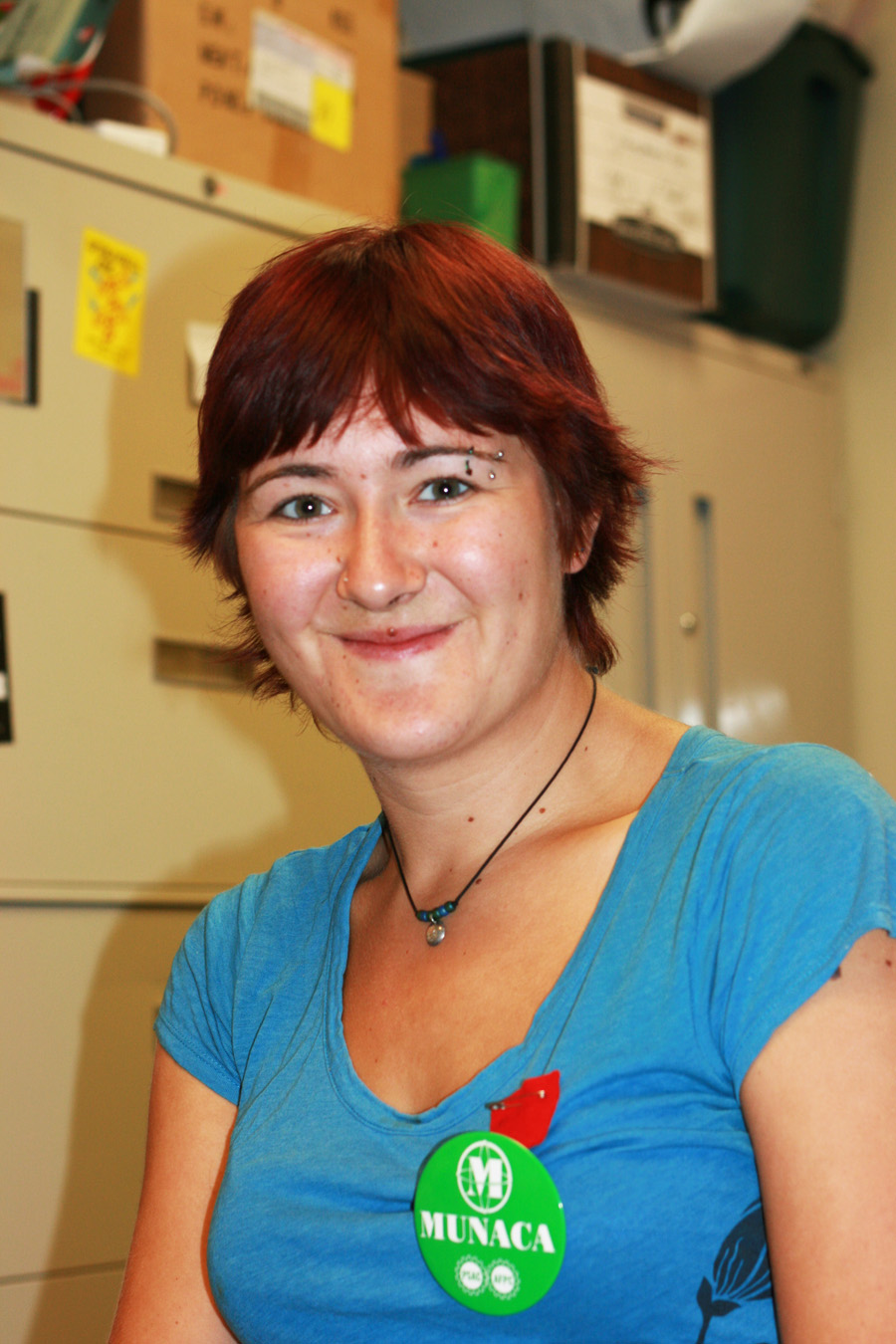
Few on campus on that bright day in early September could have predicted the effect the dispute would have had on the McGill community. Lines were clearly drawn—not just the tape that delineated where picketers could stand —but also the one separating green button-clad union supporters from those who sympathized with the administration’s stance. Long before occupations and student strikes, divisions on campus this academic year had already begun.

QPIRG and CKUT 

Starting on Nov. 4 students voted on two fall referendum questions, which asked whether the Quebec Public Interest Research Group (QPIRG) and CKUT radio’s student fees should cease to be opt-outable via the Minerva online system and instead by refundable directly through each organization. Also included in these referenda was the question of the clubs’ existence, because a ‘Yes’ vote would enable them to renew their Memoranda of Agreement (MoAs) with the McGill administration which are set to expire on May 31, 2012.

Both questions passed with an overwhelming majority, with 65.6 per cent voting yes to QPIRG’s question and 72.3 per cent voting yes to CKUT’s question. However, in January the referenda results were invalidated by the McGill administration, who said that the questions dealt with two separate issues by asking students to vote both on the club’s existence as well as a change to the organization’s fees to be opt-outable only in person.

The announcement followed a notice of appeal filed on Nov. 11 with the Judicial Board (J-Board) of the SSMU co-petitioned by Zach Newburgh, 2010-2011 SSMU President, and Brendan Steven, co-founder of the Prince Arthur Herald. However, the McGill administration’s decision to not accept the referenda results was not related to the notice of appeal filed to J-Board.

On Feb. 5 the J-Board heard the case against respondent Rebecca Tacoma in her function as Chief Electoral Office (CEO) of Elections SSMU. The petitioners specifically questioned the results of QPIRG’s question, asking that it be invalidated and citing violations during the campaign period, the CEO’s alleged inability to fulfill her functions, and the unconstitutionality of the question. On Feb. 14 J-Board ruled to invalidate QPIRG’s fall referendum question. The J-Board stated that this decision was based on the fact that the question was unconstitutional because it dealt with two separate questions.

Following recommendations from the administration to CKUT executives regarding the potential to ask a revised question winter referendum period, CKUT decided to hold a question asking only if their student fee should become non-opt outable. The question failed with 42.9 per cent of the voters answering ‘No’ on March 14.

During a special referendum period from that ends April 16, QPIRG is running a question asking students to support the existence of the organization.

While the debate surrounding the constitutionality of the Fall referendum questions for both QPIRG and CKUT has died down, both organizations may face difficulties with funding next year, and increasing amount of student opt-outs will be challenges both will need to address.

NOV.10

On Nov. 10, 14 students occupied Principal Heather Munroe-Blum’soffice on the fifth floor of the James Administration Building, some wearing hoods and masks. The occupation, which had been planned a few days in advance, occurred in response the administration’s handling of various issues on campus last semester, including the MUNACA strike and admin support for tuition fee increases.

Occupiers moved into a secure area on the fifth floor and flew a banner reading “Nov. 10 Occupons McGill” from a window. After receiving phone calls from staff on the fifth floor as well as a signal from the area’s panic button, McGill security sent personnel to the building and called the Montreal city police for assistance.

Soon after, students outside the James Administration Building learned through social media that acts of aggression were occurring inside. Students formed a human chain around the building in an attempt to deny security and police access into the building.

Police on bicycles arrived on the scene, and both police and demonstrating students were aggressive towards one another. After a few minutes, the police turned away and around 5:00 p.m., approximately 100 police in riot gear arrived through the Milton and Roddick Gates.

The riot police disbanded the line of students around the building and blocked its entrance, pepper spraying students. Riot police charged towards students, pushing them outside from the Milton Gates, and then charged again along Milton. Students and faculty members, many of whom were just passing by, were pepper sprayed or hurt.

The occupiers later negotiated their exit from the building with Provost Anthony Masi and Deputy Provost (Student Life and Learning) Morton Mendelson, who agreed that no disciplinary charges would be laid against them.

Released Dec. 15, dean of law Daniel Jutras’  report investigating the events of Nov. 10 addressed some concerns raised by the fifth floor occupation. Mandated by Principal Heather Munroe-Blum, the report recommended that the university work to discuss the meaning of free expression and peaceful assembly on campus, including the legitimacy of occupations and sit-ins as a form of protest. To address these concerns, Munroe-Blum authorized a four-part Open Forum led by Dean Christopher Manfredi, keeping the events of Nov. 10 open for discussion throughout the rest of the school year.

Concerns with the transparency of Jutras’  internal investigation led a group of students to lead the Independent Student Inquiry, which published a chronology of events Dec. 1, and a final report with recommendations on March 1. The McGill Association of University Teachers also created a report on governance, collegiality and security on campus that aimed to foster discussion following the events of Nov. 10.

Nov. 10 was probably the climax of this academic year, polarizing many students, who for the first few days thought that the administration had called the riot police to campus. Ultimately, Nov. 10 raised issues of freedom of speech and security on campus that still need to be succesfully addressed.

Student movement at McGill

The student protest movement against the Quebec government’s proposed tuition fee increases kicked off on Nov. 10, when over 20,000 Quebec students gathered to march through Montreal in opposition to the announcement that the Quebec government would be increasing local university tuition by $1,625 over five years.

On Feb. 13, two student associations at the University of Laval voted to go on strike. Since then, a total of 170 student unions, representing approximately 191,316 students across Quebec, have gone on unlimited strike against tuition increases.

At McGill, a special General Assembly (GA) was held on March 13 by the Arts Undergraduate Society (AUS) where students voted on whether to go on strike. With over 1,100 students attending the GA, the motion to strike ultimately failed with 609 against, 495 for, and 16 abstentions.

The next day, the Social Work Student Association became the first McGill association to join the province-wide strike. They voted to go on unlimited strike, with a majority of 61 per cent voting in favour.

Following the AUS GA, various departments within the faculty of arts voted to go on strike, including the philosophy, geography, and English departments.

The Macdonald Campus Students’ Society voted to go on a one day strike, and the Post Graduate Students’ Society voted to go on a three day strike from March 20 to March 22. This was in an effort to join the Quebec student-wide day of action on March 22 against tuition increases.

March 22 saw over 200,000 people march through the streets of Montreal, making it the largest protest in Quebec history. Over 500 McGill students participated in the demonstration. Also in the crowd were other university students, CEGEP and high school students, as well as professors and concerned parents.

Despite the mobilization, the government has not agreed to talk with student leaders on tuition increases. On April 5, Education Minister Line Beauchamp announced that the government would not back down on the expected increases.

The student movement has been marked by passionate support and increasingly creative forms of demonstration. With an anglophone majority, McGill featured less impetus to favour the strike than most other universities across Montreal. However, the turnout at the AUS GA demonstrated that hundreds of students were eager to express their views, and that there is no such thing as student apathy when the issues at hand are controversial enough. The validity of student democracy was also called into question following mobilization by departmental GAs—arguably unconstitutional in light of a negative vote from the faculty GA.

Asbestos

Early in the winter semester, McGill was the subject of criticism and national media attention for its links with the asbestos industry. In early February, over 70 medical doctors and health researchers called for the resignation of asbestos exporter and member of the McGill Board of Governors Roshi Chadha, citing her involvement in plans to reopen the Jeffrey Mine in Asbestos, Quebec. Chadha is a director of Seja Trade Ltd., a company that exported asbestos from the Jeffrey Mine until the mine’s activities were suspended last fall. She announced on Feb. 1 that she would take a leave of absence from her positions on McGill’s Board of Governors and the St. Mary’s Hospital Foundation.

In a CBC documentary that aired in early February, professor David Egilman of Brock University accused McGill of allowing the  industry to sponsor scientific studies that misrepresented the health effects of asbestos. Egilman said that the government is using these same studies to justify the reopening of the Jeffrey Mine, which would allow asbestos companies to export asbestos to countries where people are unaware of its universally acknowledged health risks.

On Feb. 9, Dr. David Eidelman, vice-principal (health affairs) and dean of medicine, announced an investigation into professor J. Corbett McDonald’s epidemiological research on the health effects of chrysotile asbestos, which had come under fire in the CBC documentary. The investigation was conducted by chair of the department of epidemiology professor Rebecca Fuhrer, despite calls for an independent and transparent investigation by anti-asbestos activists.

Eidelman announced the results of the preliminary review on April 4, stating that Fuhrer did not find evidence of research misconduct. However, Eidelman has asked McGill’s Research Integrity Office for guidance in his proceedings, because he said the faculty did not have access to all the information necessary to completely determine the integrity of McDonald’s research.

While the controversies surrounding McGill’s connections with the asbestos industry may not be resolved, they have raised questions about the role of corporations at McGill and the standards to which prominent leaders at the university should be held. In addition, some activists have accused the university of implicitly endorsing the use and export of asbestos by not taking stern and direct action following these controversies. The internal investigation may not have uncovered proof of research misconduct, but the damage that these continuing controversies could have on McGill’s reputation seem to warrant a greater response from the university than the few MROs we have received.

#6party

Around 11:00 a.m. on Tuesday, Feb. 7, a group of about 20 students occupied the office of Deputy Provost (Student Life and Learning) Morton Mendelson on the sixth floor of the James Administration Building. The occupiers said they would not leave until the administration met their two demands—that Mendelson resign, and that the administration ratify the QPIRG and CKUT fall referenda results, which they had previously invalidated due to concerns of the questions’ clarity.

Throughout the day, additional protesters positioned themselves in the lobby of the building in solidarity with the occupiers. McGill security prevented these students from using the elevators to reach the sixth floor, and after 9:30 p.m. security no longer allowed students to enter or bring food inside the building. Around 20 students stayed in the lobby overnight, despite being denied access to washrooms or Internet. The lobby protestors left the building around 11:20 a.m. the following day.

Over the next four days, the sixth floor occupiers ran out of food, relocated to an office with a window, and received groceries through using a pulley system. The McGill administration continued to send daily email updates of the situation. After occupying the sixth floor for 118 hours, the nine remaining students were peacefully evicted by the police on Sunday, Feb. 12 around 9 a.m.

Later that day, the McGill administration issued the Provisional Protocol Regarding Demonstrations, Protests, and Occupations on McGill University Campuses, which outlines situations where the administration will interfere in a demonstration or call the police. According to Principal Heather Munroe-Blum, there is no set date for the termination of the provisional protocol, but there will be some “repositioning”  in the fall.

The occupation provoked many different reactions from members of the McGill community. Several organizations openly declared their support for the occupiers, including QPIRG, although they stated that they were unaware of the plans for the occupation. Others expressed strong disapproval of the occupiers’ tactic. The presidents of the engineering, management, arts, and science students’ societies, signed a letter collectively condemning the way that the occupiers’ tactics “alienated” students instead of encouraging greater student participation in campus dialogue.

In response to the occupation, some students created a Facebook event titled “The James 6th Floor occupiers do NOT represent me,” an event that claimed to represent the “silent majority” of students on McGill campus who did not agree with the occupiers’  tactics. This event led to the creation of the Moderate Political Action Committee (ModPAC)—a group seeking to promote “collaboration, not conflict” between students and the McGill administration.

Three months after the Nov. 10 occupation, the sixth floor occupiers caused concerns to resurface in the McGill community, with questions about appropriate methods of student protest and the role of the administration in dealing with them. The gap between students and administration, students and occupiers, and supporters and critics of the occupation widened as many community members felt the pressure to declare allegiance for  one side or another. From renewed security measures at James Admin to the growing discussion concerning the polarization of campus, the occupation remains a solid presence at McGill long after its participants left the sixth floor.

News

MUNACA and admin prepare to finalize agreement

The McGill University Non-Academic Certified Association (MUNACA) and the McGill administration have resolved the remaining outstanding issue on their collective agreement and are preparing to finalize proceedings. The agreement, ratified by MUNACA’s members on Dec. 5 after months of negotiations, marked the end of the union’s three-month strike last fall.

On March 9, approximately 250 MUNACA members demonstrated in front of the James Administration Building to protest a delay in finalizing and signing the collective agreement with the administration.

The delay involved an article that addresses individuals whose salaries exceed the pay equity line drawn in 2001, and would allow them to receive salary increases as a one-time lump sum.

MUNACA had requested a list of the individuals who would be affected by this article and received 80 names from the administration during negotiations. However, according to MUNACA President Kevin Whittaker, the administration later announced that over 40 names had been added to the original list without an explanation.

According to David Kalant, MUNACA’s VP Finance, the union met with McGill human resources twice since the rally, and resolved the issue at their last meeting on March 28]

“The number [of people in the final list] increased by 20,” Kalant said. “They will receive lump sums for step increases and economic increases too.”

Associate Vice-Principal (Human Resources) Lynne Gervais said that McGill sent MUNACA the latest version of the agreement on March 30 and is awaiting the union’s response before translating the final agreement into French, as required by Quebec law. Once a translation is ready, both parties will be able to sign the agreement.

“It can be signed [in] as quickly as a week, as soon as the two parties look at the French version, but I don’t know,”Gervais said.

Kalant noted that MUNACA members are frustrated that the agreement has not yet been finalized.

“The membership is understandably not happy with the delays since none of the agreed-to increases and retroactivity can be paid until the contract is signed,” he said. “It is unfortunate that the administration tried to alter what was agreed to during conciliation in a way that MUNACA could not accept.”

“This increased delay was, in the end,  totally unnecessary,” Kalant added.

Gervais reflected on the year-long negotiations with MUNACA.

“It was a very long process and clarity of definitions needs to be even more precise,” Gervais said. “That’s what I learned.”

In an interview with campus press on March 27, Principal Heather Munroe-Blum briefly addressed the pending collective agreement.

“As principal, my hope and my goal is to have this signed and to move on, and certainly for our employees to have access to their compensation,” she said.

News

Government won’t back down on fee increases

Last Thursday, April 5, Quebec Education Minister Line Beauchamp proposed a new student loans plan, in response to the student movement that has been opposing planned provincial tuition fee increases of $1,625 over five years.

Beauchamp said that the government will not back down from the plan to increase tuition fees. In protest of the increases, nearly 200,000 students from across the province have been boycotting classes for over nine weeks.

SSMU VP External Joël Pedneault questioned whether the offer was realistic.

“A lot of student associations are on strike until the government makes an offer on tuition fees,” he said. “It’s not a realistic offer given the mandate a lot of student associations have voted [on], which is to reconsider the strike once the government is talking about tuition fees.”

The plan would allow graduates to repay their student loans in a manner proportionate to their incomes. The aid policy would also allow students with a family income of over $60,000 to borrow under the aid program.

“I’m hesitant to say that’s even a step in the right direction,” Pedneault said of the proposed loan policy. “I think one of the fundamental issues at the root of the student strike is student debt, [but the proposal is] expanding the capacity of certain students to get into more debt to finance their studies.”

Pedneault noted that a similar offer regarding income contingent loan repayment plans was made and rejected during the 2005 student strike regarding cuts to the Quebec Grants and Loans program.

“Students continued to strike after that offer was made and eventually that was not on the table anymore, and the government reversed its decision to cut the bursaries program in Quebec,” he said. “I could see a similar situation evolving right now, where people reject this offer and decide to focus on the main issue at hand, which is the tuition increases.”

Beauchamp also suggested that students hold votes by secret ballot to end the strike.

“The debate now is in the student community,” Beauchamp told the press.

According to Pedneault, this week CEGEP administrations will have to reopen collective agreements with professors, whose contract guarantees two months of break in the summer.

“If the strike continues, that will push the semester into the summer territory,” he said. “The pressure is very real and very immediate.”

News

Heather Munroe-Blum shared her plans for next year

On March 27, Principal Heather Munroe-Blum spoke to the McGill Tribune, the McGill Daily and Le Délit  about this year’s events and  what to look forward to in 2012.

McGill Tribune: Next year will be your last year McGill’s principal. What are your goals for your last term, and what do you hope your legacy will be?

Heather Munroe-Blum: It’s a good time to be thinking about that. Certainly my goals for the coming year are the major planning initiatives that we have underway­—the response to the Principal’s Task Force on Diversity, Excellence and Community Engagement; the completion of the next round of academic planning known as the Achieving Strategic Academic Priorities (ASAP)  Paper; and integrated with that and parallel to it, the development of the Strategic Research Plan. Those are the places where we, I think, really stand to now take measures, commit ourselves to them, and have some targets that we’ll be reporting back on. And in that regard, the Task Force on Diversity, Excellence, and Community Engagement is really important for me.

The other piece, of course, is the follow-up to the Task Force in my first term, on student life and learning, and although we’ve made progress, I think there’s still ways to go in that. And I guess the other part that’s very important is McGill not just being in Quebec, but of Quebec. You know, we’ve just celebrated our 190th anniversary. We were here before Quebec was a province or Canada was a country, so all the great things about McGill are not just related to what happens within the institution, but where we are.

The McGill Daily: Can you tell us when your potential successors for next year will be announced, and what that process will involve?

HMB: The process is underway, which is why it’s announced quite far in advance. It’s an advisory process to the Chair of the Board, who takes a recommendation to the Board of Governors. There’s a broad representation of the university constituents on the advisory committee: students, admin and support staff, faculty, and alumni. And then they look for the best candidate. All of our leadership searches—for deans, for vice principals, for the principal—are done at the international level, looking for the best candidate.

MT: Following some events this semester, some people have been worried that McGill is a “consequence-free environment.” How would you respond to those people?

HMB: I would say it’s not a consequence-free environment. We’re working very hard to find the right balance between making sure that our core activities are protected, that people are able to do their work, whether it’s students or professors or admin and support staff. And we balance that with the ability for people to express themselves freely, and to demonstrate peaceably. Clearly, there are limits to the latter, and there should not be limits on the ability for people to do their work and carry out their responsibilities here. So there are consequences, and I think we’ve seen some of them in the last week. You know, we’re doing our best to balance this. But I know there’s a concern about this, so you can imagine we’re quite preoccupied with it.

 MT: Dean Manfredi’s open forums are a way of allowing people to express themselves. But also last semester you had a live webcast where you answered questions, and you had a blog.

HMB:  With [such a] big community … it’s really a challenge to think about how to communicate regularly, not just when there’s something that happens that makes people worried, but all the good things happening too. And it does seem the webcast is a good way to do that … so we’re doing one in April, and then I think the plan is [to do them] again in the fall and the winter.

[In the fall webcast,] far more students than ever in my experience [were] saying, ‘Well what about me? What about my voice, what about my interests and concerns?’ And what we don’t want is an extreme to dominate, whatever that extreme is …We have a very diverse student body, smart, able, dedicated, but a whole range of interests and activities. And so the leadership of the university is very distributed, the elected leadership of the constituent members of the university is very distributed, and we need to very actively continue to pursue how best to have a good alignment of that, that allows for and celebrates diversity, while respecting the place and the mission of the university.

—This interview was edited and condensed by Carolina Millán Ronchetti.

News

Hochelaga Rock may be moved in fall Pow Wow

Momentum is building to move the Hochelaga Rock to a more prominent location on campus. A symbol of Iroquoianand Canadian history, the rock currently sits on lower field in between the Roddick Gates and the Welcome Centre.

The Hochelaga Rock was installed in the 1950s by Parks Canada to commemorate the indigenous history of Montreal.

In 1860, construction workers found unusual relics at the corner of Metcalfe and Burnside, leading geologist and McGill principal Sir John William Dawson to suggest he had found relics from  Hochelaga, the indigenous settlement where where Jacques Cartier landed in 1535.

After organizing a Kanata conference this fall where social work professor Michael Loft noted the general lack of awareness of the rock, U2 arts student and Kanata executive Jimmy Gutman sought to bring the rock to students’ attention.

Gutman brought a motion to move the rock to a more visible location to the Jan. 31 AUS General Assembly. The motion passed as a recommendation to the AUS Council. The following day, AUS VP Academic Yusra Khan brought the motion to AUS Council where it also passed—this time as a mandate.

SSMU President Maggie Knight explained that dean of students Jane Everett is currently engaged in consultation with members of the McGill community to determine a better, more visible location for the rock, as a result of discussions in one of McGill’s senate committees on a recommendation from the Aboriginal Affairs Work Group.

Paige Isaac, Interim Co-ordinator of the First Peoples’ House (FPH), said that the FPH is undergoing consultations during the summer in order to prepare for the rock’s move, which they hope will take place this fall.

“We … plan on co-aligning the moving of the rock with a celebration, most likely at our annual Pow Wow in September,” Isaac wrote in an email to the Tribune. “Our Elder, Alex Sonny Diabo, will be involved in the ceremony.”

The purpose of moving the rock is to increase awareness of Iroquoian history, and Isaac said she aims to have the rock included as part of the Welcome Centre’s tour of McGill’s downtown campus.

“The rock right now is not visible and we are not giving it the attention it deserves—not just the rock, but the acknowledgement of the traditional territory,” she wrote. “We hope to increase this knowledge and celebrate it.”

News

Dean Manfredi hosts final meeting of Open Forum

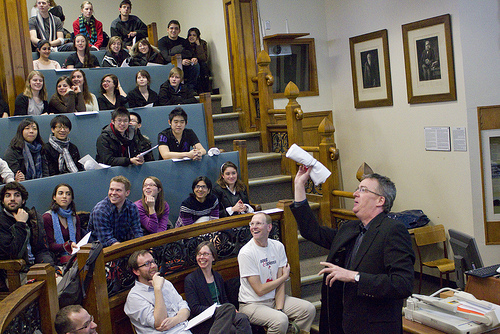
On Wednesday, April 4, the McGill administration hosted the last of four public meetings of dean of arts ChristopherManfredi’s Open Forum on Freedom of Expression and Peaceful Assembly.

The meeting focused on the administration’s actions in response to the events of Nov. 10. It was held in the BelliniAtrium of the Life Sciences Complex, where students, faculty, and staff voiced their opinions  on the issue.

“The purpose of these open fora is to provide members of the university community [with] an opportunity to express their views on these important subjects,” Manfredi, who led the discussion, said. “Students, faculty, non-academic staff, and senior administrative personnel have all attended the forum, participated, listened, and heard the differing views that people have put forward.”

Discussion focused on how to define the right to peaceful assembly, and whether or not the administration’s response to student mobilization had been too drastic, and what measures ought to be taken both by politically active students as well as the faculty and staff of McGill.

“The conversation has focused around four sets of issues that dean [of law, Daniel] Jutras identified in his report coming out of the events of Nov. 10, which are mainly issues of identity, location, duration, and … what might constitute justifiable limits on expression and peaceful assembly on a university campus,” Manfredi said.

The topic of whether or not recent student actions qualify as actions of peaceful assembly and what the definition of ‘peaceful’ is came up frequently, as it has been complicated by recent disruptions of university work like the occupation of the sixth floor of the James Administration Building in February.

Participants identified that those whom the protests targeted may have felt threatened or unsafe, even if the protesters themselves had no intention of being violent or threatening.

“I think the question should be shifted to: [what] is the perception by the people who are in the same room or in the same space as protesters?” Jeffrey Sachs, PhD in Islamic studies, said. “When is it reasonable for them to feel that they are in danger or are threatened? The perception question [seems to be more important] than whether or not the people intend to be violent or whether they are acting in a violent fashion.”

Ideas of perception played a role throughout the forum, as it is difficult to adopt a definition of ‘peaceful assembly’ that takes into account what all parties believe to be a disturbance of peace.

Matters of space were equally important. Some university spaces are public places where students can, in theory, legitimately engage in protests if they so desire. However, there was no consensus about the legitimacy of occupying private spaces such as offices or libraries, which, while non violent, disrupt work done in the university.

“Where it happens changes everything, so I agree with the statement that trying to pinpidgeon [sic] [all of these points] into the code is going to be very difficult,” Adam Bouchard, graduate student in the faculty of science, said. “What we really need is a way to be able to take a general [definition] of peaceful and then be able to review it either during or after the fact so that everyone can be treated appropriately.”

The meeting was the last of a series of four that constitute the Open Forum, which will formally conclude with an academic symposium on May 2 at the McGill Faculty Club. At the symposium, academics and experts will bring outside perspectives to the issues surrounding strikes and peaceful assembly that have been relevant this year at McGill.

Read the latest issue

Read the latest issue