Latest News

Commentary, Opinion

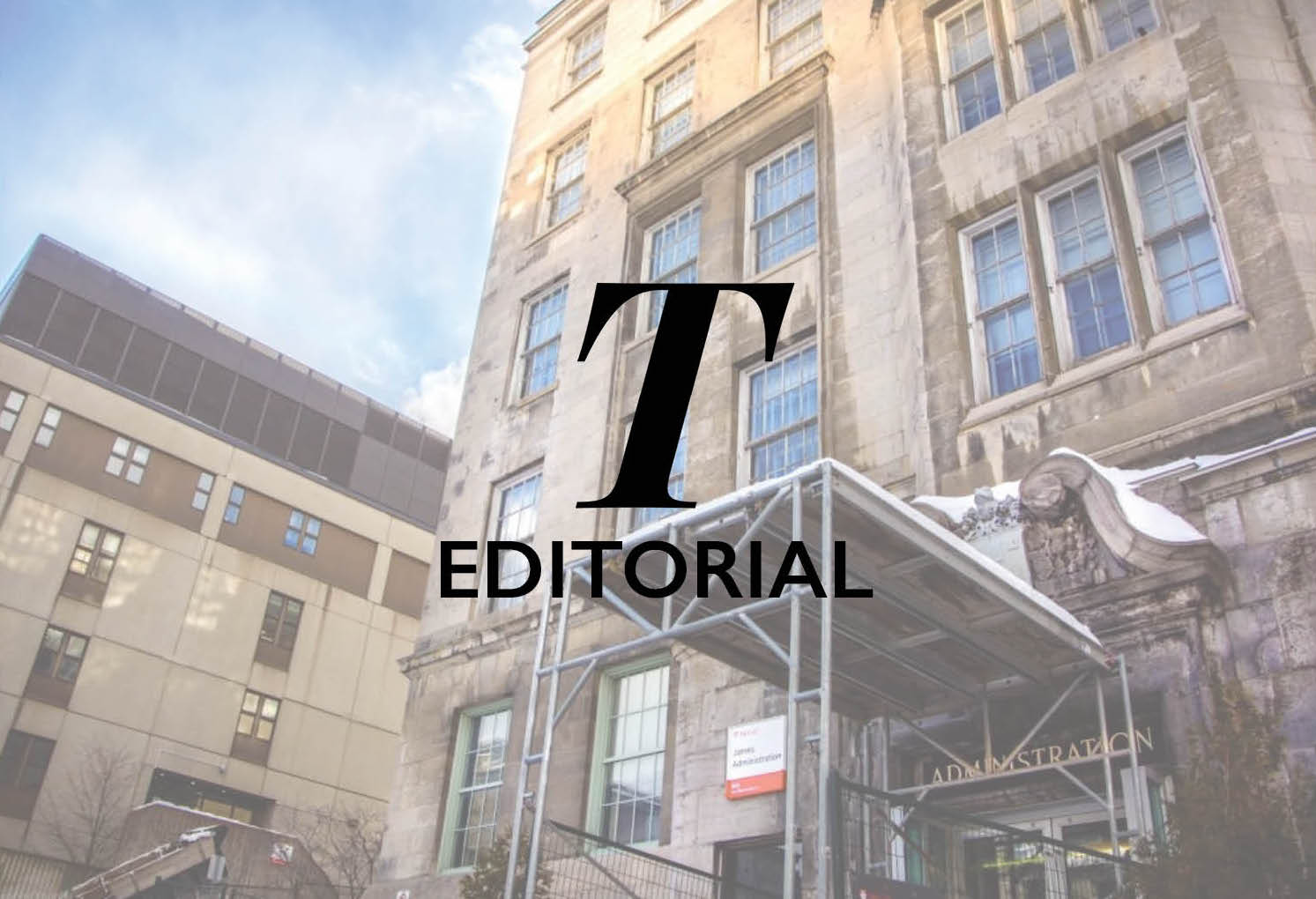
The selective humanity in Canada’s refugee policy

Canada’s open-arms response to the recent Ukrainian refugee crisis is, rightfully, a point of pride for Canadians. Refugees of all backgrounds face unimaginable challenges through no fault of their own, from dangerous sea crossings to lasting mental trauma. Countries that recognize these challenges and contribute their attention and resources to refugee settlement do make a positive impact. However, Canada and Quebec’s hasty policies for Ukrainian refugees are not reflective of their typical refugee policies, which raises doubts about whether these governments are genuinely motivated by humanitarian principles, rather than political and racial bias. 

On March 3, Immigration Minister Sean Fraser announced that Canada will allow an unlimited number of Ukranians to apply for expedited visa stays of up to two years, waiving quotas, the usual application fees, and high barrier requirements such as language or labour market impact assessments. The visa process, which usually takes a year to complete, will be expedited to a matter of weeks for Ukrainians. At the provincial level, Quebec immigration minister Jean Boulet announced $5-million in grants to 14 community organizations related to the support and francization of incoming Ukrainian refugees. Quebec also has no limit set on the number of Ukrainian refugees it will accept through Canada’s program. 

Especially for students and young adults, expedited temporary visas are relatively quick to process and are an effective short-term policy response to global refugee crises. The policy grants refugees thrown into uncertainty time to safely study or work before making difficult long-term decisions about their future. That said, this thoughtful policy is highly uncharacteristic of Canada, a nation that often avoids such open-access temporary visa programs on the grounds that people will overstay them upon expiry. 

For context, Canada has approved 7,885 Afghan refugee applications in seven months, in contrast to the over 6,000 Ukrainian applications approved in the last 10 weeks —many even being accepted before concerns about Russian aggression fully materialized. By contrast, migration opportunities for Syrian refugees fleeing war to Canada have quietly declined ever since the influx in 2016. Their path to Canada has essentially become limited to private sponsorship cases, which are both rare and come with high financial barriers. 

Upon being prompted to acknowledge that the same temporary visa opportunities are not offered to refugees from Africa or the Middle East, Fraser and Prime Minister Justin Trudeau insisted there was no bias involved, stating that each situation is unique. The justification offered is that Ukraine’s western borders are currently open, and over one million Ukrainian refugees have already successfully crossed over to neighbouring countries, from which it is easier to apply to come to Canada. Meanwhile, in Afghanistan for instance, refugees face several barriers crossing into neighbouring Pakistan, including required bribes, police aggression at checkpoints, and heavy travel restrictions imposed by the Taliban. 

However, the Canadian government’s justifications are no excuse for abandoning efforts to ensure fairness. Unique situations, such as those in Syria and Afghanistan, warrant especially comprehensive criteria and consultation. There are several reputable international and local refugee organizations, such as Aman Lara, that are ready to coordinate with the Canadian government to offer the same hope to young non-Ukrainian refugees.  

Canada’s inequitable refugee policy reflects more than laziness on behalf of the government—it carries the weight of a racist, and unfortunately common, rhetoric circulating mainstream media: That Ukrainian refugees, the majority of them white Christian Europeans, will better fit into Canadian society. Especially compared to Western media coverage of the Middle East, Ukrainian refugees have been depicted as more civilized and consequently more worthy of the support the Western world has to offer. 

This narrative is morally reprehensible. Canada is home to some of the most proudly multicultural cities in the world, and the modern “Canadian” is no longer defined by a single ethnicity, religion, or cultural practice. Quebec, in particular, must be aware of its racial bias, as it invests millions in the francization of Ukrainian refugees while sitting on a backlog of non-white applications—a situation made worse when considering it cut immigration to the province by 20 per cent in 2019. Premier Legault justified the cut by citing the difficulty of integrating newcomers into society and the labour market—now not the most convincing explanation given Quebec’s immigration policy for Ukrainians.

To truly offer equal opportunity, the government must acknowledge the racist implications of its policy in this current social climate, instead of dismissing criticisms with the logistical and bureaucratic excuses refugees hear too often. As shown through its policy for Ukrainian refugees, Canada’s stressful and invasive procedures imposed on refugees from other active conflict zones, namely Syria and Afghanistan, were unnecessary. The federal and provincial governments have demonstrated their capacity to help refugees regain agency over their lives, and it is time they extend these opportunities equitably.

Know Your Athlete, Sports

Know Your Athlete: Clément Secchi

Clément Secchi, U4 Management, has spent much of his life in the pool. The fourth-year swimmer was named both McGill and RSEQ Athlete of the Week multiple times this year, and recently won six gold medals at the RSEQ Championships, including ones for the 4x50m relay, the 200m butterfly, and the 50m butterfly—setting team and RSEQ records for all three. Secchi was also named Athlete of the Meet at the Championships as well as RSEQ Athlete of the Year. 

While clearly a dominant force in the pool, Secchi explained that dedication and hard work allowed him to reach the level he is at today.

“I am proud of never giving up and I’ve kept training hard and getting faster and faster,” he said in an interview with the Tribune. “I wasn’t very fast when I was younger, so […] to be where I am at today, it is nice to see where I [came] from.”

The star swimmer explained that he does not have professional role models, but rather looks up to those who are closer to home.

“My biggest inspiration is probably my parents,” he said. “My parents [motivate me] with their work ethic. They are really hard workers. And if you work hard, after you can play hard.”

Growing up in France, Secchi tried his hand at multiple sports before zeroing in on swimming as his favourite. 

“I was playing soccer and tennis and doing swimming at the same time when I was young, but after a few years, I had to make a choice between the sports and I decided to stick to swimming,” Secchi said. “I liked the teammates I had and the pool was also really close to where I was living so it was really practical. I always loved being in the water. I spend most of my summers in the water.”

He joined his hometown club in Aix-en-Provence, staying there until his second year at McGill—the year that the COVID-19 pandemic hit. While spending his third year in France during the pandemic, he moved up to the largest swimming club in France, Cercle des Nageurs Marseilles, a professional team that produces Olympic-level swimmers. 

Secchi explained that the Marseille facility, starkly different from McGill’s Memorial Pool, is his favourite place to swim. 

“The best place to train is definitely in Marseille,” he said. “The complex is on the beach so when you are done training you can walk 20 stairs and then you’re in the sea. So it’s pretty amazing, different from the McGill pool for sure.”

While Secchi may enjoy the pool in Marseille more, the swimmer explained that he really loves his McGill teammates and appreciates the support they provide each other.

“It’s about having a really good atmosphere and everybody working towards the same goals and everybody working hard,” Secchi said. “I like the work ethic at McGill, everybody works hard and supports each other trying to be the best every day.”

A supportive network is crucial, especially considering how much training they do. Secchi trains two to three times a day most days of the week, and at least once every day, except on Sundays. McGill swim team training consists of both swimming practices and lifting sessions twice a week. 

Secchi emphasized that with such a busy schedule, staying organized and using his time efficiently is crucial. Even with a timetable like his, he makes sure to put aside time to take a nap every day.

“You get better at [the balance] as you get used to it,” he said. “I am so much more on top of schoolwork and swimming in my last year than in my first year. But, it is really about setting priorities and also being efficient.”

As his time at McGill comes to an end, Secchi looks forward to the future and hopes to obtain a master’s degree in the United States while spending his final year of eligibility competing in the NCAA. In the immediate future, however, you can catch Secchi competing in the U Sports Championships on March 23.

Science & Technology

Student Research: How the tickle of a feather guides bird flight

Flying is fundamental to the survival of birds. It’s how they migrate, find food, mate, and escape predators. Along with its benefits, flight comes with unique risks as well: One wrong maneuver and a bird could plummet out of control. So, how exactly do birds become the masters of flight as adults? This is the question third-year biology honours student Maggie-Rose Johnston, a member of the Sarah Woolley lab, is trying to answer. Working with zebra finches, Johnston is seeking to understand how a bird’s brain interprets the physical stimuli sensed by its wings.

“The basic hypothesis is that the activity going on in the feathers should be translated in the brain,” Johnston said in an interview with The McGill Tribune. “What I’m doing is just the real basics of understanding a whole lot of avian flight and how they react to pressure differences and airflow.”

Relying on sensory feedback from their feathers to navigate the aerial environment, birds use tiny changes in wind patterns to fine-tune their movements through the air. The sensory information is passed along from the bird’s wings to its brain using its central nervous system, guiding the bird during flight so that it can seamlessly react to ever-changing air currents. 

“Whiskers are a good analogy for filoplumes,” said Johnston. “They are these long feathers that have a little tuft at the end of them and are interspersed in avian wings. And what seems to be happening is that these are acting like whiskers, detecting the movement of the larger feathers.”

The main focus of Johnston’s research is to distinguish which areas of the brain are involved in interpreting the movement of feathers. To mimic the motion of flying, Johnston moves one of the zebra finch’s wings up and down, by hand. Once this flight simulation is completed, the bird’s brain activity is measured. 

“In future steps, [we] may use tweezers to move a specific feather, but at this point we’re just trying to find the ballpark of what we’re looking at here,” Johnston said.

During flight, certain neurons in the hyperpallium apicalis, an area of the brain involved in interpreting sensory information from the wings, are activated. To identify which neurons are firing, Johnston measures the activity of an early activation gene called RPS6. This gene marker acts as an indicator of neural activity and is used to determine which regions of the hyperpallium apicalis are involved in the interpretation of sensory information.

During the measurement process, the birds are sedated and left to rest in the dark away from any external stimuli before brain activity is measured to try and reduce any data obstruction. Johnston admitted, however, that background noise can interfere with the experiment.

“The problem is that there is a little bit of activity in the [hyperpallium apicalis] but it’s not very striking compared to the background noise,” Johnston said.

This link between sensory information and flight mechanics is still somewhat unclear, but Johnston is using this as a learning opportunity to improve her experimental protocol. She views the ambiguity of her results as a way to learn and is keen to go back to the drawing board. Nevertheless, her results are far from insignificant as they are still furthering the understanding of neural correlates of bird flight.

When it comes to future applications of her research, Johnston believes that the field of avionics has much to learn from the flight of birds.

“Understanding how birds fly can open up a whole new avenue for engineering in general and engineering of flight,” Johnston said. “The energy-saving potential of getting machines to behave like bird wings is incredible.”

The mapping of neuro-mechanics of bird flight could revolutionize aviation, most notably within the sector of drone engineering. How birds compute air flow changes and adapt to their surroundings is a source of interest for self-driving drones research. Johnston hopes to conduct further research on birds and other vertebrates to unlock the design secrets embedded in their anatomy. 

Commentary, Opinion

Redressing the history of medical injustice at McGill

Content warning: Enslavement, medical abuse, racial and colonial violence 

McGill’s troubled history of abuse and complicity in violence toward Black, Indigenous, and disabled people is nothing new. James McGill enslaved at least three Black people and two Indigenous children, an increasingly recognized and discussed reality within the community, especially following professor Charmaine Nelson’s work, Slavery and McGill University: Bicentenary Recommendations, and the Black Students’ Network and the Indigenous Students’ Alliance’s 2021 video essay on McGill’s history of enslavement. 

McGill, as an institution, has also committed atrocities in the Allan Memorial Institute under the MK ULTRA experiments. Dr. Ewen Cameron worked in a team with the CIA at the Allan Memorial Institute in the 1950s and 60s to conduct brainwashing experiments and psychological torture on patients admitted for mental illnesses. Eyewitness accounts suggest Indigenous children were also subjected to Cameron’s abuse, and Indigenous groups such as the Mohawk Mothers suspect there may be unmarked graves under the Royal Victoria hospital. 

Survivors of these abuses have since filed lawsuits against McGill, the Royal Victoria Hospital, the Canadian government, and the Central Intelligence Agency (CIA). Until now, though, the Canadian Supreme Court has refused the government and hospitals’ motions to dismiss the case, forcing McGill to confront its legal and moral liability. Given its involvement in this kind of abuse, McGill must acknowledge its wrongdoing and implement reparative measures for survivors and the larger McGill community, such as providing monetary reparations and committing to addressing current issues of medical abuse. 

Cameron’s aim was to “de-pattern” brains to create a blank mind canvas susceptible to ideological influence and malleable to different objectives. Considering that McGill prides itself as a global leading institution with a history of “expanding minds,” the university should confront its history of psychological torture and forced ideological indoctrination. McGill can no longer ignore the experiences of survivors of the abuse who recall being comatose for weeks at a time, drugged with LSD, put in sensory deprivation rooms, and forced to listen to the same recordings on endless loops. 

During the Korean War, the CIA funnel-funded Canadian researchers like Cameron to lead these psychological experiments at McGill. As the first chair of McGill’s psychiatry department, Cameron had the authority to legitimize his practices to psychiatry students he worked with, who would later become professionals in the health-care system. In this way, his structural and institutional impact would trickle down to harm racialized and disabled people. Indeed, Quebec’s systemically racist healthcare endangers Black, Indigenous and other racialized individuals—proof of the longstanding effects that colonial violence has on institutions like hospitals, which will need to implement radical measures to enact long-overdue change.

The MK ULTRA experiments are not the first time McGill has come under scrutiny over its harmful past, and it certainly will not be the last. McGill’s colonial legacies were first forged as part of the university’s founding and this history continues to shape the institution today. In 2020, McGill finally changed the racist name of its sports teams following persistent advocacy by Indigenous students. McGill is also built on the stolen and unceded land that is part of the Treaty Land of The Haudenosaunee Confederacy, of which the Kanien’kéha Nation, the Anishinaabeg, and Haudenosaunee peoples are a part. As Kahentinetha, a member of the Mohawk Mothers, said, “The entire McGill University is a crime scene.” 

If the university hopes to show any accountability and work to regain the trust of the community, McGill has a responsibility to publicly acknowledge the numerous atrocities it has been a part of and apologize to survivors. At the very least, the university must go forth with legal processes without posing any obstacles to the families of survivors. McGill must be willing to be held accountable, and should develop plans to ensure decolonial and anti-oppressive approaches are embedded into the university’s own health system. Further, it must take steps to halt all abusive measures within the health-care system at large. Any effort at reconciliation by McGill is insufficient as long as the university neglects their responsibility in redressing the pattern of medical injustice.

Arts & Entertainment, Books, Pop Rhetoric

Albert Camus: A visionary of pandemic-era life?

Albert Camus’ 1947 novel The Plague masterfully portrays the death and suffering that a fictional bubonic plague brings to the people of Oran, an Algerian city under French colonial rule. The events take place over many months, with protagonist Dr. Rieux working to both physically and psychologically help others suffering from the plague. The novel has undergone a resurgence in popularity since the start of the COVID-19 pandemic, perhaps as it appropriately captures much of the public’s response to the pandemic over the past two years. Indeed, the novel’s emphasis on human resilience and the value of life are especially relevant in today’s social climate. 

Since the pandemic began, the global death toll has surpassed 6 million.

Much in the same way that we have watched the steadily rising figures released by the government, many people in Camus’ novel attach great significance to their government’s weekly release of health statistics. Though many newspapers have struggled to raise revenue, especially those that still print paper copies, general trust in the news has increased since 2020. Reports and information have clearly taken on a heightened importance, which reflects not only the pertinence of the time period, but also the significance we attach to the subject of the news itself—tragedy.

Outside of exploring the value of life, The Plague also focusses on Dr. Rieux, who grapples with the chaos of his situation. It is the human condition—namely, the desire for meaning in a meaningless world—that drives the oft-ineffectual fight against that which we cannot make sense of. For example, Rieux works day-in and day-out at quarantine facilities providing care, but most of the time his work is futile. Most people die from the sickness. Rieux, in sum, finds that “Weariness is a kind of madness. And there are times when the only feeling that I have is one of mad revolt.” Rieux’s exhaustion from fighting against the seemingly inexplicable is apt when reflecting upon both the pandemic’s early days, characterized by confusion and a global lack of knowledge, as well as its tiring, two-years-this-month perpetuation. As a beacon of hope, Camus’ plague eventually recedes after mass vaccination campaigns, however. 

Recently, Camus’ call to action and firm adherence to moral principles have been observed in contemporary movements. Though one fifth of health-care workers in the U.S. have left their jobs due to unsafe working conditions, many more stayed and tried to provide care to those who need it. To rectify these conditions, some nurses and workers have gone on strike and demanded more resources and staff necessary to properly handle cases. Across Europe, including places like France, health-care workers have done the same. The challenges of the pandemic have brought notice and resistance to the seemingly absurd conditions people have been living in, and Camus’ rebel has, in a sense, resembled aspects of those essential workers who, like Rieux, try to do the best they can with what they have been given.

Art often reflects reality, but for Camus’ novel, life almost seems to be imitating the book. In particular, Camus’ concludes that “in time[s] of pestilence […] there are more things to admire in men than to despise” and that humans should “go forward, groping our way through the darkness […] and try to do what good lay[s] in our power.” Society has responded in a similar way to Camus’s predictions: With the media’s continuous despondency, the resilience of essential workers, and most importantly everyday citizens’ searches for meaning in a hostile world. 

Rieux remarks that he shall “refuse to love a scheme of things in which children are put to torture,” and it is against the world that Rieux tries to realize his purpose as a doctor. Likewise, when we have been confronted with the suffering brought on by the pandemic, we have tried to fight against it to preserve the things we love. In Camus’ fiction, the plague slowly ends thanks to the diligence and realism of those who oppose its violence. Perhaps leaning into the same message, in addition to greater support for our health-care system and vaccine outreach, can help get us through COVID-19.

Science & Technology

Tribune Tries: Visiting Montreal’s Biodome

Montreal’s Biodome is part of the Space for Life complex, a network that includes four other museums––the Biosphere, the Botanical Garden, the Insectarium, and the Rio Tinto Alcan Planetarium. The network aims to provide educational and research opportunities that prioritize sustainability and biodiversity protection. 

Researchers at the Biodome have access to a living laboratory, which acts as a hub for projects related to ecology, habitat protection, urban wildlife, and animal ethics. With five ecosystems under one roof, the centre boasts a collection of over 130 different animal and plant species. After paying a visit to the centre on a rainy day, The McGill Tribune has compiled a list of our favourite animals found in each ecosystem. 

Tropical rainforest – Capybara

Often found hanging around the rainforest’s bodies of water, the capybara spends its days munching on leaves, rolling in the dirt, or cooling off in the water. Capybaras can grow as large as 1.3 metres long and can weigh up to 68 kilograms, making them the largest rodents alive today. To communicate, these overgrown guinea pigs bark, whistle, and click, and can typically be found in groups of 20 with a large male at their helm. 

Fun fact: In the wild, capybara’s backs are prime real estate for birds hoping to hitch a ride or catch some rays. 

Laurentian maple forest – Canada lynx

One of Canada’s largest felines, the Canada lynx can be identified by its disproportionately large paws and black tufts of hair on its ears. As excellent climbers and jumpers, the lynx is often on the hunt for hares, of which they consume as many as 200 per year. Mostly found in Canada, Alaska, and the northern United States, they tend to spend most of their time alone, roaming four to 20 kilometres a day. 

Fun fact: The Canada lynx can jump as far as seven metres. 

Gulf of St. Lawrence – Moon jellyfish 

Made up of 98 per cent water, moon jellyfish are basically the celery of the sea. Much like anemone and coral, moon jellyfish use their tentacles (all 1,200 of them) to capture their prey. The nematocysts covering each tentacle release a stinger that injects a paralyzing agent into the plankton and larvae that make up their diet. 

Fun fact: Contrary to popular belief, peeing on a jellyfish sting will not actually make it feel better. 

Subantarctic Islands – Macaroni penguin 

These medium-sized, flightless arctic birds are recognizable by their yellow head tufts, similar to those of the rockhopper penguin, which you can also find at the Biodome. The most ecologically vulnerable species on this list, macaroni penguins have experienced a population decline ranging between 30 to 65 per cent over the past 30 years, depending on the study conducted. They only come onto land to moult and reproduce, spending most of their time in the sea, where they find their diet of krill, fish, and cephalopods. 

Fun fact: When colonizers first saw these penguins, they called them “macaronis” after the 18th century fashion trend referenced in the song “Yankee Doodle.” 

Labrador coast – Atlantic puffin

Atlantic puffins are easily identified by their matching orange beaks and feet. The small birds tend to nest around cliff sides when they aren’t looking for fish to eat. While they may have the macaroni penguin beat when it comes to their flying abilities, Atlantic puffins are hardly experts––to keep themselves in the air, they must flap their wings 300 to 400 times per minute. 
Fun fact: The Atlantic puffin can catch up to 60 fish in one dive.

Arts & Entertainment

Soundtracks, Chinese queer culture, and Swedish news algorithms: McGill graduate students present their research

The Spring Student Speaker Series wrapped up with its recent March Session on March 17. Three graduate students in the Department of Art History & Communication Studies (AHCS) presented brief summaries of their research in Arts 260 as well as on Zoom. The hybrid event included a half-hour talk from each researcher, followed by a quick question and answer period after each presentation. 

Allyson Rogers, a doctoral candidate in communication studies, kicked off the event with a critical examination of the National Film Board (NFB) soundscapes in the post-WWII period. The NFB’s primary focus is slice-of-life Canadian documentaries, the soundtracks of which have a homogeneous nature that Rogers characterizes as a distinct “NFB Sound.” Rogers presented clips exemplifying this sonic trend, pointing to several key elements like small ensembles of woodwind instruments, multiple independent melodies, and an overarching tone of optimism. Such distinct sounds also correspond to Canadian political motivations, such as promoting Canadian pride and patriotism. The later half of the postwar period, specifically the 1950s and 1960s, saw a rise in stylistic changes and more adventurous musical interpretations. The different examples of the NFB sound teem with nostalgia for those who watched these documentaries during Canadian history education. 

Next up was Reina Yuan, a first-year master’s student in AHCS. Yuan’s research is centred on the queer counterpublic and the rise of alternative nightclubs in her hometown of Chengdu, China. Yuan aims to create a theoretical city map of queer spaces, focussing on several key locations and their connections through a framework inspired by Di Wang’s The Teahouse, which examines cultural changes throughout the city in 1900-1950 through the lens of teahouses. Yuan’s research seeks to use physical spaces in order to explore the political and youth culture of the city. In her presentation, Yuan discussed the Poly Center, a skyscraper with different nightclubs at almost every level. Yuan elaborated that she has seen the Poly Center in person in her visits to Chengdu every summer. 

“The thesis is a very personal project to me,” said Yuan during the discussion section following her presentation. “It’s part of the microhistory of my hometown.”

Torbjörn Rolandsson closed the event with a dive into the “News Value Project” in Sweden. He completed his PhD at Stockholm University and is now a graduate research trainee in ACHS. Rolandsson’s presentation explored the impacts of the Svergies Radio News Value System, a recent technological addition to the Swedish public service radio that helps categorize different news stories for output. The project rates stories through a three-tiered algorithm of importance, lifespan, and accordance with journalistic values, which strive for authentic and personal programming that includes unique voices. To make narration authentic and personal, an effect that can sometimes be aided by incorporating natural soundscapes, radio journalists often go beyond the studio into real environments to capture the unique ambience of the world. Although elements of theatricality still remain—Rolandsson shares an example of reporters hitting nearby water to record a splash—the radio soundscape attempts to foster a more connected engagement with the real world.

The speakers’ admirable ability to condense months or years of research into a half-hour presentation displayed their serious dedication to their studies. While each presentation was enlightening, the slideshows they had prepared only scratched the surface of the depths of their knowledge.

McGill, News, SSMU

Risann Wright elected as 2022-2023 SSMU President

The 2022-2023 Students’ Society of McGill University (SSMU) executive team was announced on March 18 after a five-day voting period that saw the lowest voter turnout of the past decade. Only 12.9 per cent of the undergraduates cast their ballots this year. Risann Wright, U3 Arts, clinched the SSMU presidency with 51.9 per cent of the vote, beating opponents Bryan Buraga, U4 Arts and Science, and Julian Guidote, 1L. 

With 61.1 per cent of the vote, Hassanatou Koulibaly, U2 Arts and Science, was elected vice-president (VP) Student Life against Olivia Bornyi, U1 Arts. After five rounds of preferential voting, Catherine Williams, U3 Arts, won the VP Internal position over Jaz Kaur, U2 Arts, and Ananya Seth, U1 Arts. 

The rest of the executive team, all of whom ran uncontested, comprises Kerry Yang, U3 Science, as VP University Affairs (UA), Val Mansy, U3 Science, as VP External, and Marco Pizarro, U3 Science, as VP Finance. 

In an interview with The McGill Tribune, Wright affirmed that her priorities as SSMU president are to push for “systemic change” in the society, which would include reforming Human Resources and creating an Equity, Diversity, and Inclusion committee.

“The environment that I hope to create at the SSMU is one that is first and foremost professional, that is collaborative, and one that, should conflicts arise, [has] a very clear process to swiftly and effectively deal with them,” Wright said. “I can’t tell you that no conflict is ever going to happen or there are going to be no disagreements, but I can tell you that I can make every effort to have a safe environment and a structured process to deal with it so that it does not go to the sizes we have seen or overshadow work.” 

Wright plans to work with the rest of the executive team to improve student engagement in the SSMU, emphasizing the importance of getting immediate resources to students, such as stipends for wifi modems and access to COVID-19 rapid tests. 

“Students have every reason at this point to be disenchanted with the SSMU,” Wright said. “The way that we can improve engagement and improve voter turnout is by showing students that it is important, that [the SSMU] does impact you [….] We can improve confidence in the SSMU by genuinely and directly helping students, by allowing them to see that there are leaders, there are executive teams that are transparent, that are going to be held accountable, and that will own up to what they say they are going to do, which I have every intention of doing.”

VP Internal Williams referred to her status as a newcomer to the society, and discussed her focus on having better communication with students. 

“I understand being a student and feeling left in the dark, you see all these things happening, but no one is telling you anything about it,” Williams said in an interview with The McGill Tribune. “I completely get the frustration of a lack of transparency. My aim is to be as transparent as possible.”

In an interview with the Tribune, Yang cited the importance of centring students for a democratic student society. 

“This is going to be my fifth year at McGill and I have seen four SSMU exec teams all from varying levels, and I understand what a good SSMU team looks like and what a bad one looks like,” Yang said. “It is being humble and being people-centric and student-centric, because at the end of the day [being a SSMU executive] is about making every student’s experience the best it can be.”

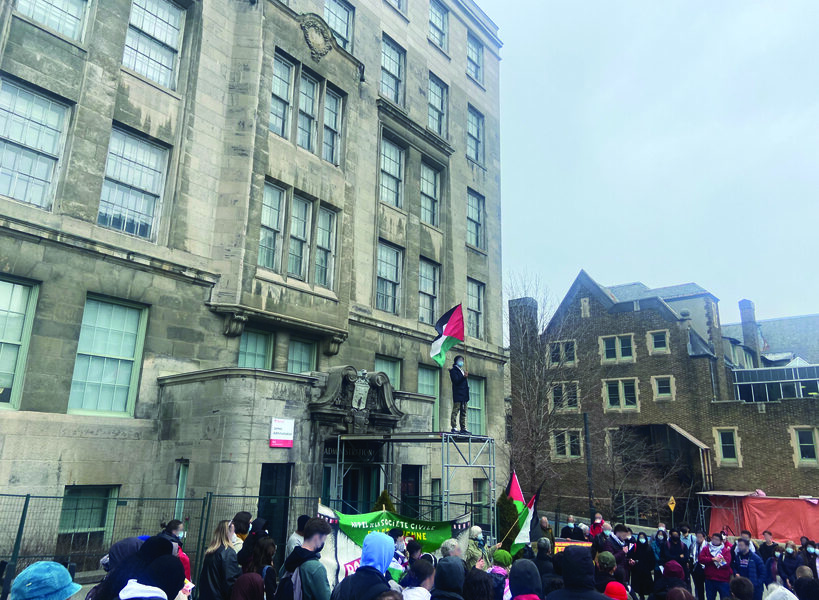
The SSMU Winter 2022 Referendum results were released later on March 21 to account for an extended voting period after the Palestinian Solidarity Policy was removed from the ballot following an order from the SSMU Judicial Board. The Referendum ballot was rerun and the Policy passed with 71.1 per cent of the vote in favour. 

Other motions that passed included the creation of Dialogue telemedicine service fee, the creation of the MUSTBUS fee, the creation of the Student Support fee, and the creation of a Black Affairs fee levy. The proposals to increase the SSMU membership fee and to create aFrench Accessibility Fee did not pass.

McGill, News

Two years after the administration falsely reported her deceased to her family, Fanta Ly speaks about systemic racism at McGill

On July 30, 2020, the sister of Fanta Ly received a call from McGill falsely reporting that Fanta had passed away. In the two years since, there has been little explanation from the administration regarding how this mistake occurred. 

A Student Affairs case manager had mistakenly called Ly’s sister instead of the family of a student who had indeed passed away. In a statement to The McGill Tribune, McGill media relations officer Frédérique Mazerolle wrote that changes have been made to ensure this does not happen again.

“The situation […] is the result of a most unfortunate human error, by which an employee of the University contacted Ms. Fanta Ly’s sibling, thinking she was reaching out to the family of another student, who had passed away,” Mazerolle wrote. “The employee noticed the mistake early in the call and immediately apologized profusely. The Principal of the University also sent a written apology to Ms. Ly. We have since carefully reviewed our internal processes to ensure that such incidents do not happen again.” 

According to Ly, the case manager did not realize their mistake or apologize during the initial call. Principal and Vice-chancellor Suzanne Fortier sent an apology letter to Ly, now a fourth year law student, more than six months after the incident.

Ly, a national director at the Black Law Students’ Association (BLSA) of Canada and a Black Wealth Club fellow, believes her story is more than just a one-off mistake by a confused employee.

“Some people are trying to dismiss this as a mistake from McGill, but this incident really needs to be situated within the long-standing harassment and discrimination of Black students at McGill,” Ly said in an interview with the Tribune. ”

Ly went on to describe other incidents of hostility and differential treatment from the administration, particularly regarding academic accommodations. Prior to the phone call, Ly sought medical accommodations and was met with resistance from multiple McGill employees. 

“[An Associate Dean] told me I can’t get an accommodation for the same medical reason more than once,” Ly said. “Furthermore, for white students, these issues always get resolved because at some point administrators feel the need to respond and ensure equal treatment. I wish it were the same for Black students. When it comes to Black students, there’s never any response. And it’s just so much time and energy wasted, just trying to fight with an administration that doesn’t value us and treats us like absolute garbage.”

Ly also described receiving a failing grade after speaking out against discrimination, as well as having to contest seemingly targeted changes to the requirements for her minor, such as the removal of certain credits that used to count towards her program. After addressing these issues with the Student Affairs Office (SAO) and being redirected to multiple sources, Ly felt unsatisfied with the explanations given. Feeling ignored by the administration while handling complications with her academic standing, having difficulty getting accommodations, and grappling with the phone call, all amid the COVID-19 pandemic, took a toll on her.

“And even after the call to my family, no one ever reached out to me,” Ly said. “They only sent me that apology letter after I sent an email regarding the faulty investigation and stated that I would inform the media if they didn’t respond. This is all just too much anxiety and too much stress. I couldn’t keep up with my coursework. How am I supposed to do my classes in this type of environment?”

Hülya Miclisse-Polat, 3L and co-president of McGill’s BLSA chapter, believes that while aspects of Ly’s experience have been unique, it nevertheless reflects a larger range of systemic issues. Miclisse-Polat also believes that placing the onus on students not only to report incidents of racism, but to seek justice can create a taxing environment for Black students.

“The fact that the burden falls on the students creates a hostile environment—it a lot of times makes students feel unsafe, and it just sort of perpetuates a system of exclusion at the faculty,” Miclisse-Polat said in an interview with the Tribune. “This is what we mean when we talk about systemic discrimination. A lot of times it’s done in very insidious ways, but it continues to foster a sense of exclusion.”

Currently, Ly is seeking justice in a variety of ways, including filing a complaint to the Quebec Human Rights Commission, writing to the Minister of Higher Education, and sending documentation of students’ experiences to faculty alumni as well as her local member of Parliament.

If you are in need of resources or support relating to anti-Black racism, contact the Black Students’ Network, the Black Law Student Association at McGill, or visit this website for more.

A previous version of this article stated that Ly received multiple failing grades for speaking out against discrimination. In fact, this was a one-time incident. The Tribune regrets the error.

Hockey, Martlets, Sports

Stymied by Concordia Stingers, Martlets hockey falls short of RSEQ title

Delayed by a week due to COVID-19 protocols, game one for the Martlets hockey team (12-3-0) versus the Concordia Stingers (11-3-1) best-of-three playoff series took place on March 17. Throughout the season, McGill worked hard to earn their spot in the RSEQ finals. Though the team fought tooth and nail, they ultimately fell just short of the championship title, losing their first game 3-0 and their second 4-1. 

Though the Martlets couldn’t clinch this series, fifth-year forward Stephanie Desjardins emphasized that this does not hinder the girls’ end goal. 

“Obviously it was not the result we wanted,” Desjardins said. “But we still have a shot at our ultimate goal which is the national championship. The games were good [to] prepare for next week.”

McGill played Thursday night’s home game to a packed arena, with fans from both schools cheering loud and hard. Both Martlets and Stingers glided onto the ice with a powerful demeanour—ready, willing, and able to go to all lengths to secure the win. However, within the first five minutes of the period, Rosalie Begin-Cyr from the Stingers scored a swift goal to put the Stingers on the board. 

The Martlets tried to get past the Stingers’ wicked fast defence, with forward Katie Rankin attempting several shots on goal, but to no avail—the Concordia skaters were just too fast. They frequently intercepted McGill’s long passes, leaving no Martlet unguarded. Yet, goalie Tricia Deguire let no pucks through for the rest of the period, leaving the first frame of the game at 1-0 for Concordia.

During the second period, the Stingers left the Martlets’ defence scrambling. Even as their main tactic became to keep the puck away from the net, the Martlets’ offensive shots often took too long to set up, resulting in an impenetrable fortress forming around the Stingers’ goalie, Alice Philbert, and the shots inevitably being blocked. 

Things got bleaker for McGill fans when the Stingers scored another two goals, putting the Martlets at a three-point deficit. The third period saw little change in either teams’ strategies, and the first game closed off with a loss for McGill. 

Both teams returned refreshed on Friday, ready for the second game, with McGill hoping to push the series to a tie-breaker. Alas, the Martlets had a disheartening start, with the Stingers up 2-0 in the first period. Though their aggression increased in the second half of the game, McGill needed to step up and throw shots at goal, but their energy could not drive the team all the way to the net. With a goal from team captain Jade Downie-Landry, the score was briefly 2-1 for Concordia. However, with 7.8 seconds left in the second period, the Stingers scored again, followed later by a final open net goal after McGill pulled goalie Deguire off the ice, closing the series with another loss for McGill, 4-1. 

Marika Labrecque, a fifth-year centre on the team, shared Desjardins’ sentiments about the national championships, remaining proud of her team while recognizing what held them back. 

“Our first game was a bit more difficult and we knew that we would have to do better, especially shooting more,” Labrecque said. “We gave everything we got for this game. The intensity was there, but we didn’t capitalize when we had the opportunity.”

Despite this loss, the Martlets advance to the Final 8 tournament in Prince Edward Island, set to begin March 24.

Moment of the game: Reignited after a goal from the Stingers, goalie Tricia Deguire did not let in another goal for the rest of the game, saving five shots in a row even as the opponents’ offence continued to push forward.

Quotable: “I’m proud of how far we have come this season and still more to come. I feel as though we came together as a team and played a great game. Although we didn’t get the outcome we wanted, it was a hard fought battle. Tricia had two amazing games, which really held us in there.” – Third-year forward Makenzie McCallum
Stat Corner: Martlets goalie Tricia Deguire made 39 saves during the first game, and 32 during the second, putting her total number of saves at 11th-best in the USports Association.

Read the latest issue

Read the latest issue