


Latest News

Sports

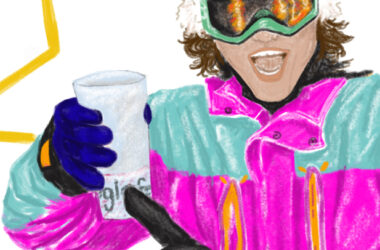
2021 Winter X Games return to Aspen

On Jan. 31, the 25th edition of the Winter X Games kicked off in Aspen, Colorado. Held at the Buttermilk Ski Resort, the event featured only skiing and snowboarding events and was organized in a fenced-off venue, with no spectators permitted due to the ongoing pandemic. The pandemic also caused some athletes to withdraw from the Games, namely Canadian snowboarders Mark McMorris and Max Parrot

The X Games are an annual extreme sports event hosted by ESPN. The first Summer X Games were held in 1995 in Newport, Rhode Island, with the winter edition being introduced two years later in Big Bear Lake, California. Among the various extreme sports, the event prominently features skateboarding, motocross, skiing, and snowboarding. 

Due to the freestyling nature of the events, past X Games have seen their competitors introduce new, never-before-seen tricks. Some notable feats include Tony Hawk’s first ever 900 in skateboarding, Shaun White’s Double McTwist 1260 in snowboarding, and Travis Pastrana’s first double backflip in Moto X. 

This year, despite a reduced number of events and competitors, athletes put their best foot forward to deliver exhilarating performances. 

Jamie Anderson won another gold medal in Women’s Snowboard Slopestyle with her first run, making her the most decorated female competitor in X Games history with a total of 20 X Games medals. Zoi Sadowski-Synnott took second place in the same slopestyle event, while Quebec’s own Laurie Blouin won the bronze medal.

Dusty Henricksen from Mammoth Lakes, California made his X Games debut this year. Any pressure of his first Games did not seem to affect the 17-year-old snowboarder, who went on to win not one but two gold medals in Men’s Snowboard Slopestyle and the Snowboard Knuckle Huck. 

“I was just trying to stay on my feet and snowboard and have a good time with all these boys,” Henricksen said in an interview with Forbes

His win in the slopestyle event made Henricksen the first American male snowboarder to win the event in 12 years—since Shaun White in 2009—as well as the first snowboarder to win two gold medals in his rookie appearance.

Alongside Henricksen, Chinese freeskier Eileen Gu also made her first X Games appearance. Gu took first place in Women’s Ski Superpipe, as well as Women’s Ski Slopestyle and third place in Women’s Ski Big Air. Her debut made Gu the first woman to win three X Games medals in her rookie appearance, and the first rookie ever to medal in every event she competed in. 

Marcus Kleveland, an X Games snowboarding veteran from Norway, made his seventh X Games appearance. In the Men’s Snowboard Big Air, Kleveland placed first, earning him his fifth X Games gold medal. However, while he started off strong in Men’s Snowboarding Slopestyle, Kleveland eventually fell short, finishing the event in fifth place. 

This year, the slopestyle events took on a “jam session” style where competitors had a set amount of time to complete as many runs as they could and were only judged on their best run and not on overall performance. This method has received backlash, especially from fans who claimed the all-or-nothing judging style was partially responsible for Kleveland’s low placement. 

Overall, the 2021 Winter X Games did not fail in showcasing some of the world’s best winter extreme sport athletes. Even with fan favourites like Shaun White withdrawing from the Games, athletes like Marcus Kleveland, Chloe Kim, and Nick Goepper all delivered expert performances. Moreover, with first-timers Dusty Henricksen and Eileen Gu breaking records, this year’s event kept viewers on the edge of their seats.

Football, Sports

The McGill Tribune presents: Super Bowl LV Preview

On Feb. 7, the AFC champion Kansas City Chiefs will kick off against the NFC champion Tampa Bay Buccaneers in Super Bowl LV. The game will be held at Raymond James Stadium in Tampa Bay, Florida, marking the first time in Super Bowl history where a team will play the championship game in their home stadium. The Buccaneers will return to the Super Bowl for the first time since the 2002 season, while the Kansas City Chiefs look to repeat their victory—a feat that has only been accomplished once in the 21st century. 

Both teams have had a unique path to the Super Bowl this season. Kansas City continued their success from last season, finishing 14-2, placing them first in the AFC and granting them a first-round bye in the playoffs. In the Divisional round, the Chiefs narrowly beat the six-seeded Cleveland Browns, despite Super Bowl LIV MVP quarterback Patrick Mahomes sustaining a concussion in the second half. In the AFC championship game, the Chiefs punched their ticket to the big game with a significant win over the upstart Buffalo Bills. On the other side, the Tampa Bay Buccaneers, led by four-time Super Bowl MVP Tom Brady, finished the season 11-5, placing fifth in the NFC. Tampa Bay went on the road to Washington in the Wild Card round, and New Orleans in the Divisional Round, beating both teams in closely contested games. In the NFC championship game, the Buccaneers beat the favourite Green Bay Packers, converting on a first half hail-mary and intercepting Aaron Rodgers on three occasions.

When assessing the player and team statistics from the regular season, the strengths and weaknesses of each team are made clear. On offence, each team was reliant on a strong passing game. Kansas City led the league in passing yards per game with 303.4 and placed third in passing touchdowns with 40. Tampa Bay finished second in passing yards per game with 289.1 and second in passing touchdowns with 42. Although neither had a strong rushing game, Kansas City had a significantly better performance, finishing 16th in the league in rushing yards per game, compared to Tampa Bay in 28th. 

On defence, the Buccaneers were reliant on a strong front seven, allowing the league’s least rushing yards per game, only 80.6 and 10 rushing touchdowns. In comparison, the Chiefs finished lower in both categories, giving up 14 rushing touchdowns and 122.1 yards per game on the ground to opponents. 

The most important matchup in this contest will be the Kansas City offence against the Tampa Bay defence. At the line of scrimmage, the Buccaneers will have a significant advantage going into the game. The Chiefs offensive line lost left tackle Eric Fisher, their former first overall pick, to a torn Achilles, a difficult blow to a unit that already lost first-team All-Pro Mitchell Schwartz earlier in the season. On the other side, the Buccaneers front seven are peaking at the right time. 2018 first round pick and defensive tackle Vita Veta’s return from injury last week was a critical addition to an exceptionally good core that features a staggering five former All-Pro selections. 

However, despite this advantage, Kansas City’s offensive weapons are historic. Patrick Mahomes, one of the most talented quarterbacks in NFL history, has connected with his two First team All-Pro selection targets Tyreek Hill and Travis Kelce throughout the season and playoffs, a trend that should remain consistent this Sunday. Complemented by Head Coach Andy Reid’s strategic, aggressive play-calling, the Chiefs’ air attack will pose a difficult challenge for the upstart, young Buccaneers secondary. 

The McGill Tribune predicts that, ultimately, the Buccaneers will struggle to stop the Chiefs’ pass attack and their offence will come up just short, with Kansas City emerging victorious 31–27. The contest will live up to its significance, with two quarterbacks striving to end their careers as the greatest to ever play.

Creative, Podcasts

The T: “Investigating the SSMU’s Student Fee Policy with Sébastien Duckett” Feb. 3

This week on the show:
SSMU Finance Commissioner Sébastien Duckett takes us through the Finance Committee’s new report, “Investigation into the SSMU’s Student Fee Policies,” — a deep dive into current fee practices and policy that reveals a lack of financial due diligence and accountability, and contains recommendations to rectify these issues.

Student governance: SSMU Legislative Council (Jan. 28th)
Episode links:
SSMU student fee investigation reveals lack of due diligence, financial accountability, by News Contributor Juliet Morrison: www.thetribune.ca/news/02022021-3/
SSMU Legislative Council approves motion to support Dollarama workers, by Social Media Editor Marie Saadeh:
www.thetribune.ca/news/02-02-2020-2/

Host: Sequoia Kim, News Editor
Guest speaker: Finance Commissioner Sébastien Duckett
Podcast Producers: Multimedia Editors Sarah Ford & Alex Hinton, Creative Director Aidan Martin, Editor-In-Chief Helen Wu.
Artwork design: Design Editor Chloe Rodriguez

Features

The threat from inside

On Jan. 6, far-right supporters of former United States President Donald Trump stormed the American Capitol Building in an attempted insurrection that killed five. Throughout Trump’s presidency, far-right extremist hate groups proliferated on social media and in public spaces. Political figures, including the president himself, have also depreciated the gravity of their own actions, which has in turn brought far-right radicalization into the mainstream. 


Far-right extremism, also referred to as the extreme right, is defined as a branch of right-wing political ideology and action that is more radical than the mainstream realm of conservative politics.


Some Canadians may see far-right politics as a distinctly American phenomenon, but far-right hate groups have long been lurking across the country, including in Quebec. Four years ago on Jan. 29, a far-right extremist killed six and injured 19 at a Quebec City mosque, inspiring similar attacks around the world in years to come. Much like in the U.S., Canadian extremist networks have only grown stronger through social media, and even more recently, the COVID-19 pandemic. 


In Quebec, the far-right has existed for decades. Frédérick Nadeau is a Social Sciences and Humanities Research Council postdoctoral fellow at the Centre of Expertise and Training on Religious Fundamentalism, Political Ideologies and Radicalization (CEFIR), a research centre focussing on political radicalization based in Cégep Édouard-Montpetit. According to Nadeau, the existence of far-right movements in Quebec dates back to at least to the Quiet Revolution. Up until around the 2010s, however, such groups generally flew under the radar. For the first half of the decade, these groups were mostly made up of young skinhead neo-Nazis. 


“Starting in 2015-2016, with La Meute, the Soldiers of Odin, and Storm Alliance, we see that the extreme right becomes less ‘clandestine,’” Nadeau wrote in an email to //The McGill Tribune.//* “It abandoned the [neo-Nazi] approach characteristic of the skinhead groups prior to 2015, and adopted a more (ultra)nationalist and identity-based ideology.” 


In essence, far-right extremist groups became more palpable, making the average person more likely to get involved, thus rendering them more accessible to new demographics. Nadeau explained that the makeup of these groups has shifted from primarily young, violent skinhead types to middle-aged workers and otherwise ‘ordinary’ people. As these shifts in formal or informal group membership occured, public debates sprang up over several controversial pieces of legislation. 


“This trend can be linked to the opening of the floodgates we see in the wake of debates surrounding reasonable accommodations (2006-2008), and the Charter of Values (2013), which permitted a normalization of hostile discourse towards immigration and Islam,” Nadeau wrote. “We therefore encounter a plethora of xenophobic and islamophobic groups on social media, and we see groups looking to exit the virtual space to materialize in the ‘real world.’”

Science & Technology

When feelings don’t care about the facts

The rise of the Information Age has enabled widespread public access to scientific research, but it has also disseminated a dazzling array of misinformation. Distinguishing fact from fiction during a pandemic can be difficult, particularly for the significant number of Canadians that struggle with literacy.

Dr. Christiane Northrup is one of many health-oriented online presences that has capitalized on social media’s wide reach. Despite a steadfast commitment to astrology and vaccine denialism, she has successfully leveraged her training as an obstetrician-gynecologist into a career focussed on women’s health spanning multiple decades. Her Instagram posts alternate between advertisements for her ebooks and short videos, during which she casually chats about her cats, fan mail, and harmful pandemic misinformation.

In a recent article for McGill’s Office for Science and Society, science communicator and M.Sc. Jonathan Jarry described how people tune out scientific experts in favour of influencers like Northrup.

“As science and technology become more and more complex, when we lose touch with it, it’s very easy for us to fall back to our intuitions, to believing things because they make us feel good, not because they are true,” Jarry said in an interview with The McGill Tribune.

When scientific information is poorly communicated, people tend to fall back on the assumptions they already hold, often confusing personal experiences and compelling falsehoods with proven facts. The human tendency towards irrationality is only furthered by modern media distrust and times of crises that decrease trust in public authority. 

Northrup’s platform was initially built on her bestseller Women’s Health, Women’s Bodies, which combines relatively accurate health information with more dubious mysticism. Her straightforward advice about dealing with hot flashes and the proven issues with mammograms is easily accessible to women with doubts about the medical system. 

However, Northrup is no stranger to dangerously inaccurate health information. Her recent content resolutely ignores reality, actively discouraging people from getting vaccinated, spreading unfounded claims about the danger of the COVID-19 vaccine, and going so far as to brazenly deny the reality of the COVID-19 pandemic. 

Northrup has carefully crafted her persona to target female audiences, focussing on keeping her audience engaged rather than providing factual insight or analysis. The impressive social media following that she has garnered shows that health beliefs are often grounded in emotion rather than reason. 

“Feelings don’t care about facts,” Jarry said. “If somebody’s irrational beliefs are based in emotions, in values, no amount of saying [that] the science is true whether you believe in it or not […] will really make a difference if you’re trying to […] change their mind about something.” 

Although Northrup’s talk of intuition and vitamin supplements may seem relatively inconsequential, other messages she spreads have the potential to cause significant harm. Efficient and widespread vaccination against COVID-19 is essential to halting the spread of the disease. Misinformation on social media can have damaging effects on trust in health institutions and can affect people’s likelihood of getting the vaccine. 

Scientists and policymakers have a duty towards society to disseminate science in an accurate and accessible way. Developing a vaccine is important, but educating people, reducing transmission, and preparing our society for future risks are also crucial to maintaining public health. Accomplishing these goals cannot happen without establishing reliable communication and public trust.

“The first thing that I think we should do is to listen to these concerns, because by listening to them, we can better understand where this person is coming from,” Jarry said. “It also shows that we care about their anxieties and their fears, and this is how you build a relationship of trust.” 

Among the proliferation of untrustworthy sources, there is a growing movement of science communicators striving to deliver accessible and accurate health information. Through online initiatives such as ScienceUpFirst, they aim to reclaim the social media narrative surrounding COVID-19 and to help people understand scientific information. Effective science education is fundamental to public health, and it can only be achieved through the dedication and compassion of scientists and educators.

Science & Technology

McGill research study finds fisheries may save humans after nuclear war

When thinking about the aftermath of a nuclear war, fisheries are not the first things that come to mind. However, in a recent study published in Proceedings of the National Academy of Science (PNAS), a team of McGill researchers revealed that marine fishery supplies could be vital to sustaining human life by providing food security after a nuclear war or other abrupt climatic shocks. 

Among other catastrophic effects, such as immediate destruction of cities and firestorms, nuclear war would result in the release of soot into the atmosphere, blocking out sunlight and leading to a plunge in atmospheric temperature. Consequently, there would be an unprecedented reduction in agricultural production, posing a risk to worldwide food security. 

“I think it’s very important to study what the potential effects of a nuclear war could be so that we are well informed when we, or our decision-makers, decide rules for whether or not we should have these weapons,” Kim Scherrer, a PhD student in McGill’s Department of Earth and Planetary Sciences, said in an interview with The McGill Tribune.

Alongside Scherrer, a team of researchers evaluated the effects of nuclear war on the worldwide food system through six “war scenarios,” modelling how fishing worldwide would change depending on rapidly increased fish demand or decreased ability to fish. These were done through the state-of-the-art Community Earth System Model. Each scenario simulated a war-like event, followed by the socioeconomic response of the fishing industry, pertaining to the simultaneous fishing demands. 

Based on existing global tensions, the study simulated five conflicts between India and Pakistan with increasing quantities of soot release, and one substantially larger U.S.-Russia war injecting 150 teragrams of soot into the atmosphere. The industry responses included a range of fishing demands, from business-as-usual, or no change, as a control scenario to very large increases or complete collapse. 

The main findings from these climate models showed that well-managed fisheries are key to maintaining fish and seafood as stable food sources. In practice, this means implementing strict quotas on fish catches. While fisheries may appear as a short-term solution, they can be instrumental to global nutrition in the immediate years following a nuclear war, especially as the climate restabilizes itself in the following five to 15 years.

“It’s a good idea to monitor gear types and details of the fishing to prevent destructive practices, but the most important thing is simply to fish less,” Eric Galbraith, a professor at McGill’s Department of Earth and Planetary Sciences, wrote in an email to the Tribune. “This ends up giving us more fish to eat, [being] more profitable, and producing [fewer] emissions.” 

According to Scherrer, while the research revolved around the potential outbreak of a nuclear war, the findings are equally applicable to other possible climatic shocks, such as volcanic eruptions. The results are also relevant to more subtle changes, such as unmitigated climate change, which has already started to put pressure on the fishing industry. 

“I think that’s a really important finding, that being prepared for the worst should be the same as just avoiding overfishing and maintaining abundant fish stocks, so it’s not like [we] have to do something completely different,” Scherrer said. 

The study found that the U.S.-Russia war scenario and business-as-usual fishing would be closest in predicted magnitude to the end-of-century fishing declines under unmitigated climate change. 

In the future, Scherrer hopes to uncover the links between other food sources that might be important in a climate disaster resulting in a food emergency. In particular, she hopes to gain a better understanding of the relationships between the farmed crops and the animals that we eat.

“We can’t run our lives or societies thinking that nuclear war would happen tomorrow,” Scherrer said. “The urgent thing that we find in the study is that when it comes to fisheries, you don’t have to be doing something very different to be prepared.”

Know Your Athlete, Sports

Know your athlete: Dylan Havelock

As co-president of the McGill Men’s Rugby Team and a Dean’s Honour List scholar, Dylan Havelock, U4 Engineering, is the true embodiment of a student athlete. The fifth-year winger, who is passionate about both rugby and engineering, has strived for excellence both on the pitch and in the classroom.

“I think when you genuinely enjoy what you’re learning or doing, it’s easy to throw yourself in that and get invested in it,” Havelock said in an interview with The McGill Tribune.

Havelock first played rugby in his freshman year of high school in Ottawa, Ontario. Since then, he has succeeded in the sport in more ways than one. 

He received a $2,000 academic excellence award at the annual Quebec Foundation for Athletics Excellence gala in December 2020. Havelock was also a recipient of the 2019 Jean Béliveau Athletic Award, which recognized his academic achievements and leadership in his community. As a former hockey player, winning this award was particularly special for him. 

“I’m a huge NHL fan, so to win the Jean Béliveau Award, which is in the name of a legendary Montreal Canadiens player, was a really big honour,” Havelock said. 

As he looks back on his university rugby career, Havelock reminisces on the good times he has had with his team. His favourite memory was when his McGill team beat Harvard in the 2019 Covo Cup

“We really went all out for it in 2019. We played at Molson Stadium and there were nearly 1,600 people out for the game,” Havelock said. “It was a really special moment to have such a great win against a school like Harvard, and in front of a huge crowd too.”

Havelock attributes his accomplishments to hard work, discipline, and the supportive environment of the rugby team. 

“Our coaches are so supportive of us,” Havelock said. “We really try to focus on having a well-rounded player, not just someone who can perform on the field [….] Our players are still focussed on school and can keep up with that while still being able to make time for rugby.” 

Although he is invested in his studies and has achieved exceptional grades, Havelock emphasizes the importance of taking advantage of the full university experience. He believes that university is not just about being a successful student, but also finding interests outside of the classroom, being involved, and forming meaningful relationships. 

“The friends and the connections I’ve made from fellow players, with my coaches, with rugby alumni, that’s what’s going to last me long after university is done,” Havelock said. 

Although Havelock fostered strong friendships and experienced many victories as a part of McGill Rugby, there were also disappointments. The team suffered a tough loss in the 2019-20 RSEQ league finals, and was determined to have their chance at redemption in the 2020-21 season. With the cancellation of the season due to COVID-19, however, their plans changed. 

Instead, the team doubled down on community involvement, channeling their energy into fundraising for important causes. Havelock, who plays a big role in community work as the team co-president, proudly reported that they raised over $5,000 for the CHU Sainte-Justine Hospital and $7,150 for Movember in two back-to-back virtual fundraisers. 

“Doing some of these charity events and trying to be active in the community still allows us to feel connected, even though we don’t get to necessarily see each other in person,” Havelock said. 

Graduating during a pandemic is definitely not what Havelock hoped for, but he looks forward to starting his new career as a software engineer at RBC and plans to stay involved with rugby in the future. 

“It’s definitely bittersweet, especially on these terms since it’s not a regular graduation,” Havelock said. “There will be good things ahead too, but I’ll definitely always look back fondly at my time at McGill.” 

Havelock, who has certainly made the best of his time at McGill, expresses his encouragement to younger athletes. 

“To any first-year player, it may feel tough trying to balance everything, but it’s honestly all worth it in the end,” Havelock said. “There’s definitely going to be tough times at university [and] it’s definitely very demanding, but hang in there.”

Off the Board, Opinion

Retracing my steps

If you have been online in January, you have probably seen a Spotify Wrapped against your will. Candy-coloured and set to a nondescript background beat, the Wrapped roundup satisfies our collective desire for life stats while spawning countless imitations. One of these, as I discovered recently while knee-deep in my inbox, is from the unsettling Google Maps Timeline, which has been faithfully tracing my every move since 2015. As the daughter of an internet security devotee, I was initially horrified to realize that I had failed to safeguard my location data for the better part of a decade. Then, I was fascinated. 

Holed up in my apartment over a grim, drizzly winter, I ached for escapism and found it in hour-by-hour logs of my own pre-pandemic life. Through birdseye maps of my daily travels, I watched high school me move in a circuit between home, school, and the public library—still my sixth most visited place, the timeline tells me. After moving to Montreal for university, I watched myself explore the city before falling into a rhythm. Every mishap is chronicled, from mediocre dates to only lasting an hour into what was meant to be a marathon library session. As my past converged on my present, my map stretched across the ocean as I settled myself in a new city for exchange, and then within months I found myself back in my hometown, motionless. 

Reliving the past, whether by watching yourself grow up via Google Maps surveillance, paging through old diaries, or revisiting text threads, invites both regret and nostalgia. Amid a stagnant year, I yearned for the freedom found in my old maps. Every night spent in a dimly lit crowd and afternoon in a busy coffee shop took on an outsized emotional weight. The places you go, as Google Maps shows in its slick commercials, are of profound importance.

Despite the lessons within, seeing my everyday movements broken down by hours felt like an encroachment by the digital lurker in my pocket. The timeline falls somewhere between the gamified personal data favoured by fans of the quantified self and a startlingly transparent view of what information we as internet citizens willingly exchange for convenient, personalized services. Gen-Z is notoriously lax about online privacy: Among digital natives, it’s taken almost for granted that personal data is being used to inform the algorithms that deliver our content. Tacit acceptance of compromised privacy is often considered necessary to benefit from new technology. 

On the data-driven web, presentations of user data like the timeline obscure the very real security concessions that users make as they traverse the internet. In 2019, I went to a talk by theorist Neema Githere on data healing as a response to data trauma, the compounded weight of being counted and sorted by impersonal yet prying technologies. This concept raises a difficult question: As digital natives who recognize the flaws in our internet immersion, from algorithmic racism to political data mining, how might we break free—especially when there’s a sleekly designed reason to stay?  

New counter-mapping projects like Montreal’s own Queering the Map both disrupt the mapping status quo and satisfy my fascination with narrative location data. The community-generated map invites users to drop pins on their own experiences, capturing the spatiality of 2SLGBTQIA+ life. Inherent in counter-mapping projects is an optimistic view of data as powerfully personal and integral to the stories of our lives, reinforced by the invitation for users to contribute to a collective geography.  

Obeying the luddite voice of reason my mother embedded in my brain, I finally switched off location tracking and put an end to the everchanging map that was six years in the making. My old map remains, though—partially because I cannot figure out how to scrub it from the web and partially because I like to return to it. Perhaps the Google powers that be have me figured out, but the chance to retrace my steps is difficult to pass up.

Commentary, Opinion

Don’t worry about your weight during a pandemic

At the start of last year, I decided to better myself. I resolved to study more, interact more with student organizations, and most importantly, lose weight. After all, during the first year of university, I had gained a significant amount of weight, as many students do. But while I have succeeded in my first two goals, weight loss has admittedly been a failure. Between the social isolation caused by COVID-19 and my bad habit of stress-eating, I think I have come to understand how Sisyphus felt, struggling to push the boulder up the mountain. In retrospect, the task I gave myself looks somewhat absurd now, as COVID-19 is simultaneously a stressor and a cap on outdoor exercise. Still, from WebMD to The New York Times, multiple sites are strangely focussed on tackling weight loss during this pandemic. This emphasis on weight during an unprecedented point in global history is fundamentally misguided and shows how much society overemphasizes weight as an aspect of health. 

Society has not always prioritized weight as a determination of health. The body mass index (BMI), a common measurement that determines obesity using a table of height and weight, is a relatively modern concept. The creator of said index, Belgian mathematician and statistician Adolphe Quetelet, developed it in the mid-1800s simply as a formula to link weight and height. Moreover, it was not popularized until the early 1970s, when it was proposed as the best formula relating those two values.

There are a plethora of issues associated with BMI. Because BMI as a model came from data taken from Belgians, it does not apply to all people equally and is Eurocentric in nature. The original index misrepresents most ethnicities. Furthermore, it is most useful when studying populations as opposed to individuals, as it does not distinguish between fat and muscle. Despite this, many doctors still use BMI as a measure of individual obesity. More disturbingly, the vast majority of funding for obesity research goes towards genetic studies, which echo eugenics instead of focussing efforts on human behaviour.

Society overemphasizes weight’s role in health culturally as well. The fat acceptance and body positivity movement has some reasonable arguments regarding how weight is viewed in the West. Advocates believe that the perception that overweight people are laughingstocks or even pitiable has led to a social stigma against them, one that can lead to psychological problems such as eating disorders (EDs) as a result of self-loathing. A markedly feminist critique also calls out diet culture’s role on Western women, which idealizes a Eurocentric, perfect body that is not attainable for most. Though not without its critics, who view it as promoting a dangerous lifestyle choice, the movement brings to light several problems with how Western society regards weight and weight loss. 

For example, while ED rates have increased in non-Western, developed countries in recent years, Western countries still have higher rates overall. Likewise, a comparison of EDs along gendered lines shows that EDs are far more prevalent in women, indicating that the cultural link is quite possibly present. Thus, while it is fair to criticize a small niche of the body positivity movement if they seek to normalize obesity due to the health problems that can accompany it, it is unfair to dismiss all of the points they wish to make.

While focussing on weight loss, as in my case, is nothing to be ashamed of, there is also nothing wrong or shameful about your body changing during what is sure to be an extremely trying period in the lives of many. In a time of great stress, there is something to be said for taking a step back and being more lenient on oneself. I, for one, am happy to stop rolling the boulder for now in order to wait for the burden to shrink to a more manageable size. 

Read the latest issue

Read the latest issue