Latest News

Student Life

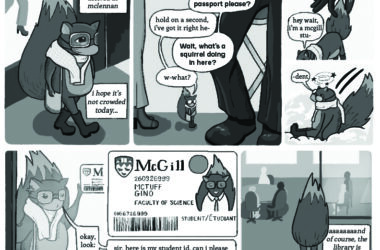
Alleviating the transfer student blues

There is one thing that all McGill students can agree on: McGill is an extremely challenging school. While the degree of difficulty varies between courses and programs, it is safe to say that it is nearly impossible to find a truly easy class that requires minimal work. This academic rigour, mixed with a highly intelligent student body, can cause students to experience imposter syndrome. Feelings of inadequacy in comparison to their peers can prompt students to question their acceptance or accomplishments at McGill. Although McGill students differ in their experiences of imposter syndrome, it is particularly prevalent amongst transfer students. 

“Imposter syndrome is when someone doesn’t feel worthy of their achievements and feels nervous, particularly before they speak, in front of other people,” Sarah Henning,  licensed psychologist, said. “It gets highlighted when people receive an award or receive acceptance into a new and rigorous setting.”

In most cases, students transfer schools because their experiences at their past university did not work out for one reason or another. Whether this is due to academics, tuition fees or other social factors at their previous university, students make a conscious and life-altering choice to transfer to a new school and acclimate to a new environment for a second time. 

McGill’s lack of programming specific to transfer students still unfamiliar with the school can contribute to imposter syndrome. While McGill runs an orientation for transfer students, historically, this program has been only an hour-long non-interactive lecture focussing on transfer credits. While the session provides important information, it can be both overwhelmingly broad and surface-level, consisting of direct screenshots and slides from the McGill website.

Not only does this orientation fail to cover the necessary information on how to navigate the university from a student perspective, it also does not seek to introduce transfer students to their peers. 

Gilbert Lin, manager of Campus Life & Engagement (CL&E) at McGill, explained in an interview with The McGill Tribune that the reason behind the structure of this session is to ensure students understand credit requirements for graduation. 

“We understand that there are a lot of activities going on on campus, and we do not want to keep students any longer than necessary,” Lin said. “The transfer program is organized the way it is because of the academic rigour at McGill. Our first priority in this session is to introduce the specific credit requirements for transfer students, which we know is often different from other students, and so we want to make sure we cover that before touching on other information.” 

Lin replaced Leslie Copeland, the former manager of CL&E, last year. Lin said that he had increased the duration of the transfer orientation in an attempt to put more emphasis on building friendships. The transfer orientation, however, is still only one event and students do not receive any additional, long-lasting support throughout their first year. While CL&E offers great programs such as The Buddy Program, The Student Matching Program, and The First Friend program, which pair incoming first years with upper year students, no CL&E initiative is aimed at supporting and connecting transfer students. 

Before Lin took on the role, there was no reception during the orientation event for students to meet, and there are still no specific Facebook entering class pages or social media groups for transfer students to connect. 

Mahler Meyerrose, U2 Arts, transferred to McGill last year from St. Lawrence University. Reflecting on her experience in the transfer program, Meyerrose explains how the whole process was quite jarring. 

“During the transfer session I was sitting next to a bunch of grad students and PhD students,” Meyerrose said. “The program is not at all just undergrads. I thought it was really weird how it was such a mixed group of students.”

While this experience alone could cause a transfer student to feel isolated, confused, and disoriented, once classes begin and the add/drop period ends, students are buried in work and must begin to learn the social norms of McGill while attempting to keep up with academic expectations. In this process, it is quite easy for students to not only feel different from their classmates due to their unique educational background, but also to  feel confused as to how to access the many resources listed online. Without other peers to relate to due to the lack of a transfer student community, it is understandable that students find themselves doubting their intellect and feeling alone at such a large university. 

This experience hits quite close to home because three years ago, I transferred to McGill from Northeastern University. While I could not be happier today that I transferred, it would be a lie to say that my first year at McGill was easy. 

Not only was it hard to make friends during the first couple of months, but I also struggled to learn the ins and outs at McGill. After leaving the transfer students session three years ago, I remember feeling like I was simply a statistic in the eyes of the orientation leader, as if she was just there to make sure that we could swiftly graduate from the school we just enrolled in. From not knowing what to respond when someone asked what residence I was in, to being unsure how to maneuver add/drop at a new university, my first year at McGill feels like a blur.

Looking back at how I felt during these first couple of months, I remember struggling to find a way to describe my feelings. I was not embarrassed by the fact that I transferred, but I did feel a need to “fit in” with what I always considered “real” McGill students. I was also trying, to the best of my ability, to adjust to the demands of McGill courses, not feeling bright enough to engage with my peers.

In retrospect, I understand that I was experiencing imposter syndrome. In navigating my transfer, I would have appreciated help from McGill through either a more comprehensive transfer programming or more guidance. While I understand that there are mental health resources available through the Student Wellness Hub and the Healthy Living Annex at the university, at the time, I was unaware that this feeling was abnormal. 

Many resources, such as the American Psychology Association and the Harvard Business Review, detail the best way to overcome this syndrome: To begin talking about it with others. For transfer students, this would likely be much easier amongst themselves, allowing them to feel a sense of community amongst 27,000 undergraduates. But without a robust support system offered by the university, this community is unlikely to emerge.

“I know for me, whenever I feel this way, I know it helps to talk to my colleagues and they usually reassure me that this feeling is normal, and can go away,” Henning said. 

Moving forward, the McGill Orientation Program should consider these factors when introducing new and different students to the McGill community. In providing support throughout the first year, or even the first semester, the McGill Orientation Program could ease the feelings of imposter syndrome for transfer students and create an inclusive transfer student community. 


McGill, News

Fall 2020 TAs still missing payments as the semester nears end

Following various technical issues with Workday, McGill’s new human resources (HR) system, the Association of Graduate Students Employed at McGill (AGSEM) has filed several individual, union, and collective grievances against the university in accordance with their Collective Agreement (CA). Some problems included lack of access to technology necessary to teach classes, incomplete or stalled hiring, payment in the form of cheques rather than direct deposit, and most notably, late payments to teaching assistants (TAs). 

On Oct. 30, McGill Student Accounts and HR offered temporary relief measures for those experiencing financial difficulties resulting from the Workday issues. This included automatically deferring unpaid tuition balances without interest until January 2021, reversing interest charges on late Fall 2020 tuition fees, and offering an additional $1,500 in loans also to be repaid by January 2021.

The Post-Graduate Students’ Society (PGSS) University Affairs Commissioner Kristi Kouchakji explained how HR’s decision to issue the loans without conferring with the union initially sparked confusion among those who received them.

“We had no idea that HR had decided to administer it as an opt-out with no up-front communication until we started hearing (understandably) confused, and in some cases angry, feedback from members,” Kouchakji wrote in an email to The McGill Tribune.

Kiersten van Vliet, who served as the president of AGSEM until the end of Nov. 2020, expressed her concerns regarding McGill’s HR slow response, despite the fact that they have acknowledged AGSEM’s grievances.

“For some context, even this late into the semester, there are TAs almost finished their contracts who are still not ‘hired’ in Workday—and consequently have not received a single paycheque,” van Vliet wrote. “HR has repeatedly missed their own deadlines for resolving the pay issues—late October has become late November and beyond. We’re already into hiring for next semester and they haven’t yet ‘hired’ some of the TAs this semester. We anticipate many of the same hiring issues again in Winter because the fundamental problems with the Workday system itself have not yet been resolved.”  

In response to McGill’s violation of the CA, AGSEM filed several grievances claiming late fees and interest equivalent to what McGill charges for late tuition payments. McGill is currently working through each grievance and AGSEM is still awaiting settlement offers from the administration.

Frédérique Mazerolle, McGill’s Media Relations Officer, stressed that the university is working closely with both AGSEM and PGSS to resolve any outstanding Workday issues.

“Each case is handled individually,” Mazerolle wrote. “Depending on the nature of the problem, communications were initiated with the administrator or the employee or both. In the weeks to come, more robust user support tools and renewed training will be implemented to support units through the next wave of hiring.”

Despite frustrations with Workday, Grish Balaji, a TA in McGill’s Department of Electrical and Computer Engineering, was impressed by the many departments that quickly took action to remedy the issue, and after careful consideration, is still planning on working as a TA next semester. 

“[Teaching assistants] plan our budget[s] based on the income we receive,” Balaji wrote in an email to The McGill Tribune. “To know that there were delays in payment because the records were not properly processed from McGill’s side breaks the hopes and inner peace of every TA. I have friends complaining about having to work outside campus even though they’re a TA at McGill because McGill hasn’t processed their records/payments.”

The new TA Collective Agreement was ratified in September 2020 and will be signed by mid-December. After that, McGill has 90 days to process retroactive TA raises won in negotiations, which AGSEM says it will be closely monitoring. The PGSS has released a comprehensive survey on graduate student funding and living, learning, and working conditions in order to better address constituent needs.


A previous version of this article stated that HR’s decision to issue cheques sparked confusion, when in fact, it was the loans that sparked confusion. The article has been updated. The Tribune regrets this error.

McGill, News

McGill Athletics & Recreation stays strong despite COVID-19

The COVID-19 pandemic has affected all levels of sports at McGill, including varsity, intramurals, and recreational programs, resulting in a significant negative impact on the McGill Athletics & Recreation’s revenue stream. Quebec’s lockdown restrictions have impacted operations at both the Currie Gym and the Macdonald campus. With fewer people using the facilities and less money to allocate to teams and programs, Athletics & Recreation has had to adapt to accommodate students while respecting provincial public health guidelines.

This year, student fees, memberships and programs, facility rentals, camps, sponsorship engagements, Sports Medicine Clinic services, and other retail operations experienced a decrease in revenue. Senior Communications and Marketing Manager Stephanie Malley explained the impact of COVID-19 on Athletics & Recreation’s budget in an email to The McGill Tribune.

“While much effort has been directed toward reducing expenses through these challenging times, fixed costs including energy, cleaning, maintenance and salaries continue to be incurred,” Malley wrote. “Athletics and Recreation’s fiscal year 2020 budget will close with a large deficit that will need to be addressed over the coming years.”

To adhere to university and public health recommendations, Athletics & Recreation installed signage throughout the sports complexes to encourage proper physical distancing and have increased cleaning schedules in high-traffic areas. Athletics & Recreation staff work both on and off campus to ensure that all in-person activities are run safely and effectively. Lifeguard Robyn Nakano, U3 Arts and Science, discussed her experiences working at the Memorial Pool during the Fall 2020 semester.

“It’s been a [time of] transition,” Nakano said. “We started out originally with three guards […] which was a change from last year. Now we’re back to two guards, which is fine because we’re a small pool [….] We have had a really tough time this semester getting shifts covered because not as many people came back [to Montreal] in the fall.”

Athletics & Recreation has modified their recreation programs several times since the start of the pandemic to remain in accordance with the ever-changing public health guidelines that regulate physical activities. In the email to the Tribune, Malley elaborated on the popularity of the in-person programming at the downtown and Macdonald campus fitness centres. At the beginning of the semester, while in-person fitness classes, intramurals, and fitness centres were open, they were consistently at or near capacity. Government regulations that placed Montreal into the red zone on Oct. 1 required the department to scale back its operations. 

Athletics & Recreation is still able to provide some on-campus activities, including lap swimming, indoor tennis and badminton, track running, basketball, and recreational skating. The department also added an online component to its fitness class schedule, allowing students to take up to 15 online classes for free each week. Pascal Namia, U3 Arts and Science, is grateful that McGill is continuing to offer recreational activities this semester.

“I’m glad [McGill] opened [the gym] up to allow training,” Namia wrote. “My routine was usually arms/legs followed by cardio, and I would spend all 90 minutes in the gym. I felt safe COVID-wise, but sometimes social distancing wasn’t possible in the weights section [….] Nowadays, I just play badminton in the evenings with a buddy of mine to get a sweat in [….] I’m glad that they’re still offering recreational sports, because if they don’t, I lose something I look forward to doing at the end of the week. It keeps my mental health in check.”

Additionally, the McGill Intramural Office modified its services for online delivery, offering virtual programming like E-Sports, Strava Run Club challenges, and online trivia. In-person programming included Spikeball and a Lawn Games League, though Winter 2021 intramurals have yet to be announced. Many students, like Josh Shapiro, JD ‘20, an intramural participant during previous semesters at McGill, are thankful that some activities are still being offered this semester. Shapiro, a finalist for the inaugural class of McGill’s Intramural Hall of Fame, participated in this semester’s online trivia events. He discussed what he misses most about past intramural activities in a message to the Tribune.

“I badly miss the camaraderie of teams like Jewventus, my co-rec soccer team,” Shapiro wrote. “Thanks to Rene Bondy’s efforts to continue the intramural program through the current semester, however, I have been thrilled to participate as a member of the ‘Follow @unsoliciteddishpics’ trivia team in the weekly intramural trivia.”

Varsity teams have also faced their share of obstacles this Fall. Due to the current government and league directives, no varsity team events, competitions, or in-person practices are taking place. However, many teams have still found creative ways to stay in shape, such as individual or group Zoom workouts. Martlets soccer player Tia Lore, BA ‘20, spoke to the Tribune about the challenges she encountered this semester.

“[One] challenge is just being in one place, for so long,” Lore said. “With classes, you would [go from one class] to a different class and walk outside to go to the gym [….] We’re so used to having practices every day, or that time restriction where [you have] to get this [assignment] done because [you] have practice, whereas now there’s no time restrictions, so I feel like I have to learn how to manage my time again.”

With the varsity sports season cancelled, groups like Varsity Council say they have had a hard time connecting with athletes this semester. Varsity representatives have adapted to this semester’s circumstances by moving all of the council’s social events online, promoting its events via Instagram, and looking to start a Strava account in hopes of motivating more athletes to workout. Varsity Council President Evelyn Silverson-Tokalidis, U3 Arts, highlighted the difficulties facing student-athletes due to the pandemic.

“We are a council that focusses on attending [varsity events], promoting and working with athletes, especially during their seasons,” Silverson-Tokatlidis wrote. “Now, with seasons not happening, it is hard to motivate athletes to stay social and connected during this time. It is hard to plan events and motivate a group of people to work toward a common goal when the very goal that they want to work toward has been taken away from them.”

Athletics & Recreation will continue to adhere to university and public health guidelines moving forward. For the winter semester, the focus will be on the safe return of in-person varsity activities. Looking ahead to the 2021-2022 competitive season, Athletics & Recreation’s efforts will be directed toward RSEQ schedules, hosting protocols and analyzing the delivery of in-person activities such as meetings, educational seminars and sport specific banquets.

With Montreal remaining in the red zone until Jan. 11, 2021, Athletics & Recreation will continue to adapt and improve the activities offered to students. Malley emphasized the importance of exercise for physical and mental health during the quarantine.

“The health and well-being of McGill students, coaches, staff, and sports complex members has always been a top priority for Athletics & Recreation,” Malley wrote. “In a time when more and more people are spending their day in front of a screen, our role in keeping our community moving is even more important. The correlation between exercise and mental health is well established, and we want to make sure the McGillians have a variety of outlets to relieve stress and stay healthy.”

solace
Sports

Finding solace in sports

Skiing

Sarah Farnand, Sports Editor

Since I was a kid, skiing has been a great source of comfort. I began waterskiing when I was five years old, and started downhill skiing shortly after. After a few laps around the lake and a few trips down the bunny hill in the winter, I was hooked. Unlike other sports I played growing up, I never participated competitively in downhill or water skiing, which made the experience stress-free and therapeutic. Even in high school, when I began competitive nordic skiing, it was never a source of anxiety because I honestly did not care how I did. I was just there to meet people and exercise. 

Growing up, especially during my teenage years, I was an extremely competitive person. I hated losing, and I had big aspirations for my hockey and running careers. I was certain that I would pursue one of them in college, so I trained hard and pushed myself to my absolute limits. And while every high school sports movie will tell you that hard work is what it takes to be successful, it also made me hate those sports. I was very close to quitting both hockey and running and, after coming to university, I no longer participate in either at a competitive level. 

All of my memories from skiing, however, are positive, from the memories I made with my friends during nordic practices to downhill skiing with my dad during school breaks and waterskiing at my grandparents’ house over the summer. Skiing is also a perfect opportunity to enjoy the outdoors and nature. Looking up from the snow or the water and seeing the beautiful mountains and trees surrounding me as the wind blows in my face is a surreal experience every time. The peace that overcomes me while I ski is can’t be put into words. 

Partaking in a sport with no expectations, simply because it is enjoyable, can be a source of solace and help heal negative connotations towards sports and exercise.

Cycling

Adam Burton, Sports Editor

Open roads, gentle breezes, and the rhythmic hum of wheels gliding along the tarmac: When you’re cycling, there’s nothing but you and the path ahead.

My cycling journey began at the age of seven, when my dad threw me on the back of his tandem and dragged me along for rides all around America. I’ve come a long way since then, and while my dad was my initial source of inspiration for riding, I’ve made cycling my own.

Growing up in New York, I was easily overwhelmed by what was happening around me, whether it was academics, extracurriculars, or navigating the never-ending maze that is the high school social ecosystem. When the going got tough, I always found it easiest to retreat and spend some time alone to ground myself. As I grew older, cycling became my grounding activity. The feeling of focus, control, and isolation is comforting, and taking time for yourself was refreshing, whether it was a 20-minute bike ride home from school, or a four-hour mission to the middle of nowhere and back.

The onset of the COVID-19 pandemic left many with a wealth of time, and a dearth of activities to fill it with. Thankfully, riding my bike was still an option. Being able to leave my house every day and explore a new neighbourhood gave me a sense of freedom that the pandemic had otherwise taken away. Going out, visiting random towns, grabbing a coffee at a rural Tim Hortons, and nodding in approval of oncoming cyclists was the most fulfilling part of my summer.

When I’m out on the road, I get into a rhythm, my breathing synchronizing with my pedalling. Everything that burdens me simply disappears, and I come home energized, refreshed, and ready to seize the day.

book report
Sports

Book report: The Tribune Sports Section’s holiday reading list

Fall 2020 was a long and gruelling semester with far too much screen time for many students. For anyone looking to take a break from dense course readings and computers, The McGill Tribune has compiled a list of books about sports that are sure to keep readers entertained over the holidays. 

There’s Only Two David Beckhams by John O’Farrell

This novel combines the author’s love of English soccer, criticisms of the culture and politics of its elite levels, and a sense of humour that is often lacking in the world of sports commentary. 

Set during the lead up to the 2022 FIFA World Cup in Qatar and culminating in a final confrontation at the tournament, the novel follows journalist and AFC Wimbledon fan Alfie Baker as he slowly uncovers some of international soccer’s biggest secrets.

O’Farrell not only provides thoughtful insights on the corrupt institutions of the soccer world, but also on the culture of soccer fandom and all the emotions that come with loving a team that never wins. The book takes the all-too-frequent question of what we would do to see our teams win to a new extreme. Written with the wit and nuance that only a soccer fan could provide, There’s Only Two David Beckhams offers the perfect alternate reality for anyone looking to escape exam season. 

Beartown by Fredrik Backman

Content warning: Sexual assault 

In a remote town in Sweden that has been in decline for years, a youth hockey team with a chance at a national championship title becomes a beacon of hope for the whole town. Backman’s character-driven novel examines the effect that sports can have on a community and the pressure placed on young athletes. 

Following the stories of various town residents as they grapple with the fallout of Beartown’s star player Kevin Erdahl’s actions, Beartown is thoughtful and poignant in its handling of sensitive topics. The novel weaves together the stories of an immigrant family in a small town, teenagers and adults alike dealing with the consequences of sexual assault, and a teenage boy exploring his sexuality. As the stories unfold, Backman slowly unpacks the culture of sexism and toxic masculinity in hockey. The account is ultimately one of empathy and healing, with a discussion of intergenerational problems and questioning of why people treat each other the way they do. 

Ultimate Glory by David Gessner

For anyone who has ever wondered about the origins of competitive frisbee, David Gessner has the answers. Ultimate Glory is Gessner’s memoir of his time playing ultimate when the sport was still in its infancy. Chronicling the game’s development, from its origins in a New Jersey high school parking lot to televised international competitions, Gessner reflects on his interactions with some of the greatest players in the game and the culture of a sport born of protest. 

The book is equal parts a story about the characters and culture that make up the world of ultimate, and a consideration of the tactical and technical evolution of the game itself. 

Soccerwomen: The Icons, Rebels, Stars, and Trailblazers Who Transformed the Beautiful Game by Gemma Clark

Gemma Clark’s history of women’s soccer is a fascinating look at a game whose growth was purposefully halted and interrupted. As an introduction to the origins of women’s competitive soccer and its early stars, Soccerwomen sets up a chronological account of how the game reached its current state, with each chapter focussing on a different player. 

Through a series of interviews with some of women’s soccer’s biggest stars, Clark unpacks the multitude of experiences from players around the world and discusses the rapid growth of the game in recent decades. Soccerwomen is a holistic view of women’s soccer that looks at both the evolution of playing style and the commercial aspects of the sport.

Commentary, Opinion

The limits of innocent until proven guilty

One in 10 female-identifying students at Canadian post-secondary institutions experienced sexual assault in 2019. According to a survey from 2014, only about five per cent of sexual assaults are reported to police. As sexual assault garnered more attention through the #MeToo movement, many used the phrase “innocent until proven guilty” to defend accused men, and this phrase is still repeated, even within the McGill community. In 2015, at McGill, over 50 per cent of students chosen for a survey said they had witnessed inappropriate sexist comments, unwelcome sexual advances, and requests for sexual favours. Presuming innocence until proven guilty is complicated when it comes to sexual assault cases, where evidence has an expiry date and the trauma that can result from coming forward is enough to deter many survivors from speaking up.

There is a false rhetoric surrounding the phrase “believe women” that implies an allegation should be enough to convict someone of sexual assault without other evidence. In reality, convictions based solely on allegations rarely, if ever, occur. This view only leads to the discreditation of those who experience sexual violence. Instead, believing women is about encouraging them to come forward by providing a safe space. This concept developed because of the double-standard survivors of sexual violence experience: For most other crimes, law enforcement officials and outsiders are quick to believe victims and launch investigations, whereas survivors of sexual violence are expected to provide all evidence for a conviction during the initial complaint or they are invalidated. Believing women is not to presume immediately that the accused is guilty, but rather to acknowledge the accuser’s complaint as legitimate.

The #MeToo movement also questioned the standards for proof when it comes to sexual assault cases and the traumatic nature of evidence collection. The idea of being prodded for hours after an assault for the administration of a rape kit is often too traumatic for survivors to consider. The process of reporting is both intrusive and traumatic in nature, which dissuades survivors from coming forward. The difficulties involved in reporting a case of sexual assault is important when considering why sexual assault cases often fail to reach a courtroom.  This includes the fear of lawyers whose job is to discredit and tear down victims and the line of police questioning that is often based in victim-blaming, questioning clothing or drink choices. Trauma experts have found that common reasons for not coming forward include hallmark symptoms of trauma following sexual assault, such as confusion and a foggy memory. Christine Blasey Ford’s accusations against then-Supreme Court nominee Brett Kavanaugh is a well-publicized example of a survivor seeing her abuser in a position of power and feeling obligated to come forward , and speak up to protect others. Similarly, within the McGill community, the incoming Students’ Society of McGill University (SSMU) Vice President Internal faced similar accusations, and the alleged survivor displayed a comparable way of thinking to Ford. Women need to feel comfortable coming forward, knowing their claims will be taken seriously, no matter the perpetrator’s identity or how clearly they recollect the incident.

There is no statute of limitations on sexual assault in Canada because there are recognized institutional and psychological factors that result in delayed reports. Reporting an assault is hard, and the process leading to a conviction may feel insurmountable. The culture around sexual assault is changing, but not fast enough. Being at McGill, a university in one of the safest cities in North America, does not change this. Assuming that believing survivors means calling for jail time is not conducive to change and works against the movement to empower women. When the processes in place to report crimes fail survivors, it is up to individuals to work to change the culture surrounding reporting sexual assault. Sensitivity, tact, and respect are the only things that will encourage women to speak up. 

Creative, Podcasts, Video

2020 Election Roundtable with Democrats Abroad at McGill

Multimedia Editor Alex Hinton sat down with 3 members of Democrats Abroad at McGill to talk about their involvement and reaction to the 2020 US Presidential Election.

Features

Pushing away from prejudice

For a culture that is built on subverting the conventional, the skateboarding community must strive to create more diverse spaces. What is largely depicted in popular magazines and videos disregard the reality of the skate scene. While there are companies and magazines working to increase visibility, more recognition must be given to femme-identifying, queer, and non-white members of the community.

Although there is a need for structural changes through sponsorships, media, and financial support within the industry, there have been safer spaces emerging around the world to address this lack of representation and establish equal opportunities. Companies like The Skate Witches, Meow Skateboards, and Glue Skateboards, among others, have been founded out of this absence to improve representation without tokenizing skaters by simply fulfilling a quota. Instead, these groups aim to showcase skateboarding from a more realistic and inclusive perspective. 

While these issues are universal, Montreal is lucky to have a more inclusive skate scene with individuals who are actively creating these spaces—especially for those who are new to skating, feel intimidated or unsafe at parks, or are looking for a community to share how special skateboarding is. These are some of the women who have greatly impacted my experience skateboarding in Montreal.

“I actually feel less comfortable skating on the street [than back home in Strasbourg]. I think because there’s such a big skate culture here there’s also the drawbacks of that [….] I’ve never heard anybody explicitly [say] ‘Oh that person is a poser’ or whatever but I feel a lot less comfortable cruising around here than I do back home. Whenever I’m just holding my board and not skating and walking, I get so anxious because I’m like ‘I know how to use it’ [….] It’s crazy because I have never once thought that [somebody is a poser] when I’ve seen someone carry a skateboard but for some reason, I feel like people would think that about me. That’s why I bike everywhere.”

Science & Technology

Plastic planet: Challenges in creating a greener world

With every passing day, the Earth takes another step towards becoming a plastic planet. Plastic has infiltrated every habitat across the globe, from the high seas to the soil beneath cities. In an effort to address the gargantuan problem of plastic pollution, Prime Minister Justin Trudeau and the Liberal Party of Canada party have proposed a single-use plastic ban. By 2021 at the earliest, the Liberal Party intends to ban plastic bags, straws, and cutlery.

For environmental scientists and conservation biologists, this ban is a welcome intervention given the scale of plastic pollution, which has become one of the most pressing environmental issues worldwide. With production of plastic products accelerated after the Second World War, plastics have only become increasingly prominent in our daily lives, though the world’s ability to deal with plastic waste has fallen behind. Single-use plastics, which account for 40 per cent of plastic products produced every year, are a big part of this problem. Their convenience has led to a throw-away culture that is partly responsible for the world’s current inability to deal with plastic waste. Most of these single-use products are not recycled and many more are improperly discarded.

Dr. Audrey Moores, an associate professor in McGill’s Department of Chemistry, specializes in material chemistry and specifically green chemistry, the synthesis and catalysis of environmentally benign agents that can break down environmental pollutants and reduce their negative impacts.

“In Canada only nine [per cent] of all plastics produced are recycled,” Moores wrote in an email to The McGill Tribune. “The vast majority of Canadian plastic is land filled.”

The plastic products that are improperly disposed of often end up in river systems that then carry plastic waste towards the ocean.

“Canada alone is responsible for 46,000 million tons of plastics being released to the environment every year, which is a staggering number,” Moores wrote. “It is considered that eight million tonnes of plastics leak into the ocean on a yearly basis [worldwide], and the number keeps going up.”

Once at sea, ocean currents transport waste around the world. During this process, mechanical and chemical forces break down these plastics to form microplastics, tiny plastic pieces fewer than five millimetres in length.

“Microplastics are either manufactured as small plastic particles or they originate from the degradation of larger plastics—both single-use and recycled forms,” Dr. Anthony Ricciardi, a professor in McGill’s Department of Biology, wrote in an email to the Tribune. “Research over the past two decades has revealed a wide range of effects on animal reproduction, growth, and behaviour.”

These microplastics, which are often found in our oceans and freshwater systems, are particularly harmful for wildlife. Studies on a number of fish species have demonstrated that exposure to microplastics stunts growth and alters behaviour patterns. Moreover, research shows that large quantities of plastics enter the bodies of fish through feeding and respiration.

“Plastic fibres, microbeads, and fragments are frequently found in the digestive tracts and tissues of freshwater and marine animals,” Ricciardi wrote.

Once they have entered an animal’s body, microplastics can cause serious damage. These fragments can block the digestive tract of some species, leading to starvation. Microplastics can also leach chemicals that cause neurological damage into the bloodstream. 

Given the scale of the plastic pollution problem and the harmful effects these products inflict on nature, a plastic ban is a prospect welcomed by many. 

Checkout bags, straws, cutlery, and food packaging made from plastics that are difficult to recycle are only some of the items included in the ban. However, other single-use plastics such as milk bags, garbage bags, and snack food wrappers were not included. The government said the ban did not target these products because of the lack of affordable and readily available alternatives. Other items were left off Trudeau’s plastic blacklist because of a lack of evidence for their negative environmental impact or because they have been deemed too important to warrant a halt on manufacturing. Such items, like disposable masks, will continue to be allowed because they serve an essential purpose. 

This crackdown on single-use plastics is part of a wider nationwide strategy to achieve zero plastic waste by 2030.

Reactions to the Liberals’ proposed elimination of some plastic products were mixed. Some business groups voiced concerns over the financial impacts and the increased costs that small businesses could face when pivoting to more environmentally friendly options. While many environmental groups welcomed the news, others pushed for a more intensive ban. Other non-governmental organizations, such as Greenpeace Canada, called for the ban to be more encompassing, forcing pollution-emitting corporations to take more responsibility for the lifecycle of their products and the waste they produce. 

A 2019 report found that 90 per cent of Canadians supported stronger regulations on plastics and 70 per cent were in favour of a single-use plastic ban. However, support has dwindled amidst the pandemic. Since the start of the pandemic, public endorsement for stronger regulations has fallen to 79 per cent and support for a ban has fallen to 58 per cent. The pandemic also set back progress by increasing plastic use and making price-conscious individuals and businesses more wary of expensive environmentally friendly packaging. Moreover, many respondents preferred personal protection equipment made with disposable plastics over alternatives.

Concerns over the single-use plastic ban are to be expected, given its societal impacts. This ban will have extensive ramifications for business practices.

“The ban on single-use plastics will force consumers and companies alike to develop solutions for products that can be reused as opposed to disposed of after use,” Moores wrote.

Dr. Theo van de Ven, a professor in McGill’s Department of Chemistry, commented on the initially high expense of possible alternatives. 

“Initially, [alternatives will have] a higher cost to the consumer, but as new materials are being developed, the cost will come down,” van de Ven wrote in an email to the Tribune.

Apart from changes in production, increased social awareness of the environmental repercussions of plastic waste is another impact of the ban. Even small bans of single products such as plastic straws have forced people to acknowledge the futility of single-use plastic products and encouraged individuals to re-evaluate their habits. Above all, they provide concrete paths for countries to strive for a sustainable future. A ban on plastic products of the magnitude proposed by the Liberal Party could magnify this phenomenon.

Despite reservations that the plastic ban does not go far enough, or that it circumvents humanity’s underlying pollution problem, the changes that it enforces are a necessary first step towards Canada’s greener future. Unfortunately, however, Moores does not believe it will address the larger issue of creating green alternatives to plastic products.

“[The ban] will not solve the bigger picture plastics question,” Moores wrote. “[…] We do not recycle enough plastics, and we [first] have to overcome technical challenges to be much better at that.”

Science & Technology

Tracking devices are revolutionizing the study of remote wildlife

The movement patterns of migratory birds, especially those that travel vast distances, are often hard to track. This makes these species difficult to locate in the wild and even harder to study. Biologging, which involves attaching tiny tracking instruments onto animals to observe their location and behaviour, has emerged at the forefront of wildlife research. The ability to study birds and mammals across oceans and in remote areas is essential to revealing how the ecosystem-level effects of climate change are impacting animal behaviour. 

On Nov. 12, McGill’s Redpath Museum held a Cutting Edge Lecture given by Kyle Elliott, assistant professor in the Department of Natural Resource Sciences at McGill and Canada Research Chair in Arctic Ecology. The talk, hosted by Ingrid Birker, public program and education coordinator at the Redpath Museum, provided a glimpse into the rapidly expanding field of animal tracking.  

Elliott first introduced the devices that are used to record information about an animal’s movement. Geolocators and GPS loggers are used to pinpoint the exact location of individual birds in their habitat. While some devices use light signals from the sun to determine the animal’s geographical coordinates, others communicate location through radio signals.

Location data gathered from these devices have helped scientists uncover previously unknown behaviours of many species. Researchers had previously assumed that Arctic falcons flew south to the tundra in winter; however, geolocator devices have shown that they are in fact seabirds, spending their winters on the northern sea ice. 

Elliott emphasized that advances in commercial GPS technologies have had a large impact on the capabilities of ecologists to conduct field research. 

“This consumer pressure [of microelectronics] is fundamentally changing how we can study wildlife,” Elliott said. 

In fact, some devices used in biologging are accelerometers, which effectively track movement the same way most smartphones do. These devices measure acceleration on three different axes to create a three-dimensional representation of the organism’s movement, whether it is standing, running, or flying. Some advanced models can even provide data about heart rate, like a Fitbit, to measure how much energy an animal is exerting while hunting.

Despite the advances in research capabilities provided by biologging, there are drawbacks to equipping animals with these gadgets. Adding extra mass to an already small organism could compromise their ability to survive by increasing the energy required to fly or swim. To alleviate this risk, scientists are working to miniaturize these devices. 

According to Elliott, monitoring seabirds is an innovative way of gaining insight into related species that we know less about, like the Arctic cod.

“We can track seabirds and use that [information] to track prey spatial distribution, which should be useful to create marine reserves and to understand marine pollution,” Elliott said. 

When seabirds dive to feed on cod, tracking devices provide researchers with information about the location and clustering of the fish. This information can be used to locate hotspots and ensure these habitats are conserved.

“That’s an example of how we can use geolocators to figure out where [seabirds] go, what habitats they’re using, and where they may occur in the future,” Elliott said. “Now we are trying to see what behaviour can tell us about the ecosystem.”

In his current research, Elliott is studying the impact of climate warming on the health of Arctic ecosystems. The loss of Arctic sea ice combined with heat waves have forced seabirds to work harder for less nutritious food sources, impacting their fitness and that of their offspring. 

Elliott concluded his talk by reiterating how biologging technologies are paving new opportunities for the study of wildlife in the field. 

“We are living in this golden age of biologging,” Elliott said. “We can now track animals in almost real-time to find out where they’re moving, even with species we never thought would be possible.”

Read the latest issue

Read the latest issue