


Latest News

Student Life

Sage Montreal creates unique Asian-inspired street fashion

Clothing is, for many, an essential part of self-expression. Street fashion, in particular, is able to convey significant meaning in a casual manner. Sage Montreal, a streetwear brand started by a group of students from McGill, Concordia, and the University of Waterloo, aims to represent east Asian culture within a western reality. 

Jian Qiao He, U3 Management and one of four founders of Sage Montreal, explained how his brand explored the cultural backgrounds of its creators for inspiration. 

“[There were] not really any brands that reflected [my Asian] lifestyle and upbringing,” He said. “[Sage was created to] represent us authentically.”

One afternoon in 2017, after a day of CEGEP, He and three friends were chatting in a bubble tea shop, as they often did. These friends, Victoria Kwok, U3 Economics, Rulin Nie, U3 Management, and Yu Tong Lui, an engineering student at Waterloo, were all interested in street fashion and had Asian backgrounds, so together, they decided to create their own brand, which they called Sage Montreal.

Today, the team has grown from the original four founders to a dozen team members. A friendly atmosphere remains, even as the team has grown. 

“Since we started as friends, it’s easy to work together,” Kwok said.

The name “Sage” comes from the necklace that a frog wore in popular anime Naruto. This name captures the casual and referential vibe that the brand projects.

Sage Montreal’s attention to small details that evoke broader emotions, like the frog’s necklace, is clear throughout the brand’s launches. Their most recent launch, “In the Heat of the Sun,” embodies the brand’s emotional lifeblood.

“Before the profits, we’re really just driven by the vision of Sage, which is to analyze our upbringing and culture under the microscope, [which] drives us to consistently deliver projects,” He said. 

“In the Heat of the Sun” is a play on words, referring to both the sun’s warmth, and Sun Wukong, the monkey king from Journey to the West, an influential piece of 16th-century Chinese literature. Slyly, this reference appears on the top of the launch pages’ bar. 

Sage connects cultural reference points, such as Naruto and Journey to the West, from across history and across Asian traditions as these designs aim to share many stories. 

Beyond bridging cultural boundaries, Sage pushes creative boundaries by taking full advantage of their resources at hand. In particular, their interactive and dynamic online presence was created by Liu, who has a background in software engineering and led Sage’s team in building their innovative website. 

The homepage of Sage’s website takes viewers through an interactive gallery that showcases several pieces from the brand. The team collaborates amongst themselves and with Montreal photographers and graphic designers on lookbooks for each launch. This strong online presence helps Sage to achieve their vision and reach a wider audience.

Despite the recent challenges brought on by the COVID-19 pandemic, the brand is using the hardships as an opportunity for growth. Due to interruptions in supply chains that backed-up their orders, Sage shifted from relying on third-party manufacturers to produce their clothing to producing their products completely on their own. The brand has its own printing press, adding to the unique, artisanal quality of their clothes. They also plan to make more clothing by hand in Montreal to further Sage’s sustainability mandate.

Sage’s quick adaptation to pandemic conditions, along with its visual branding, have allowed them to continue to grow in the absence of an in-person store. 

“[Sage had] a seamless transition from [the] physical environment to [the] virtual one,” Nie said. 

For their most recent launch, Sage dedicated its resources to revamping the website instead of a physical pop-up shop. They added detailed animations to their online boutique, giving it the look of a rotating storefront, along with a complex 3D virtual gallery.

Sage hopes to expand its partnerships by collaborating with small businesses in Montreal, other groups, and creators. The company also hopes to develop an inclusive platform for under-represented creators to share their art and experiences. 

“[Ultimately, Sage is] all about growing our community,” Nie said. “Community is what keeps Sage alive.”

McGill, News

McGill launches reimagined study spaces for COVID-19

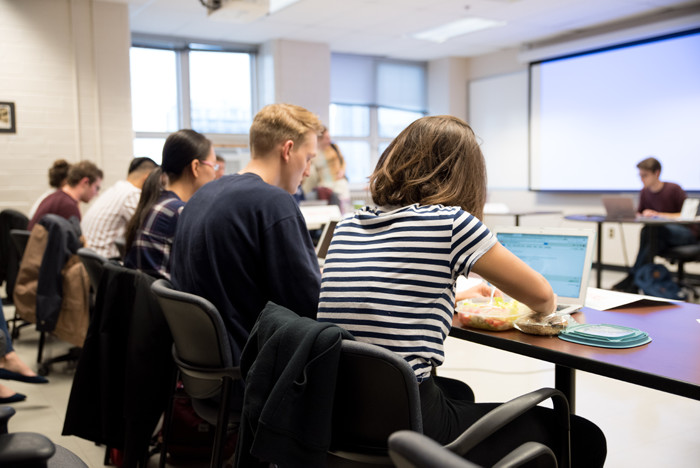
On Sept. 8, McGill launched Study Hubs, a safe-study alternative to the traditional library experience. The Study Hubs are individual study spaces that are set up in compliance with the university’s COVID-19 safety measures that include the mandatory use of masks and socially distanced study areas. These study spaces are available at the Mclennan-Redpath complex, the Nahum Gelber Law Library, and the Macdonald Campus Library.

Students can gain access to the Study Hubs by booking one three-hour time slot per day. Upon arrival, which can be at any time during the allotted time slot, students must check in with Student Navigators using their McGill IDs. Although the online booking system tracks seat numbers, seating is assigned on a first-come, first-serve basis as students arrive at the library.

Arielle Rosenthal, a Student Navigator at the Redpath Library, explained the Study Hub’s safety procedures.

“Masks are to be worn at all times in the library, except in your chosen seating place,” Rosenthal said. “There is no food allowed, but drinks are allowed in a sealed drink container, and cleaning will occur between each study period.”

U-Print printing services are also available in the McLennan-Redpath complex and the Nahum Gelber Law library to students who book a Study Hub time slot. Power sources are available at 85 per cent of the seats, though library resources recommend having fully charged devices upon arrival. While the new Study Hubs grant students access to library resources, they do not allow students to socialize as circulation in common areas is not permitted.

Lindsay Nissinoff, U3 Arts, who frequented McGill’s libraries before the COVID-19 pandemic, spoke about her reluctance to visit the Study Hubs.

“I am personally apprehensive about trying these new spaces, mainly due to the three-hour time limit and the rising number of COVID-19 cases in Montreal,” Nissinoff said. “While I praise the university for attempting to resume in-person activities, I personally would prefer to study outside while the weather permits.”

Mathilde Genest, U3 Arts and Science, has a different outlook on the Study Hubs.

“I was a little uncertain about the Study Hubs. However, after actually coming to the library and seeing all the measures that were put in place, I am looking forward to coming back,” Genest said. “I will say the limited time slots will pose a challenge, but I felt safe and the library was pretty transparent about the procedure. I feel like I need to be able to study somewhere else than home from time to time, and the Study Hubs seem to be the safest option.”

Katherine Hanz, liaison librarian at McGill, explained that the health of students and staff was prioritized during the creation of the Study Hubs which presented the best solution for staff and students. 

“Creating a safe space for study was a top priority with both the set-up and running of the Hubs,” Hanz said. “A number of measures have been put in place to keep students and library personnel safe. While the Hubs may not feel exactly like the pre-COVID library, we are so happy to be able to welcome students back in this capacity and to be able to provide a safe place for study.”

The new Study Hubs gives students a chance to use library resources while being able to study in a quiet environment. Additionally, the Study Hubs strictly follow the directives from the Quebec Ministry and McGill’s protocols for COVID-19. Nonetheless, there is still apprehension to use the shared spaces, especially as on Sept. 20 when Montreal rose from Level 1 to Level 2 under the progressive regional alert and intervention system for COVID-19.

The interview with Genest took place in French and was translated by the author.

News, The Tribune Explains

Tribune Explains: Association of Graduate Students Employed at McGill (AGSEM)

What is AGSEM? 

The Association of Graduate Students Employed at McGill (AGSEM) is the union to which teaching assistants (TA) and invigilators for McGill university belong. Founded in 1974 as the McGill Teaching Assistant Association (MTAA) and certified in 1993 as a union to represent Teaching Assistants, AGSEM is the oldest Teaching Assistant Union in Quebec and currently the largest labour union at McGill University. Comprising several branches, AGSEM operations are run by an executive committee, a bargaining committee, a Delegates council, and several other peripheral committees. In 2010, McGill’s student invigilators were similarly accredited as a union after receiving a 94 per cent majority vote in favour of unionizing.

AGSEM represents TAs and exam invigilators through its Collective Agreements, which are signed by the organization’s representatives and McGill’s Board of Governors. The Agreements define employees’ labour rights, which include freedom from harassment and unfair dismissal, as well as limits to hours worked. The most recent Collective Agreement for TAs expired in 2018, and a new one is expected to be voted on later this month. 

AGSEM and COVID-19

AGSEM recently criticized and annotated a draft of McGill’s “Directives for Teaching Staff Regarding In-Person Activities: Fall 2020” for failing to adequately address the rights of teaching staff. The union called for a more concrete plan to communicate the directives with its employees and demanded that TAs not be forced to assist classes in-person and through Zoom simultaneously. 

In April 2020, the McGill administration announced its decision to hire non-union graders for some summer 2020 online courses. This move sparked outrage among McGill’s graduate TAs and invigilators who saw the decision as explicitly anti-union, enacted solely to cut-back on costs. In addition to anger over McGill’s choice to hire graders outside of AGSEM, the union felt that the decision to raise online course capacity levels over the summer placed an additional burden on already overworked and underpaid TAs. 

As McGill adjusts to learning online with some in-person options, AGSEM has expressed that McGill’s employed graduate students deserve to be better compensated for working in virus-prone conditions. For those TAs and invigilators expected to assist with in-person learning opportunities, there is now an increased risk associated with their position.  

Unionization Drive for Teaching Support 

While graduate TAs have been protected by a collective agreement signed in 1993, McGill has added many non-unionized teaching support positions in recent years. Teaching support positions include markers, graders, tutors, note-takers, demonstrators, facilitators, mentors, course assistants, student assistants, academic casuals, and placement exam administrators. AGSEM’s bargaining unit has been actively engaged in an effort to unionize teaching support positions so that workers in these positions can profit from union benefits like negotiated fair wages, paid breaks, job security, access to office space and teaching resources, access to grievance procedures, and protections against workplace harassment and discrimination.

On Apr. 30, AGSEM petitioned to unionize teaching support staff. AGSEM and the Confédération des syndicats nationaux (CSN) are currently initiating legal challenges against McGill to ensure that the university is following the proper unionization process.

The upcoming TA assembly

AGSEM is holding a bargaining ratification vote on the upcoming TA general assembly on Sept. 30. Occuring after two years of collective negotiations, graduate TAs will have a chance to discuss and ratify their new tentative contract. Starting on Sept. 22,  AGSEM will be hosting a series of online presentations outlining the tentative agreement in preparation for the assembly.

McGill, News

Renaming of men’s varsity teams delayed indefinitely

Following the McGill administration’s decision to change the name of the varsity mens’ teams in April 2019, the Steering Committee assigned to find a new name for the teams by August 2020 has seen their work delayed due to COVID-19. Following Indigenous-led student activism, McGill Principal and Vice-Chancellor Suzanne Fortier announced in an email on Apr. 12, 2019 that a Steering Committee would be formed to select a new name. 

Deputy Provost (Student Life & Learning) Fabrice Labeau and Mr. Hubert T. Lacroix, a former McGill varsity head coach, are the co-chairs of the committee. Labeau attributed the delay in part to the magnitude of the process.

“There was [an] excellent response to the open call for name ideas, [and] the Steering Committee received more than 500 submissions,” Labeau wrote in an email. “[We take] seriously the responsibility of choosing a name that honours McGill’s long history of athletic achievement, and expresses the university’s values and principles. The Committee plans to conclude its work in the coming weeks. Part of this work includes doing the necessary due diligence before we publicly announce a new name.”

Tomas Jirousek, former Indigenous Affairs Commissioner of the Student’s Society of McGill University (SSMU) and leader of the #changethename campaign, highlighted the larger implications of the renaming process when it comes to Indigenous students and reconciliation.

“The McGill administration has a moral obligation to deliver a new name in a timely, and respectful manner, one which recognizes the impact and history of the Redmen name,” Jirousek wrote in an email to the Tribune. “A delay in moving forward with a new name acts as a barrier in moving towards that place of reconciliation.”

Jirousek understands the issue of the men’s team name as a significant decision, one of the many hurdles that need to be addressed by the McGill community.

“There are pressing issues facing Indigenous students at McGill, and the university cannot genuinely confront those issues while we are still grappling with the legacy of the Redmen name,” Jirousek wrote. “I am disappointed but not surprised in the length of time that it takes McGill to meaningfully address issues of colonialism on campus.”

While Labeau focused on the scale of the decision-making process, Jirousek feels that the process of renaming is in fact a simple one that is a matter of two choices. 

“Choose the McGill Martlet name, a name which our varsity women’s teams have championed, or open a process for choosing a name which actually honours Indigenous nations,” Jirousek wrote. “The administration should have been in contact with the SSMU Indigenous Affairs Commissioner during this process to properly explain how this issue […] has been impacted by [COVID-19].”

Jo Roy, an Abenaki U2 social work student, shared Jirousek’s concerns about a lack of transparency and communication between the Steering Committee and the student body.

“I only remember the call for name submissions going out last year [and] I have yet to see any information [or] updates from this committee,” Roy wrote to the Tribune. “Committees are usually struck by institutions as a means to signal that they’re doing something about an issue without actually doing anything [….]”

Regarding the impact that COVID-19 may have had on the process of selecting a new name, Roy expressed dissatisfaction.

“[It] feels like the committee meant nothing to the administration to begin with, [and] that the pandemic was just a convenient way for them to forget about […] the promise made to Indigenous students,” Roy wrote.“Everyday that a new name has not been chosen to replace that racist nomenclature is another day that [McGill is] unwelcoming to Indigenous students.”

Student Life, The Viewpoint

Left behind: The impact of the pandemic on international students

The beginning of McGill’s remote semester has been especially challenging for international students, who faced the additional barriers of visas, study permits, and border closures. International students will continue to face unique hurdles throughout the rest of the year, as many struggle accessing courses, academic help, and course materials from their homes across the globe.

For starters, it has become increasingly difficult to simply obtain a study permit. Many application and biometrics centres are closed due to public health restrictions. In response, the Canadian government launched a two-stage assessment process for study permits in July. The first stage of approval allows students to start their studies online, while the second stage approval requires students to complete the pending process and present their biometrics and medical documents to the visa officer. While school started three weeks ago, some students have not been granted their first stage approval until now.

Kushagra Chawla, U0 Arts, was one of many students who saw his Québec Acceptance Certificate (CAQ) process delayed due to the pandemic. 

“Firstly, I was unable to submit my documents on time due to the closure of the courier services,” Chawla said. “It took me a month to receive my CAQ. After receiving it, I saw the validity dates for the documents were missing. Fortunately, the department that handles these issues was kind enough to reissue me the correct document in two days.” 

Chawla added that these encounters often caused him to feel unmotivated and anxious.

Other than obtaining the necessary documents on time, students unable to travel to Montreal face many logistical challenges, from obtaining course materials to clashing time zones and spotty Wi-Fi.

Sarman Singh Chandhok, U0 Arts, is an international student who considered moving to Montreal in the fall. He shared his concerns about finding textbooks and course materials. He’s still adjusting with this situation with the help of ebooks rather than physical textbooks.

“I am worried about how I will get my textbooks,” Chandhok said. “I have been searching for the books online, as I can’t make it to Le James McGill Bookstore.” 

Although professors list required course materials at the beginning of the course, it is difficult to find certain textbooks in different countries, since they are often only available in Montreal. 

Sneha Vaishali, first year neuroscience master’s student, was prepared to start her master’s at McGill this fall. However, due to logistical problems, she was unable to enter Canada, which has affected her ability to carry out the research component of her program. 

“I was supposed to start working in my lab in May, but being unable to procure travel documents and the lockdown being imposed on many countries […] made the process very uncertain,” Vaishali said.

As Vaishali is not able to perform experiments in-person, she feels that it might be difficult for her to catch up once she is able to come to Montreal.

Students struggling with accessibility issues can reach out to McGill’s International Student Services (ISS) for support. ISS is offering a number of webinars and workshops, including rapid advising, to support students navigating immigration issues during the pandemic. Additionally, ISS has a program called The Buddy Program, which pairs new international students with upper-year international students to support their transition to university life.

These are challenging times for all members of the McGill community. To alleviate immigration-related pressures, Immigration, Refugees and Citizenship Canada (IRCC) announced that international students who were approved for a study permit to begin their program in Canada in May or June will be able to begin their program online without affecting their eligibility to eventually apply for a Post Graduate Work Permit. Previously, international students would have had to continuously study full-time in Canada for at least eight months to be eligible, and online study could render them ineligible.

However, this change comes alongside changes to the Quebec Experience Program (PEQ) immigration program, which are poised to make gaining permanent residency more difficult for international students after graduation. Students can lend their support to groups like Le Quebec c’est nous aussi who oppose this legislation, and advocate for their international peers as they face unique challenges this remote semester. 

Montreal, News

Concordia activists highlight challenges of human rights activism in 2020

On Sept. 13, the Concordia Student Union hosted an online seminar featuring Montreal activists discussing a wide range of subjects, such as systemic oppression against Indigenous Peoples, police brutality against Black people, and the Canadian government’s negligence towards marginalized people during the COVID-19 pandemic. The event was called “Police, Climate and COVID-19” and featured speakers Ellen Gabriel, Harsha Walia, and Sandy Hudson, activists who highlighted injustices plaguing Canada and the world today. 

Gabriel, Walia, and Hudson spoke candidly about the state of human rights around the world in 2020, arguing that though there is still a long way to go, the situation is not hopeless. The speakers agreed that systemic injustices are inevitably intertwined, and they stressed the importance of seeing the link between movements such as Black Lives Matter (BLM) and Indigenous rights movements.  

Ellen Gabriel, a human rights activist from Kanien’kehá:ka who has advocated for Indigenous peoples’ rights for nearly 30 years, emphasized the exhausting but necessary nature of the fight against colonization.

“For Indigenous people, [activism is] not a hobby, it’s what we have to do because we’re fighting colonization,” Gabriel said. “What I can’t stand are bullies, and that’s what the Canadian government is.”

Harsha Walia, a migrants’ rights activist, author, and lawyer based in Vancouver, BC, asserted that the Canadian government has left many groups behind when addressing the COVID-19 crisis, particularly those of the middle and working classes.

“You’re supposed to believe in the government,” Walia said. “Those who believe in that kind of myth, who think that the state and the government will take care of them, particularly in a health emergency, [suddenly these] middle class or even working class white workers […] realize [that they are] paying into this state structure that actually isn’t [beneficial].”

Sandy Hudson, founder of the Canadian wing of the BLM movement, noted that despite the ebb and flow of public support that typically characterizes activism, her organization has nevertheless been gaining momentum for years. Currently, the movement’s success has resulted in the cultivation of a new chapter with the goal of rallying to defund the police.

“We were seeing on the news a lot of discussion [in] Canadian media about Michael Brown and [the officer who killed him,] Darren Wilson, but not much about Jermaine Carby, [who was a Toronto man murdered by police], and nobody even knew the name of the officer who killed him at the time, Ryan Reid,” Hudson said. “I was upset about it. Many people in the Black community were upset about it.”

Hudson believes that the recent surge in anti-racist activism will not dwindle anytime soon.

“I do think that people truly do care [about civic engagement] […],” Hudson said. “I think that what’s happened this summer is that there’s been so much attention paid to the particular issue of police violence […] against Black people [and] […] Indigenous people. We’ve actually shifted culture significantly through our movement work, and you can’t really go back to a place of ignorance once you’ve gained the knowledge.”

Hudson also argued that what connects these movements are the injustices perpetrated by local police forces.

“Policing in our communities […] really targets our communities in ways that they don’t target people who aren’t Indigenous, people who aren’t migrants, [and] people who aren’t Black,” Hudson said. “The way that the state cracks down on particular communities and tries to keep us at the margins through the use of policing, I mean that’s a thorough line through all of our movements. This is a topic that really is just a human issue.”

In their concluding remarks, the speakers all agreed on the interconnectedness of today’s social justice movements. Gabriel explained that no injustice exists in a vacuum; one cannot discuss the police violence against Black people without also mentioning the exploitation of Indigenous lands.

“In human rights, we say all rights are interdependent [and] interrelated,” Gabriel said. “One right that is violated prevents you from enjoying all of your rights.

McGill, News

McGill residences fail to uphold pandemic safety guidelines

As COVID-19 cases rise throughout the province and outbreaks occur at multiple Canadian post-secondary schools, McGill University has by comparison appeared to weather the pandemic relatively well. However, the loss of the social aspects typical of the first-year university experience have impacted incoming students’ decision to live in residence this Fall semester, raising the question of how health and students’ safety can be balanced with Montreal nightlife.

Deputy Provost (Student Life & Learning) Fabrice Labeau sent an email to the student body on Sept. 9 that disclosed McGill’s “whistleblowing policy” and encouraged students to report unsafe activities happening on campus. Despite this measure, students in residence appear not to be complying with the regulations being put forward for their safety. Andrea Bloom, U0 Arts, who lives in New Residence Hall, believes that the university has failed to punish those who violate the health standards that they committed to uphold.

“I was once in an elevator interacting with a fellow student when I asked them where they were from, only to [have them] tell me [that] they were still in quarantine,” Bloom said. “[The student] said he was forced to go down to the cafeteria since the residence attendees failed to deliver the meals to his dorm. There is no logistical process to confirm whether quarantine rules are being met [….] Breaking rules within the residence […] is not even the most outstanding issue. It is mainly students going out in large groups to bars […] and then returning to the dorms.”

Western University has reported 39 COVID-positive students since Sept. 13, while McGill has only reported two positive cases. Emme Smith, U0 Science and resident of La Citadelle, noted the discrepancies between the safety policies between different student residences.

“Security has been rather intense in my building compared to the other residence halls, specifically concerning the number of people in a given room and sanitizing,” Smith said. “They watch over us at the front desk [of La Citadelle] and have confronted students, which is rare in New Residence [Hall]. Washing hands and sanitizing can only work for so long. I think McGill should require every student living in residence to get tested weekly to eliminate the possibility of asymptomatic students spreading COVID-19.”

Monique Lauzon, marketing and communications manager of McGill’s Student and Hospitality Services (SHHS), disagreed that students in residences are being placed in unsafe environments.

“Our self-isolation/quarantine protocol is in place,” Lauzon wrote in an email to the Tribune. “All-in-all, students have respected and followed this protocol. Staff is on site to monitor. Please note that under the protocol, students are permitted to leave their room to pick up food deliveries from the lobby as long as they wear their mask and sanitize their hands prior to taking the elevators.”

She pointed to the increased measures taken by SHHS to prevent COVID-19 cases in residences. 

“The safety of our students and staff is our foremost guiding principle,” Lauzon wrote. “Since the start of the pandemic, our residences staff have been working diligently to ensure spaces are cleaned and sanitized to the highest possible standards and that physical distancing measures are in place. Extra staff is deployed on-site to provide extra support and security for students.”

Students like Bloom attested to the lack of concrete enforcement measures, though Lauzon denied that those living in residence were violating rules without being punished.

“Extra staff is on site to monitor the situation,” Lauzon wrote. “[They will] intervene if or when necessary.”

Student Life

Tribune Explains: Accessing McGill’s remote mental health services

As students find their footing for the Fall semester, many may be wondering how to access mental health support through the university. If you read the emails sent out regularly by Fabrice Labeau, Deputy Provost (Student Life & Learning), you have no doubt heard of Keep.meSAFE, the digital therapy resource that the university recommends for those seeking counselling. Keep.meSAFE is but one of many remote resources available for students. The McGill Tribune breaks down how and where to access campus mental health resources this semester.

What are my options for mental healthcare outside Quebec?

Keep.meSAFE is a mental health counselling service offered to students in partnership with the Students’ Society of McGill University (SSMU) and the Post-Graduate Students’ Society (PGSS). The service provides 24/7 year-round access to licensed counsellors through telephone and mobile chat in over 60 languages. 

For students located out of the province, this may be the most accessible and affordable option for mental health care. 

How can I get non-clinical support?

The Peer Support Center (PSC), founded in fall 2013, is a service offered by and for McGill students. Serina Cole, the PSC’s Promotions and Outreach Coordinator, stressed the group’s commitment to inclusivity.

“[We strive] to be a confidential, non-judgemental support space for all McGill students,” Cole said. “Regardless of [students’] gender, sexuality, or race, we are here to listen.”

For the Fall 2020 semester, the PSC will be offering their services through Zoom. A peer supporter will be in a private room, wearing earphones at all times to ensure full discretion. During the 45-minute appointment, students are welcome to discuss anything and everything on their minds and trained students will be there to listen.

Cole stressed that the PSC’s goal this semester is to be as accessible as possible to McGill students, wherever they may be.

“Although we are known for our drop-in, in-person services, we have moved to an online format so [that] we can broaden our reach regardless of [students] are in the world,” Cole said. “Whether you want some help gathering resources, are feeling stressed out, or just need a listening ear, we are here for you.”

What about the McGill Wellness Hub?

The McGill Wellness Hub is touted as the university’s one-stop-shop for student health. The Wellness Hub offers services such as workshops, support groups, and resources. However, they are not accessible to all students.

In order to receive healthcare through the Wellness Hub, students must be located in the province of Quebec at the time of the appointment and consent to a telehealth appointment. For students currently located outside of the province, many professional services at the Hub are unavailable. 

Counsellors are booking both first-time and follow-up appointments, and psychiatrists are still available for appointments via video call if you are a pre-existing patient.

Local Wellness Advisors (LWAs) are now offering online booking, and Access Advisors are available to connect students with resources if they are unsure of what support they require. 

What other options are there?

If you or anyone you know is experiencing a crisis, you always have the option of calling local emergency services, or going to the nearest hospital. 

However, emergency care often isn’t enough. A key aspect of mental health care is preventative care: Providing consistent and long-term care for those with or without mental illnesses to reduce the amount of crisis care. 

For students studying from home, whether in Canada or abroad, familybe it chosen or biologicalcan be an incredibly valuable support. If you live alone and the isolation is impacting your mental health, go out of your way to connect in-person with your friends and loved ones, whenever and however it is safe to do so.

Science & Technology

Climate change takeaways from the 7th Annual Trottier Symposium

The COVID-19 pandemic has had an immense impact on people’s lives across the world. It has also, however, presented a learning opportunity for political leaders tackling global problems, namely climate change. These lessons were the theme of this year’s Trottier Symposium, hosted virtually on Sept. 16 by the Trottier Institute for Sustainability in Engineering and Design (TISED).

The symposium, entitled “Lessons from a Pandemic,” featured guest speakers Michael Mann, professor of atmospheric science at Pennsylvania State University, and Naomi Oreskes, professor of the history of science at Harvard University.

Oreskes opened the symposium with a lecture on why the general population should have faith in scientific findings. In her lecture, she outlined the evolution of scientific methodology and emphasized that while scientific findings are never absolutely certain, it is the best way of accessing the truth. Oreskes explained how science gains its credibility through repeated testing, the accumulation of evidence, and the consensus of groups of experts. 

“The relative risk of believing in science is far [lower] than not believing,” Oreskes said in reference to the United States’ poor response to COVID-19. “We should not trust scientists, but we should trust science.”

Scientific data has supported the theory of global warming since the 1950s, and there has been broad scientific consensus on the existence of anthropogenic climate change for more than three decades. Yet, special interest groups funded by fossil fuel companies, including ExxonMobil, and private citizens such as the Koch Brothers, still attempt to discredit climate science, usually to their own benefit

The tactics that climate change deniers use to resist activism range from dismissing the dangers of climate change to outright denial. These deflective and divisive maneuvers are a popular strategy of the fossil fuel industry, pushing the narrative that the responsibility of solving climate change rests on the shoulders of individuals, rather than governments or corporations.

Mann and Oreskes agreed that the challenge in reducing the impacts of climate change is not the absence of available technological solutions. 

“The technology that we need already exists,” Oreskes said. “We don’t need a miracle.”

Oreskes added that it was not enough for academics and policy experts to introduce innovative  solutions to solving the climate crisis. Politicians and the public also play an essential part in addressing climate-related issues. 

“If you don’t address the politics, it doesn’t matter how good the solution is,” Orekes said. 

Both Mann and Oreskes remain optimistic, despite the looming ten year deadline laid out by the United Nations Intergovernmental Panel on Climate Change (IPCC). The IPCC report stipulates that humans must limit global climate warming to 1.5 degrees celsius or else face the first stages of climate disaster. 

Mann commented that the “doomism” of some writers and environmentalists who believe it is too late to save the planet from warming is misleading. Around the world, renewable energy is becoming cheaper and carbon dioxide emissions are projected to plateau. Curbing the effects of climate change will require a twofold reduction in heat-trapping greenhouse gas emissions over the next 10 years—a target that Mann believes is still within reach.

Mann is also heartened by the success of grassroots activism, specifically in protesting the construction of natural gas pipelines across Canada and the U.S.

“We’re seeing investors unwilling to invest in pipelines because there’s so much opposition [and] because of the threat of litigation,” Mann said. 

Simply put, the challenge remaining for many climate activists is tabling climate policies in discussions with politicians.

“We don’t want it to be political, but it is,” Oreskes said.

Commentary, Opinion

Justice Ginsburg will continue to inspire women to study law

Studying law as a woman can be daunting. Despite that women are pursuing careers in law more now than ever before, we are still studying institutions created by powerful men, with the original purpose of serving those powerful men. Landmark Supreme Court of Canada decisions that promoted feminist ideals—such as R v Morgentaler, which legalized abortions—are not very far back in our rearview mirror.

Even today, sexism runs rampant in our courtrooms. For instance, Robin Camp, a former Federal Court judge, told a rape survivor in 2014 that she should have kept her “knees together.” Legal education itself often contributes to this cycle. In law classes, women are not always valued by their male peers. As a law student at McGill, there have been times in class discussion groups where I was the only woman, and I felt invisible at best and disregarded at worst. 

Although more women now have a seat at the table, much work remains to be done in order to secure gender equality in legal institutions. Contemplating this can be frustratingly sad. At other times, it inspires me to push forward and use my degree for good. Former U.S. Supreme Court Justice Ruth Bader Ginsburg, who passed away on Friday, Sept. 19, will live on in my memory as a motivation to pursue my legal education. 

When I accepted my McGill Law offer in 2018, I had aspirations for the education I was embarking on and my subsequent career. These ambitions came from women before me—lawyers and judges—that paved the way for women in law. Justice Ginsburg was the epitome of this. She fought relentlessly for gender equality and worked tirelessly to serve the American people until the day she died. As the second-ever female U.S. Supreme Court justice, RBG was a trailblazer. Strong women like her have inspired me to seek leadership positions and to advocate fearlessly for the issues in our community. 

Ginsburg is best known for her dissents. Diverging from the majority is often frowned upon within legal circles, given that we dislike confusion from the highest court. Yet, RBG spoke up when she disagreed, and did so with vigour. In this sense, Ginsburg inspires me to be, as she has been described, “tough as nails.” 

In the hours following the announcement of RBG’s passing, I felt sick to my stomach. Someone who I saw as a role model and as a champion for gender equality had become a political pawn within minutes of the announcement. It reminded me of a POLI 348: Gender and Canadian Politics reading from this semester—The Second Sex by Simone de Beauvoir. De Beauvoir argues that, through a process known as “othering,” the value of a woman is defined by her relationship to man. She becomes the “woman behind the man” instead of just being herself. In the context of Ginsburg’s passing, I found this to be especially true. Her personal achievements are being overshadowed by the effects her death has had on men, such as President Donald Trump and former Vice-President Joe Biden. Instead of being remembered for tenaciously working until the age of 87—at times battling bouts of cancer—to advance gender equality in the U.S., the media has focused on the implications her passing may have on the presidential election. Her legacy is being defined by her relationship to men and politics. 

This absolute disregard of an accomplished woman’s life disappoints me, but it is nothing new. 

Yet, Ginsburg made us feel like we deserve a seat at the table—because we do. In many ways, she actually gave us that seat. It is important to remember her for the profound effect she has had on women studying law and the progress she made for women in the U.S. In a world where women do not always get the praise that they deserve, let us not forget to give Ginsburg the applause that she merits. 

Read the latest issue

Read the latest issue