Latest News

a, Student Life

Crossword answers—Oct. 28, 2014

Across

4. Casper

6. Spooky

10. Cat

11. Krueger

12. Frankenstein

15. Skeleton

17. Alien

18. Jackolantern

19. Dracula

20. Shining

21. Jaws


Down

1. Rocky Horror Picture Show

2. Bats

3. Halloween

5. Costume

7. Gallagher

8. Shriek

9. Zombies

13. Kodos

14. Shyamalan

16. Ghoul


a, Martlets, Men's Varsity, Sports

The week that was for McGill Athletics: Oct. 28

Beyond the box score

Redmen Hockey

A road trip through northern Ontario netted the Redmen two wins over the weekend: A 5-2 victory over Nippissing and a 3-2 win against Laurentian. Centre Cedric McNicoll continued to add to his point totals, picking up two assists in each game, as McGill improved its record to 4-2-0 this season. Head Coach Kelly Nobes opted to give each of his goalies a start, putting backup Karel St-Laurent in net against Nippissing Friday, and starter Jacob Gervais-Chouinard between the pipes against Laurentian. St-Laurent stopped 28 of the 30 shots he faced, while Gervais-Chouinard was slightly less impressive, allowing two goals on 22 shots. The road trip was especially impressive considering the previous weekend, during which McGill split home games against the same opponents.

Martlet Volleyball

The Martlets did not drop a single set this past week, going undefeated in four road games against East Coast schools. McGill beat Cape Breton, Dalhousie, Acadia, and Saint Mary’s handily, allowing more than 20 points in a set just twice total. Setter Yasmeen Dawoodjee dictated the pace for McGill’s attack against the latter three opponents, including 32 assists in the win against Dalhousie. First-year middle Myriam Robitaille had perhaps the most impressive single-match performance of the week, racking up 15.5 points against Dalhousie, including 11 kills and one ace to go along with seven blocks. Robitaille also led the Martlets in points against Saint Mary’s, but did not play a major role in either of the team’s other wins. McGill continues its season with two more road games this week against Sherbrooke and Montreal.

Redmen Lacrosse

Co-captain Connor Goodwin netted two goals and a handful of assists in a 15-7 win over the Trent University Excalibur on Saturday night as the dominant Redmen finished the regular season undefeated for the second consecutive season. Eight different Redmen players scored, with junior midfielder Jake Gutman leading the way with an impressive four goals. McGill will ride a tremendous crest of momentum going into the CUFLA East playoff game against the University of Ottawa Gee Gees, and will once again set its sights on the gold medal game of the Bagattaway Cup.

By the numbers


2

— Power play goals scored by the Redmen hockey team in their 3-2 win against the Laurentian Voyageurs on Saturday.


3

— Number of seconds separating McGill’s first-place finisher Jullien Flynn from Laval’s Marguerite Plante-Dube in Saturday’s six-kilometre RSEQ cross-country Championship race.

4

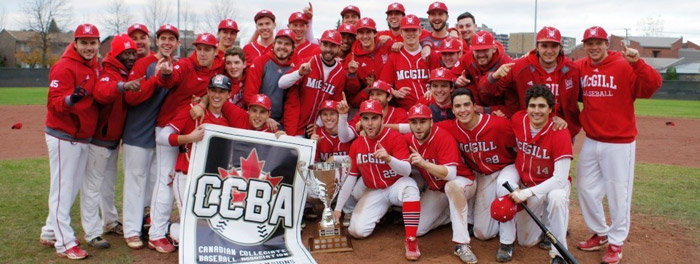
— Number of National baseball Championships won by McGill’s Redmen baseball team as of this Sunday. Previous titles were captured in 1994, 2006, and 2010.

a, News, SSMU

Fall General Assembly sees heated debates, over 700 in attendance

Last Wednesday, the Students’ Society of McGill University (SSMU) General Assembly (GA) saw extensive debate over motions such as “Calling on SSMU to Stand in Solidarity with the People of the Occupied Palestinian Territories.”  With 739 students in attendance, GA was hosted in the SSMU Cafeteria, with overflow held in the Ballroom, the Lev Bukhman room, and other rooms in the building. This GA discussed six motions, two of which were added from the floor during the assembly—one calling for solidarity with student protesters in Hong Kong, the other against the provincial budgetary cuts to the university. Four of the motions passed, including the motion for the nomination of the Board of Directors. All passed motions will require further ratification in two weeks by all SSMU members through an online vote.

Motion Calling on SSMU to Stand in Solidarity with the People of the Occupied Palestinian Territories

Hundreds of students expressed that they attended the Fall GA in order to voice their opinions on this motion.

“I think it’s a very important issue that should not be pushed under the rug the way it always has been,” U2 Engineering student Sara Albouz said. “I think it’s time […] for a student body like McGill’s to lead by example.”

Other students expressed concern over SSMU taking a stance on external politics in representation of the student body.

“I believe that SSMU […] should not take a stand on divisive political issues,” U1 Arts student Jordan Devon, one of the coordinators for the “No” campaign against the motion, said. “I think social justice is incredible […] but we should be taking a stand that represents all students.”

Ameya Pendse, U3 Arts, motioned to postpone the motion indefinitely, arguing that SSMU should not take a stance on the issues in Palestine and should therefore not consider the initial motion for debate.

“If we vote now to postpone this motion, we can actually come together on this issue and say ‘We don’t want to touch this,’” Pendse said.

Students who insisted that the debate on the initial motion was necessary emphasized the importance of having an open discussion about the motion itself, rather than removing it from consideration altogether.

“I find it ironic that people are arguing to postpone this debate in the name of free speech, when in fact shutting down this debate is shutting down anyone […] who has anything to say about this issue,” a U2 Arts student said.

The motion to indefinitely postpone the original motion was passed 402-337, after which the majority of students left the assembly.

“Around the world, people don’t have the chance to talk about these issues in an open environment […] without being judged,” Youcef Rahmani, U4 Arts, said. “[There were] peer support [volunteers] who are here, McGill [which] is a safe space itself, [there is] all of this framework and institution to facilitate this discussion [….] I think it’s just a shame to [have been] barred from talking about it.”

Other students noted the role of the GA in student engagement.

“Regardless of the outcome of the vote, I think one thing that was really salient throughout the debate was that a lot of debate was devoted to the GA itself,” Ryan Mitton, U3 Arts, said. “I think that if we can take one thing out of this […] it’s that while the GA remains the most perfect way at this moment to engage students at McGill, we should always be looking at how we can make it better for student engagement.”

Motion Regarding Action on Climate Change

Students voted in favor of the motion regarding action on climate change, which called for SSMU to join he Étudiant(e)s Contre les Oléoducs (ÉCO), a student coalition that demands blockage of pipeline projects in Quebec, termination of fossil fuel extraction, and recognition of Indigenous sovereignty over their territories and veto power over extraction projects.

“There is a very clear correlation with building pipelines and emission of [carbon dioxide,]” said SSMU VP External Affairs Amina Moustaqim-Barrette. “We cannot be complicit in the funding of fossil fuel industry […] and the destruction of our climate. It is time that students impose a strong voice against this.”

Moustaqim-Barrette was one of the movers of the motion and the individual who would be responsible bringing a policy regarding action on climate change to Council in Winter 2015.

Eric Taylor, U0 Engineering, spoke against the motion, stating the blockage of pipelines would only result in Quebec seeking overseas oil sources.

“This motion does not make a real change on climate change,” Taylor said. “I would much rather Quebec purchase its oil [domestically]. Real change needs to come from removing our dependency on oil, not from preventing our access to oil.”

Medicine Senator David Benrimoh said passing the motion would be moving in the right direction to change the current situation.

“We need to make it difficult to survive on oil,” Benrimoh said. “It’s going to be difficult to change people’s minds on things. Not building more pipelines makes the status quo more difficult to maintain.”

The motion passed 111-17.

Motion in Support of a Campus Free from Harmful Military Technology Development

Students voted in favor of the motion to require SSMU to renew its stance against the development of harmful military technology at McGill, and support campaigns to this effect.

Supporters of the motion emphasized that a university should not be conducting harmful military research that could be used in wars at all.

“Right now, we must start at the fact that a university is not a tool of war,” one student stated. “That’s why we must address this issue.”

Other students cited economic advantages to conducting military research, with individuals raising concerns that there was no contingency plan for finding other sources of future funding.

Jonathan Mooney, first-year Law student, voiced concerns over what the term “harmful” would entail.

“How do we distinguish between harmful and non-harmful military research?” he asked. “I think it’s a great motion, but not specific enough […. For example,] Drones are used to monitor weather [….] I want to get a better sense of what specifically we will be opposing.”

Two amendments to the original motion were brought forth by U2 Arts student Cadence O’Neal. The first amendment called for SSMU to stand in solidarity with those affected by harmful military technology, and the second called for SSMU to publicly condemn human rights violations by states, such as the U.S., Canada, and Israel, involved with McGill’s research on military technology. The first amendment was adjusted and added to the motion; the second amendment was later rescinded by the initial mover. Tensions rose in response to the amendments, and many returned to the GA in order to vote. The motion passed 146-11.

“I feel very happy that the motion was able to pass,” said O’Neal. “[But] I feel disappointed that my original amendments were not able to be included, because it would make SSMU take a stronger stance.”

Motion to Stand in Solidarity with Students and Protesters Demanding Democratic Government in Hong Kong

Students voted to postpone this motion, brought forth by Benrimoh, which called for SSMU to issue a statement of solidarity with the protesters in Hong Kong, to condemn repression, and to educate McGill students on the issue.

Some students expressed the opposition to the motion, stating that universal suffrage is not currently the default for all countries.

“Is this a perfect democracy? No. But this is progress,” U2 Arts student Eddie Lin said. “Should SSMU condemn other countries that don’t have universal suffrage?”

U2 Arts student Ava Liu moved to vote against the motion because, as the motion was brought from the floor during the GA, “it lack[ed] appropriate measures” to ensure that those who wanted to voice their opinions on the issue would be able to attend the GA.

Students voted 105-77 to postpone the motion, with many stating that it should be discussed at a later date due to a lack of awareness about the motion and in order to give other students an opportunity to give their opinion.

Motion for Solidarity against Austerity

Students passed a motion brought forth on the floor by Moustaqim-Barrette and other councillors, which called for SSMU to “denounce the provincial government’s austerity measures against McGill and other post-secondary institutions.”

McKenzie Kibler, U3 Arts, expressed concern that if passed, the motion could implicate pre-strike intentions, although Moustaqim-Barrette clarified that the motion would not be able to mobilize a strike as it stands.

Mooney cited a past campaign called “Je suis Michele” that also lobbied against the Quebec government on budget cuts that achieved change yet did not result in a strike.

“I think it is possible to take a stance on a motion like that and not go to strike,” Mooney said. “It means we’re going to stand up and say ‘We don’t agree with these cuts.’”

The motion passed 142-14.

The GA ultimately adjourned at 12:26 a.m., with SSMU President Courtney Ayukawa stating that she was impressed with the turnout and engagement during the GA, but that there are improvements to be made to the process.

McGill University Bookstore
a, McGill, News

Faculty of Management to move into McGill Bookstore

The McGill Bookstore will be repurposed to house the expansion of the Desautels Faculty of Management in Winter 2016 in a move to address the faculty’s space deficit, confirmed Vice President Michael Di Grappa at this weekend’s homecoming. The future location of the bookstore has yet to be decided. (more…)

a, Student Life

Healthy options for breaks during midterms

October’s various academic duties can seem pretty blindsiding after the hazy heat and carefree days of September. This season however, students can avoid stress by implementing a few wellness tricks. Below are some suggestions for fun and healthy diversions around McGill to ease minds of midterm woes—and won’t break the bank in the process.

Make a splash in free lane swimming

McGill students have free access to the McGill Athletics Facility Memorial Pool.  Recreational swims are offered daily at various morning, afternoon, and evening times. Swimming is a great way to relieve stress and burn off extra energy, as it offers a full body workout that increases muscle tone and flexibility. Swimming can also be a great meditative activity, and like any exercise, it releases the happy-feeling chemicals called endorphins. For those that still need convincing: Consider what a warm balmy pool will feel like in the midst of the first Montreal blizzard.

Calm minds with meditation

Meditation is an excellent way to alleviate stress and decrease anxiety. Benefits include stress management, increasing self-awareness, reducing negative emotions, and staying focused on the present. The McGill Office of Religion and Spiritual Life offers a non-denominational prayer and meditation space in the Brown Building as an option for on-campus stress reduction. For guided meditation, consider trying a free Zen Meditation session offered every Friday from 8:15 to 9:15 a.m in the Birks Building. This is perfect for calming down frazzled nerves.

Switch up the study routine with some caffeine

For those who need to study—but shudder at the thought of libraries—try some of the cafés near McGill that offer great ambiance and endless caffeine. Studying at cafés is a great way to shake up the routine, and allows students to experience Montreal culture. Recommended cafés close to McGill include Caffe Art Java, Cafe Chai, Pikolo, Arjuna, and Humble Lion, all of which have free wifi, coffee, and enticing pastries.

Try out a pay-as-you-go recreational fitness class

Shake out some stress and get the blood pumping at one of the diverse pay-as-you-go fitness classes offered by the McGill Athletics Facility. Rec Activities Cards are available for purchase in denominations of $10 or $30. One hour sessions only cost $2.61, and are guaranteed to work up a sweat and provide an energy boost. Class types include High Intensity  Interval Training (H.I.I.T.),  spin, power yoga, and zumba—fun and cheap activities which provide a body-boosting break.

Have a nature adventure on Mount Royal

Students are lucky to have a mountain gracing the side of McGill, with beautiful colours dotting the scenery. Bright hues of amber, crimson, and gold seem to be bursting from all directions. Immersing yourself in nature is a great way to relieve stress and increase well-being. There are plenty of trails to meander through, with a set of stairs that lead to a very rewarding view of Montreal.

a, Arts & Entertainment, Theatre

Theatre Review: Oh, What a Lovely War!

It’s commonly said that “comedy is tragedy plus time,” and few shows can capture that saying in as much of a literal sense as Oh, What a Lovely War! does. Originally created in 1963—well after the dust had settled on the horrors of both world wars—the production was intended to be an ironic critique of war itself and what it stands for, using the First World War as a backdrop. One hundred years later, Players’ Theatre brings the musical to its stage, and under the direction of Connor Spencer, deftly captures the comedic aspects without letting the seriousness get lost in the laughs.

The show is not a typical musical—one with plots and characters, romances and twists—instead, it’s styled after a Pierrot Show, far more of a circus or variety show than a musical. These Pierrot Shows were popular in the seaside towns of pre-war England.

Mimicking these shows, the Players Theatre designed the set with hanging candles in jars and bunting flags, making you feel like you’ve walked into a vintage circus.

The music is composed entirely of popular, sing-along songs of the time period, most of which were sung by the men in the trenches. A few, like “Gassed Last Night,” are clever parodies of such songs.

The show begins with the troupe playing war games, and quickly launches into an absurd satire of the bumbling generals, laughably naive citizens, and stiff-lipped aristocrats preparing for war. One of the memorable early scenes is a hilarious beauty-pageant of pompous European countries boasting their power and glory, with cultural stereotypes abound.

With the spirited songs, constant movement, and slapstick portrayals of the events of the early war, the cast brings a rousing exuberance to the first act. From propaganda anthems like “I’ll Make a Man of You” to the opening ensemble number “Row, Row, Row,” the cast proves its vocal strength.

Anni Choudhury stands out from the ensemble with his prominent comedic talent. In one of the most hilarious scenes, Choudhury plays a loud, buffoonish English sergeant directing his troops on how to properly fire sticks—or in one case, a parasol. The scene had the air of a Monty Python sketch, with Choudhury giving a performance reminiscent of John Cleese.

The second act takes a more somber turn, focusing on the trials and tribulations of the British army. While men are being killed by the thousands, the out-of-touch aristocratic generals are far more concerned with keeping up appearances and following who is being promoted than worrying about the travesties of war. Borrowing money from a subordinate comes as more of a shock to one general than the fact that his troops are being annihilated.

With Spencer’s direction, the juxtaposition of the first and second act isn’t jarring. The transition from uproarious political satire to a solemn revelation of the ‘victory’ of the great war is slow, allowing the audience to gradually sense the shift in tone. Yet even in its exploration of the grim realities of war, the second act combines the tragic truth of the war with dark humour. Daniel Carter in particular masters the delivery of this dark comedy as the English general who is committed to fighting no matter the costs because the alternative—surrendering to some foreign German and saving thousands of lives—is just unthinkable.

Vocal talent was not lacking in this production, particularly from the female cast members. Hannah McKillop’s soprano on “Keep the Home Fires Burning” captured the tearful desperation and exhaustion felt by everyone involved in the war effort, while Sophia Metcalf and Eleonore Lamothe shine in “I’ll Make a Man of You” and “Hold Your Hand out Naughty Boy.”

With its constant shuffling of sets, characters, costumes, and songs, the show is a unique theatrical experience; its talented cast and director manage to bring both the tragedy and comedy of the First World War alive in a performance bursting with delight and creativity.

Oh, What a Lovely War! runs from Oct. 22 to Oct. 25 at 8 p.m. at Players’ Theatre (3480 McTavish). Student tickets are $6.

McGill MOOC course Food for Thought
a, Features

Learning beyond the classroom

Six million. That was the conservative estimate given by an Oct. 2013 article in the Wall Street Journal addressing the combined enrolment numbers of edX and Coursera—two of the most popular Massive Open Online Course (MOOC) platforms—since the two websites were launched in 2012. Today that number has almost doubled, with 11.7 million users enrolled in courses across the two online learning platforms—2.5 million at edX and 9.2 million at Coursera—according to the two websites’ most recent data. With many leading North American institutions hosting MOOCs, McGill has not been idle, having released two original courses on edX thus far. In the process, McGill has begun to establish a culture of online learning, with growing momentum amongst faculty members to integrate elements of MOOCs on campus.

At 6’2”, David N. Harpp, a professor at McGill’s Department of Chemistry, casts a statement of authority in any room or screen that he occupies. Alongside his patient demeanour and lifelong passion for teaching, Harpp has won 12 academic and teaching awards—including McGill’s inaugural Principal’s Prize for Excellence in Teaching (2001) and the Lifetime Achievement Award for Leadership in Learning (2010).

Harpp began to push the boundaries of McGill’s academics once more last year when he heard about MOOCs’ growing popularity around the world. In particular, he wanted to ensure that McGill did not fall behind other top North American institutions, since many academically renowned universities have begun to move towards offering online courses. As a professor, Harpp was excited by the challenge.

“There was so much hype about it, it would have been odd to be left on the sidelines,” Harpp said. “If [the University of Toronto] for instance gave out or put together half a dozen [MOOCs] and McGill wasn’t doing anything, I just don’t think it looks right. But particularly Harvard and MIT, two of the top schools in the world, are working [hard at this].”

A university committee, led by Provost Anthony Masi, settled on edX as the preferred medium for McGill—the same one used by other top North American universities. Harpp and his colleagues decided to draw upon the help of McGill’s Teaching and Learning Services, where he could draft a team of full-time staff to completely redesign an existing course. CHEM181 (World of Chemistry: Food) was chosen as McGill’s pilot MOOC, a popular course Harpp had taught for 31 years with professors Ariel Fenster and Joe A. Schwarcz. Renamed Food for Thought, the course required extensive work to integrate it on McGillX—edX’s assigned name for McGill’s MOOC branch.

“There was a tremendous amount of preparation [done],” said Frank Roop, Video Producer for McGillX. “All the slides were […] updated [with] new pictures, [and] copyright [was] cleared.”

The team created homework and quizzes to accompany each week’s lectures, a format of engagement encouraged and supported by EdX’s platform. The professors also decided to create weekly videos to address any questions arising from the discussion boards in order to establish a more personal interaction with students.

The course exploded. By the time the 10-week instruction period had wrapped up, roughly 32,000 students had been enrolled in Food for Thought. The course posted a final rating of 4.96 out of five—an astonishingly high number given the number of participants.

“The feedback was off the charts, frankly,” Harpp said. “I was a little surprised that it came up as [well] as it did. I thought that maybe they would say, ‘Harpp mumbles a lot, Schwarcz talks too fast,’ or something like that. There was in fact none of that, which was also a surprise.”

The tremendous success of Food for Thought resulted in a flurry of reactions. McGill professors John Gyakum and John Stix launched ATOC185X (Natural Disasters) on edX later that same year. Furthermore, the success of the first course encouraged Harpp, Schwarcz, and Fenster to relaunch Food for Thought, with the course released for the second time this past Oct. 1.

The international audience that MOOCs provide has become a draw for professors looking to further their knowledge and understanding in their field of research. According to Gyakum, the conversations on the ATOC185X discussion boards provided the professors with input from individuals residing in different parts of the world—particularly those with the potential to contribute but may not have had the opportunity to attend university.

“A lot of the hazards that we discuss occur in various areas of the world that may not resonate that well with North Americans,” Gyakum said. “For example, we talked about cyclones in India, typhoons in Japan […] volcanoes in Indonesia, and so forth [….] The primary reason that I was most interested in working on the MOOC was [that] I feel very strongly [that] in order to tackle some of the world’s great scientific problems, we need a lot more input intellectually.”

Outside of field-specific research, online courses have also offered the opportunity for schools to experiment with different teaching styles, including peer grading and the encouragement of participation on course discussion boards. According to Laura Winer, the director of McGill’s Teaching and Learning Services, hosting MOOCs at McGill has allowed staff to better understand students’ learning habits.

“The ultimate goal is to improve learning for our students, [and to] improve and enhance interaction between the professors and students in large classes,” Winer said. “So we’re learning a lot about what we can do, how to do it better, and how to create engaging environments and interactions. We’re investing that in our McGill students. We’re learning how people learn.”

Despite the novelty of the MOOC movement, professors and other staff members have begun to recognize the potential for integrating online learning on campus. With 50 lecture halls at McGill outfitted with recording equipment, students enrolled in over-crowded courses can skip class in lieu of watching lectures at home.

“Many big courses don’t have perfect attendance, particularly at a school like McGill where a third of the students live remote from campus,” Harpp said. “[Students simply] watch many of the classes online […. CHEM181] can be as big as 800 people, and you can’t put 800 people in Leacock [132].”

Working with edX allowed Harpp, Schwarcz, and Fenster to recognize the opportunity to use their newly prepared MOOC to offer an updated learning format. For the next on-campus iteration of CHEM181 in Winter 2015, the three professors plan to release recorded lectures to students ahead of time, and use select class hours as additional information sessions.

“We’ve booked the room for the entire [semester,]” Harpp said. “We will not have a lecture every week, but probably half a dozen […] extra lectures or special lectures [….] We probably won’t ask questions about these topics, unless we record them.”

25 per cent of the grade for CHEM181 will come from online homework and discussion board interaction—a similar format to the grading system that McGillX uses. Yet the class will retain elements of a traditional university course, with a significant portion of the grades coming from two written midterms and a final.

This new format of teaching, titled ‘blended learning,’ straddles the line between traditional brick-and-mortar institutions and online education. A number of universities have begun to tentatively roll out blended learning programs, with the University of Waterloo and York University among the few North American campuses involved.

One of the greatest advantages offered by blended learning is the potential to create more engaging activities—particularly for courses with larger class sizes. Furthermore, there are increased opportunities for students to connect with each other and their professors.

“This is going to be the way of the future, where [students] are guided on where to get information, in addition to having personal contact with the professor,” Schwarcz said. “There’s just no point in redoing lectures exactly the same way you’ve done it in other years. It’s time that could be better oriented to educate in a different way.”

This semester, Gyakum and Stix will integrate three weeks of blended learning into ATOC185 (Natural Disasters), shifting two of their course topics from ATOC185X—the edX version—to their on-campus course. The class will watch lectures online and finish activities at home, in order to use class hours to conduct poster presentations.

“Both [Stix] and I view this as an experiment that we need to be involved with,” Gyakum said. “Obviously, the outcome may not be perfect from the get-go, but I think it’s very important that we work towards engaging more students [….] There’s no question in my mind that [students] are having the opportunity to go much deeper into a lecture than they otherwise would be able to, than [if they were] just taking in a lecture and having a midterm on the material.”

With an increasing number of faculty and students disillusioned with current teaching and learning methods, a shift towards online education appears inevitable.

“There’s a school of thought that the lecture format is becoming archaic in terms of all the electronic devices right now,” Schwarcz said. “It doesn’t make sense to give classroom lectures the same way we’ve always been doing it when they can be recorded and people can look at those lectures. You can use the classroom time for other things.”

According to Teaching and Learning Services’ Alexander Steeves-Fuentes, MOOCs and other forms of online learning will have a large impact on the future of courses at McGill.

“The biggest benefit for McGill will be in terms of adjusting how the curriculum is implemented and how students are instructed,” he said. “The majority of students these days do everything online [….] Why are we still doing things on paper? Why aren’t we building everything online?”

At the moment, however, MOOCs remain at the forefront of the conversation regarding McGill’s role in online learning. Two new courses are in the process of being developed for edX. Dr. Ian Shrier, a professor in the Department of Epidemiology, Biostatistics, and Occupational Health, is set to release Body101X—a course analyzing physical activity—on Feb. 25, 2015. The Faculty of Management will be launching a course next Fall titled Social Learning for Social Impact, which is being marketed as a Group MOOC (GROOC)—a MOOC designed to encourage people to collaborate in groups to share knowledge.

Yet a variety of factors—including funding from donors and available support staff—will most likely limit the number of MOOCs that McGill can produce.

“We cannot meet the demand [of professors that want to come on board],” Winer said. “We’ve had way more professors who would be interested in developing MOOCs or developing blended learning approaches than we have the capacity to handle with the current resources.”

Regardless, the impacts of online learning will most likely be felt across campus in the years to come.

“I think [blended learning] has to be a big part of our future at McGill,” Winer said. “How do we take advantage of the tremendous resources that are available online, the tremendous access to people around the world, [and] the collaborative nature of the work you do? To shut ourselves off from that would be an exercise in tunnel vision […. Blended learning] provides opportunities to really give students the best and most powerful learning experience possible, [and] MOOCs provide a vehicle to facilitate and expedite that process.”

a, Arts & Entertainment, Theatre

Pop Rhetoric: It’s a bird, it’s a plane, it’s a film franchise!

After months of speculation, DC Comics has released its five-year superhero film line-up, answering hundreds of assumptions, expectations, and unrealistic hopes in one succinct press conference. The films include the sequel to 2013’s Man of Steel, which will focus on Batman and Superman’s first meeting while simultaneously featuring multiple Justice League cameos, including Wonder Woman and Aquaman—whose feature-length films will be coming out in 2017 and 2018, respectively.

The portrayal ofwonder Woman by Gal Gadot will also mark the first time that a superhero film franchise will feature a woman in a leading role, excluding box-office flop Catwoman (2004). This is a huge step forward for the comic book world, which has often featured women in strong leadership roles on print, but shied away from having them play equally strong roles on the big screen. Additional films will be pedalled out for The Flash, Shazam, Cyborg, and Green Lantern, and Justice League is set to be released in two parts in 2017 and 2019.

For DC fans everywhere, as I proudly profess myself to be, this announcement is essentially the advent of a five-year-long Christmas. Beyond the fact that the Suicide Squad is getting its own film—something I didn’t hear anybody speculate upon—seeing that DC Comics is ready to burn and bury the disappointment that was Ryan Reynolds’ performance as Green Lantern could be considered a holiday in and of itself. However, this announcement has, unsurprisingly, been immediately questioned by people claiming DC is just too late to the feature film game, and will now be forever clouded by The Avengers’ (2012) multimillion dollar success. While I have to agree that DC has taken far too long to amp up its movie franchise, it’s an absurd statement to claim that DC is anything other than a powerhouse of superhero comics, TV shows, and films that have established a steady long-lasting fan base completely independent of Marvel’s enterprises.

Comparing and contrasting DC and Marvel is a hilariously contentious topic, and I would be lying if I said I had never considered ending a friendship over another’s preference for Iron Man over the clearly superior and far more fleshed-out Batman character. Of course, both franchises have things they do incredibly well and things that they fail horribly in, and while the two companies are clear rivals, they have successfully teamed up multiple times in the past making for some of the most interesting comic book story lines that have ever been produced.

Cinematically, it cannot be denied that Marvel does movies right—focusing on fantasy fun while also funding the talent to bring a solid balance of superhero whimsy and an occasionally strong action-laden plot is what made Marvel the frontrunner of superhero films in the past decade. On the other side of the coin, Marvel too has ‘mastered’ the creation of a multi-film plot that it can then suck the life out of until it is a contradictory carcass of its former glorious self, just for the purpose of continued profit (here’s looking at you X-Men). DC, meanwhile, has tended to focus in recent years on the slow build-up of incredibly gritty, dark, and plot-heavy live-action films and television series; and while these productions may not attract the same profit as Marvel’s spoon-fed humour and good-looking background characters, DC’s commitment to consistent character and plot development makes for a more interesting cinematic experience.

This latest film franchise will likely set the tone already established in Man of Steel—darkly, humorous, true to the comics, and committed to realism. This clear contrast from Marvel’s cinematic route goes to show the inherent differences in the two companies, which have long polarized fans into one camp or the other. The differences in production style between the two companies is what makes the world of superheroes so interesting—Marvel provides fantastical escapism through the capes of broad-shouldered men and women in skintight body suits, allowing for the cinematic escape that movies were initially intended to provide, while DC injects horror and villainy into recognizable cities, thus allowing the heroes of its universe to seem that much more possible, and that much more relatable.

a, Research Briefs, Science & Technology

Research Briefs—Oct. 21, 2014

Breakthrough in nuclear fission

Lockheed Martin Corporation (LMC), one of the world’s largest defence contractors—in 2009 it received 7.1 per cent of the Pentagon’s total funds—has had a major breakthrough in the study on the viability of shifting to nuclear energy. Led by Tom McGuire, the team demonstrated the feasibility of building a 100-megawatt reactor measuring seven by 10 feet—which would allow the reactor to fit on the back of a large truck. Considering the size of the Hoover Dam, which generates 4.2 billion megawatt-hours annually, a 100-megawatt reactor that small would completely change perspectives on energy and energy costs.

The original study in 2009 focused on nuclear fission—the process by which an atom’s nuclei is split to generate enormous amounts of energy. According to McGuire, the 100-megawatt fusion reactor will hopefully be built in the next 10 years, and can help solve the current energy crisis and climate change problems. In a world where energy use is predicted to increase by 50 per cent over the next generation, this breakthrough may be just what cities need.

Cancer metastasis reduced up to 90 per cent in mice

Cancer is very effective in invading host cells, mainly due to its ability to metastasis—the process by which  a tumour spreads through the body. Researchers at Stanford University have focused their attention on the proteins responsible for this spread, Axl and Gas6. The linking of these two proteins is one of the most important steps in the beginning of metastasis.

In order to prevent this interaction, the researchers engineered a decoy Axl protein 100 times more effective in binding with Gas6, forcing extremely low chances for normal Axl to bind to Gas6. To do this, the team built over 10 million minor variants of the Axl protein to find the one that best fit Gas6. By introducing their engineered protein, they were able to interrupt normal Axl binding to Gas6. As a result, the group found a 78 per cent reduction in metastatic nodules in breast cancer, and a 90 per cent decrease in metastatic nodules in ovarian cancer.

The research has the potential to provide a completely nontoxic process to fight cancer—unlike current cancer treatments. Furthermore, the team is looking to work with other proteins that bind Gas6, such as Mer and Tyro3. Though it will take some time to develop this research into mainstream therapy, it does offer hope in the ongoing search for a cure for cancer.

The Antimatter Microscope

Werner Trifthäuser and his colleagues at the Military University in Munich, Germany have been using positrons in order to find and analyze high quality images of the defects found in material surfaces. It is important to analyze and discover the defects in a material, because they affect its mechanical properties and can cause failure and fracture. Many engineering issues—such as any malfunctions aircraft wings and unstable and unsafe mechanical constructs—are caused by concentrated defects in the structure of materials used.

The focus of Trifthäuser’s research was to detect one of the most common material defects, ‘vacancies,’ which are locations within a material where a positively charged nucleus is missing. Consequently, positrons—the antimatter partners of electrons—are preferred in imaging, as they are very effective in finding vacancies. Without a nucleus, there are no electrons in the vicinity to react and annihilate the positron. Due to the completely opposite properties they have, matter and antimatter are highly reactive and their interaction results in total destruction—leaving nothing but energy behind. Therefore, by measuring the time a positron can survive in a section of the material, the researchers have been able to generate images that have unprecedented sensitivity to defects, compared to those from current methods of microscopy.

The band Royal Tusk
a, Arts & Entertainment, Music

Carriere keeps moving as Royal Tusk settles into its own

How does Daniel Carriere—lead singer and guitar player for Edmonton rock band Royal Tusk—relax after a stressful day on the road? It’s simple—he doesn’t.

“I don’t unwind as much as I just crash [and] like, pass the fuck out,” said Carriere. “It is exhausting. People think you play a show and you’ve done nothing all day ‘cause you’ve been driving and you should have time and energy, but it’s the contrary because there’s no routine. You don’t know when you’re gonna eat sometimes, especially with a tour like this because you’re following a bus and the drives can get pretty long.”

Despite the never-ending trial of touring, Carriere wouldn’t have it any other way. To him, a seasoned road warrior with over a decade of experience with his previous band Ten Second Epic, the road is home. Despite touring with a mostly new set of bandmates, the road experience never changes.

“The road is always the road,” says Carriere. “It’s almost like you get used to that as a home. I’m quite comfortable touring […] we’ve done it for so long. Right now [when on tour] I feel like I’m at my other home. It’s really tiring, I mean just travelling all the time, but something about the transience of it all is really kind of nice for me.”

Carriere is in the midst of Royal Tusk’s second tour in support of the band’s debut EP, Mountain. The EP, is in many ways, a culmination of ideas accumulated by Carriere and Royal Tusk bass player Sandy Mackinnon during their time in Ten Second Epic.

“It’s just a sample of what we were doing,” explained Carriere. “We toured so long in [Ten Second Epic] and for all that time we were just thinking of other music we wanted to play, so when we got a chance to start making this stuff we wrote like crazy. We went into the studio in New York with 25 to 26 songs and had to cut it down to six! I think it popped a cork of inspiration that we’d been saving for a long time”.

Mountain also reflects a more collective approach to songwriting than exhibited in the past by the musicians. Carriere suggested that this strategy was just as fulfilling as writing on his own.

“We’re all pretty competent at our instruments and we don’t tell each other what to do,” he said. “Everyone writes their own parts. It’s exciting because sometimes if you’re writing everything from the drum part to the last lyric, there are no surprises. You get to be more of a fan of the song if you’re surprised by it.”

As for Carriere’s two-band relationship with Mackinnon, Carriere couldn’t put his finger on what has made their partnership so special.

“I don’t want to try and get analytical about it,” he said.  “It’s just something about the chemistry of it all. I guess it’s effortless, we’ve just known each other so long. To have a successful band, you need to have successful relationships with people. That’s what keeps it ticking and makes it fun, because God knows this isn’t the easiest job to do.”

Read the latest issue

Read the latest issue