


Latest News

Science & Technology

Should consent for examinations under anesthesia be obligatory?

In recent years, the practice of obtaining consent from medical patients, particularly when conducting examinations under anesthesia (EUAs) of the sensitive pelvic, rectal, or prostate regions, has gained increased attention. While the United States has seen significant media coverage and regulatory changes on this issue, Canada continues to lag behind. Although there are professional guidelines in place requiring specific consent for EUAs, non-consensual exams persist in Canadian medical practice.

In a recent publication in Journal of Surgical Education, Phoebe Friesen, an assistant professor in McGill’s Faculty of Medicine, investigated the perspectives of Canadian medical students on the importance of consent for sensitive EUAs. Her interest grew from discussions with her students, where several expressed discomfort about performing non-consensual pelvic exams on anesthetized patients. 

“I felt disturbed when I heard about it,” Friesen said in an interview with The Tribune. “I think there is this ambiguity around consent [….] It’s often something practitioners never [properly] learned, sort of like this paternalistic practice that was just passed on, never questioned, and then passed on again.”

When medical students enter their clinical rotation years, they work with a variety of clinicians, each of whom models a different approach to patient care and consensual practices. This means that the attitudes around consent that a medical student ultimately acquires may reflect the practices of the particular clinicians they work with.

“You might have one [attending physician] that in the stereotypical way, sees it as primarily a legal act,” Friesen explained. “On the other side of the spectrum, students are going to see incredibly slow, attentive consent, where patients are given an opportunity to ask a lot of questions.”

During her research, Friesen distributed an anonymous questionnaire to 134 medical students across six medical schools in Canada. Of these, 119 completed the survey entirely. The respondents included 79 women, 33 men, and 9 students identifying as trans, genderqueer, two-spirited, nonbinary, or preferred not to answer. 

The results indicated that 72 per cent of students believed that specific consent for EUAs was a moral requirement, 20 per cent were unsure, and eight per cent did not consider specific consent for EUAs to be a moral obligation at all. Those who felt specific consent was necessary cited a variety of reasons, including patient rights, autonomy, respect, and integrity. Some students also expressed concerns that non-consensual exams could be exploitative or even constitute assault.

However, some respondents questioned the need for explicit consent, arguing that it could impede educational opportunities. 

Some men in medical school also shared that they feel they do not receive enough exposure to certain medical training compared to women in medical school. One respondent wrote, “I have now graduated medical school and still do not feel that my ability to perform pelvic exams is adequate.”

“[The findings on how] eliciting specific consent might be a challenge, particularly for male and racialized students, are really interesting,” Friesen noted.

Friesen pointed out a key distinction between how medical students and the general public view patient care. In the world of medicine, students may see patients as opportunities for education. However, outside of the medical field, the necessity of consent is understood as an obvious, ethical, and humane boundary.

“People outside of this world [of medicine] just see it as completely obvious that you would ask someone for consent,” Friesen said. “There just really seems to be a difference in logic.”

The findings of this study highlight the need for greater emphasis on ethics and consent in medical training. Friesen advocates for a more structured and mandatory curriculum that includes comprehensive education on these issues. 

“My hope is that McGill will be the first Canadian institution to put forward an explicit policy on this,” Friesen said.

Given that patients have expressed a clear desire for the requirement of consent for EUAs and that the study shows the majority of medical students support this practice, it’s clear that action must be taken to make this the standard moving forward.


Commentary, Opinion

Canada’s Online News Act is failing student journalism

When The Tribune’s Instagram account went dark last week, it wasn’t just a platform that disappeared: It was a bridge between the newsroom and the McGill community. As social media giants such as Instagram and Facebook block news content in Canada, university newspapers face a critical setback caused by the Online News Act (Bill C-18). The bill mandates Meta and Google to pay news outlets to share their content—but  big technology companies have refused, instead blocking individual publications’ pages. Their desire to prioritize capitalistic greed over basic compensation for journalists has limited institutional transparency and accountability. This legislation, intended to protect journalism, has instead jeopardized vital platforms for tomorrow’s reporters and editors—repressing not just current voices, but the future of the field itself.

Since its enactment in 2023, the Online News Act has triggered a standoff with Meta and Google, resulting in platforms like Instagram and Facebook blacking out Canadian news. For smaller outlets, social media isn’t just a distribution channel. It’s a tool for engaging directly with readers in a way legacy media cannot replicate. While social media platforms have always been flawed—promoting sensationalism, censoring important topics, and prioritizing engagement over accuracy—they have also served as an equalizer in a media landscape dominated by legacy outlets. For university newspapers, social media offers a unique opportunity to connect with readers on their terms, share stories directly, and engage in real-time conversations. This connection is particularly valuable for smaller, resource-strapped publications, which rely on platforms like Instagram to amplify their coverage and promote a sense of community. Losing this access hurts these outlets’ distribution, but it also diminishes the impact of the work they produce.

Alternative news outlets, including student papers, don’t just report: They engage, challenge, and reflect the communities they serve. They provide a space for voices to be heard, fostering conversations that might otherwise be overlooked in mainstream media. By cutting off access to their social media platforms, big tech has weakened the link between these publications and their audiences, leaving critical gaps in public discourse. Tech giants’ decision threatens the core values of inclusivity in journalism, which seeks to give every voice a chance to contribute to the larger narrative. These publications often tackle issues that mainstream outlets overlook, from student activism to institutional accountability, striving for investigative reporting and amplifying the voices of marginalized communities. 

Big tech’s reaction to the Act risks silencing these stories and stifling the next generation of journalists before they even get a chance to begin. At McGill, where there’s no journalism program, student publications are the only way future reporters can learn about the field, tell impactful stories, and build portfolios for a potential career. Journalism thrives on a diversity of voices, perspectives and platforms. When a few giants dominate the media landscape, discussions narrow to prevent critical stories from being told. What good is supporting journalism if the end result is fewer voices, not more? 

The social media bans also raise questions about fostering dialogue, holding power accountable, and ensuring that diverse perspectives are heard. By limiting access to platforms where these conversations happen, big tech undermines these ideals. In the process, they may alienate young readers, many of whom rely on social media as their primary source of news. In 2023, 62 per cent of Canadians aged 15 to 24 reported obtaining their news and information from social media platforms, compared to 18 per cent of older Canadians. For a generation already skeptical of traditional media, this lack of accessibility will further erode trust and engagement with journalism as a whole. Tech giants’ refusal to comply with the bill thus weakens the power of communities to organize and stand up against injustice. Without accessible platforms for sharing information and amplifying urgent causes, collective action becomes far more difficult, undermining the ability to protest and demand accountability.

Open access to information is not optional—it’s the foundation of a thriving democratic society. By making it harder for news outlets and journalists to connect with their audiences, big tech endangers the future of news that it claims to protect. Canada needs to find a way to balance the scales between tech giants and smaller publications without crushing the voices that will define its media landscape in years to come. When The Tribune’s Instagram went silent, so did its vital link to the McGill community. If tech companies cannot collaborate with the government to increase accessibility, the future of independent journalism–on campus and beyond–will be left in the dark. The standoff following the Online News Act is not just economic but existential, threatening the very soul of journalism.

Out on the Town, Student Life

Save big, live better

As the festive season winds down, many students are looking back on their extravagant holiday spending with regret. With school back in swing, Valentine’s Day around the corner, alongside countless club events, parties, and Igloofest, reigning in spending can seem impossible. One easy way to stretch your budget is to take advantage of student discounts whenever possible. Luckily for you, The Tribune has done a little research and has compiled some of the best deals in town.

3 Brasseurs732 Rue Sainte-Catherine
This restaurant offers two irresistible student deals: Get 10 items for just $10 CAD,  or get 15 per cent off your meal (excluding drinks) with your student ID. Bonus perk: By showing a ticket from a show or cinema, you can also enjoy 15 per cent off your meal.  

Bulk Barn – 1616 Rue Sainte-Catherine | 5445 des Jockeys
If you’re looking to stock up on affordable snacks and ingredients while also saving up, Bulk Barn is the place for you. Students get a 15 per cent discount on Wednesdays and they offer a 15 per cent discount on your purchase on Sundays if you bring a reusable container.  Not only is it budget-friendly, but it is also sustainable! Don’t forget to bring your student ID.

Metro – 3575 Avenue du Parc Suite 5100
Metro offers a 10 per cent student discount for purchases over $50 CAD every Monday, Tuesday, and Wednesday. This is perfect if you’re trying to do your groceries without hurting your wallet.

Marché Adonis – 2173 Sainte-Catherine Ouest 
Students can benefit from a 10 per cent discount during weekdays at Marché Adonis by showing their student ID. The Tribune also recommends consulting their weekly flyers, as they often offer additional discounts. 

B.Cycle Spin2000 McGill College Avenue #140
If your New Year’s resolution is to exercise more, B.Cycle has got you covered. With various locations in Downtown, Westmount, the Old Port, and Rockland, they offer an enticing variety of spinning, interval training, pilates, and TRX bar sequences classes. Students get 28 per cent off each class and 31 per cent off of a monthly membership. Simply fill out their student form to unlock the reduced fees.

Via Rail
Via Rail allows you to travel comfortably by train, offering free Wi-Fi onboard, power outlets at the seat, food service, and spacious bathrooms. They have sales every Tuesday on last-minute deals and extend a McGill VIA discount if you are travelling for a university-sponsored or paid trip across all fare types, excluding the Escape Fares. The discount is also applicable for faculty and staff personal leisure trips, allowing up to three additional travellers. 

DriveSafe
If you are ever in need of a late-night drive, this perk is for you. DriveSafe is a free transportation service run by the SSMU, operating on Thursdays to Saturdays from 11 p.m. to 3 a.m.. Volunteers drive students to and from anywhere on the island of Montreal, Montmorency metro, Longueuil metro, and Kahnawá:ke. This service is especially helpful for commuters or those heading out late, braving the cold weather. To get a ride, simply call their dispatch on their website or fill out their request form.

WalkSafe
Similarly, WalkSafe offers a safe accompaniment service for walking at night, including on public transportation. Available during the Fall and Winter semesters, the service operates Sunday to Thursday from 9 pm to 12 am and Friday to Saturday from 9 p.m. to 3 a.m. You only need to fill out their request form.

Honorable mention : Poulet Rouge McGill – 698 Rue Sainte-Catherine
Poulet Rouge, a beloved Québécois restaurant chain, specializes in customizable chicken bowls with rice and vegetables, offering vegetarian, Halal, and gluten-free options. Until May 1, you can enjoy a 15 per cent discount by showing your McGill student ID card for the 2024-2025 school year. The deal applies to regular-priced orders and does not work with other offers or promotions. It’s an ideal destination for a budget-friendly lunch near campus, as their meals will fill you up for the remainder of the school day.

Art, Arts & Entertainment

Unravelling preconceived notions about contemporary art with ‘Ravel Ravel Interval’

When I find myself pushing open the heavy glass doors of the Montreal Museum of Fine Art’s Contemporary Art Square, I am admittedly apprehensive. I’ve never been drawn to contemporary art pieces, often finding that they lean so esoteric as to feel alienating. My expectation for Anri Sala’s piece, Ravel Ravel Interval (2017), is the same. 

When I enter, and the door slams shut behind me, I am greeted by a dark hallway and the delicate sound of piano beckoning me forward. Entranced by the music, my cynicism seems to dissolve in an instant. As I continue to walk down the hallway, the piano gets progressively louder. I reach a doorway at the end of the tunnel and am met with an open room containing two projector screens with a two-metre gap between them. 

The screens feature two hands; one belonging to Montreal pianist Louis Lortie and the other to French pianist Jean-Efflam Bavouzet, playing Maurice Ravel’s Left Hand in D Major (1929-1930). The concerto is a one-handed piece commissioned by Paul Wittgenstein, a pianist who lost his right arm in the First World War. 

I enter the room and sit on one of the benches in front of the piece. The projector screens are translucent, which allows viewers to see both hands playing simultaneously. Sala’s camera work is intimate, capturing the concerto at eye level with the pianos’ keys. The two disembodied hands begin their ghostly melody in sync, dancing about the ivory as if performing a pas de deux. 

As they continue to play, the hands grow separate from one another: While Lortie tickles the low keys, Bavouzet is on the opposite side of his screen, striking the high ones. Even though both pianists play the same piece, their motions are entirely different. In certain moments, one hand will pause on a rest that the other has yet to reach, while the other continues alone, the orchestra shifting into an impromptu solo. The unique playing styles of both artists become noticeable in the observable distance between them, highlighting the divergences that define the breadth of human creativity. The notes of the pair of pianos tumble against each other as both artists align and separate, providing a layered melody that embodies the stratified nature of individuals within a society. 

Eventually, an unseen orchestra joins both pianists; dramatic strings and delicate winds intensify the piece’s pathos. As someone not well-versed in either orchestra or contemporary art, I am shocked by Sala’s piece’s enrapturing quality as I sit facing a combination of the aforementioned forms. The close-up shots make one feel present in the playing of Ravel’s concertos, the distant yet equally visible players allowing viewers a certain level of agency in which pianist’s rendition they wish to participate. Sala pans out as the music reaches its crescendo to feature a broader view of the piano while the orchestra booms in the background. 

The volume and speed of the pianists’ playing rope you in before the experience seemingly ends in a quick cut to both artists’ hands hanging limp, their pianos absent. After following the piece’s life through wavering trills and sharp notes, this feels almost like a death. 

Suddenly, the stillness is interrupted by both hands waving slowly as the orchestra recommences. Sala then cuts to the beginning of Ravel’s Left Hand in D Major, and the whole piece starts anew. As I exit the room and back out the dark hallway, I feel that I—similarly to the two pianists—am experiencing a fresh beginning: A positive relationship with a previously dismissed art movement. Anri Sala’s Ravel Ravel Interval is the perfect exhibit for those wishing to be pulled vigorously into the sphere of contemporary art. Once you open those doors, there is no going back. 

Anri Sala’s Ravel Ravel Interval is on display at the MMFA until Apr. 27. Tickets are both available online and in person. (Free for those aged 25 and under). 

McGill, News, SSMU

Technical difficulties at the McGill Students’ Nightline leave callers and operators at risk

Following an upgrade to McGill’s phone infrastructure in February 2024, the McGill Students’ Nightline has been experiencing difficulties with its phone system. The Nightline is a student-run organization providing confidential active listening services, dependent on telephone infrastructure provided by McGill. Despite attempts to resolve these difficulties, the Nightline remains without the resources it needs to operate safely and effectively.

The Nightline provides confidential, anonymous, and non-judgmental listening services to the McGill community, available seven days a week, from 6 p.m. to 3 a.m..

Ava Fuchs, External Coordinator of the Nightline, told The Tribune that she cannot publicly disclose the exact nature of the problems the Nightline is experiencing, out of interest for student safety. 

“I can’t disclose exactly what the issues are, but they are related to both volunteer and caller safety,” Fuchs said. “Our volunteers aren’t able to provide all of the functions that we normally would want them to. It’s also related to the safety of the caller if they were in a crisis situation.”

The problems began in February 2024, when the Nightline transitioned from using a private phone system independent of McGill to a newly installed network shared by the whole university. 

Hamza Abu Alkhair, the recently appointed Director of Clubs and Services at the Students’ Society of McGill University (SSMU), told The Tribune that McGill began migrating its phone systems to Cisco’s Unified Communications System (UCS) in 2023. All new phones installed at McGill are connected to the UCS.

“In the late Fall of 2023, Nightline requested that their phone system be upgraded and UCS was the only available solution,” Abu Alkhair wrote. “Nightline have had their new phones active since February 2024.”

After approaching SSMU with the Nightline’s difficulties in Fall 2024, Fuchs says the Nightline executives received a tepid response, and that SSMU failed to find a solution.

“We tried to get [SSMU] to get [McGill IT Services] to change [the phones] back, or get more information, or get maintenance, but they’ve been pretty unresponsive,” Fuchs stated. “We’ve been […] on them, and just nothing’s happened. They’ve tried to do a couple of things, and they’re like, ‘It should be working out,’ and it just doesn’t.”

Abu Alkhair acknowledged the issues the Nightline has been experiencing following McGill’s migration to the UCS, and confirmed that all phones used by SSMU have similar problems.

“We have been working with Nightline’s external coordinator and McGill IT to get these issues resolved since September,” Abu Alkhair wrote to The Tribune. “We have also been coordinating with Nightline and a McGill technician who has been directly in touch with Nightline about these issues.”

Despite SSMU’s efforts, the Nightline’s issues still have not been resolved.

“McGill went directly to Cisco about [these] issues just before the holiday break and they recommended a reboot of the UCS system,” Abu Alkhair wrote to The Tribune. “This was tested by Nightline in early January, but [the system] still isn’t working.” 

SSMU President Dymetri Taylor says he was only recently informed about the issues the Nightline has been experiencing, but affirmed that SSMU is working to find a solution. 

“This is something that has newly cropped up on my radar,” Taylor wrote to The Tribune.  “As far as I’m aware, we’re looking into getting them the new and necessary phones to replace the old ones.”

Despite the technical difficulties, the Nightline continues to serve the McGill community. Fuchs informed The Tribune that the Nightline plans to expand its operations to make its services more accessible for a bilingual student community.

“McGill Students’ Nightline will begin implementing a French language chatline on Wednesdays and Fridays starting in February,” Fuchs wrote. “This new feature is a great way for us to make our services accessible to McGill students and members of the community who feel more comfortable chatting in French.”

McGill, News, SSMU

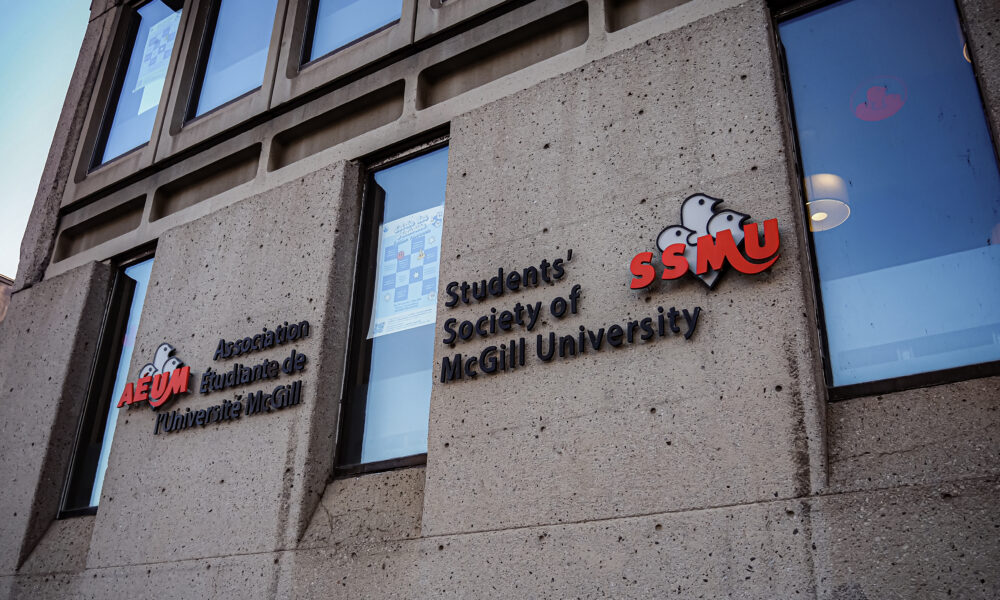
SSMU Board of Directors rejects proposal to increase signatures needed to submit a question to referendum

The Students’ Society of McGill University (SSMU)’s Board of Directors (BoD) met on Jan. 21 to discuss proposed changes to referendum processes and a motion to increase gender-neutral washrooms in the University Centre.

First, the Board discussed Elina Qureshi’s resignation as a Nominating Committee Director. The Board appointed member-at-large Fawaz Halloum to take her position.

SSMU President Dymetri Taylor then stated that Halloum’s term on the Nominating Committee should last until May 31 rather than Nov. 14, as Quereshi had been appointed as a short-term director. Halloum questioned this reasoning, as in the past, members-at-large serving on committees remained until their terms ended, regardless of their predecessor’s title. As per precedent, the Board decided to end Halloum’s term in November 2025, planning to review the issue further at a later date. 

The Board then discussed the motions for ratification approved at the Jan. 16 Legislative Council Meeting. First, the Board unanimously ratified the Motion Regarding the Internal Regulations of Representation and Advocacy, which stipulates that SSMU University Affairs take into account the identity and lived experience of candidates when appointing representatives to the McGill Senate—one of the university’s highest governing bodies. 

The Board also ratified the Motion Regarding Interim Club Status for the Green Olive Chinese Christian Club and the Motion Regarding Constitution Changes for the McGill Students Chinese Music Society

Taylor then summarized the Motion Regarding Interim Provision of Elections and Referenda, which aims to adjust the structure of SSMU’s referendum and executive election process by shortening campaign periods, altering the structure of debates, and increasing the number of signatures required to submit a referendum question to the ballot.

Taylor proposed the current requirement of 100 signatures be increased to 250 to represent approximately one per cent of the student body. He also introduced a mandate that the Legislative Council and the executive board must review submitted initiatives at least two weeks prior to the referendum, to prevent initiatives that are legally unfeasible from reaching the ballot, then having to be annulled. 

SSMU Vice-President (VP) External Affairs Hugo-Victor Solomon noted that multiple students have approached him with apprehension about the Motion, expressing concerns that these additional barriers would discourage engagement in the referendum process. 

“The way that this is being perceived by a lot of students is that SSMU is trying to make it hard for students to participate in democracy,” Solomon said. “This is a pretty consequential point given the ongoing case regarding the Policy Against Genocide [in Palestine].” 

Halloum also expressed concerns with the Motion, arguing that the Board’s review of student-submitted initiatives should only pertain to the legal implications of motions, not their subject matter.

“Complicating direct democracy is not the direction we should be going,” Halloum said.

Taylor accepted these critiques as friendly amendments, agreeing to keep the number of required signatures at 100. The Board ended the non-confidential section of the meeting by unanimously ratifying the Motion.

During the confidential section of the meeting, the Board debated the Motion Regarding SSMU Building Gender Neutral Washrooms. SSMU VP University Affairs Abe Berglas proposed the Motion on Dec. 5, and its ratification was postponed during the previous BoD meeting. This Motion stands to increase the number of gender-neutral bathrooms in the University Centre, and has drawn opposition from some Directors who claim that these washrooms would impede safety for some women students.

“The motion is waiting for legal review—but even after being seen by our lawyers, Councillors and Directors have indicated that their concern is about women’s safety,” Berglas wrote to The Tribune. “It’s upsetting to hear that they believe women’s safety is at odds with non sex-segregated spaces, especially when Trump used the same talking points to justify his executive order.”

Moment of the meeting: The Board put the Motion Regarding Gender Neutral Washrooms back under legal review, delaying its ratification once more. 

Soundbite:

“By taking it to the next Board of Directors instead of involving the Legislative Council, we are taking the Legislative Council out of this referendum process.” — Simone Brown, SSMU Policy and Advocacy Coordinator, on the Motion Regarding Interim Provision of Elections and Referenda.

Sports, Volleyball

The Tribune’s McGill sports moment of the week

Martlets Volleyball has extended their win streak to five this weekend, with two shut-out games against the University of Quebec at Chicoutimi (UQAC) at Pavillon sportif. The games spotlighted graduate student Elyssa Lajmi, who led the team on both offense and defense. In the first game, Lajmi scored 19 points—16 of which were kills—and put up 14 digs and five blocks on defense to halt UQAC’s advances. In the second game, the power hitter from Thionville, France scored 12.5 points with an impressive three aces. 

The Martlets won both matches in three-sets, though not without some competition. On Friday, they won their sets 28-26, 25-14, and 25-12, breaking UQAC’s team early and riding out the rest of the match. On Saturday, UQAC showed great effort, but still fell short to the Martlets 25-17, 25-22, and 25-20. The victory showcased the team’s offensive resilience and unwillingness to give up. Moreover, though Lajmi’s performance was key, the game was nothing short of a full team effort as Coach Rachèle Béliveau made great use of the bench

This season is also a special one, as it marks the end of Coach Béliveau’s career at McGill. Béliveau announced in early January that she would retire after this year. 

The Martlets are now 9–7 in the Réseau du sport étudiant du Québec (RSEQ), where they are tied for third place with Laval University and UQAM. McGill has five games left until the RSEQ playoffs and aim to defeat UQTR this Friday, Jan. 31 at Love Competition Hall. This past weekend may act as a tipping point in the Martlets season as they strive to take home the RSEQ championship banner in March. 

With this past weekend’s successes, Martlets Volleyball is on its way to a second-place spot in the conference and a triumphant playoff season. 

Science & Technology

Zooming in on the streets of Montreal

Streets play a vital role in our day-to-day life, and their layout can affect everything from physical health to social connections and mental well-being. Well-designed streets that prioritize pedestrian safety and offer accessible, active transport options support encourage a healthier lifestyle. However, these thoughtful design features aren’t always equitably distributed across neighbourhoods. 

A recent paper published in the journal Case Studies on Transport Policy studied the quality of streets across Montreal, considering socioeconomic factors like neighbourhood income and population. The research team, which includes Hisham Negm, a doctoral student at McGill’s School of Urban Planning, examined various neighbourhoods around Montreal to conduct their study.

“The goal of the research was to understand how streets are designed differently in Montreal, and if the socioeconomic characteristics of the neighbourhood impact how streets are designed,” Negm said in an interview with The Tribune

To conduct this study, Negm and his team first categorized Montreal neighbourhoods according to two key factors: Population density and income. This allowed them to select and compare streets of similar population density but different income levels to study if income level was a factor affecting the quality of street design. The team focused on microscale street elements—small-scale features relating to the physical condition of the street that can have a disproportionate impact on road users. Microscale street elements that positively impact street users, such as well-maintained sidewalks, greenery, and traffic calming measures, were used to assign a quality score for each street based on how many of these features were present. 

Negm explained that examining streets at the microscale level allows researchers to look beyond common, but simplistic, metrics like the width of a street or its connectivity to other roads.

“[It’s not about] a bird’s-eye view of the street,” Negm said. “[It’s about] looking at the details—the elements that make the street what it is for the people who use it.”

To gather data, the team used MAPS-Mini, an adapted version of Microscale Audit of Pedestrian Streetscapes (MAPS), a street imaging tool that focuses on the microscale features that affect pedestrians and cyclists. They also relied on Google Maps and in-person observations to assess the presence of these features.

The study revealed two key differences between the streets of higher and lower-income neighbourhoods. 

“First, streets in lower-income neighbourhoods tended to be of less quality [according to] the MAPS-Mini tool, and second, street assessments done by Google Street View were less reliable than those done on-site for those streets,” Negm explained.

This means that, in Montreal, income level does appear to impact the quality of street design, with lower-income areas generally having fewer of the features that contribute to a safer and more enjoyable street experience. 

While the study focused on comparing street features, it did not explore how these differences in design affect residents’ well-being. 

“We didn’t study how [these built environment features] impact residents directly, but we know that these features vary across different income levels,” Negm said.

Addressing these disparities doesn’t necessarily require a complete overhaul of street designs. In the short term, targeted improvements to the specific features lacking in lower-income areas—repairing broken sidewalks or adding more green space—could have a significant positive impact with a relatively small budget and short construction times. 

Negm emphasized the importance of directing resources to the areas where they’re needed most. 

“If you can spend a little money to make a huge impact, that’s where the resources should go,” Negm said. “For example, if you have a sidewalk that is broken, fix it, and consider expanding it to improve the overall quality of the street.” As Canada continues to urbanize, with over 80 per cent of Canadians living in cities today, well-designed city streets are more important than ever. Ensuring that neighbourhoods—regardless of income level—have streets that prioritize safety, health, and social interaction is key to improving the quality of urban life for all citizens.

Arts & Entertainment, Books

Mothers, daughters, and the spaces in between

Hanna Stoltenberg’s debut novel Near Distance is a quiet look at a mother and daughter occupied by different concerns. Karin, the mother, is worried she is losing her youth, and Helene, the daughter, is worried she’s turning out like her mother. They struggle to bridge this emotional gap between them; things go unsaid, old wounds resurface, and tensions flare over a spilled cup of coffee. Yet through all of this, Stoltenberg captures the authenticity of their relationship, showing how they often fall back into a familiar, comfortable rhythm.

Published in Norwegian as Nada in 2019, Stoltenberg’s exploration of complex relationships through understated but descriptive prose has established her as an author to watch. Now, thanks to the efforts of translator Wendy H. Gabrielsen, English-speaking readers can also enjoy the novel.

The story follows Karin, a woman in her fifties working at a jewelry store in her hometown of Oslo. She spends her days socializing with men she meets online and rarely speaks to her daughter Helene. But when Helene discovers her husband is having an affair, she invites Karin on a weekend trip to London. During the trip, we see Helene navigating both her mother’s presence and this new betrayal.

On the surface, nothing much happens in this book, but with a closer look, you can see the intertwining of two lives shaped by love and unspoken tensions. The novel is an intensely character-driven tale about what it means to be a woman and a mother and how these two identities interact. Yet, despite the lack of obvious plot action, from the beginning, Karin and Helene’s relationship feels off; the reader is immediately aware of past hurts without Stoltenberg needing to spell them out. 

At first, Helene inviting Karin to London seems strange given their rocky relationship. Throughout the trip, Stoltenberg reveals how they know each other the way only a mother and daughter could while simultaneously feeling like strangers. She manages to create tension at every moment, even in simple scenes of dress shopping or going out for a drink.

Throughout the novel, the present narrative is balanced with flashbacks of Karin’s life. We witness her efforts to raise Helene and the evolution of their relationship over time. Karin finds a family with Helene and her father Erik but slowly loses it. Stoltenberg’s choice to alternate between timelines adds depth to the otherwise plot-light narrative, revealing enough to immerse readers in the unique mother-daughter bond without over-explanation. The understated nature of the novel allows readers to draw their own conclusions about the characters and their choices.

Karin never knows where she stands with Helene. She is a spectator in her daughter’s life, seeing her grow into a responsible adult from a distance. Since the novel is told entirely from Karin’s perspective, the reader is similarly kept an arm’s length away from Helene, learning about her only through Karin’s observations. 

The brevity of this novel works in its favour. The concise vignettes of Karin’s life are focused and never drag the pace. The minimalist narrative is engaging, even for those who prefer more plot-driven stories. This is also thanks to the tangible, well-written characters who feel authentic and relatable. Some details may seem extraneous at first glance, but when put together, they form a complete characterization of the two characters. Their idiosyncrasies are part of what makes the characters feel so real. They are ordinary people with flaws and strengths, just like the readers who come to know them.

It’s not just Stoltenberg’s keen observations of Karin and Helene that make her writing so striking. Even side characters—passersby, old acquaintances, and fleeting figures—are rendered with the same attention to seemingly mundane detail, making them come alive on the page. Her style and nuanced way of capturing the relationships between people, both within and outside Karin and Helene’s relationship, recalls the practice of observing strangers on the street. You’re reminded that every individual life is as complex and unknowable as your own.
Near Distance was published on Jan. 14 and is now available for purchase.

Editorial, Opinion

Calls for Indigenous justice cannot end with Kimberly R. Murray’s mandate

In December 2024, Kimberly R. Murray, Canada’s Independent Special Interlocutor for Missing Children and Unmarked Graves and Burial Sites associated with Residential Schools, reached the end of her mandate, concluding a term that had started in June 2022. Her work in this role culminated in a Final Report, presented in October 2024 at the seventh National Gathering on Unmarked Burials, in which she outlined several actionable obligations that Canada’s government and other public institutions have to Indigenous Peoples. Despite the far-reaching and positive impact of Murray’s work under the Special Interlocutor role, the Canadian government has made the conscious decision to neither extend her term nor identify a successor.

Beyond the research Murray conducted to inform this report, her mandate with the Office of the Special Interlocutor (OSI) also involved serving as an impartial third-party mediator in court cases relating to residential schools and unmarked graves. Murray’s role in such cases was to fact-check and to intervene if other parties made derogatory comments about Indigenous peoples, offering a platform through which survivors could be properly represented in legal matters without the fear of being shut down or ridiculed.

Alongside her work in the courtroom, Murray fought against misinformed and denialist myths surrounding residential schools. A lack of conversation on Canada’s history of Indigenous harm allows the Canadian government to avoid accountability and maintain the status quo without internal reform efforts. As such, Murray dedicated significant portions of her time in the Interlocutor role to emphasizing the government’s obligation to reflect, take accountability, and offer reparations to the families of missing Indigenous children.

The Canadian government’s highly intentional decision to neither appoint a replacement to the Interlocutor role nor renew Murray’s mandate will have repercussions on the trust-based relationships established between Indigenous Peoples; the legal frameworks that Murray worked hard to establish will be jeopardized. This failure to fill Murray’s role also suggests that the government considers its work on Indigenous justice to have concluded with Murray’s term. This places the reality of residential schools in a temporal framework that is untrue to the deep and persistent impact of colonialism in Canada. Given the ways in which Indigenous Canadians remain systemically affected—in sectors from foster care systems to healthcare—by these histories of oppression, Canada must not allow their investigations into residential schools to end with Murray’s term.

Standing beside the Canadian government’s clear choice to not extend the Interlocutor mandate, their choice not to implement the report’s obligations speaks to a broader truth that Canada has failed to treat Indigenous justice as an active battle. When the National Advisory Committee of the Truth and Reconciliation Commission (TRC)—of which Murray served as Executive Director—similarly collected testimonies from Indigenous Canadians and outlined their own recommendations in 2015, the Canadian government remained completely inactive. Funding organizations like TRC and the OSI to collect data and compile actionable suggestions is a convenient front the government can hide behind to claim it is doing its due diligence. Such behaviour begs the question of whether a government founded in past and present colonial oppression will ever meaningfully support long-lasting anticolonial change.

Such failure to take productive and respectful action in reconciling the sustained colonial realities faced by Canada’s Indigenous populations is not limited to the government; other public institutions, like universities, have been similarly passive. Murray’s report outlined universities’ responsibility to fill their curricula with resources to address myths of denialism, an obligation that McGill could begin to tackle through the establishment of a full Indigenous Studies Program. Without this program, the burden of education on Indigenous histories, cultures, and identities has fallen on the student at the cost of widespread awareness. 

Beyond these internal curricular obligations, Murray also made frequent reference to McGill’s New Vic Project and associated legal battle with the Kanien’kehá:ka Kahnistensera (Mohawk Mothers). Without an Interlocutor to ensure meaningful, considerate dialogue, it is increasingly crucial that McGill approach relations with the Mohawk Mothers in a manner dictated by respect and attentiveness. McGill must commit to recognizing the neo-colonial violence that is taking place on the New Vic site in accordance with the demands of the Mohawk Mothers. It is the university’s responsibility to move beyond bandaid solutions towards long-term justice.

Read the latest issue

Read the latest issue