



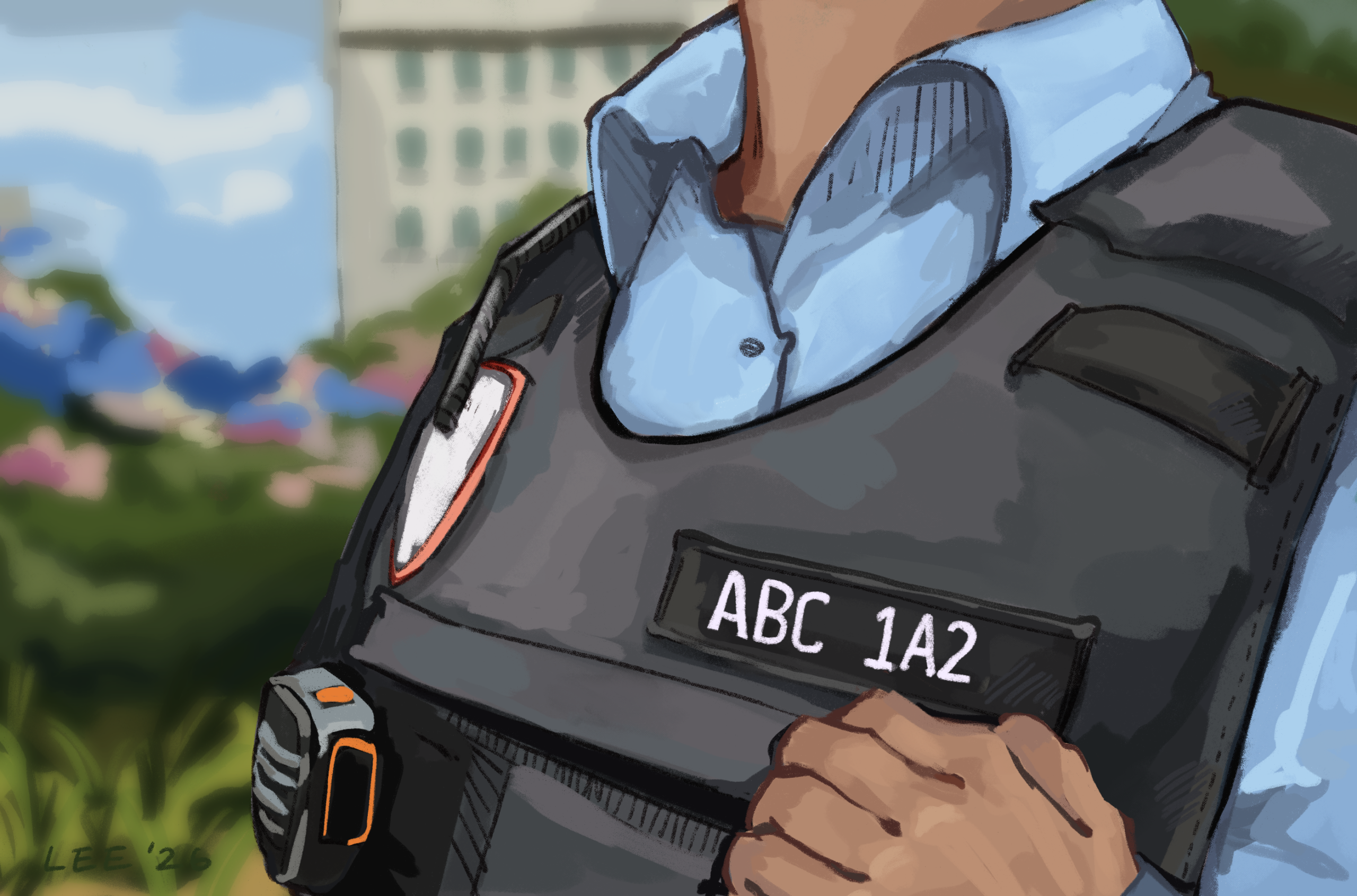

The McGill Senate convened on Nov. 12 for its third meeting of the academic year. Senators engaged in debate over proposed revisions to McGill’s Code of Student Conduct and Disciplinary Procedures, ultimately passing an amended version that removed Board of Governors (BoG) oversight from the Committee on Student Discipline (CSD), which implements the Code.
The meeting began with memorial tributes to Professor Erika Giselle, librarian Tatiana Bedjanian, and Professor Deborah Danoff. McGill’s President and Vice-Chancellor Deep Saini then discussed Quebec’s multi-year Immigration Plan for 2026-2029, which will maintain existing international student quotas. Saini expressed disappointment that the provincial government did not exclude graduate students from these quotas or reopen the Quebec Experience Program pathway to permanent residency for recent graduates, as McGill had recommended.
Most of the session focused on proposed revisions to the Code of Student Conduct, presented by Interim Deputy Provost of Student Life and Learning, Angela Campbell. Campbell emphasized that the Code’s revisions aimed to reflect deliberate consultation, engagement, and compromise with the McGill community.
However, Jérémy Boulanger-Bonnelly, assistant professor in the Faculty of Law, immediately moved to amend the proposed code, explaining why he sought to remove any references to BoG involvement from the document.
“This amendment […] would give the Board of Governors a veto over the appointment of members of the CSD,” Senator Boulanger-Bonnelly said. “The Board has consistently failed to justify in any compelling manner [why these changes are necessary].”
BoG Chair Maryse Bertrand defended the Board’s involvement, citing numerous incidents involving ‘angry mobs’ on campus that have prompted concern from McGill’s administration.
“The Board has heard complaints […] from students who would rather spend their entire semester attending remotely, rather than face what they call a hostile or poisonous atmosphere in their faculties,” Bertrand stated. “The Board cannot and will not do nothing in the face of these new and unprecedented disruptions.”
Boulanger-Bonnelly’s amendment, which would remove Board involvement from CSD appointments, passed narrowly with 38 votes in favour, 34 against, and 6 abstentions. He then proposed a second amendment to maintain the Code’s current ‘knowingly’ intent standard—which requires proof that a student was aware their conduct would cause the specific result they are being penalized for—rather than the newly proposed ‘unreasonableness’ standard, which only requires that student conduct seriously deviate from what a ‘reasonable’ person would do for them to receive discipline.
Supporters argued the lower standard for punishment could discourage freedom of expression and assembly, particularly for protest-related offences. The Senate defeated the amendment in a majority vote.
After a failed motion by Vice-President Administration and Finance Fabrice Labeau to postpone the vote on whether to adopt the new Code indefinitely, the Senate heard final comments on the revised Code.
Saini warned that the updated Code may be read as a breach of power by McGill’s administration.
“[The amended Code] could be interpreted as the Senate overriding the statutes and […] seeking to regulate the authority of the [BoG],” he said.
In response, Catherine Lu, professor in the Department of Political Science, emphasized that the Senate did not intend to cause any conflict with the Board of Governors by amending the Code.
“I really would resist any kind of interpretation that somehow made this about winning or losing, because we’re all going to win or lose based on credible, convincing arguments,” she stated.
Ultimately, the revised Code of Student Conduct passed with 44 votes in favour and 18 abstentions.
Moment of the meeting: Associate Professor in the Faculty of Engineering, Ipek Türeli, read a statement from her Palestinian colleague in McGill’s Faculty of Medicine and Health Sciences, who described experiencing anti-Palestinian racism on campus and called on the university to recognize its role as a silent witness to violence.
Soundbite: “I came here in support of my colleague, Senator Boulanger-Bonnelly’s, motions. I got the result that I wanted on the first motion. I didn’t get the result that I wanted on the second motion. On a balance, I’m going to vote for the Code [….] I’m prepared to respect the work that was done.”—Víctor Muñiz-Fraticelli, associate professor in the Faculty of Law, on navigating disagreement through the Senate’s democratic process and on avoiding postponing a vote on the Code.