
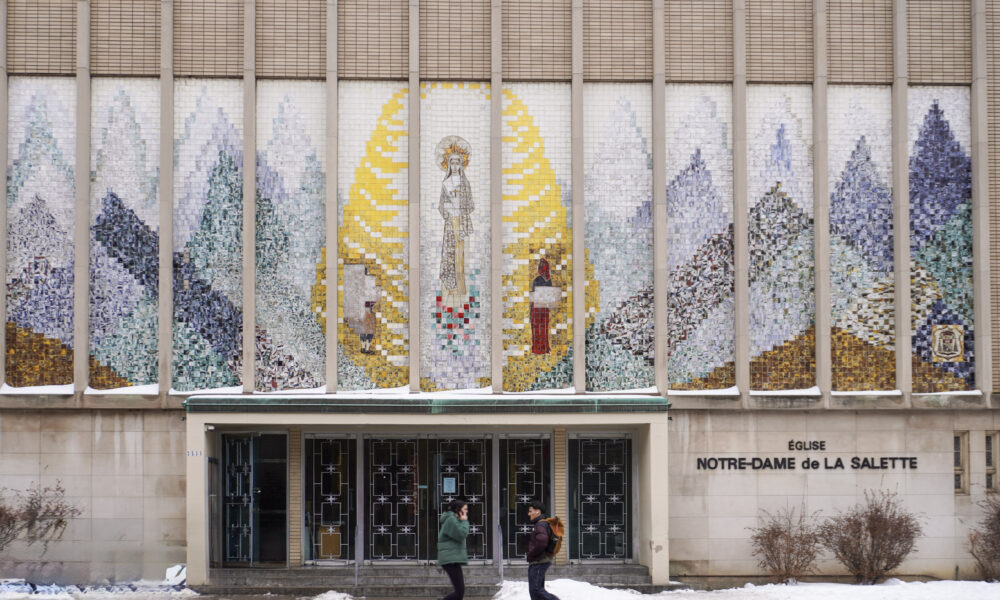



On Dec. 29, the Parole Board of Canada (PBC) banned convicted Catholic priest Brian Boucher from several parts of Côte-des-Neiges-Notre-Dame-de-Grâce (CDN-NDG) and the Town of Mount Royal, after he repeatedly crossed paths with an individual he had sexually assaulted.
The individual said that encountering Boucher caused discomfort. They noted that they had already sought additional safeguards in October by requesting the former priest not only be banned from the CDN-NDG region, but from the island of Montreal itself. The PBC’s failure to adopt preventative measures to ensure the safety of survivors—instead acting only after further harm was caused—shows that the system has failed yet again in its duty to protect survivors of sexual assault.
In Jan. 2019, Boucher was convicted and sentenced to eight years for assaulting one boy between 1995 and 1999, and another between 2008 and 2011. He began serving the remainder of his sentence in a halfway house in July 2024, as Canadian law allows the statutory release of federal offenders after they have completed two-thirds of their sentence.
The Archdiocese of Montreal, the church network through which Boucher served as a priest, chose to protect Boucher rather than act on warnings from survivors and their families. Multiple families raised concerns about Boucher’s suspicious behaviours toward boys in the 1980s, when he was not yet a priest and instead taught catechism classes. These complaints were ignored, and Boucher was ordained in 1996. Several parishioners raised further concerns about Boucher’s relationship with a ten-year-old boy in his new parish, but the Church again dismissed them.
Quebec Superior Court Justice Pepita Capriolo disclosed the Archdiocese’s culture of inaction and secrecy in a report published in 2020. The report found that Boucher may have had concerning relationships with a boy and a young adult during his tenure as a chaplain at the Newman Centre at McGill University between 2000 and 2002. Capriolo concluded that senior members of the Archdiocese knew of his abuse but continuously deflected responsibility.
Boucher’s violations of statutory release conditions and multiple encounters with his survivor align with his patterns of callousness and disregard towards the law. In the statement banning Boucher from parts of Montreal, the PBC explained that he continues to lack empathy, deny his actions, and violate boundaries. The summary of the decision also notes that Boucher is at risk of inflicting further trauma on survivors.
The Church failed to protect survivors by allowing Boucher to continue practicing as a priest for more than 20 years. The PBC cannot become another institution that falls short of safeguarding survivors by underestimating the risks posed by an unrepentant predator, even when that individual is subject to geographical restrictions.
Boucher has made it abundantly clear that he will not change. Even before Boucher violated the terms of his statutory release, he was charged with additional sex crimes allegedly committed behind bars in 2023.
Mere geographical restrictions are not sufficient. Letting Boucher roam free tells sexual abuse survivors that living in fear is a sacrifice they must make for the offender’s comfort and reintegration. When the PBC, the very tribunal responsible for ensuring survivor safety, fails to prioritize the well-being and safety of individuals who have repeatedly expressed concerns about Boucher’s freedom of movement under statutory release, it becomes clear that survivors cannot rely on any institution to keep them safe.
55 per cent of provincially sentenced offenders re-offend after prison: Although reintegration is critical for the rehabilitation of sentenced individuals, data shows that the justice system must consider the recommendations and needs of survivors to ensure public safety.
While the PBC needs to help offenders reintegrate into society, it is equally responsible for keeping citizens safe—especially individuals that other institutions like the Catholic Church previously failed to protect. The justice system must rethink rehabilitation as a process that not only reintegrates offenders into society, but at the same time ensures the safety and well-being of survivors and citizens.