
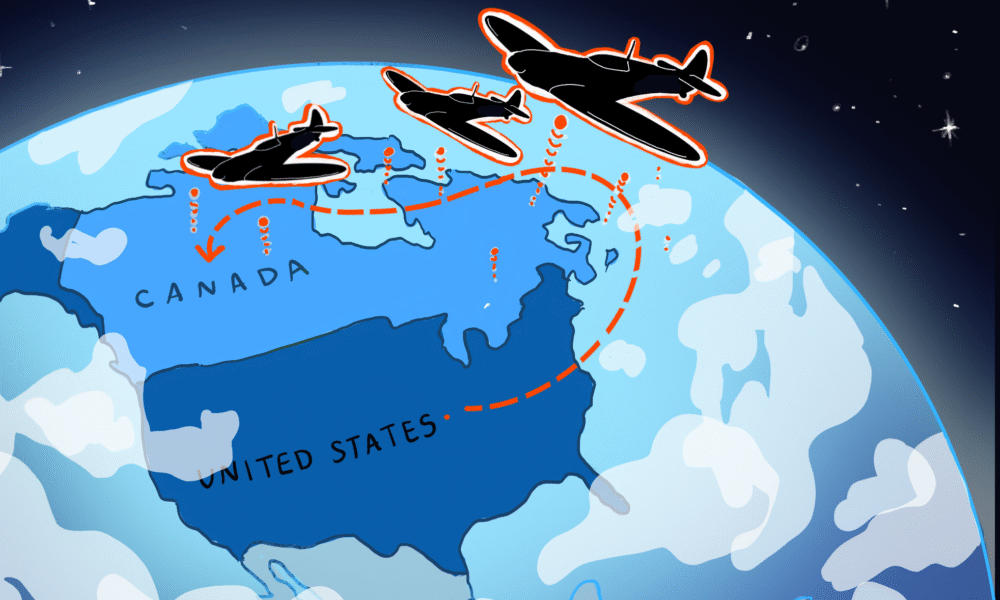




On Sept. 19, Jenny Kwan, current New Democratic Party Member of Parliament (MP) for the Vancouver East Riding, introduced Bill C-233. While Canada has ceased direct military exports to Israel, Canadian arms can reach Israel and other conflict zones unregulated through a U.S. ‘loophole.’ The Tribune explains Kwan’s proposal, which aims to close this gap, and how McGill students can get involved to stop the flow of Canadian-made weapons to Israel.
What does Bill C-233 do?
Bill C-233—more commonly known as the No More Loopholes Act—is a law that intends to amend the Export and Import Permits Act, originally created in 1947. The House of Commons has since amended the act many times, including following the Arms Trade Treaty (ATT), which was adopted by the UN General Assembly in 2013 to regulate the international trade of conventional arms. Canada acceded to the ATT in 2019. Currently, the Export and Import Permit Act regulates the international trade of arms with international standards, but certain loopholes allow Canada to send military exports to the U.S. without a permit. Bill C-233 intends to amend the act to ensure Canada abides by this international treaty more closely, preventing Canada from sending arms to foreign war zones via the U.S.
How does it work?
Currently, Canada may export military arms to the U.S. without the permits that other countries require. These arms are then integrated into larger weapon systems exported to Israel and other war zones. No human rights risk assessment is conducted under this method, allowing Canada to sidestep regulations intended to prevent human rights violations. Reports find that hundreds of shipments of Canadian explosives and fighter jet components have reached Israel through this technicality over the past two years.
The No More Loopholes Act would end the U.S. exemption from regulations, meaning that if Parliament passes the amendment, the government’s Export Controls Division would have to check all military export permits for any potential association with human rights violations and war crimes.
How are Canada and McGill complicit in international warfare?
Canada exports around $1 billion CAD in military goods to the U.S. each year. Due to diplomatic agreements between the two countries, these exports are almost entirely unregulated. The components Canada ships to the U.S. are used in many major weapons systems, such as fighter jets, drones, and missiles. From here, these weapons are often shipped to Israel, contributing to the ongoing genocide in Palestine. While direct export to Israel has been well regulated, Canada is nonetheless complicit in genocide through its exports to the U.S.
McGill, too, is implicated in international warfare through its current investments in the defence contractors Lockheed Martin, Thales SA, and Safran, which all have ties to Israel’s military, manufacturing, and surveillance activities.
What can McGill students do?
In late February, Parliament will vote on Bill C-233. Students may participate in the campaign by contacting their MP and expressing their support for the amendment. Students may fill out this form to email their MP directly.
Students can also contribute by encouraging their friends and family to get involved. In a movement briefing for the No More Loopholes Campaign, Shatha Mahmoud, organizer at the Palestinian Youth Movement, emphasized the importance of taking action.
“We are now in the final stretch before [Kwan’s] bill comes to a vote in Parliament [….]The government is counting on us to be delayed, to be confused, and we are ensuring we are doing the exact opposite,” Mahmoud said. “Silence is how this violence is normalized.”