


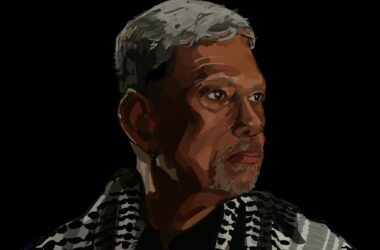


On Jan. 27, Muslim Awareness Week (MAW) hosted a roundtable on the dangers to civil liberties that Bill 94—passed in October 2025—would bring.
Quebec lawmakers allege that Bill 94 is intended to reinforce secularism in the Quebec education system and bring several legislative reforms. The bill requires any worker providing services to students, as well as students themselves, to keep their faces uncovered within public or private institutions, and to refrain from wearing any visible religious symbols. This restriction does not apply to coverings worn for medical reasons or by people with disabilities.
The author of the bill, former education minister for the Coalition Avenir Québec (CAQ) Bernard Drainville, argues that these measures are meant to promote Quebecois and democratic values such as gender equality and a secular state.
The roundtable convened at the Centre communautaire de loisir de la Côte-des-neiges and was composed of three panellists: Ligue des droits et libertés Coordinator Laurence Guénette, Professor of Law at the Université de Québec à Montréal (UQÀM) Ndeye Dieynaba Ndiaye, and UQÀM Political Science Master’s student Nour Amjahdi. The panel was overseen by MAW President and Co-Founder Samira Laouni.
Laouni began by acknowledging the ninth anniversary of the Jan. 29 mass shooting at the Islamic Cultural Centre of Quebec City, emphasizing the importance of fighting Islamophobia. She then introduced the main concern with Bill 94, noting that it excludes Muslim women from working in the public sector, given that many of them choose to wear hijabs for religious and cultural reasons.
“While pushing the fundamental value of gender equality, [the government] is violating the right to work of certain women,” Laouni said. “How can gender equality be achieved without the financial independence of women?”
Laouni then passed the microphone to Guénette, who began with an assessment of the Quebec government’s actions since the Act respecting the laicity of the State (Bill 21) was passed in 2019. She noted that Bill 94 expands the restrictions of Bill 21, and adds to the existing violations of certain marginalized groups’ rights.
“The religious neutrality of the state [is] meant to allow everyone to practice their religion freely without fear of compromising their convictions and with respect to the right to equality,” Guénette stated.
She continued by explaining that the CAQ adopted Bills 21 and 94 despite opposition from several feminist and human rights organizations. She also noted that the restrictions on face coverings in Bill 94 represented flagrant violations of both the Canadian and Quebec Charters of Rights and Freedoms. Guénette ended by warning that the CAQ’s use of the notwithstanding clause to override constitutional protections should worry everyone in society.
Next, Amjahdi discussed how she was directly impacted by the ban on face coverings. After Bill 21 was passed, she could no longer teach music as she had intended. More recently, she lost her job leading a children’s choir because of Bill 94.
“It was very violent,” Amjahdi said. “I was quite lost and my life turned upside down. I felt that my identity was shaken. This law put an end to my musical identity.”
Amjahdi explained that, despite being a product of the Quebec francophone school system, she now questions her identity as a Quebecoise. She concluded by calling for allies of the Muslim community to join them in protesting these bills.
Dieynaba Ndiaye, the fourth panellist, discussed the importance of speaking out against constitutional injustices.
“In certain societies [like Quebec], filing grievances has an important moral value. We must do it when rights are violated in Quebec,” Dieynaba Ndiaye affirmed. “We have the Commission des droits de la personne et des droits de la jeunesse.”
According to Dieynaba Ndiaye, Bill 94, along with several other pieces of legislation, represents a rupture of this social contract.
“It’s very important [to understand] that people come here with competencies, with experience,” Dieynaba Ndiaye said. “People choose Quebec just as Quebec chooses people.”
*All quotes were translated from French.