
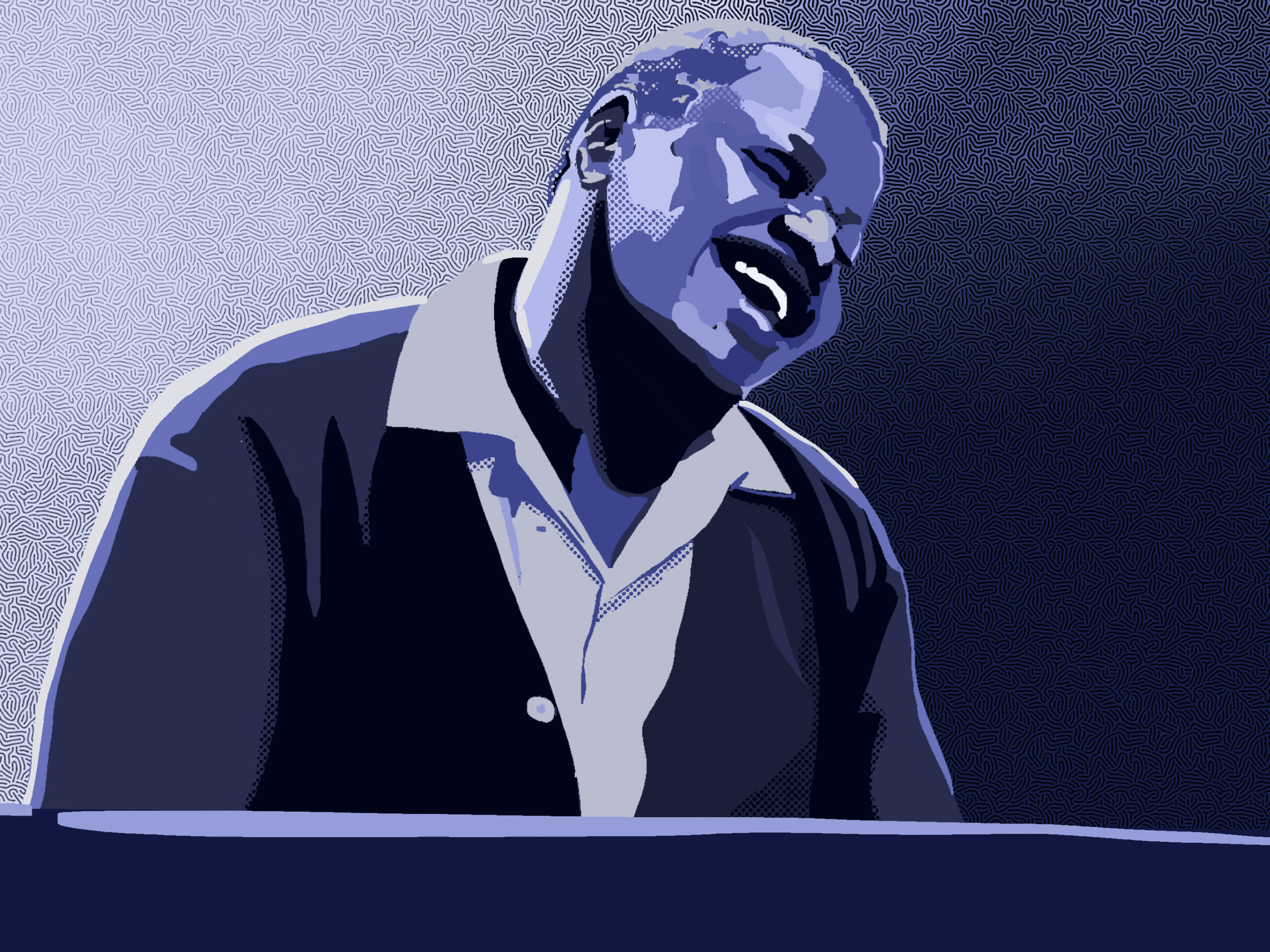




On a warm summer day in August 1925, Oscar Emmanuel Peterson, one of Canada’s most respected jazz artists, was born. Growing up in the working-class, predominantly Black neighbourhood of Little Burgundy in Montreal, Peterson developed his musical skills alongside his four siblings and with the support of his loving parents. Forced to give up the trumpet after contracting tuberculosis, he chose to focus on the piano and soon developed a musical talent that foreshadowed his bright future. Peterson honed his skills, and with the support of his sister, Daisy, won a nationwide amateur talent competition in Canada and landed his own weekly radio show: Fifteen Minutes Piano Rambling. Soon after, Peterson signed with a record label, and, by 1945, he had released his first two recordings: I Got Rhythm and The Sheik of Araby.
Norman Granz, founder of Verve Records, became Peterson’s agent, allowing his fame to grow internationally. Granz was famous for introducing jazz to broader audiences by taking “jazz out of smoky clubs and putting it in concert halls.” He heard Young Peterson on the radio in a taxicab on his way to the Montreal airport and was immediately struck. After learning that the music was a recording of Peterson at the Alberta Lounge, Granz asked the driver to turn around and take him there so that he could meet him. In the following years, Peterson’s career grew, and he established himself as a household name in the jazz world, working with the likes of Ella Fitzgerald, Chet Baker, Duke Ellington, Billie Holiday, and Louis Armstrong. The last nicknamed him “the man with four hands” for his rapidity and precision when playing.
“The way you play music is a tonal biography of yourself, your thoughts and feelings,” said Peterson. Peterson was a quick and precise artist; he could execute lightning-fast runs, possessed incredible timing, and had a deep understanding of swing. His hands were able to tell many stories, such as that of a lover yearning for his beloved in Blue and Sentimental or of a person who has achieved success at the cost of someone special in I Can’t Get Started.
He is further remembered for his commitment to racial equality and his defiance of stereotypes, emerging as Canada’s first Black jazz star in the 20th century. He overcame racial prejudice to establish himself as a giant in his field. Further, he was a music educator and humanitarian, receiving many accolades, including eight Grammy Awards, a Praemium Imperiale World Art Award, the UNESCO Music Prize, and 16 honorary doctorates. Notably, a coalition of Black community groups has recently asked for Montreal’s Place des Festivals to be renamed after Oscar Peterson to honour his legacy, which has marked the city’s music scene.
The prolific Peterson released several albums each year and appeared on more than 200 albums by other artists. He is widely considered to be one of the best jazz pianists of all time and remains a cornerstone of the genre. His influence resonates in the works of artists like Laufey, who are reintroducing jazz to younger audiences.
Peterson’s composition Hymn to Freedom also had a deep impact, becoming pivotal to the Civil Rights Movement of the 1960s. The song calls for a world of unity, dignity, and liberty, with lyrics by Hariette Hamilton. Peterson’s wife, Kelly, is currently translating the composition into various languages, such as French and Cree, to allow individuals from various backgrounds to hear and understand Peterson’s vision for a free and harmonious world.
Peterson is renowned for his technical mastery, virtuosity, and the warmth with which he played, and he is remembered for his deep love and connection with the art of music.