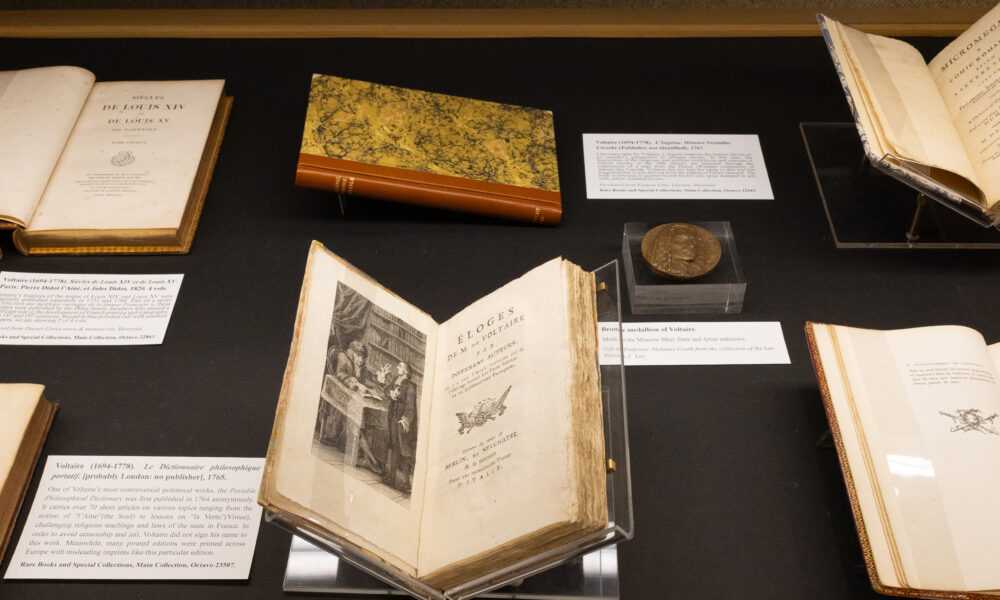

Most students don’t realize that one of McGill’s McLennan Library’s fourth floor’s Reading Room houses extensive historical archives. Its New at McGill exhibit features a wide variety of subjects ranging from Voltaire’s literature and modern architecture plans, to embargoed letters and natural science collections in astronomy and botany. The collection’s diversity is a testimony to the careful work of the Rare Books and Special Collections (RBSC) team.
When funding is limited, archivists must determine whether an item truly adds value to the collection before acquiring it. This careful selection process makes the exhibit special, with objects from different periods placed side by side. It features modern works, such as a pop-up book made by Collette Fu from her 2008 to 2023 project titled We Are Tiger Dragon People and presentation models of the Mangaf Beach Development Project in Kuwait from 1996. Elsewhere in the exhibit, you can view Icones Historiarum Veteris Testamenti, published in 1547, which is in near-mint condition.
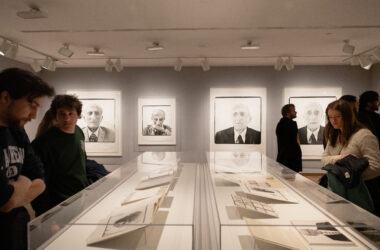
I initially browsed the exhibit, walking through the Reading Room and reading the captions in the two rows of cases on display. I started with the left case, where Monica Ong’s 2021 Planetaria, a work of visual poetry about astronomy, was juxtaposed with a perpetual calendar from 1810.
Among the most striking items are letters by Canadian short story writer Mavis Gallant. Canadian filmmaker and journalist William Weintraub, a close friend of Gallant, donated the letters to McGill in 2002 under embargo. The embargo expired in 2025, allowing the shipment to be opened for the first time. Eve Majzels, one of five curators of this exhibit, was given the honour of opening the collection and now manages it. Inside were 118 letters and six postcards from the William Weintraub fonds. These letters offer a peek into the private life of Gallant, an important literary figure of Montreal, with the letters’ topics revolving around Quebec politics, personal matters, and her and Weintraub’s careers. Among these letters, Majzels selected two for display in the exhibit because of the quality of their writing and Gallant’s humour.
The exhibit also nods to the expansion of women’s literacy and education. L’origine des fleurs and Hommage aux dames are two beautiful, handcrafted books on display that were published for a female audience in the 19th century. These books are evidence of women’s increasing access to literature at the time.
For the botanical collection, the curators chose a 1910 book of pressed flowers detailing the locations from which they were picked. The page displayed counts three flowers: Heather, foxglove, and pomegranate, each gathered from different locations in Italy. Another book on exhibit, British Sea-Weeds, published in 1872, introduced women and non-scientists to the study of algae. Lauren Williams, the curator of this case, said during a recorded presentation that botany “was one of the few subjects to be appropriate for women to engage with at the time.”
When the exhibit closes, archival items will return to archival storage on the fourth floor’s shelves or to their designated collection locations. While they won’t be publicly displayed anymore, individuals can request to see some of the materials on display in McGill’s Archival Collections Catalogue. However, the majority can be found in the McGill Libraries catalogue. Ursula Charmichael, one of two coordinators of New at McGill, emphasized that the team is constantly working to expand their collections to support teaching and research at McGill and across Montreal. The recently unveiled Gallant letters are a prime example of McGill’s role in presenting new discoveries to the global research community.
New at McGill allows us to recognize collection development as a crucial role of librarians and archivists. If you need a break from studying, consider visiting this exhibit. Not only will you find significant relics of history on display, but you will also see the dedication and teamwork that went into putting the collection together.
New at McGill is open to the public until March. 2nd.


