



Folk tales and legends are forms of art that permeate our lives and pass on wisdom across generations. Few embody this as vividly as the Chinese zodiac, which continues to influence centuries after its origins. The shengxiao, or Chinese zodiac, are the 12 animals that represent each year in the Chinese lunar calendar, or yin-yang li—also known as “heaven-earth.” Each animal has a distinct personality with character traits, lucky signs, and compatibility. On Chinese New Year, which typically begins between Jan. 21 and Feb. 20 on the Gregorian calendar, the cycle changes to the next animal in the zodiac. This year, the celebration begins on Feb. 17 and ends March 3, marking 2026 as the year of the fire horse. Chinese astrology places one of the five elements in rotation with the zodiac in a 60-year cycle. The elements—wood, fire, earth, metal, and water—interact with the animals to create a unique projection for each year.
It is believed that the zodiac emerged from a legendary race between all the animals; however, sources disagree on its historical origin. Some trace it back to the Warring States period (475-221 BCE), others to the Qin dynasty (221-207 BCE), and some to the Han dynasty (206 BCE-220 CE). Over time, the Chinese zodiac evolved into a shifting piece of culture, guiding how people interpret the future and providing insight into the personality and fortune of each upcoming year.
The Story of the Chinese Zodiac
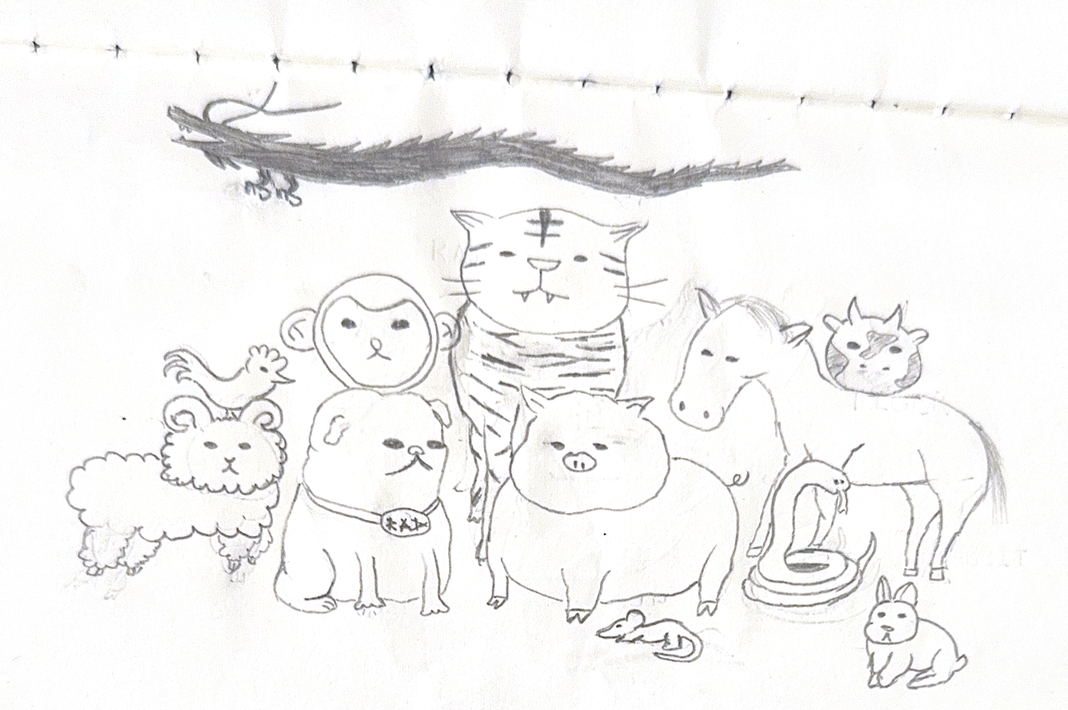
Centuries ago, the Jade Emperor, the most revered of the Daoist deities, wished to help his people measure time by giving them a proper calendar: The zodiac. Hoping to name each year after a different animal, he asked them all to partake in a swimming race where the first twelve to cross the river to his palace would be named the zodiac. Legend has it that the story begins with the rat betraying the cat and the kinship they once shared.
Although contested, one version of the tale recounts how the two animals, the closest of companions, were horrified by the setting of the race, as neither could swim particularly well. They decided to ask the ox if he would kindly offer them a ride on his back. The rat, blinded by ambition, wished to be first in the calendar and mused that the ox would swim faster without the cat on his back. So, he pushed his friend into the swirling waters. Thus, there is no cat in the zodiac calendar. Some even claim this to be the origin of the two species’ longstanding animosity.
However, many agree on the rest of the tale. Each of the remaining animals ventured on their own journey to reach the Emperor. After the rat finished first, the ox lumbered after him, honour still intact. The tiger came third, easily braving the river. The resourceful rabbit hopped across by way of stones, but reached an impasse and was unable to go any further until a log blew his way. To his surprise, the log carried him to the Emperor’s palace over the distance remaining. The dragon arrived fifth, much to the Emperor’s bewilderment—the dragon revealed that he had stopped to provide rain to a drought-ridden town, and then had blown the log across for the stranded rabbit. The horse and the snake ran neck and neck, but the snake spooked the horse and underhandedly secured sixth place. The rooster, monkey, and goat came next, having built a makeshift raft which pleased the Emperor. As a result, he deemed the goat eighth, the monkey ninth, and the rooster tenth. The languorous dog came eleventh, after he had whittled away his time luxuriating in the river’s cool water. Finally, the pig came last, having paused for breakfast, lunch, dinner, and a nap.
Each year, the order of the animals reminds us to be mindful of our thoughts, the way we treat others, and the way we carry ourselves throughout the year. This centuries-old tale is ever-influential today.