
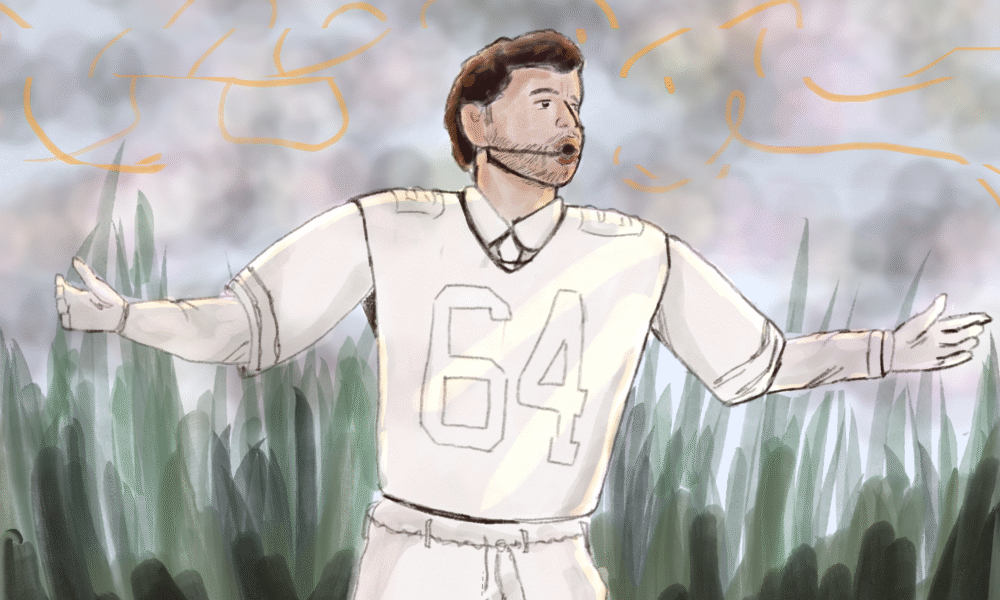



The Super Bowl has long been an annual time of excitement for both Americans and international football fans alike. Although some love the opportunity to get together with friends and family to passionately root for their team, others with no interest in football still tune in for the halftime show. The musical performance during the game’s halftime has hosted acts by many iconic artists such as Prince, Michael Jackson, and Beyoncé. Even weeks later, this year’s performance by Bad Bunny still resonates.
Bad Bunny is a Puerto Rican rapper and singer who rose to fame after releasing his 2016 song “Diles.” Today, he has six solo studio albums and is the only artist to have been named Spotify’s number one Global Top Artist four times. Bad Bunny’s music honours and celebrates Latine culture, denouncing American imperialism and the ongoing effects of colonialism—especially in his most recent album, DeBí TiRAR MáS FOToS.
Throughout his Super Bowl performance, the staging itself venerated his Puerto Rican heritage. The set, a field of tall grass, paid homage to Latino labour—a reference to sugar cane extraction, which was collected through slave labour in the Americas. Bad Bunny also had actors play roles across many different industries dominated by Latino workers, including construction, food service, and more. In spotlighting labour that is often overlooked, the artist created a space of acknowledgement and appreciation for those workers and the generations before who have toiled in these workforces.
Bad Bunny also celebrated love during his performance. He invited one lucky couple to get married on the football field, which ended with the introduction of Lady Gaga’s performance of Die With a Smile. This is a stunning example of how celebrities can use their fame to make others’ dreams come true. It also highlights how love in the face of hatred can encourage others to combat political polarization through community building.
One of the most noteworthy segments of the performance featured a Latino boy and his father watching Bad Bunny’s recent Grammy acceptance speech, where he discussed the vital impact of immigrants on American success, condemning ICE’s violent treatment of citizens and non-citizens alike, and advocating for the celebration of multiculturalism. Bad Bunny was the first artist to win Album of the Year for a fully Spanish album. Amidst the rise of anti-immigrant sentiment and prejudice towards Latin Americans, Bad Bunny serves as a model of Latino resilience and accomplishment for immigrants and youth. This inclusion highlights the importance of representation as a way to dismantle stereotypes that dehumanize marginalized groups.
As Bad Bunny concluded his performance, he gave a shoutout to every country in the Americas. Naming them in geographic order from south to north, his final shoutout went to his home of Puerto Rico. As he exited the stage with a group of musicians and dancers carrying flags of the Americas, he sang the chorus of his song “DtMF”, filling the field with the elation of North and South American cultural diversity, forever marking this performance. On the stadium’s jumbotron, the message “The Only Thing More Powerful Than Hate is Love” shone in large print while Bad Bunny held a football that read the message “Together, We Are America.”
Bad Bunny’s display of pan-Americanism is particularly impactful during a time of intense division. Over time, global superpowers, specifically the U.S., have revealed prejudice towards Latin American communities, as evidenced by the increasing atrocities committed by ICE. Bad Bunny’s theme of unity in the face of hatred sends the message that everyone should have a place in America—the nation’s cultural diversity is its greatest strength.