
Electronic cigarette usage has increased rapidly in recent years, with global estimates surpassing 100 million users. As vaping continues to grow in popularity, physicians and public health researchers are facing a difficult question: How should people quit a habit for which there is virtually no medical treatment consensus? A new[Read More…]
Student Research

Heavy metal exposure: A hidden cause of heart disease
Around the world, millions of people come in contact directly or indirectly with heavy metals, particularly cadmium and arsenic, thereby increasing their risk of heart disease. Past studies have investigated the respective effects of these two metals on heart health at concentrations well beyond the levels that people are typically[Read More…]
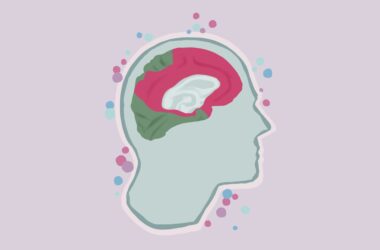
Human Cognition: Moving away from the brain
Long before Francis Schmitt coined the term “neuroscience” in 1962, scientists have been interested in demystifying the secrets of the human brain. Although neuroscience primarily focuses on the functions of the cortex—the outer layer of the brain— researchers have begun to highlight the importance of more primitive brain anatomy: Namely,[Read More…]
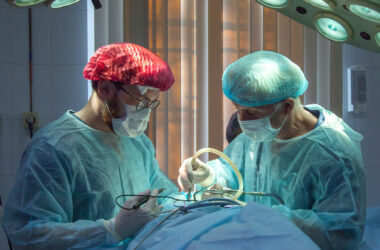
Creating more accurate and realistic spine surgery simulation models
Before performing procedures, surgeons must receive step-by-step training. The traditional method, “See One, Do One, Teach One,” asks trainees in surgical residency to repeat after their instructors. To gain experience, these trainees often practice their surgical skills on cadavers. Due to the high cost of cadavers and limited availability of[Read More…]
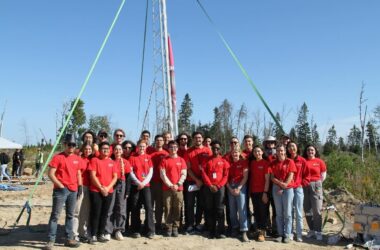
Ad Astra: McGill Rocket Team’s successful launch
On Aug. 29, 2023, the McGill Rocket Team, having driven the ten hours from Montreal to Timmins, Ontario, successfully launched their lovingly-engineered rocket Porthos. The vehicle flew to a height of 10,000 feet, and most impressively, the flight used a fully student-researched and developed hybrid engine. Project Porthos earned them[Read More…]

Health misinformation: A hidden obstacle to better patient outcomes
The internet has become a widely used source of health information by the public, including cancer patients. However, the quality and reliability of online information vary greatly, leading to misunderstandings of treatments and, ultimately, reduced quality of care for those living with cancer. In a recent paper, Marrah Nicolas-Joseph, U3[Read More…]

Making soup with methane, vitamin D, mRNA, and shellfish waste
The 35th semesterly Soup & Science was one for the books, with top-notch student and professor research presentations accompanied by delectable soup. The McGill Tribune brings you the presentations we liked best for a little taste of the event. Improving mRNA resilience by combining it with other molecules U4 chemistry[Read More…]
NeuroLingo breaks down neuroscience jargon during TED-talk-like event
On Nov. 26, NeuroLingo hosted a free public neuroscience event during which researchers shared their ongoing projects. Founded in January 2020 by four graduate students in McGill’s Integrated Program in Neuroscience (IPN), NeuroLingo is a neuroscience outreach initiative with the goal of demystifying complex topics in neuroscience. The six speakers[Read More…]

Let’s talk about poop: McGill student won’t let Crohn’s disease stop her from becoming a doctor
Poop. There’s no shame in talking about it. We all need “to go” in one form or another and it’s completely normal. However, bathroom breaks affect some people’s lives more than others. Taylor Morganstein, a first-year medical student at McGill, wants to talk about poop more openly to start the[Read More…]

Teaching an old enzyme new tricks
Blue-green algae are a common sight at summer swimming holes and lakes. Also known as cyanobacteria, blue-green algae are a class of bacteria capable of using sunlight as an energy source through photosynthesis. Despite being well-known and well-studied, a group of McGill researchers uncovered an unexpected and surprising activity in[Read More…]


