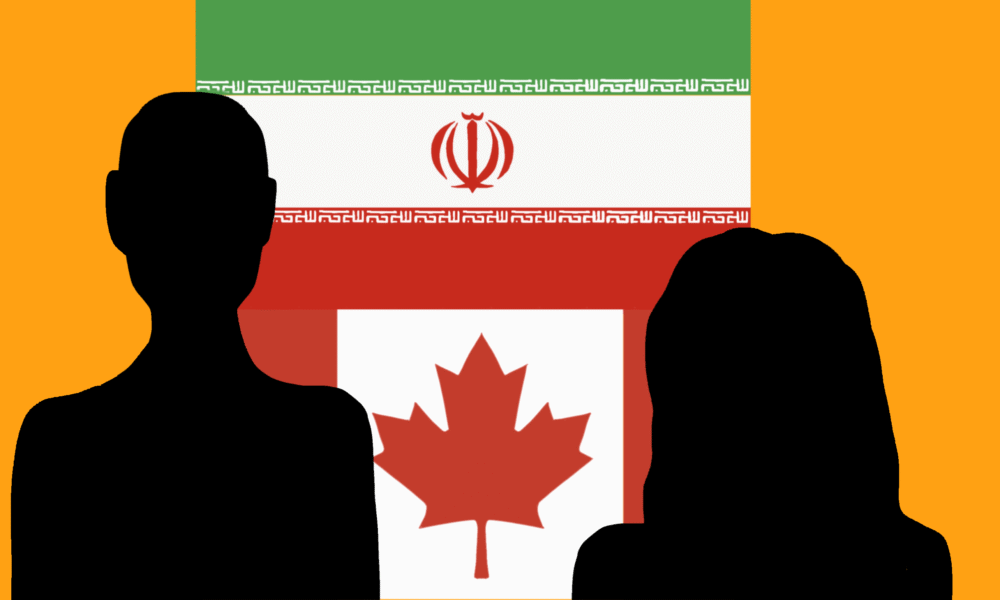


On March 4, the Canadian government announced an extension of temporary special immigration measures for certain Iranian nationals currently living and working in Canada. The Immigration, Refugees, and Citizenship Canada (IRCC) policy now allows Iranian citizens with valid work permits to apply for extensions.
Amid the U.S. and Israel’s military attacks on Iran, the decision is part of a broader set of temporary measures Canada introduced beginning in 2022—following the Islamic regime’s crackdown on ‘Women, Life, Freedom’ protestors. However, the latest extension applies more narrowly than previous measures. In an interview with The Tribune, Rex Brynen, professor in the Department of Political Science at McGill University, highlighted the exclusivity of the current policy.
“The current temporary measures apply only to Iranians with valid work permits and do not, for example, cover those on study permits seeking extensions,” Brynen said.
Brynen noted that the extension’s narrower scope should be interpreted as a broader tendency of Canadian immigration policy, rather than as a direct indicator of Canada’s relationship with Iran.
“I don’t see this as a statement of Canadian policy towards Iran so much as reflecting the current government’s generally more restrictive approach to immigration,” he said. “Human rights matter, and labour market considerations matter, but so too does politics [….] Public opinion polls show a significant drop in public support for immigration in general.”
Brynen also noted that political rhetoric around immigration has shaped the broader context within which these policies are introduced.
“Islamophobia is a factor, too. The Conservative opposition that has been actively scapegoating asylum-seekers and scaremongering about the security risk of Iranian temporary residents,” Brynen said. “The Carney government is responding to that context.”
According to Brynen, the policy changes may also disparately affect those on certain types of work permits. An open work permit allows individuals to work for any employer in Canada, while an employer-specific work permit allows them to work only for one specific, pre-approved employer during their stay in Canada.
“As I understand it, it becomes harder to extend one’s stay under an open work permit or study permit,” Brynen said. “That may push some people into having to make asylum claims rather than face a termination of their legal status.”
Daniel Douek, faculty lecturer in the Department of Political Science at McGill, mentioned that geopolitical conflicts can affect how citizens of certain countries are treated internationally.
“Anytime there’s a situation of warfare, and anytime there’s a situation of international crisis, and, in particular, [when] a government such as the Iranian one, which is predatory towards its own people, […] becomes the target of measures by other countries, then that brings into question Iranian citizens abroad,” Douek said. “However one feels about the government, […] you still have some affiliation with it, so that can be problematic.”
Douek emphasized that Canada has a well-established Iranian community, many of whom left Iran due to political repression or other hardships.
“There’s a large Iranian diaspora here in Canada of people who, even if they didn’t come as refugees or didn’t come seeking asylum, nevertheless have faced discrimination in different forms,” Douek explained.
McGill has sent an email offering support to Iranian students. McGill’s Media Relations Office (MRO) included this email in a written statement to The Tribune, acknowledging the hardships Iranian students may be facing.
“We recognize that the recent violence affecting Iran may be adding to the stress and concern felt within the Iranian community. We are here for you and are ready to help in any way we can.”
The email went on to list available resources students may consult. Specifically, students can contact case managers in the Office of the Dean of Students for guidance and support and access mental health services through the Wellness Hub. Students can also consult the GuardMe Student Support Program, which provides 24-hour counselling services. Additionally, students experiencing academic difficulties may speak with their instructors about accommodations.
The message emphasized that university support services remain available to students affected by ongoing events related to Iran.


