Quebec’s proposed Bill 9 could change regulations around religious expression in public institutions, including universities. Introduced in November 2025 and currently in committee, the legislation expands the province’s secularism law and has sparked debate among students, advocacy groups, and university administrators about its potential impact on campus life.
Bill 9 is part of Quebec’s broader agenda of ‘laïcité,’ a principle emphasizing the strict separation of religion and state. Under this framework, public institutions are expected to remain religiously neutral while ensuring equality and freedom of conscience for all citizens.
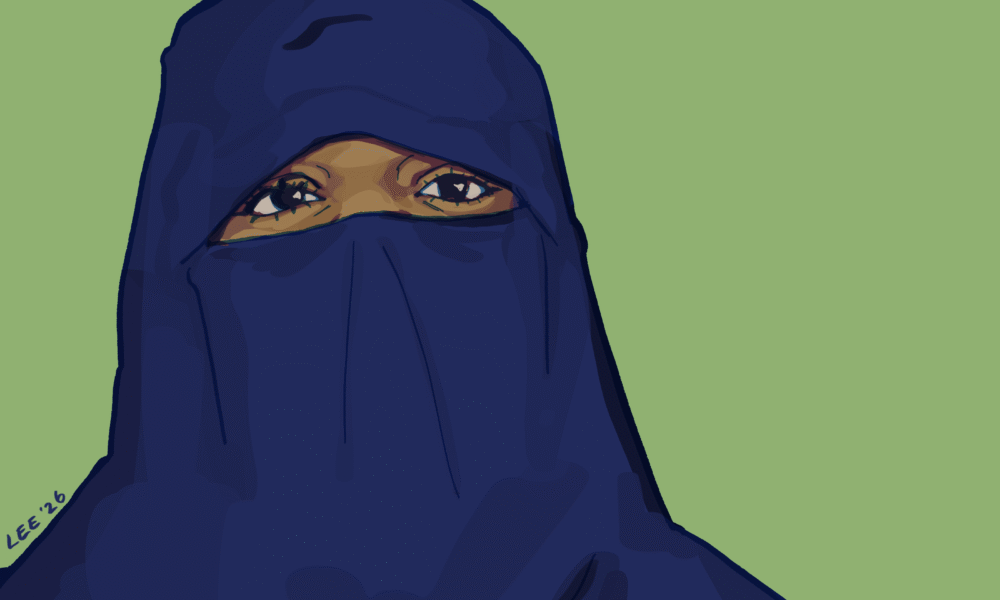
One of the bill’s provisions requires individuals to have their faces uncovered when receiving services from higher education institutions or a body providing childcare services, or in places under the authority of such bodies. In a written statement to The Tribune, Department Chair of Jewish Studies Eric Caplan argued the bill contradicts the objective of state neutrality.
“The stated aim of the bill is to protect state neutrality, but I fail to see how some of the things that it prohibits actually threaten state neutrality,” Caplan wrote. “I think people understand, for example, that when an employee wears a hijab or a [kippah] while serving customers at the [Société de l’assurance automobile du Québec], they are reflecting their own personal religious commitments only. Displaying these commitments does not associate the state with religion.”
Caplan also raised concerns about the bill’s implications for religious freedom.
“Whether the bill’s intent is to target religious minorities or not, the net effect is the same: It forces religious minorities to violate one of the rules of their religion in order to work in a school or for the government.”
The proposed legislation would also extend the ban on face coverings to public settings, including government buildings and spaces under the authority of public institutions. Additional measures include a ban on prayer spaces within public institutions, including universities, and a requirement for groups holding religious gatherings in public spaces to obtain a municipal permit.
Bill 9 would also increase restrictions on religious symbols, banning workers in subsidized daycare and private schools from wearing them. These measures expand on Quebec’s current secularism law, Bill 21, which primarily applies to public-sector employees such as teachers and police officers.
Universities have expressed reservations about how the legislation could affect their governance and autonomy. In a written exchange with The Tribune, McGill’s Media Relations Office (MRO) warned that some provisions in Bill 9 are broadly worded and open to interpretation, which could create uncertainty on campuses.
“Central notions such as ‘religious practice’ or the ‘authority’ exercised in certain spaces are formulated broadly and imprecisely, which could lead to differing interpretations and open the door to a high number of complaints or disputes within our institutions,” the MRO wrote.
For students at McGill, the proposed changes could have practical implications for religious expression and campus spaces. Faith-based student organizations rely on university facilities to provide mentorship and create community spaces.
Mélissa Délalie Houinsou, president of McGill’s chapter of the Christian Medical and Dental Association (CMDA), noted in a written statement to The Tribune that many students draw strength and resilience from their faiths, particularly in high-pressure academic fields.
“For many, faith is an important part of resilience, identity, and personal values,” Houinsou explained. “Students fear that increasing restrictions could make them feel that they must hide or limit an important part of who they are.”
Members of McGill’s Muslim Students’ Association (MSA) have also voiced concerns about how the legislation might disproportionately affect Muslim students. The association currently provides a prayer space in the Student Society of McGill University (SSMU) building and organizes weekly prayers—resources that support Muslim students’ religious practice and sense of community on campus. MSA president Hamza Alfarrash explained the potential effects of Bill 9 in an interview with The Tribune.
“Bill 9 is a secularly motivated bill,” Alfarrash said. “Even though it does not explicitly mention targeting Muslims, it inherently affects Muslims, especially those who are visibly Muslim, such as those who wear the hijab or those who perform the five daily prayers.”
He added that concerns about Bill 9’s impact on religious expression extend beyond Muslims.
“When it comes to public support, we want to show [that Bill 9] does not just affect Muslims. It affects other religious groups and students [….] Today they’re targeting us, but tomorrow it could be targeting your freedom of expression, which is why it is important to not look aside when it is happening.”
*Statements provided by MRO were translated from French


