




Mayor Soraya Martinez Ferrada’s 2026 budget implemented a 90 per cent reduction in funding for Montreal’s universal mobility program, an initiative dedicated to making public spaces accessible for individuals with reduced mobility. Ferrada’s administration allocated $354,000 CAD in funding for 2026 and has planned $0 CAD for 2027, severely compromising accessibility.
Ferrada’s minuscule budget allocation for mobility notably pales in comparison to the $3 million CAD the Plante administration had dedicated annually to the program. This funding has been critical in developing accessible infrastructure to support individuals with disabilities and injuries, the elderly, and parents with strollers.
The Ferrada government has eradicated funding for mobility efforts in a blatant violation of equality rights as enshrined in the Canadian Charter of Rights and Freedoms. These policies—mirrored by the failure of public institutions such as the Société de transport de Montréal (STM) and McGill University to offer sufficient programming for physical accessibility—reveal a broad neglect for the principle of universal mobility and must be rectified immediately.
Universal mobility entails access to one’s place of work and schooling, as well as to recreational third spaces. Under this fundamental standard, governments and institutions, public and private, are legally obligated to ensure dignity for those with reduced mobility.
The Accessible Canada Act mandates the identification and removal of barriers to accessibility, as well as the prevention of new barriers. When physical barriers to mobility persist, they bear compounding repercussions on one’s ability to seek employment, receive medical care, obtain an education, or even access public transportation.
The STM has implemented cuts to accessibility that mirror and are directly derived from the municipal government’s budget reductions, demonstrating how Ferrada’s actions will have a ripple effect in exacerbating barriers to accessibility in Montreal. Ferrada’s 2026 budget allocated $1.8 billion CAD for the STM—a six per cent increase in the city’s contribution to public transit, but still short of the funding needed to ensure the metro runs effectively. As a result, the STM has greatly reduced its accessible mobility options at stations and in transit vehicles. In April 2025, the STM implemented what it stated would be the metro system’s last universal accessibility project due to budget cuts, despite only 30 of the 68 stations in the metro network currently being universally accessible.
In 2017, the Regroupement des activistes pour l’inclusion au Québec filed a class-action lawsuit over wheelchair accessibility in STM metros, seeking $1.5 billion CAD in damages. However, after almost ten years of legal proceedings, the Quebec Superior Court dismissed the class action. The Court acknowledged that discrimination against individuals with disabilities had occurred, but stated that transit agencies were investing in accessibility to the best of their abilities given their limited budgets. While pressure to meet budgetary obligations can necessitate some austerity measures, the Charter rights of individuals with disabilities or impaired mobility cannot be made dispensable under financial constraint.
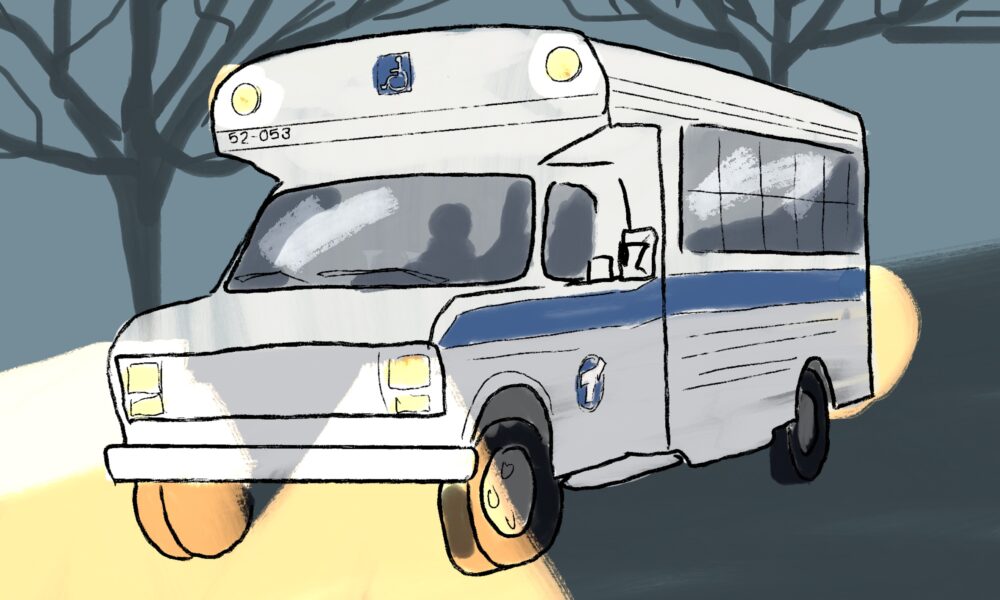
The STM still requires those using paratransit or other accessible public transportation alternatives to complete an accessibility form as far as 45 days in advance, with the expectation that individuals provide medical proof of their need for these services. For people with temporary injuries or those who lack health insurance and are unable to obtain documentation, these requirements render public transit completely inaccessible.
The municipal government’s neglect is closely paralleled at an institutional level. McGill, despite continuously claiming dedication to accessibility, still lacks sufficient programming to ensure nondiscriminatory mobility options on its campus. The university’s current mobility programming requires students to tirelessly advocate for their own accessibility needs to receive bare-minimum accommodations, as several buildings lack directly wheelchair-accessible entrances. Further, students must present medical documentation to prove eligibility for its adapted transport service program, reducing the accessibility of these accommodations.
Critically, students and residents pay tuition and taxes even when they are unable to access and enjoy the public spaces and services these contributions are financing. Taking payments from individuals with reduced mobility without dedicating a meaningful portion of tuition and tax dollars toward ensuring equitable access is unethical and negligent. The Ferrada government—and McGill—must end its chronic disregard for the rights, needs, and experiences of individuals living with impaired mobility, and allocate sufficient funding for accessibility projects within public and private spaces.