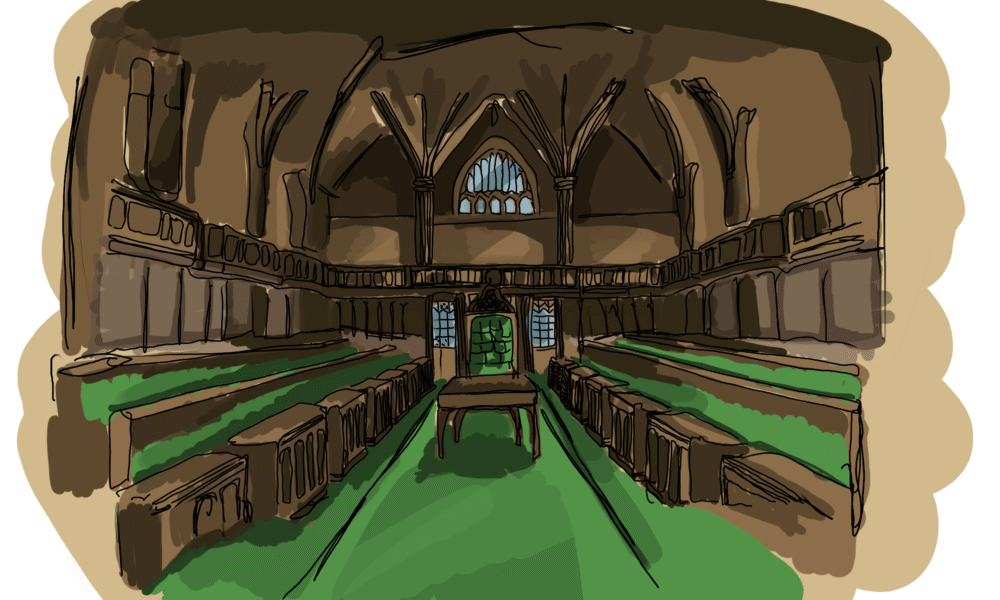



Canada’s current Parliament has passed 50 per cent of its bills through a ‘division’ vote instead of a ‘tallied’ vote in the House of Commons. Parliament has previously used this practice to fast-track legislation or opt for simplicity during online sessions. Today, it is justified in the name of stability, creating a united front in the face of geopolitical rivalries.
However, this priority not only threatens Canadian democracy—it reflects democratic backsliding in contemporary society. Citizens, unaware of how their representatives would have voted, are ousted from the political process and forced to trust their elected officials under ignorance, while bills are passed on potentially non-existent consensuses in Parliament.
Division voting is beneficial for minority governments, as it allows bills to bypass the need for majority approval from Members of Parliament (MPs). This eases the creation of legislation in highly divided times, though at the cost of certain groups’ political power.
Existing dissenting voices in Parliament have been stifled by this practice to avoid bringing down the government or causing a snap election; two of the bills passed on division under the current Parliament were confidence votes. A confidence vote is one in which a ‘no’ vote means that the prime minister no longer holds the support––confidence––of Parliament, obligating a consequent general election. By passing bills and motions frequently through division votes, Canada assumes the appearance of a stable, functioning government in the context of rising international tensions. Under pressure from the trade war with the United States, Prime Minister Mark Carney likely aspires to present national unity and a coordinated government.
However, this obscures the reality that this Parliament has been inefficient. As the completion of Carney’s first year nears, only 12 bills have passed, a stark contrast to previous governments that were able to pass over 50 within the same timeframe. Not only is Parliament inefficient, but half of the few bills that were successful only passed through a division vote, speaking to the fragility of the government and disagreement across the nation.
These confidence bills were passed on division to ensure this Parliament’s continuation while acknowledging the objections of other parties. However, acknowledgement alone does not imply democracy; impact does. When the influence of major portions of Parliament is removed from the decision-making sphere, their constituents lose power as well—even more so as constituents are unable to tell how their representatives vote. While division votes can only happen with the consent of most MPs, their lack of transparency greatly threatens Canadian democratic values.
The issue of democratic participation is not one foreign to Montrealers and McGillians. Last fall’s municipal election saw the lowest voter turnout in years at a mere 37 per cent. Low voter turnout is also visible in the context of the Students’ Society of McGill University (SSMU)’s elections and referenda; despite holding a quorum of only 15 per cent, resolutions frequently fail to reach this threshold.
Political inactivity is widespread at the local level, and will only worsen with the continued use of on division bill passing. With its high frequency of use, this procedural tactic is an abuse to Canada’s democratic system and excludes significant numbers of people by assuming a consensus that may not exist.
By ignoring or accepting Parliament’s use of this tactic, we are at risk of creating a culture apathetic to political participation—that is, to democracy. It is imperative that we stay vigilant and continue to monitor these developments, as democracy does not always vanish overnight but instead may slip away quietly when no one is paying attention.


