


Content warning: Mentions of gender-based violence, including intimate partner violence and femicide
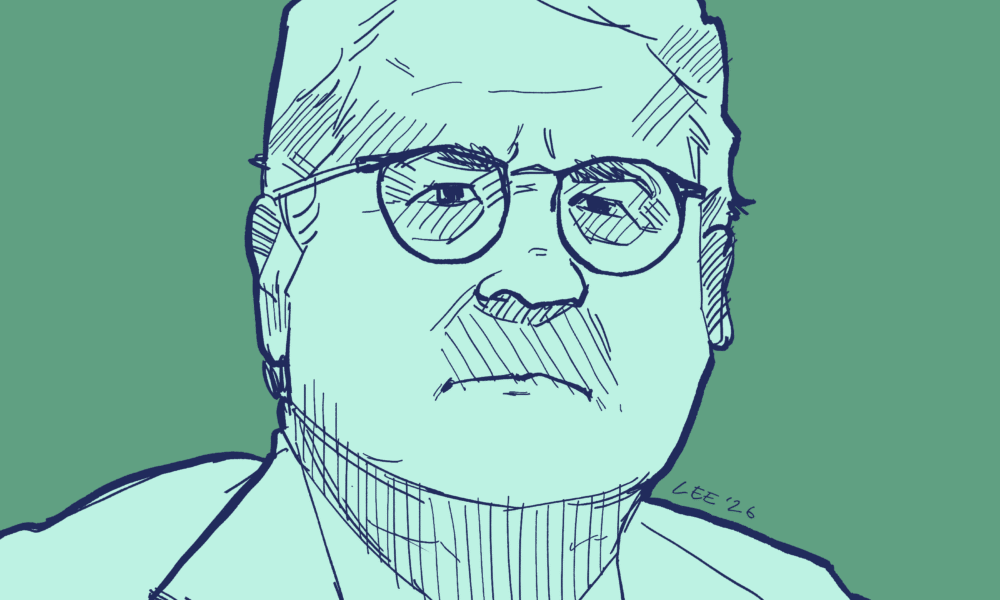
Masculinist sentiment is gaining traction across the world while global backlash against feminism and gender equality is intensifying. Simultaneously, gender-based violence remains widespread, reproductive and bodily autonomy are increasingly policed, and gender-diverse people continue to face exclusion in public policy and everyday life. During these critical times, Bernard Drainville, the current Environment Minister in Quebec, and potential successor to Francois Legault as leader of the Coalition Avenir Québec (CAQ), explicitly stated that he did not wish to be identified as a feminist, but only as a supporter of gender equality. This is a statement that clearly embodies where Quebec—and global—politics are headed: A broader political moment wherein the language of equality is embraced, but the movements needed to achieve it are rejected.
Feminism, at its core, is the belief that everyone should have equal rights, regardless of their gender identity or sex. A politician who actively distances himself from feminism while claiming to support gender equality raises a larger question about what kind of equality he is willing to defend. Rejecting feminism is not a neutral branding choice; it is a refusal to name and confront the systems that make inequality possible in the first place.
Drainville’s equality proposals mainly focus on homeownership and in vitro fertilization. While easing women’s path to property ownership and making fertility treatment more accessible are steps in the right direction, they remain insufficient. These policies frame gender equality largely through economic participation and family formation rather than addressing freedom from violence, bodily autonomy, and protection for those who face intersectional forms of discrimination and state exclusion. Drainville offers only a narrow and selective vision of equality.
This perspective becomes even more overt in his broader policies. By introducing initiatives like Bill 94, an expansion of Bill 21 that bans religious symbols for teachers and school staff, Drainville advances legislation that outright dismisses intersectional realities and excludes the people feminism seeks to protect. He also rejected gender-neutral bathrooms in schools in 2023, saying that the matter was out of the question for Quebec. Drainville then refused to convene a legislative committee on gender identity, arguing that doing so would only expose what he named a sensitive issue to political exploitation. Rather than confronting inequality as a structural issue, the version of equality he proposes is extremely limited in scope.
Gender inequality is experienced daily through violence, exclusion, and state neglect. Intimate partner violence and sexual violence affect people of all genders, but remain deeply gendered in who is most affected and how that violence operates. Worldwide in 2024, 83,000 women and girls were intentionally killed—50,000 by their intimate partners or family members. On a daily basis, this number reached 137—approximately one death every ten minutes. Quebec is not exempt from this reality. Femicides, the gender-based killings of women and girls, are the byproducts of ongoing patriarchal systems that normalize coercive control, misogyny, and violence; the province has reported seven femicides since the beginning of 2026.
When gender-related murders happen on a scale so large that they can be reported as a daily statistic, it becomes clear that gender-based violence is a global crisis and a human rights violation, as it strips women and gender-diverse people of their rights to safety, dignity, freedom, and life itself. Given this reality, a commitment to equality that stops short of feminism is deeply inadequate to address the structural conditions in which this violence persists.
Drainville’s statement is not a mere semantic happenstance, but a conscious, harmful choice. In an age where the need for feminism is urgent, vague statements about supporting gender equality or policies that will “attract young women” are not enough. Anything less than explicit and continuous feminist practices is a limited political strategy that recycles traditional gender roles as progress instead of confronting the conditions that sustain inequality in the first place. Feminism saves lives, and ambiguity is not neutrality—it is participation in a patriarchal order.
If you or someone you know is experiencing gender-based violence, please refer to the resources below:
SOS violence conjugale: 1 800 363-9010 (bilingual service available)
Sexual Violence Helpline: 1-888-933-9007


