Latest News

Commentary, Opinion

Welcomed to work, not to stay

As of Nov. 19, 2025, international graduates of Quebec universities and temporary foreign workers are no longer eligible to apply through the accelerated immigration pathway to obtain a Certificat de sélection du Québec for permanent residence. This pathway, known as the Programme de l’expérience québécoise (PEQ), was abolished by Immigration Minister Jean-François Roberge under the François Legault administration, leaving previously eligible individuals with shattered hopes of obtaining permanent residency in Quebec. 

The Programme de sélection des travailleurs qualifiés (PSTQ), which replaced the PEQ program, is a competitive, points-based system with stringent requirements regarding French language proficiency, certified job offers, and alignment with the specific labour market needs. Since its establishment, the new program has been heavily scrutinized by immigration experts, municipalities, and businesses. Those who had moved to Quebec planning to apply for permanent residence through the now-abolished PEQ pathway—known as ‘PEQ orphans’—are now placed at the mercy of the PSTQ guidelines.

The abolition of the PEQ is not simply an administrative reform but a breach of trust between Quebec and the people it invited to build their lives in the province. In narrowing immigration to serve short‑term labour goals, the government has undermined both its moral authority and its long‑term economic interests.

This change cannot be understood solely as an economic adjustment. It reflects a broader policy approach under Quebec Premier Legault, whose administration consistently pushed for restrictions, cultural protection, and linguistic conformity. This pattern is evident in recent legislation such as Bill 21, which enforces secularism by banning certain public-sector employees from wearing visible religious symbols, disproportionately targeting religious minorities, and Bill 96, which toughens French language requirements for new immigrants, international students, and institutions under the guise of preserving francophone identity. 

These decisions are part of a long-standing legislative pattern in Quebec, led by political figures such as Legault, who have repeatedly denied the presence of systemic racism in provincial institutions. That pattern is now being reinforced by Roberge’s refusal to implement a grandfather clause for the PEQ, which would have allowed current applicants to retain eligibility for permanent residence.

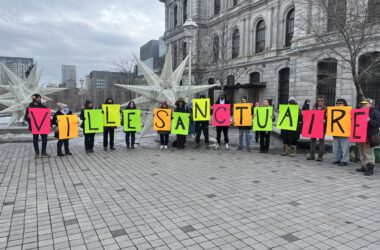
On Feb. 7, protesters marched in Montreal, articulating the impact of the PEQ’s abolition. A psychology PhD graduate held a sign that read “Assez bonne pour travailler pour le Québec, pas assez pour rester” (Good enough to work for Quebec, not good enough to stay). Others echoed similar sentiments: “Je suis venu donner de la valeur, pas demander une faveur” (I came to contribute value, not to ask for a favour).

The government insists that the PSTQ is necessary to better align immigration with labour shortages, reduce pressure on housing and public services, and distribute newcomers more evenly across the province. These concerns are not irrational, yet by dismantling a predictable pathway for already‑integrated workers and graduates, the government risks deepening precisely the labour shortages it claims to address, particularly in sectors such as healthcare, where over 6,300 temporary foreign workers face expiring permits by 2026.

At its core, this shift raises deeper concerns about the nature of Quebec’s immigration policies. Immigration is not merely an economic tool; it is a system built on integration and trust. When governments change the rules, they reshape the relationship between the state and those who choose to build their lives within it. Instead of addressing the anxieties and expectations of Quebec immigrants by implementing a grandfather clause or equivalent measure, Roberge and his cabinet have merely replaced one immigration pathway for another—a solution that serves administrative priorities while leaving human realities unaccounted for. 

Quebec must not make promises it cannot—or will not—honour; to do so is a failure of governance. At its most basic level, effective governance requires listening to the people whose lives are shaped by political decisions and recognizing the weight those decisions carry. Immigrants are not interchangeable economic units to be recalibrated according to the province’s shifting priorities. They are people who have spent years building their lives in Quebec, contributing through work, study, and engagement. Any policy that ignores this reality risks undermining not only individual futures, but the very trust upon which effective and legitimate governance depends.

Student Life, Word on the Y

Word on the Y: What McGillians are saying about the end of the Legault era

Quebec Premier Francois Legault announced on Jan. 14 that he would be stepping down from his position after eight years as the head of the Coalition Avenir Québec (CAQ), a leadership emblazoned by the weaponization of identity politics and controversy. Through various legislative agendas,  Legault forged a path rooted in partisan nationalism, rallying for the preservation of a Quebec identity through measures such as Bill 96 and Bill 21, which solidified his attachment to conservative secularism and nationalism

It is no surprise that rampant discussion has emerged from such controversies. That is why The Tribune took to the Y to see what McGillians have to say about Legault’s resignation and the future of Quebec. 

Camila Sierra, U1 Arts, reflected on the impact of Quebec’s restrictive legislation.

“It’s a relief, honestly, knowing that he’s resigning, and I hope that the values he’s taking with him are these very narrow-minded and conservative values that represent mostly white, richer parts of the population. I hope the values that are introduced are more inclusive and more intentional policies that don’t only focus on secularism […] [because] they weren’t really considering the kinds of populations that would be affected by the law [Bill 21] directly.”

Passed in 2019, Bill 21 bars public sector workers such as judges, police officers, prison guards, and teachers from wearing religious symbols while at work. However, under the guise of creating a secular province, the act disproportionately impacts religious minorities.

Bill 21 represents Quebec’s living history of racism and xenophobia still attempting to restrict the religious liberties of minorities today. It posits strict secularism as the standard, thus rendering outward expressions of faith by religious minorities more easily condemnable while purporting to be a policy of progression and equality. 

Jacintha Dykes, U4 Arts, discussed the implications of an identity-obsessed government as other issues continue to negatively impact Quebec residents and students in the province.

“I remember the tuition hikes, a couple years ago. That caused a lot of panic. I don’t think it’s productive to […] favour one part of the population over another. I think that it just creates a lot of division […] [and] distracts from actual issues.”

Vanessa Charleston, U1 Science, explained her own experience with Quebec language laws and how they shaped her early education.

“Going to an English school in Quebec my entire life, I have noticed that our schools just don’t get any funding. [Kids in Quebec typically] all go to French schools because [Legault] only wants kids to go to French schools [….] When I was a kid just starting school, my mom was going to put me into French school, but then she thought that there was not enough English for me to learn because they only do, at least from when I was a kid, roughly three hours of English a week.”

As of 2026, the Quebec government has maintained its 33 per cent tuition hike for out-of-province students enrolling in English universities. This not only discourages out-of-province Canadian students from attending top institutions like McGill, but also puts a financial strain on the university due to decreased application rates. By attempting to maintain a francophone majority, the government has instrumentalized and abused educational institutions to reestablish a narrow Quebec identity. 

Legault will remain the official Premier of Quebec until the election of his successor in April of 2026. The consensus on campus is clear: The CAQ must reevaluate its priorities and put forth a candidate ready to confront longstanding systemic issues in the province, from its healthcare shortage, the housing crisis, and a struggling education sector.

Research Briefs, Science & Technology

Parenting Black and Latine children in an era of heightened racism

In a political context marked by U.S. President Donald Trump’s inflammatory rhetoric vilifying people of colour, the rise of white supremacy, and heightened anti-immigration enforcement by ICE, racism and discrimination have become increasingly prevalent and dangerous for many people of colour. Black and Latine youth, in particular, are victims of disproportionate discrimination at school and in broader society, leaving parents deeply concerned about their children.

“Parents of colour have often had these [racist] experiences growing up and probably worry about their kids having them as well, and that worry might be associated with psychological outcomes or different behaviours,” N. Keita Christophe, an assistant professor in McGill’s Department of Psychology, said in an interview with The Tribune.

This worry can take on many different forms, depending on social circumstances as well as parents’ own experiences with racism. 

“Parents can worry about their kids getting discriminated against by teachers,” Christophe said. “They can worry about […] their kids experiencing police violence. Some of them might even worry that their kids will discriminate against other kids.”

Due to a lack of tools to assess parents’ concerns about their children’s experiences of racism, Christophe and his collaborators sought to measure how parents worry about their children’s discrimination. Their goal was to observe whether different types of worry reflect distinct concerns about racial discrimination.

The researchers used a scale called Worries About Racial Profiling (WARP) to assess the types of worries parents have, surveying Black and Latine parents in the United States who have a child aged 10 to 18. Parents reported on their concerns about their children facing discrimination, their own discriminatory experiences, and how they talk to their children about race and racism.

The team worked to determine whether the different survey items correlated with one another—whether they cluster into distinct dimensions or operate in distinct spheres. Their findings suggest that the different types of worries are closely related. Importantly, the measure also performed well across both Black and Latine racial groups and accounted for biases.

“A lot of times, [in psychology], the measures that we use […] have not been tested to see if they have a bias for or against certain groups, but if we want to compare groups on different things that we care about, we want to make sure our measures work equally and do not introduce that bias,” Christophe said.

The researchers also explored how these worries relate to other aspects of the parents’ lives. Parents who expressed greater concern about their children were more likely to have experienced discrimination themselves and to have more frequent conversations with their children about coping with racism. Notably, higher levels of parental worry were also associated with depressive symptoms in parents.

One strength of this study is that it targeted people across different geographical areas, capturing how racialized experiences vary across regions.

However, the study did not evaluate parental worries in Asian families. Asian individuals typically face different stereotypes, such as the “model minority” myth, a harmful stereotype which undermines the discrimination Asian people experience by framing them as intelligent and hardworking. Because discrimination can take distinct forms across racial groups, future work should focus on developing more inclusive measures that reflect a broader range of racialized experiences.

Looking ahead, Christophe recommends studying how parents’ worries about discrimination evolve as their children grow older. They expect concerns to grow during their children’s adolescence, as teenagers often spend more time outside the home and face greater exposure to other adults as well as the police.

More broadly, Christophe situated his work within a paradigm shift in psychology. Historically, racialized communities were excluded from psychology research or treated as inferior to the white population. Today, more academics are focusing on the cultural strengths of Black, Latine, and other racialized communities—a critical area which must continue to be studied to progress towards an equitable society.

“As much as it is important to focus on things related to racism and discrimination, I would say it is even more important to focus on positive aspects,” Christophe said. “That is a lot of what my other work does, looking at cultural pride and identity and how you instill that in kids and in families.”

Commentary, Opinion

The Olympics’ selectivity erodes neutrality

Since 1924, nations have come together to celebrate athletic excellence every fourth winter. This year, the Olympic Winter Games in Milan and Cortina mark a century of such tradition, setting record viewership just one week in. Amid the exciting celebrations of record-breaking athleticism, competing Olympians can hardly escape the political turmoil that is unfolding alongside the Games. Sports are inherently intertwined with politics, and the Olympic Committee must enforce rules governing participation consistently. Penalizing athletes of certain nationalities because of their government’s politics, all the while ignoring other ongoing injustices, reflects an unsettling selectiveness that further perpetuates political divides, corroding the three values on which the Olympics were founded—excellence, respect, and friendship.

The International Olympic Committee (IOC) has banned 14 countries from competing in the past due to various political issues: South Africa had been repeatedly banned due to Apartheid, while Germany and Japan had been excluded for their involvement in the Second World War. Most recently, the IOC banned Russia and Belarus from the Winter Olympics due to their war crimes in Ukraine, which forced many athletes to compete as individual neutral athletes (INA).

The IOC framed such bans as moral obligations, but also as a consequence of Russia’s repeated violations of the Olympic Truce—a United Nations-backed policy that calls for ceasefires immediately before, during, and after the Olympic Games. However, frameworks like the Olympic Truce hardly ever compel substantive political change. For example, Apartheid in South Africa did not end solely because athletes were barred from competing—it ended after decades of civil disobedience and activism, including widespread pressure from economic boycotts and sanctions. While sporting bans may be symbolic to advancing world peace through their role in broader international pressure campaigns, their selective application cannot be justified as a tool for achieving justice.

What these bans do achieve, however, is reducing athletes to a monolithic identity. When athletes’ only option to compete is to strip themselves of any national symbol, their pride in representing their homeland and their culture is treated as complicity in their government’s actions.

Such tension is further exemplified by Ukrainian Skeleton Athlete Vladyslav Heraskevych’s “memory helmet” featuring portraits of athletes killed in the Russo-Ukraine War, which led the IOC to ban Heraskevych from competing. This act was deemed a violation of Rule 50 of the Olympic Charter, which aims to keep the sport podium neutral. But sports are political. Heraskevych did not introduce politics into the Olympics; he merely commemorated the many Ukrainian athletes whose lives were lost. The IOC cannot act as the inconsistent arbiter of geopolitical morality while claiming that its arenas are neutral.

Global actors and human rights organizations have condemned Israel’s genocide in Palestine. Iran’s brutal crackdown on protestors is likewise criticized. Even the United States’ military invasion of Venezuela has been denounced as a violation of international law. These conflicts and their impacts have persisted through multiple Olympic Games, yet none of these countries were barred from the Olympics, and none of their athletes have been forced to compete as INAs. When athletes cannot represent their nation through the craft they dedicate themselves to, the IOF directly undermines the Olympics’ founding principles of excellence, respect, and friendship, setting inconsistent and unfair rules by which athletes must play the Games.

Excellence should be measured by athletic merit, not nationality. Respect requires the acknowledgement that athletes are global citizens, not campaigns of their government’s complicity. Friendship calls for the cultivation of athletic connection even amid adverse political conditions. When some athletes’ identities are written off as an extension of their government’s actions while others’ are overlooked, some national identities become politically unfavourable while others are affirmed as diplomatically tolerable.

The Olympics’ immense visibility comes with great responsibility: If the IOC chooses to invoke morality as grounds for participatory bans, sanctioning countries that have committed international crimes, they must lay out transparent criteria and enforce them consistently, regardless of global negligence or diplomatic alliances. Otherwise, the IOC should acknowledge the limits of sporting sanctions. Sports are inevitably political, but sporting sanctions carry limited power outside of moral symbolism. Symbolism cannot uphold justice when applied selectively.

Editorial, Opinion

Ferrada’s austerity must not threaten accessibility

Mayor Soraya Martinez Ferrada’s 2026 budget implemented a 90 per cent reduction in funding for Montreal’s universal mobility program, an initiative dedicated to making public spaces accessible for individuals with reduced mobility. Ferrada’s administration allocated $354,000 CAD in funding for 2026 and has planned $0 CAD for 2027, severely compromising accessibility.

Ferrada’s minuscule budget allocation for mobility notably pales in comparison to the $3 million CAD the Plante administration had dedicated annually to the program. This funding has been critical in developing accessible infrastructure to support individuals with disabilities and injuries, the elderly, and parents with strollers.

The Ferrada government has eradicated funding for mobility efforts in a blatant violation of equality rights as enshrined in the Canadian Charter of Rights and Freedoms. These policies—mirrored by the failure of public institutions such as the Société de transport de Montréal (STM) and McGill University to offer sufficient programming for physical accessibility—reveal a broad neglect for the principle of universal mobility and must be rectified immediately.

Universal mobility entails access to one’s place of work and schooling, as well as to recreational third spaces. Under this fundamental standard, governments and institutions, public and private, are legally obligated to ensure dignity for those with reduced mobility.

The Accessible Canada Act mandates the identification and removal of barriers to accessibility, as well as the prevention of new barriers. When physical barriers to mobility persist, they bear compounding repercussions on one’s ability to seek employment, receive medical care, obtain an education, or even access public transportation.

The STM has implemented cuts to accessibility that mirror and are directly derived from the municipal government’s budget reductions, demonstrating how Ferrada’s actions will have a ripple effect in exacerbating barriers to accessibility in Montreal. Ferrada’s 2026 budget allocated $1.8 billion CAD for the STM—a six per cent increase in the city’s contribution to public transit, but still short of the funding needed to ensure the metro runs effectively. As a result, the STM has greatly reduced its accessible mobility options at stations and in transit vehicles. In April 2025, the STM implemented what it stated would be the metro system’s last universal accessibility project due to budget cuts, despite only 30 of the 68 stations in the metro network currently being universally accessible.

In 2017, the Regroupement des activistes pour l’inclusion au Québec filed a class-action lawsuit over wheelchair accessibility in STM metros, seeking $1.5 billion CAD in damages. However, after almost ten years of legal proceedings, the Quebec Superior Court dismissed the class action. The Court acknowledged that discrimination against individuals with disabilities had occurred, but stated that transit agencies were investing in accessibility to the best of their abilities given their limited budgets. While pressure to meet budgetary obligations can necessitate some austerity measures, the Charter rights of individuals with disabilities or impaired mobility cannot be made dispensable under financial constraint.

The STM still requires those using paratransit or other accessible public transportation alternatives to complete an accessibility form as far as 45 days in advance, with the expectation that individuals provide medical proof of their need for these services. For people with temporary injuries or those who lack health insurance and are unable to obtain documentation, these requirements render public transit completely inaccessible.

The municipal government’s neglect is closely paralleled at an institutional level. McGill, despite continuously claiming dedication to accessibility, still lacks sufficient programming to ensure nondiscriminatory mobility options on its campus. The university’s current mobility programming requires students to tirelessly advocate for their own accessibility needs to receive bare-minimum accommodations, as several buildings lack directly wheelchair-accessible entrances. Further, students must present medical documentation to prove eligibility for its adapted transport service program, reducing the accessibility of these accommodations.

Critically, students and residents pay tuition and taxes even when they are unable to access and enjoy the public spaces and services these contributions are financing. Taking payments from individuals with reduced mobility without dedicating a meaningful portion of tuition and tax dollars toward ensuring equitable access is unethical and negligent. The Ferrada government—and McGill—must end its chronic disregard for the rights, needs, and experiences of individuals living with impaired mobility, and allocate sufficient funding for accessibility projects within public and private spaces.

Arts & Entertainment, Culture, Music, Pop Rhetoric

Bad Bunny’s Puerto Rican pride combats hateful rhetoric

The Super Bowl has long been an annual time of excitement for both Americans and international football fans alike. Although some love the opportunity to get together with friends and family to passionately root for their team, others with no interest in football still tune in for the halftime show. The musical performance during the game’s halftime has hosted acts by many iconic artists such as Prince, Michael Jackson, and Beyoncé. Even weeks later, this year’s performance by Bad Bunny still resonates. 

Bad Bunny is a Puerto Rican rapper and singer who rose to fame after releasing his 2016 song “Diles.” Today, he has six solo studio albums and is the only artist to have been named Spotify’s number one Global Top Artist four times. Bad Bunny’s music honours and celebrates Latine culture, denouncing American imperialism and the ongoing effects of colonialism—especially in his most recent album, DeBí TiRAR MáS FOToS

Throughout his Super Bowl performance, the staging itself venerated his Puerto Rican heritage. The set, a field of tall grass, paid homage to Latino labour—a reference to sugar cane extraction, which was collected through slave labour in the Americas. Bad Bunny also had actors play roles across many different industries dominated by Latino workers, including construction, food service, and more. In spotlighting labour that is often overlooked, the artist created a space of acknowledgement and appreciation for those workers and the generations before who have toiled in these workforces. 

Bad Bunny also celebrated love during his performance. He invited one lucky couple to get married on the football field, which ended with the introduction of Lady Gaga’s performance of Die With a Smile. This is a stunning example of how celebrities can use their fame to make others’ dreams come true. It also highlights how love in the face of hatred can encourage others to combat political polarization through community building.

One of the most noteworthy segments of the performance featured a Latino boy and his father watching Bad Bunny’s recent Grammy acceptance speech, where he discussed the vital impact of immigrants on American success, condemning ICE’s violent treatment of citizens and non-citizens alike, and advocating for the celebration of multiculturalism. Bad Bunny was the first artist to win Album of the Year for a fully Spanish album. Amidst the rise of anti-immigrant sentiment and prejudice towards Latin Americans, Bad Bunny serves as a model of Latino resilience and accomplishment for immigrants and youth. This inclusion highlights the importance of representation as a way to dismantle stereotypes that dehumanize marginalized groups. 

As Bad Bunny concluded his performance, he gave a shoutout to every country in the Americas. Naming them in geographic order from south to north, his final shoutout went to his home of Puerto Rico. As he exited the stage with a group of musicians and dancers carrying flags of the Americas, he sang the chorus of his song “DtMF”, filling the field with the elation of North and South American cultural diversity, forever marking this performance. On the stadium’s jumbotron, the message “The Only Thing More Powerful Than Hate is Love” shone in large print while Bad Bunny held a football that read the message Together, We Are America.

Bad Bunny’s display of pan-Americanism is particularly impactful during a time of intense division. Over time, global superpowers, specifically the U.S., have revealed prejudice towards Latin American communities, as evidenced by the increasing atrocities committed by ICE. Bad Bunny’s theme of unity in the face of hatred sends the message that everyone should have a place in America—the nation’s cultural diversity is its greatest strength.

News

Pro-Palestine student activists  face legal charges for occupying James Administration Building

On June 7, 2024, 15 McGill students were arrested for occupying the third floor of the James Administration building in protest during the solidarity encampment for Palestine, and 13—referred to as the ‘Palestine 13’— continue to face criminal charges today, with legal fees amounting to $40,000 CAD. Students for Palestine’s Honour and Resistance (SPHR) at McGill, an advocacy group on campus that has organized multiple pro-Palestine demonstrations, is now campaigning to raise money for the Palestine 13’s ongoing legal battle. 

During the summer of 2024, over 100 McGill students participated in a solidarity encampment for Palestine, lasting from April 27 to July 10. The specific protest in question took place on June 6 outside the James Administration building, initially with approximately 50 students. 13 students entered the building, leading to their arrest for breaking and entering, and an additional two were arrested for obstruction of police work.  Shortly after, Service de police de la Ville de Montréal (SPVM) officers arrived at the scene in riot gear, employing tear gas and pepper spray to disperse the crowd. 

In a written response to The Tribune, a spokesperson from McGill’s Media Relations Office (MRO) stated that McGill did not and does not intend to infringe upon students’ right to protest, unless the given demonstration appears to be unsafe or negatively impacts the university’s learning environment.

“McGill is committed to upholding students’ rights to freedom of expression and peaceful assembly in the context of student activism,” the spokesperson wrote. “At the same time, both McGill and the [Students’ Society of McGill University] unequivocally condemn any acts of protest involving vandalism, violence, intimidation, or the obstruction of teaching, learning, research, and other core academic activities.”

Profs4Palestine, a collective of McGill professors in support of Palestine, disagrees with the actions taken by McGill and SPVM against the Palestine 13, who were protesting in support of defunding the genocide in Gaza. 

“All spaces are inherently political—campuses are no different from anywhere else in society. Those of us who work in universities largely believe in using campus spaces as places for open exchange, the debate of ideas, and locations for learning,” a representative from Profs4Palestine wrote to The Tribune. “A political space does not mean that people of a wide variety of views, positions, and politics cannot work together—the opposite in fact. It’s important that we do not try to claim a false neutrality for university campuses, it will not bring about the learning that needs to happen there.”

Across the United States and Canada, pro-Palestine protests have sparked hundreds of arrests. While public opinion generally supports students’ right to protest—a poll by the Angus Reid Institute found that 81 per cent of Canadians are ‘OK’  with student protests—police are still readily employed to stop these demonstrations

Francis Rose Zeitoun, a U3 student in the Faculty of Agricultural and Environmental Science involved with student group Mac Community For Collective Activism, stated in an interview with The Tribune that McGill’s response to protests on campus is against the spirit of the university and disrespectful to the student body as a whole.  

“Since getting to McGill a few years ago, I’ve seen the administration pick profit over people over and over again,” said Zeitoun. “Using our academic labour and tuition money to support things we have demanded and screamed for you to divest from is deplorable. McGill is not the administration, McGill is the students who’ve come and gone, the students who’ve worked hard to make campus a better place, the students who go forward in life with a McGill degree. To see the administration suing the students over what we want is enraging because they are not McGill, we are.”

Student Life

Battling the McGill cold 

Have you noticed yourself sniffling or coughing more? Is the back of your throat starting to get that feeling? I hate to be the bearer of bad news, but you probably have the McGill cold. This bothersome illness can last from about five days to two months and can feel like a minor drag or the worst sickness you’ve ever experienced. With midterm season upon us, it’s more important than ever to develop your toolkit against this pesky winter inevitability. The Tribune has compiled four pro-tips to combat the notorious McGill cold.  

Get yourself a flu shot

The first and most important thing is to try to prevent the illness before it reaches you. Getting a flu shot at the beginning of the school year is an effective preventative measure to stave off influenza and strengthen your immune system. Although vaccinations may seem inaccessible, they’re more in reach than they may seem. Jean Coutu pharmacies offer free flu vaccinations by appointment, and there are a few right near McGill’s downtown campus! Getting vaccinated is easy and will do wonders to fend off the wretched McGill cold. 

Book a consultation with the McGill Student Wellness Hub

Want to talk to a medical professional? Call McGill’s Student Wellness Hub. They provide online or in-person consultations and can diagnose or prescribe you with the appropriate medication for whatever symptoms you’re facing. But be ready: Appointments fill up quickly. Set your alarm for 8:20 a.m., as the hub opens at 8:30 a.m. and your best chance at getting the earliest appointment is to be the first person on their line.  

Do not go out

Even if you already bought your Café Campus or New City Gas ticket, you should take the weekend off. This is easier said than done when you’ve already paid $25 CAD for an “early bird” cover charge, but pushing yourself to go out will only exacerbate your symptoms. Plus, being in a crowded environment like a club could allow the illness to spread, inevitably putting your fellow students and friends at risk. Instead, rest at home—binge the series you’ve been meaning to watch or catch up on some work you’ve been procrastinating; drink a cup of “throat coat” tea and go to bed early. A good night’s sleep will give your body more time to redirect its energy towards your immune system, strengthen it, and help you recover more quickly. Trust me, you’ll thank yourself in the morning. 

Indulge in nutritious comfort foods

When recovering from a cold, a steamy broth will be your best friend. Soothe your throat and your soul and get on Uber Eats to order some hot, comforting chicken noodle soup from Snowdon Deli. If anything is going to cure you, it’ll be the warm broth from one of Montreal’s most famous Jewish delis. Alternatively, some warm lentil soup will put your throat at ease, and its health benefits will strengthen your body for a speedier recovery. Remember to eat Vitamin-C-rich foods or take supplements.

Battling the McGill cold can be a long, hard fight. Whether it’s the infamous “Frosh Flu” or the feared finals season cold, the sickness will always find you. It’s crucial to take care of yourself to recover during this inevitable period. And remember, it is just as important to take preventative measures as it is to ask for help. Call on friends and family to help you through your battle against the multitude of winter illnesses! You shouldn’t have to fight a dreaded sickness alone. Follow these tips and hopefully your fight will be a little less wearing.  

News, Recap

Recap: Laila Parsons presents seminar on 1917 Gaza

On Feb. 19, the Montreal British History Seminar hosted “Gaza 1917.” Laila Parsons, a decorated historian specializing in 20th-century Middle Eastern history and professor in the Department of History and Classical Studies and the Institute of Islamic Studies, led the seminar. 

Parsons prefaced the talk by specifying that the conquest of Palestine in 1917 should not be understood as a distant part of World War I history or as a heroic British victory over the Ottoman Empire. Rather, she argues that the conquest represents a foreign incursion.

“[The conquest stands as] an alien invasion and occupation, and as the material starting point of the colonization of Palestine,” Parsons stated.

She maintained that, from the perspective of Palestinians, the invasion represented a rupture in which they lost the structure that came with Ottoman rule. The British encouraged the expansion and acquisition of land from Zionist settler colonies initially established under the Ottoman Empire in the late nineteenth century.

“The promise of a national home for the Jewish people in Palestine was meaningless without the military occupation that first conquered the land and then protected the settler community, at least until 1939,” Parsons said.

Parsons then clarified that the British had initially been waging a defensive war against Ottoman attacks on the Suez Canal. However, this had changed by the spring of 1917.

“The earliest point [would be] when the British Prime Minister David Lloyd George started talking about ‘wanting Jerusalem as a Christmas present,’” Parsons said.

The British continued their advance into what they understood as the ‘Near East,’ taking Jerusalem, then Damascus, and eventually the whole of Syria. 

The conquest’s extent is exemplified in Parsons’ quoting of General Edmund Allenby, a high-ranking British officer. 

“I can occupy any strategic points I like,” Parsons read from a letter written by Allenby. “I have the military administration of Syria and Palestine.” 

The presentation concluded with an account of the strained peace in the postwar period. Parsons described cataclysmic famine, destruction of essential infrastructure, and a Palestinian future dictated by the brutal British military occupation—factors which led to the termination of the British Mandate for Palestine, the unilateral declaration of Israeli independence, and the 1948 Nakba—to put into context how the consequences of the British conquest of Palestine persist today.

Arts & Entertainment, Music

Silva Bumpa blows the roof off Newspeak as UK garage continues to soar in Montreal

Being on the sold-out dancefloor of Newspeak last Friday felt like being transported to a smoke-filled Manchester warehouse or an underground party in the heart of Sheffield. For Montreal’s UK bass community, this was no ordinary club night. Feb. 13 had occupied calendars for several months, as rising garage producer and DJ Silva Bumpa made his long-awaited Montreal debut at one of the city’s perennial electronic music venues.

As Silva Bumpa loaded the first track of his two-hour set, anticipation buzzed through the room. The Sheffield native’s groovy UK garage music style has made him one of the leading figures of the new generation. 

Judging by the expressions of disbelief that accompanied each sub-bass frequency and synth melody, the crowd’s high expectations were met.

“His style makes you so excited and grateful to be there,” Ignacio Hampton, U2 Arts, said in an interview with The Tribune

Silva Bumpa’s selections are remarkably tight and consistent, making for an extremely cohesive set. He has carved out a distinct style of bumpy, nostalgic garage that prioritizes maintaining a continuous groove throughout a set, rather than producing singular moments of bass-heavy drops. Whether he’s picking from his extensive production catalogue or his prized folder of dubplates, he fills his sets with club-ready tools built for the dancefloor. When discussing his production techniques in an interview with MusicRadar, Silva Bumpa said, “Layering is everything for me. Separating out sub, having stuff that gives punch, stuff that gives texture, and stuff that gives powerful sub energy so that it can hit on a sound system.” This demonstrates the garage prodigy’s astute ability to make tunes that are functional for a rave. 

Coming off an all-night long tour in the UK last fall, Silva Bumpa is at ease when he’s controlling the pace of his sets, selecting tracks that keep the audience engaged while still allowing the dancefloor to breathe. Clearly a master at reading crowds, he consistently builds up the club’s energy before dropping some of his most explosive tracks, such as “Wrap it Up,” a bassline-influenced standout from his 2025 EP Check Dis Out. One of the most memorable moments of the set came when Silva Bumpa mixed “Doin’ It” after playing a monstrous edit of Basement Jaxx’s “Where’s Your Head At,” a staple of UK rave culture. Since ATW, a label run by fellow garage heavyweights Interplanetary Criminal and Main Phase, released “Doin’ It” last summer, it has become a viral anthem. 

Despite Silva Bumpa’s commercial success, he has stayed true to his northern roots, with the celebrated sounds of Sheffield bassline and speed garage influencing his trademark style. The Steel City has played a huge role in the legacy of UK dance music. One of Sheffield’s most iconic clubs, Niche is regarded as the most influential venue for the development of modern bassline.

Raver Kenzo Ebanda explained his appreciation for Silva Bumpa’s style in an interview with The Tribune.  

“Especially in this venue, that more sweaty, underground feel that he has fit really well. We don’t usually get that many sets like that in Montreal. I feel like a lot of the UK [garage music] is more of that mainstream stuff,” Ebanda said.

One of the standout tunes that conveyed the vibe of the underground was Interplanetary Criminal’s “Memories,” a jaw-dropping dub that’s been on every bass-head’s search history for months.

Silva Bumpa’s impressive showing at Newspeak was the latest chapter in an evolving love story between North American audiences and UK garage. With various local collectives thriving and more garage stand-outs slated to grace the city’s clubs in the coming months, the future is bright for bass music in Montreal.

Read the latest issue

Read the latest issue