
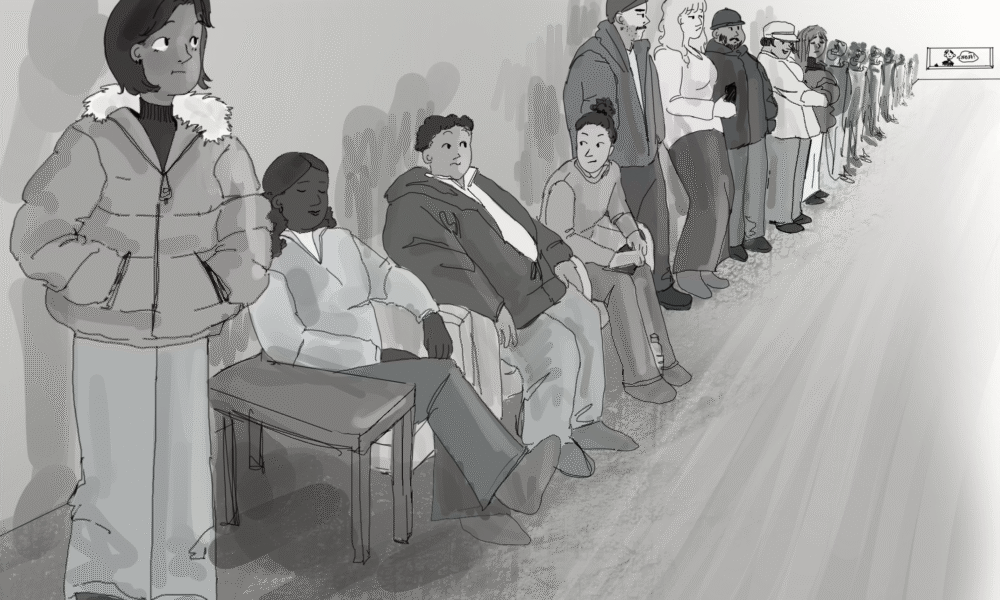



Conversations surrounding mental health (MH) have increased dramatically in recent years, with many institutions promoting wellness and expanding volumes of resources. However, the presence of services alone does not guarantee accessibility, particularly for immigrants, refugees, and socioculturally diverse communities, who often face barriers due to language, financial constraints, and increasing wait times. Many domains across Canada claim to value equity, diversity, and inclusion (EDI); why are certain communities continuously excluded?
This question led Tasmia Hai, associate researcher at the Douglas Research Centre and principal investigator of the Cognition, Attention & Achievement Research (CAAR) lab, to examine clinicians’ perspectives on MH service delivery. Hai’s recent study, published in BMC Health Services Research, interviewed 19 MH clinicians to gain their perspectives on the barriers to access of diverse populations. Her desire to pursue this research stems from both personal experience and an intention to better capture the current MH service landscape.
“Since 2020, there’s been a lot of push for EDI initiatives, and I wanted to get a sense from clinicians specifically working with individuals from diverse sociocultural backgrounds,” Hai said in an interview with The Tribune. “I myself am a first-generation immigrant to Canada, so I really wanted to see what the current circumstances were and which barriers [clinicians] were identifying.”
Other studies typically focus on patients’ experiences when navigating MH systems; Hai aimed to address this research gap by shifting the focus toward MH providers.
“As a clinician myself, I wanted to get a sense of what their experiences are when it comes to the challenges they are finding at work, because at the end of the day, clinicians are the frontline staff [providing the services].”
Clinicians identified logistical challenges—long wait times, high costs, and limited access to multilingual services—as common barriers to MH care.
“MH services are not generally free, so you would have to have access to external insurances [to cover costs]. However, the organizations providing services for reduced costs often have limitations, such as only allowing 10 sessions, which clinicians expressed [might not be sufficient for adequate care],” Hai explained. “Sometimes a family could only come to the clinic in the evening, but the clinician has to work their general nine to five, and so they don’t have the flexibility to move their schedule around because it’s not [permitted].”
The MH providers also identified social obstacles—stigma, mistrust, and cultural mismatch—that perpetuate barriers for diverse populations when accessing MH services.
“Many [clinicians] mentioned system-level changes to support individuals from diverse backgrounds,” Hai said. “It often felt tokenistic, like ‘Here is an EDI training that you can do,’ whereas if staff were more able to take time from their day to get those trainings and integrate them throughout their daily work, [social barriers could be better addressed].”
Hai highlighted that most of the clinicians in the study were from diverse backgrounds themselves, which may have contributed to their view of EDI as central to their work.
“There’s something about having that lived experience that I think often does not get captured in traditional Western medicine’s [curriculum],” Hai said.
Hai also emphasized the importance of early student involvement in their education so that, as future clinicians, they can develop the skills to foster equitable environments for diverse patients.
“With McGill being such a diverse institution with so many individuals from across the world, I think we should encourage students to think about some of the impacts of MH barriers to advocate for themselves and others in their future,” Hai said.
Hai emphasized the importance of addressing MH concerns proactively, noting that preventative measures are crucial to maintaining well-being.
“Things like high stress can lead to high blood pressure, which can lead to other cardiovascular diseases or diabetes,” Hai said. “We often don’t think about MH being associated with these things, but if we don’t address these challenges early on, it can cause [poor outcomes].”
Overall, Hai’s findings show that improving MH service access is not solely about expanding services but about transforming the systems that govern them through structural reform. While institutions may promote EDI on the surface, translating those missions into meaningful change for our diverse population remains a work in progress.