
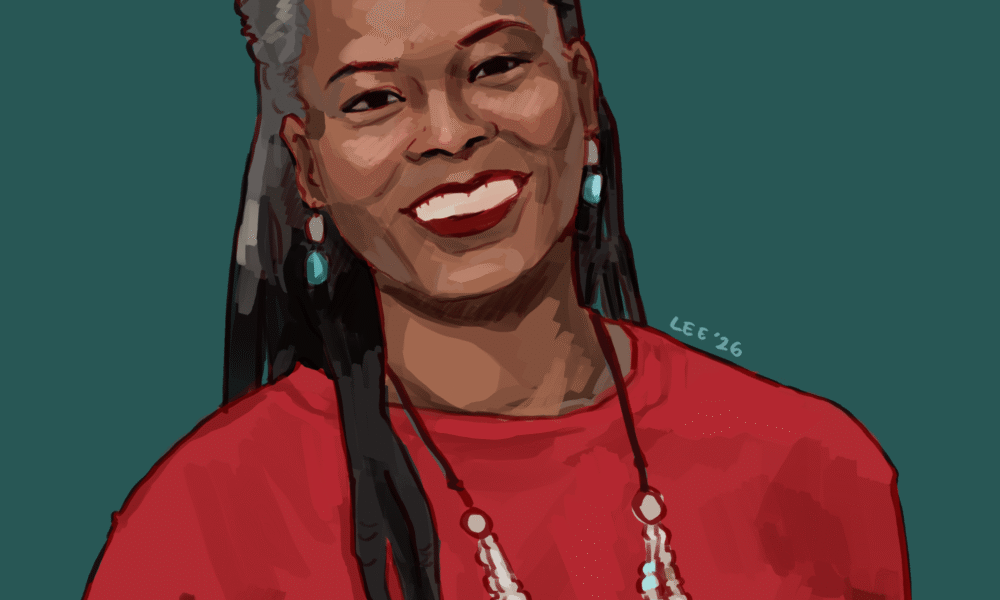




From uncovering the genes that cause birth defects to serving as Chair of the Board of Directors of the Canadian Black Scientists Network, Professor Loydie Jerome-Majewska has been a catalyst for change across fields. She serves as a professor in McGill’s Department of Pediatrics and senior scientist at the Research Institute of the McGill University Health Centre. Jerome-Majewska sat down with The Tribune to shine light on her work in developmental biology and her efforts to advance equity and representation in the field.
Since the start of her academic journey at Wesleyan University, Jerome-Majewska has approached science with curiosity and an open mind. As an undergraduate pursuing an honours degree in biology, she gained hands-on laboratory experience working with her advisor, Laura Grabel, a professor in the Department of Biology.
“She was this amazing researcher who had children of her own, who danced after work, I mean, she just did it all,” Jerome-Majewska said. “And I thought that was just awesome. And so, I applied for graduate school.”
Jerome-Majewska continued her studies in graduate school at Columbia University’s medical campus in New York City.
“I worked with another amazing woman, [Virginia] Papaioannou,” referencing her graduate advisor and a prominent developmental biologist. “[She] was making a genetic mutation in mice using embryonic stem cells. It was brand new. Had never been done. I’ve just been fortunate to have really good advisors, and she also had children, whilst doing amazing science, she was just an amazing person.”
Combined with her postdoctoral work at the Memorial Sloan Kettering Cancer Institute with Elizabeth H. Lacy as her postdoctoral advisor—one of the women who started the whole molecular biology techniques in mice—Jerome-Majewska’s academic journey laid the foundation for her current research. Currently, she focuses on developmental disorders, using mouse models to predict how gene mutations could affect human patients.
“Now I’m interested in researching babies with congenital malformation at the time of birth, who have malformations when they’re born because things went wrong during embryogenesis.”
With a person-first approach to science, Jerome-Majewska emphasizes the importance of setting priorities to maintain balanced academic excellence, which, for her, meant stepping down from teaching to focus on her research.
“I enjoyed my teaching. I met some awesome undergrads, but you have to do it well. I’m doing a lot of other things too. I can’t do it all. You can never do it all,” she said.
Nevertheless, while the field of developmental biology continues to flourish, Jerome-Majewska notes that inclusive representation remains a challenge.
“I think there are things that impede how far we’ve moved into not just my field, but in science in general, because I don’t think everybody interested or excited who can contribute has been able to participate and contribute,” Jerome-Majewska said. “I think humans have huge potential, and if we could have all of the different people participate, we’d be so much further. Yeah, so in that way, I think that’s too bad for all of our field […], if everybody’s doing the same thing, we’re not gonna get anywhere.”
This recognition of social barriers inspired her involvement with the Black Canadian Scientists Network, which, with over a thousand members, creates space for representation and collaboration in science and is currently focused on the GenCARE project.
“We’ve been able to get part of the Genome Canada grant to sequence the genomes of people of African ancestry, looking at diseases that impact the population negatively.”
Looking toward the future, Jerome-Majewska emphasizes the importance of building a more inclusive genetic research landscape for the future generation of researchers.
“I think, for the GenCARE project, I’m super excited, because, as a Black woman, I know that precision medicine is coming, and if we don’t have the DNA from people that look like me, it’s not gonna work. And I can do something about it, I have the skills. So, it’s a no-brainer.”