
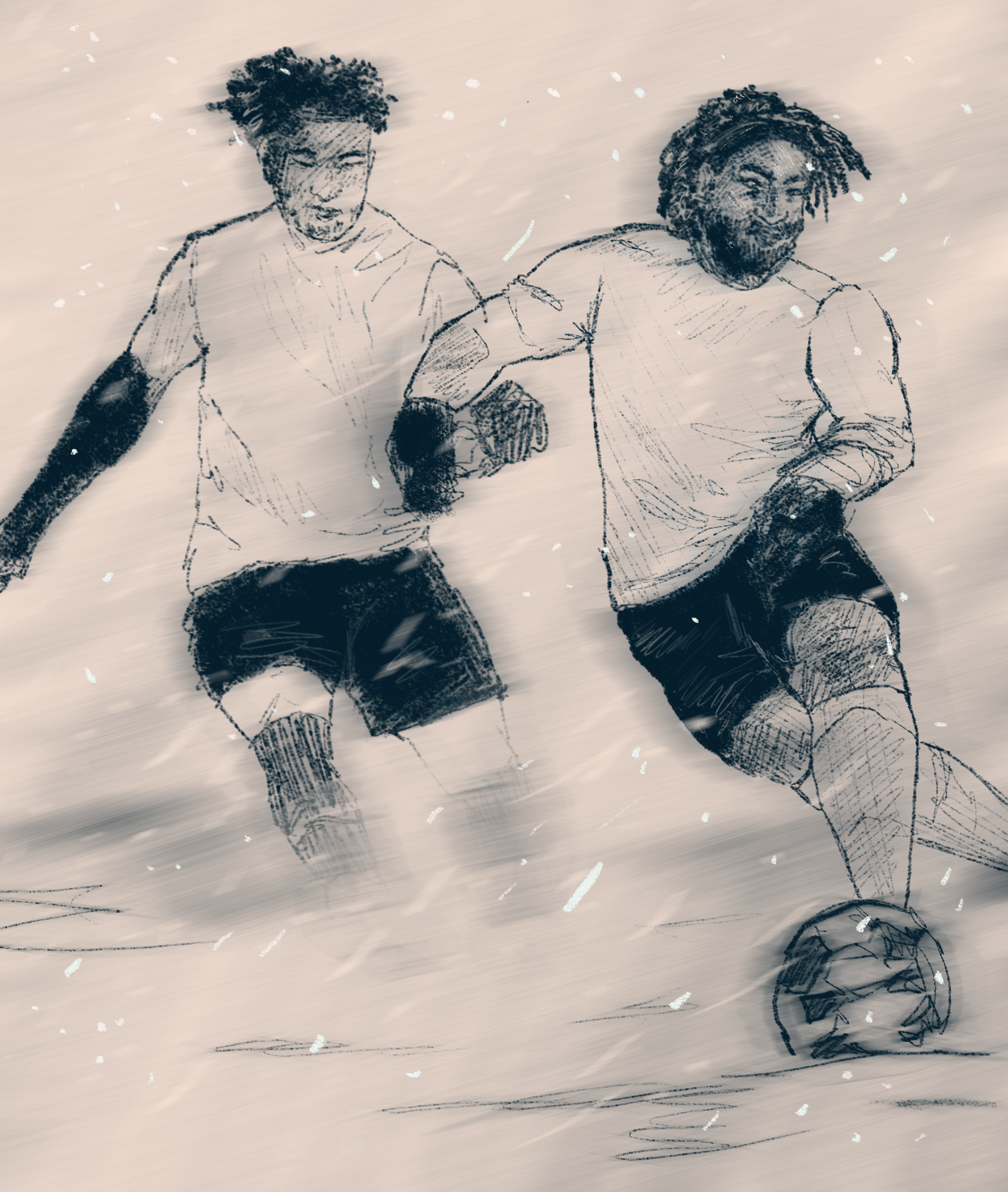



On Nov. 9, the Canadian Premier League’s final match turned into a full-blown winter wonderland. TD Place in Ottawa was buried in a blizzard, with visibility collapsed for players and spectators, grounds crews and even goalkeepers clearing snow away by hand, and extra time delayed while snowplows worked to clear the pitch.
Through the mayhem, Atlético Ottawa emerged 2-1 to beat Calgary’s Cavalry FC with an unbelievable play from David Rodríguez, who stole the show. The midfielder pulled off an acrobatic bicycle kick to tie the game in the midst of the storm and then popped up in extra time to seal Atlético’s win—a finish that immediately went viral. The match’s battle against the elements led to fans coining Rodríguez’s surreal goal the ‘icicle kick.’
This whirlwind moment joins a long list of instances in sports history where weather stopped being a matter of setting and scenery and instead became the forefront of the game. Here are a few of the wildest weather sporting moments in recent years.
During a Major League Soccer match between the Colorado Rapids and the Portland Timbers on March 2, 2019, DICK’s Sporting Goods Park near Denver filled with snow and let in freezing temperatures as the teams played a hectic game, ending in a 3-3 draw.
Despite the frigid conditions, the game was a nail-biter. The snow made footwork a treacherous task and passing was quite unpredictable; the teams adjusted to this by running more direct plays, implementing shorter passes, and using simpler touches to try and reduce turnovers on the slick surface. This snowy spectacle proved how weather can add entertainment value to sport without destroying it.
The New England Patriots and Miami Dolphins battled in a National Football League (NFL) showdown on Dec. 12, 1982: A frosty game that led to a quirky decision to let a tractor with a snow sweeper clear a spot for the Patriots’ kicker, whose ensuing field goal secured a 3-0 finish. This unusual moment of improvisation goes down in NFL history as the only one of its kind, made more rare by the fact that it allowed the only points of the game; the snowy conditions made it otherwise impossible to score.
If snow games feel surreal, the Patriots vs. Buffalo Bills NFL game on Oct. 23, 2017, genuinely looked like it was played inside a cloud. A massive, rolling fog bank drifted over Massachusetts’ Gillette Stadium during the game’s second quarter and turned the field into a grey void. Cameras could not track the ball, broadcast wires disappeared, and players seemingly vanished on the field. Teammates struggled to see their bench, never mind the endzones.
Despite the chaos, the Patriots managed to come out on top (20-13), playing a compressed and short-throw offence for the majority of the game. Quarterbacks had to throw largely based on timing and trust because proper reads downfield were impossible, and defensive players reacted only when a receiver physically bumped into them. The Bills struggled and miscommunications piled up as players disappeared in the mist.
Weather is a volatile, unpredictable, and uncontrollable aspect of sport that forces athletes and fans to adapt and adjust in real time. Snow, mud, and ice hinder technical play, cold and rain affect stamina and breathing, and wind tugs things off course. When coaches must shift their tactics and players must improvise, what emerges in these wild conditions are either mediocre moves or moments of jaw-dropping talent.
Rodríguez’s bicycle kick in Ottawa proved that weather extremes do not always ruin games: They just reframe them. The drama, the visuals, and the athletic skill and adaptability weather reveals will be replayed for years to come.