


In 1950, Earl Lloyd, Chuck Cooper, and Nat “Sweetwater” Clifton entered the National Basketball Association (NBA) as the league’s first Black athletes. Cooper was the first to be drafted, Clifton was the first to sign an NBA contract, and Lloyd became the first Black player to enter an NBA game when he appeared on the court for the Washington Capitols in October of that year.
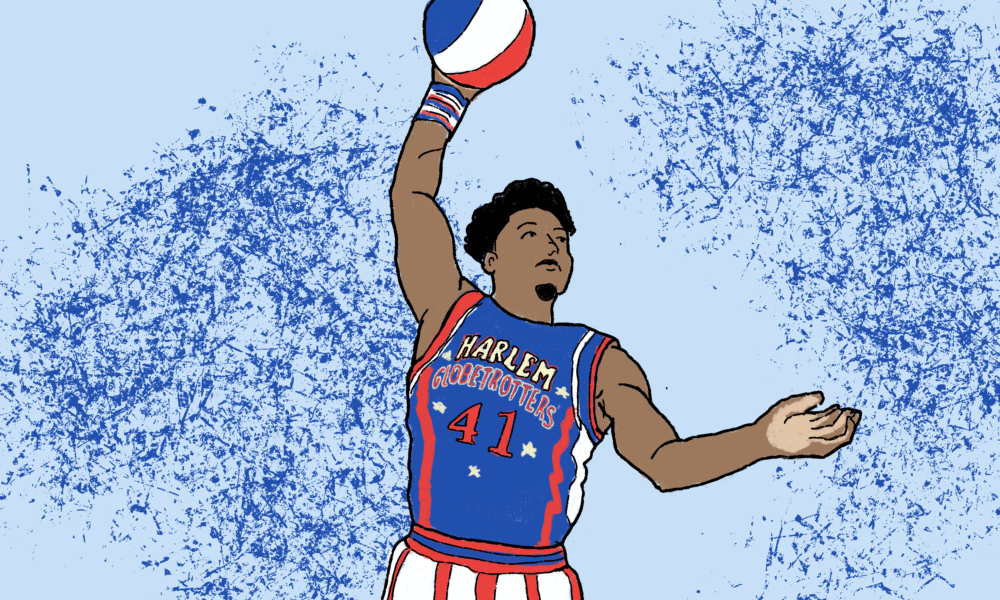
Prior to entering the NBA, Lloyd and Cooper had both played for the Harlem Globetrotters. While today the Globetrotters are seen more as a circus act than a basketball team, their role in the landscape of professional basketball is historically important.
The Harlem Globetrotters were originally founded in Illinois in the 1920s as the “Savoy Big Five,” a team that showcased Black talent at a time when segregation stopped Black players from playing in the professional league. They did not just happen to have Black players—they leaned into Black culture and identity. Later, the second iteration of the team branded itself as the “Harlem Globetrotters,” in reference to the Harlem Renaissance movement.
The team operated similarly to modern boxing, booking opponents and travelling around the globe to play in one-off games. Despite not being part of a formal basketball league, the Globetrotters dominated everywhere they went, with their most famous win taking place against Hall of Fame inductee George Mikan and the Minneapolis Lakers, who later became the Los Angeles Lakers. The Globetrotters were so dominant that they were forced to incorporate elements of the circus act we know them for today, as crowds were starting to become bored of how easily they would win games.
The team’s dominance and popularity meant the NBA simply could no longer ignore Black talent knocking at its door. In 1950, the NBA began signing players from the Globetrotters and continued to do so for years afterwards. NBA legend Wilt Chamberlain played one season with the Globetrotters in 1958-59, during which he took part in a sold-out tour in the Soviet Union. The following season, Chamberlain became a member of the NBA’s Philadelphia Warriors, where he won league Most Valuable Player (MVP), All-Star Game MVP, and Rookie of the Year in his first season. Chamberlain went on to rewrite virtually every NBA record in existence, forever changing the game of basketball.
While the Globetrotters provided a platform for Black players, the team has its own complicated history with race. Team owner Abe Saperstein was a known racist who saw Black players solely as financial assets rather than as marginalized people whom he could be an ally to. The team used Harlem branding in an effort to profit from the cultural renaissance in Harlem, New York City, while enriching a team owner who was a racist.
Saperstein attempted to sign Boston Celtics legend and 11-time NBA champion Bill Russell in 1956. Russell notably refused to play for the Globetrotters after Saperstein declined to speak with him directly during contract negotiations, instead speaking with Russell’s white college coach. While this may have worked with other players, Russell was one of the first professional athletes to use their platform to speak about racial injustice in America and to become a champion of civil rights. He was never going to stand for how the Globetrotters treated Black players just for a few extra dollars.
The Harlem Globetrotters’ role in basketball history is significant, but equally as complicated. The Globetrotters provided a platform for Black players and became so dominant that the NBA could no longer keep its doors closed. On the flipside, they had an owner who clearly lacked respect for the Black players he employed while also profiting off the Harlem Renaissance. They were an organization deemed racially unjust by Bill Russell, one of the sport’s most significant players. Despite their prominence, they have been relegated to the status of basketball’s World Wrestling Entertainment (WWE) in recent years, when really they ought to be seen for what they are: An important piece of history.