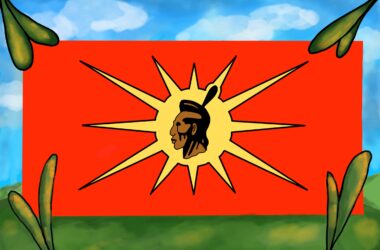
McGill’s Media Relations Office (MRO) confirmed in a written statement to The Tribune that from Oct. 23 to Oct. 30, McGill raised the Kanien’kehá:ka (Mohawk) Unity Flag to celebrate the newly-unveiled Tsi Non:we Onkwatonhnhets project at the university’s Y-Intersection. Designed by artist Louis Karoniaktajeh Hall in the early 1970s, the[Read More…]
Tag: colonialism
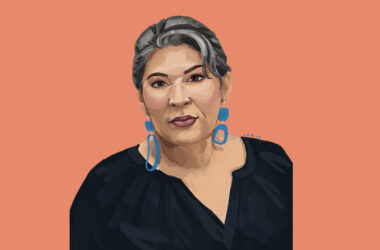
How dominant genomic narratives reinforce colonial narratives
The ‘Vanishing Indian’ myth—the idea that Indigenous populations are destined to disappear— has long been used to excuse and enact the physical and cultural genocide of Indigenous Peoples in the Americas. This rhetoric remains prevalent in modern genomics, often supporting the treatment of modern Indigenous Peoples not as autonomous communities,[Read More…]

New book McGill in History examines McGill’s past through an unflinching, critical lens
McGill’s Department of History and Classical Studies hosted a panel discussion on Nov. 6 to commemorate the release of McGill in History, a critical historical study of the university. The book was edited by Brian Lewis, Don Nerbas and Melissa N. Shaw, each of whom spoke on the panel. Several[Read More…]

Canada must criminalize coerced sterilization and confront its propagation of colonial violence
In 2005, Montreal practitioners performed a nonconsensual hysterectomy on Quebec Senator Amina Gerba, resulting in irreversible infertility. Gerba would not learn she had undergone this procedure—a clear violation of her medical rights and autonomy—until over a decade later, when, during an unrelated procedure, her gynecologist discovered she lacked a uterus.[Read More…]

SciTech Reviews: ‘Superior: The Return of Race Science’
Science has helped society make sense of the natural world and all of its intricacies. Advancements in medicine, technology, and mathematics have all led to improvements in human welfare. At the same time, science can be applied unequally, benefiting those of a specific race or class, in ways that distort[Read More…]

Stricter bail is a far cry from justice
On Jan. 13, all of Canada’s premiers signed a letter addressed to Prime Minister Justin Trudeau urging him to take immediate action in enforcing stricter bail measures. Such reform would place the onus on the accused to qualify for bail, increase the number of people held in jail without trial,[Read More…]

Self-determination, not colonial intervention
Content Warning: Mentions of sexual and colonial violence Amidst endemic gang violence, fuel blockades, and a cholera outbreak in Haiti, the United Nations (UN) Security Council is considering a military intervention to support the Western-backed central government. Foreign incursions have already begun, with Canada and the United States sending military[Read More…]

Ushering in a new future for McGill’s museums
Museums: A quintessential aspect of family vacations, school trips, and artsy dates. For centuries, they have offered visitors the chance to explore conceptual, social, scientific and artistic heritages. But museums hold more weight than most realize; they are inherently political and consistently perpetuate racism. Non-Western cultures are frequently misrepresented in[Read More…]

Mourning the Queen celebrates a violent legacy
CW: Colonial violence On Sept. 8, Queen Elizabeth II of the United Kingdom died following a series of health complications. As a member state of the Commonwealth, Canada has commenced a 10-day national mourning period. The House of Commons was convened on Thursday to pay tribute to Elizabeth and to[Read More…]

Redressing the history of medical injustice at McGill
Content warning: Enslavement, medical abuse, racial and colonial violence McGill’s troubled history of abuse and complicity in violence toward Black, Indigenous, and disabled people is nothing new. James McGill enslaved at least three Black people and two Indigenous children, an increasingly recognized and discussed reality within the community, especially following[Read More…]


