
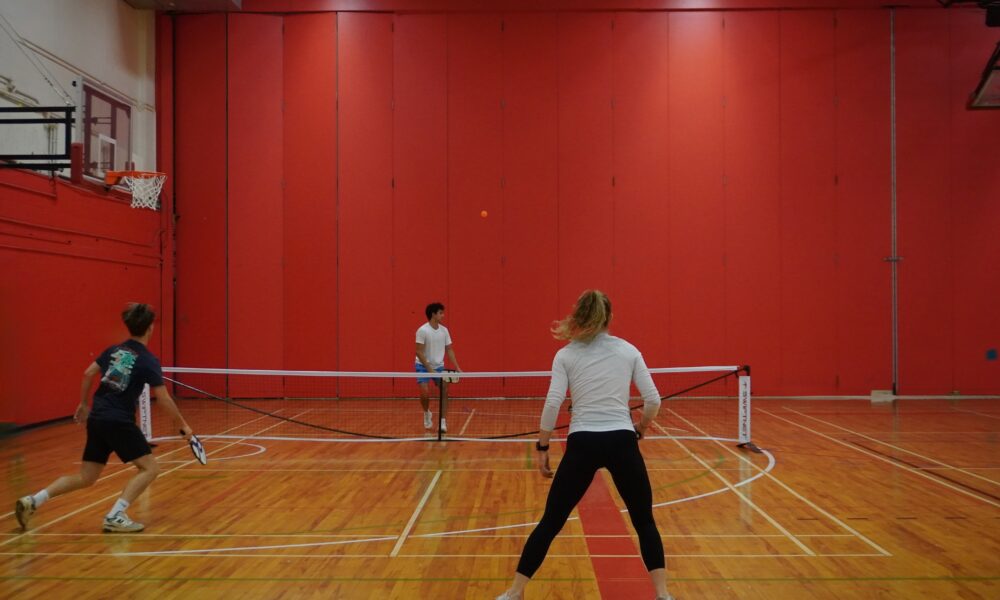




It is the most important time of the semester already, and no, I am not talking about finals (though I guess in some way I am). Intramural playoff season is upon us, and over 500 teams across 14 sports will be battling it out for ultimate victory. As a seasoned and grizzled intramural veteran myself, I can attest that you have not lived until you have experienced the epic highs and lows of McGill intramural sports.
While most students are still recovering from midterms, McGill’s brave intramural participants are putting their bodies on the line for a championship mug, which some consider more valuable than their degree—myself included. Tier 3 pickleball duos are finally getting the hang of what “the kitchen” is, and Tier 1 volleyball teams are getting to relive their high school glory days. Now, to the uninitiated, this might all seem like unintelligible jargon, so let me, an expert, cover some intramural basics.
The McGill Intramurals program has a rich history, dating back to at least the early 20th century. Any McGill student, faculty, or alumnus can participate in intramurals, provided the right fees are paid. The offerings are varied and this fall included badminton, basketball, dodgeball, flag football, cricket, pickleball, roundnet (better known by the brand name Spikeball), three kinds of soccer (11-, 7-, and 5-person variations), tennis, ultimate frisbee, and volleyball. Searching IMLeagues—the McGill intramural online platform—one can also see that there used to be offerings for video games, such as NBA2K, and board games, like Catan, which it is unclear why they cut. Tier 1 Catan would be electric.
There are three categories within every sport: OPEN, open to anyone regardless of gender and using the standard sport rules; WOMEN, open to athletes who self-identify as women, two-spirit, trans and gender non-conforming; and MIXED, also open to anyone, but with maximums of “male-matching” or “female-matching” players, and with slightly altered rules for gameplay. Within each of these categories, there are different levels of play based on athlete experience level. Starting with Play-Fun, which is designed for beginners and does not feature playoffs, tiers then move from Tier 4 to Tier 1, with Tier 1 being the most advanced. Do not fall for the belief that any one tier is better than the others, though: Personal, unbiased experience tells me that Tier 2 Mixed is the most competitive tier—at least for volleyball.
With these basics covered, and the shroud of mystery surrounding the intramural program now thrown away, let us return to the central topic of this article: Playoffs. The playoff style in McGill intramurals is single elimination—lose once, and you are done. If you make it all the way to the finals and win, you get an intramural champion’s mug. This high-stakes setup results in some thrilling finishes, as anything can happen in a single game. Here are some teams and matchups to watch especially closely as they head into the playoffs.
In Tier 2 Open badminton, “McGill Mayhem BC” are heavy favourites, holding an undefeated record and the top seed overall. However, underdogs 14th-place “Badmint & chips” took out another undefeated team,“Birdie Smashers,” in their first round matchup on Nov. 17, indicating that the bracket may not be as predictable heading into finals as it seems.
Women’s Tier 1 volleyball was predictably a runaway season for “Empire Spikes Back,” who won their 2026 championship match off an undefeated run: A repeat after winning the mug back in 2025.
In Tier 3 Open dodgeball, the 8th-place “Hot Dodges” took out the first-place team “Men who B” in a shocking first-round upset that had the potential to change the game as we know it. In a continued final playoff push against the second-place “DodgeBallz,” Hot Dodges managed to take the mug.
Finally, the mug race everybody is talking about is Open Tier 1 doubles pickleball. The 5–1 “Pickleticklers” seemed poised to duke it out in the final with “Smash Bros”, also 5–1 in the regular season. But my pick to emerge from the battlefield victorious would actually have been the third-place “Pepinilleros.” As newcomers to Tier 1, but last winter’s Tier 2 champs, they could have very well surprised the tier’s pickleball juggernauts.
These matchups all deliver a thrilling finish to the fall season and act as proof of how high-level McGill’s intramurals are. Overall, though, the most important thing about intramurals is that everyone has fun. They truly do enrich the student experience, and the bonds you form with your teammates are remarkable. However, I would be lying if I said that winning does not matter as well. After all, there are only two kinds of McGill students: Those with a mug, and those without one.
I wish all teams the best of luck—except the ones playing my team.