

McGill’s Department of Anthropology and the Institute for the Study of International Development hosted a screening and Q&A session for Diana Allan’s film Partition on Wednesday, Jan. 14, at McGill’s Critical Media Lab (CML). Allan, a filmmaker and professor of Anthropology at McGill, considers Partition a collaborative work; other members of the lab—Co-Directors Lisa Stevenson and Megan Bradley, as well as Associate Director Julian Flavin—worked on the film with Allan.
When Allan introduced her film, she emphasized how the project would not have been possible without the people she worked with at the CML.
“[This film] is a product of this space and the friendships and collaborations that it has enabled,” Allan said. “If Montreal is the home of [this film], CML is the heart [….] Thank you for the partners in this project.”
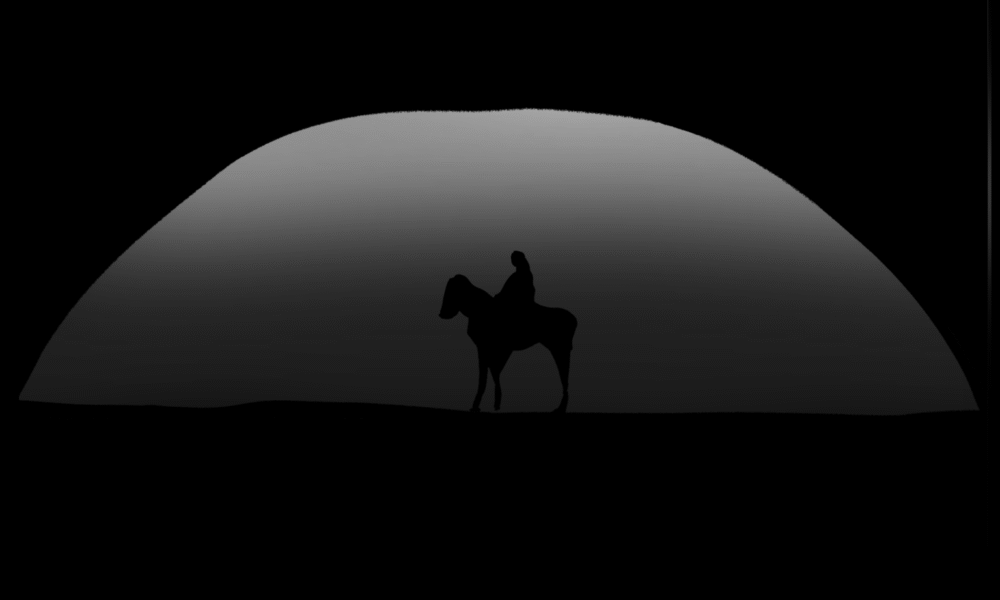
Partition explores the impact of British colonialism in Palestine by combining 1900s black-and-white visuals with modern-day audio and stories. The film showcases photos and footage from the time of the British Mandate for Palestine, which spanned from 1917 to the establishment of an Israeli state in 1948. The footage, which was recorded by British soldiers, depicted daily Palestinian life as well as British military activity during the mandate.
The archival footage is taken from the Imperial War Museum Collection in London, accompanied by music and interviews from Allan’s own collection.
“[The film] was bifocal in the sense that you’re seeing images from 100 years ago and sound from today,” Allan said.
Partition is not Allan’s first attempt to shed light on the ongoing genocide in Palestine through film. She has published a book, “Refugees of the Revolution: Experiences of Palestinian Exile,” which explores the daily struggles of Palestinian refugees in Lebanon. She is also the co-director of the Nakba Archive, an oral history collective recording and commemorating Palestinian refugees in Lebanon who lived through the Nakba.
Allan focuses on the Palestinian experience, with all language in the film either written or spoken in Palestinian Arabic. Throughout the film, she interviews Palestinians about their lived experiences, as well as their families’ experiences in Palestine. Much of the film revolved around interviews with Sumaya, a former student of Allan’s. Through these interviews, Allan shares modern-day stories of Palestine as well as historical ones through the accounts of Sumaya’s family.
In the Q&A session, Allan explains how this documentary shares similarities with many of her other films. Like Partition, Allan’s other films focus primarily on the human condition—specifically memory and the emotional impact it can have on the lives of refugees.
“All of my films have been about memory [….] Reference photos and through movement, through space, activates this sort of process of memory, and this form is about the experience of the archive itself,” Allan said.
Paloma Masel, U2 Arts, said that the film’s focus on memory and human experience drew her to the screening. She emphasized the role of a traditional song Sumaya referred to as “the camel driver’s song.”
“That song being followed by what sounded like the songs of thousands of families […] that might have gone through that sort of trauma really stuck with me,” Masel said. “And I wanted to hear more encapsulation of that […] experience in the final sequence.”
Before the Q&A began, Lisa Stevenson, co-director of the CML, warned attendees about using colonial images, as they could risk inadvertently uplifting colonial oppressors.
“I think that working with the colonial images is a very faulty endeavour and there’s a danger of you, obviously, questioning forms of colonial violence, that are the context for the making of these images and how you both make these images visible, these histories visible,” Stevenson said.
By using this footage in a film centred on the Palestinian cause, told by Palestinians themselves, Allan repurposes a tool of imperial control as a testimony of resistance against occupation.
Allan shows aerial and ground surveillance footage, women hiding their faces from British soldiers, and British bombings of Palestine during the British Mandate. Palestinians were encouraged or forced to join the British military, which had placed them under constant watch.
“You’re aware of the colonial violence. You’re very aware of the colonial gaze,” Allan says. “Images that seem to carry that kind of violence, […] something really malicious, frightening, and fearful. By the end, we transformed it into something else.”