
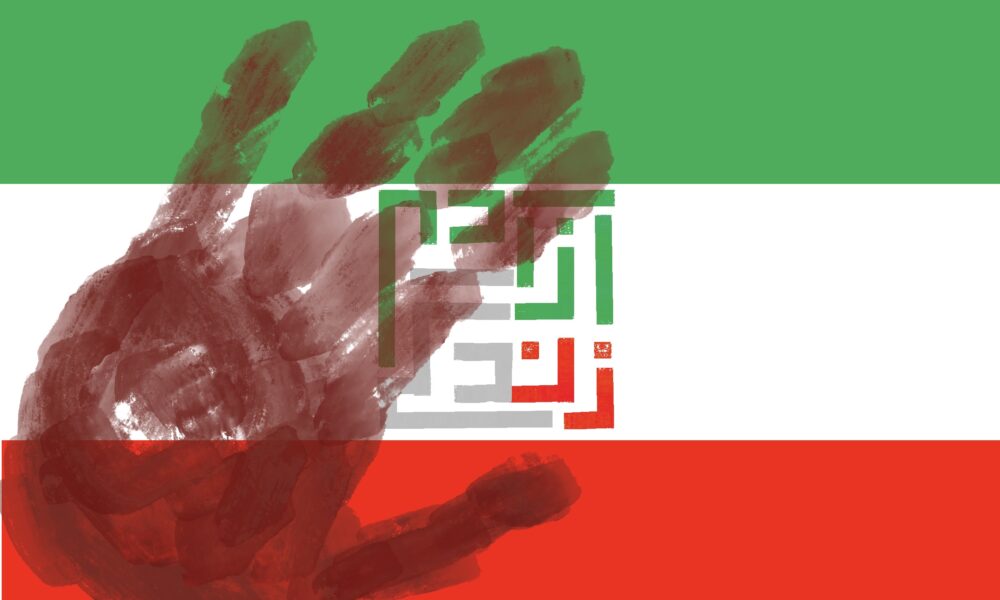



For an institution that prides itself on global engagement, McGill’s response to the crisis in Iran isn’t just inadequate—it’s indefensible. On Jan. 13, Dean of Students Tony Mittermaier sent an email to all students who hold an Iranian passport on McGill’s records. The message acknowledged the “civil unrest and disruptions to communications in Iran” and directed students to the Wellness Hub and GuardMe for mental health support. For academic accommodations, Mittermaier advised students to speak directly with their instructors. What the email did not provide was a clear, centralized protocol, or any standardized guidance to ensure that students receive consistent accommodations across courses.
McGill regularly positions itself as a “globally engaged” institution. Still, as the Iranian government’s violent crackdown on protesters intensifies amid a nationwide internet blackout and mass arrests, the university has failed to offer comprehensive support systems for students and faculty during this time of crisis.
The email’s recommendation that students speak directly with their instructors is not a neutral signal of support. It forces students to disclose personal distress as they navigate fear and uncertainty, unable to contact loved ones back home. This perfunctory response creates unequal access by design, as the accommodation outcome is likely to vary significantly depending on the instructor and the student’s comfort with disclosure.
The McGill administration frequently offers vague, decentralized guidance to faculty members during exceptional circumstances and events, harming the consistency of accessibility measures. When this institutional obscurity is practiced during times of international crisis, students and faculty are left to face compounded uncertainty.
McGill’s decision to only send this email to students with Iranian citizenship also raises the issue of visibility. Many students with loved ones or community in Iran do not hold an Iranian passport but are still deeply affected by the government’s violent repression of protestors. By deciding that passport-holders are the only appropriate recipients of this email communication, McGill is actively narrowing who gets recognized as impacted and, by consequence, who is connected with resources and support systems.
Yet regardless of the mechanism through which administrators determine if a student ‘counts’ as Iranian for an email communication, McGill should express solidarity and treat international crisis as a collective, campus-wide concern.
McGill has shown in the past that it can respond publicly and with empathy. When Russia launched its war on Ukraine in 2022, the Office of the Provost and Executive Vice-President issued a public statement strongly condemning the Russian invasion, expressing solidarity with Ukraine, and explicitly highlighting local and university-sanctioned resources available to McGill community members affected by the war, such as accelerated admissions and tuition waivers. McGill’s lack of institutional coordination to support students tied to Iran testifies to the university’s inconsistency in dictating how, when, and which students receive visibility, urgency, and empathy. This double standard is exacerbated by the disparity in enrollment numbers—in the 2024-2025 academic year, roughly 300 students with Iranian passports enrolled at McGill, compared to 17 students with Ukrainian passports. If McGill wants to continue claiming its title as a “motor of social inclusion,” it must confront and cease its discrepant treatment of different global crises. This is not a critique of McGill’s response to Ukraine—that statement reflected precisely the kind of institutional leadership and support students deserve during the crisis. The problem is: If the administration demonstrated its capacity for coordinated, public solidarity then, what explains its choice to withhold the same level of support now?
The gap between McGill’s stated values and its actions is hard to miss. For a university that emphasizes global engagement as central to its identity, its minimal, lacklustre response is striking. When McGill engagement is framed primarily through partnerships, prestige, recruitment, and research ties, while the university simultaneously neglects the well-being of its own community members by refusing to offer tangible support, it becomes extractive by default. If McGill wants to benefit from internationalism, it consequently inherits the obligation to uplift and advocate for the international and diasporic students who make this globalized status a reality.
McGill can do better, and this does not require inventing a new system from scratch. Right now, the university’s approach makes the crisis in Iran feel unnecessarily isolated, when crisis communications should be public and centralized. By leaving students to rely on student associations and one-off conversations with professors, McGill is outsourcing its obligations in lieu of a proper response.
If McGill cannot respond to global crises with the same standard of care every time, then that gap becomes a statement in itself. McGill has shown what it can do. Now is the time to apply that capacity consistently—because silence is a choice, and so is negligence.