



McGill Faculty of Law’s Centre for Human Rights & Legal Pluralism (CHRLP) hosted a workshop titled “Revitalization of Indigenous Justice in the Americas” over Zoom on Thursday, Jan. 29. The event featured three speakers active in Indigenous rights advocacy, including attorney Elizabeth Olvera Vásquez, McGill BCL/JD candidate Tarek Maussili, and Peruvian grassroots organizer Elsa Merma Ccahua.
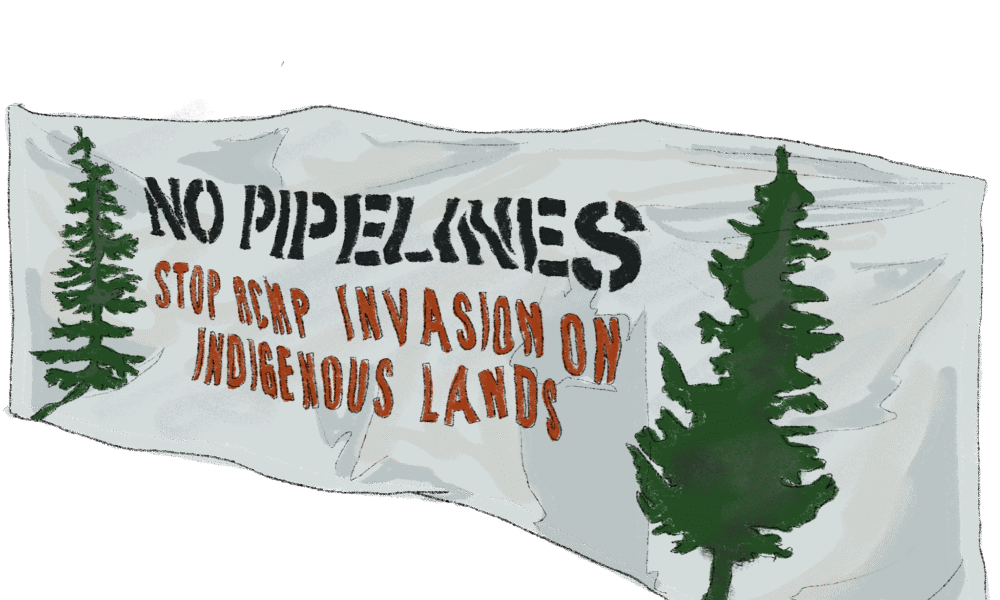
The event explored the meaning of justice for Indigenous Peoples in the Americas, with a focus on community responsibility, the relationship between land and life, and collective repair. The speakers examined how these concepts exist in the context of marginalization, capitalism, and land dispossession, with an emphasis on current Indigenous efforts to challenge these systems of power.
Vásquez began the discussion by emphasizing the importance of Indigenous communities being familiar with their family origins and history. She explained that, through an understanding of family history, Indigenous people can more effectively integrate into their communities.
“It is important [for Indigenous people] to know that their children are part of the community itself, because they know [their family] background will imply responsibility in a determined moment,” Vásquez said. “So it is important to know where to find that.”
Maussili continued the talk by criticizing Canadian society’s treatment of Indigenous Peoples, using his childhood as an example of the country’s historic and continuous erasure of Indigenous cultures and identities.
“Being Indigenous in Canada was never a good thing up until 2015 or 2016. I went through high school and I finished around 2015 and I remember being Indigenous was the most horrible experience,” Maussili said. “You’re treated as subhuman. You’re not treated with respect, and this is still the case today. Justice means reclaiming our identities and reclaiming our strength as a people. We’re losing our position in this country as Indigenous people from our respective nations. This is the goal of Canada, to assimilate our people, to dispossess us of our lands.”
He expressed the need for the younger generation of Indigenous people to get involved in activism, stressing the vitality of broader action against Canada’s attitude towards Indigenous rights.
“Getting the youth active is something that I would like to see for our people,” Maussili said. “When I was in Peru, I saw the youth and all the young activists getting involved in protesting against the government and asserting their rights, and that sort of thing is what we need to see here in Canada [….] You can still clearly see that it’s not in Canada’s best interest to assert or to respect Aboriginal rights and titles. The future doesn’t really look good for us if we continue down this path.”
Ccahua spoke next, underlining the central role of land and territory in holding Indigenous communities together in the face of corporate advancement.
“We have been fighting with a mining company for many years,” Ccahua said. “I belong to an impacted and affected community, and we have a very long history. For our people, justice is defending [our] territory, water, and life. We live in a productive community that lives off the [land], and [our people] see those products as capital for their daily living and for supporting their families.”
She concluded the workshop by stressing the role of Indigenous activism as a tool for autonomy against governmental agendas of cultural assimilation.
“In spite of all of the negative [experiences] our communities have gone through, I strongly believe that something that continues to be very present is resistance and the ways of resistance in which communities have found their own political [and] judicial strategies,” Ccahua said. “Why speak about Indigenous justice? It enhances the self-determination and autonomy of Indigenous Peoples.”