
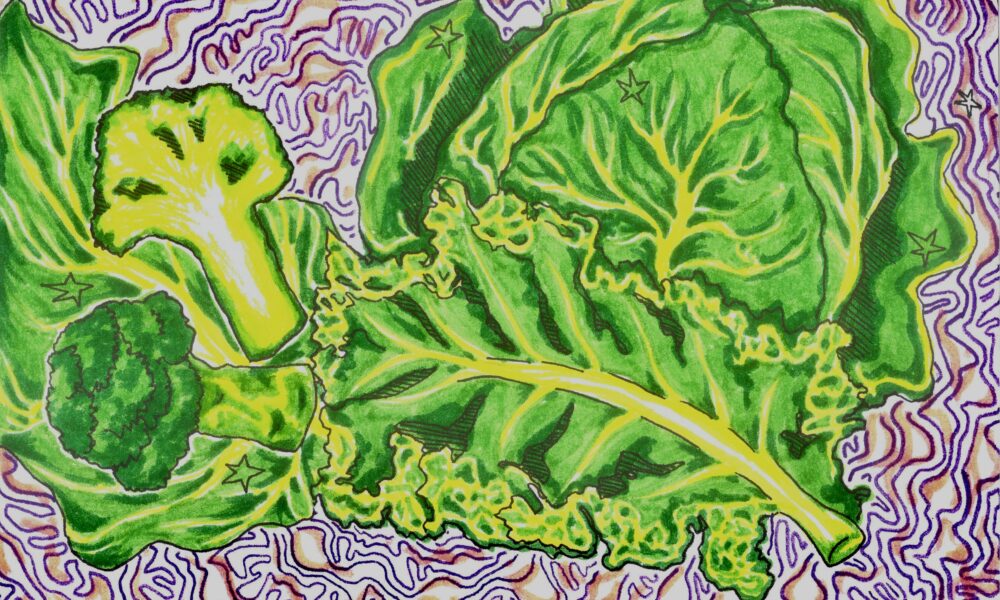

Have you ever wondered why you were encouraged to eat your greens as a child? Not only are they packed with healthy nutrients, but some of these cruciferous vegetables are also home to a chemical compound called isothiocyanates (ITCs)—phytochemicals. These are shown to play a role in preventing cancer, cardiovascular disease, neurodegeneration, as well as autoimmune and inflammatory diseases.
Previous research has shown that high dosages of ITCs can be used as an anti-cancer drug promoting apoptosis—programmed cell death—of cancer cells. Sanjima Pal, a researcher for the Research Institute of the McGill University Health Centre, confirmed this finding in her own paper but also found that ITCs can promote cellular healing at low doses.
Pal began studying isothiocyanates after completing her PhD at the National Institute of Science Education and Research in India in 2011 and is now pursuing postdoctoral studies at McGill.
Her research began by exploring ITCs’ low-concentration effects on macrophage cells—immune cells that protect our bodies from tumours and germs, among other things. Pal was particularly interested in the macrophages that promote arthritis healing and aimed to investigate how research could then contribute to therapeutic treatments of inflammatory disease.
“When at low concentration, this isothiocyanate group of compounds can modulate and switch macrophage [functional and phenotypic] properties […] towards a favourable macrophage type. This can reduce the arthritis burden,” Pal explained in an interview with The Tribune. “You [aid] wound healing from this.”
So how exactly do ITCs do this? Once they are introduced in the cells, they target enzymes—proteins that speed up biochemical processes—which, in turn, regulate a kind of imbalance in the body’s defence system called oxidative stress. By modulating these enzymes, ITCs can help regulate the autoimmune response for a variety of diseases, such as arthritis.
“My thesis publication was one of the first publications in that zone [….] So that time, I used an in vitro model and used human blood. In human blood, […] I isolated macrophage and then showed the same switching [of macrophage types],” Pal said.
ITCs also form from another compound through enzymatic activity. Broccoli, cauliflower, brussels sprouts, and cabbage are among the top sources of ITCs. When we eat these vegetables, an enzyme acts on glucosinolates to produce ITCs. However, it is important to note that ITCs’ therapeutic properties for autoimmune disease or cancer may not come from natural food sources, because ITCs in this form are not bioavailable. In other words, eating broccoli for every meal will not necessarily help prevent cancer. The concentration varies too much, which affects the consistency and efficiency of the phytochemical. Nevertheless, this field could soon start being integrated into clinical practice.
“The synthesis is quite tough. And even if you synthesize it [and] purify it at a higher amount and then make it available pharmacologically, it’s a very complicated process,” Pal said, explaining the challenges of working with the ITC compound. “Because even if it is available in cruciferous vegetables, if you heat the vegetables, you lose the property.”
Overall, Pal’s research highlights how simply shifting the dosage of bioactive compounds, such as ITCs, can expand the scope of their benefits. For her future research, Pal is interested in learning more about the benefits ITCs offer and how exactly they function—especially considering that neurodegenerative diseases, such as Parkinson’s disease and Alzheimer’s, could benefit from ITC’s regulation of oxidative stress.
“This is one of the drugs I will always look forward to putting into my research work [….] It has a diverse effect and some activity we don’t even know [about], like anything at the neuronal level,” Pal said. “You can implement this compound and see how neuron and immune cells interact. This is now a hot topic.”