



During the opening weekend of the 2026 Winter Olympics, U.S. Representative Tim Burchett made a post on X, writing, “Shut up and go play in the snow.” His jeer was in response to comments made by American skier Hunter Hess, who said that “it brings up mixed emotions to represent the [United States] right now [….] There’s obviously a lot going on that I’m not the biggest fan of.” Unsurprisingly, U.S. President Donald Trump also took issue with Hess, calling him “a real Loser” on Truth Social—Trump’s personal propaganda platform.
Ah, yes: The classic trope that athletes must “stick to sports,” or that they should “leave sports out of politics.” Those have never been sensible arguments. International sport has always been political.
Finnish historian Antero Holmila argues that the point of the Olympics has not simply been to organize different sports under one international event, but rather to promote “international understanding and ultimately, peace.” The idea of achieving international cooperation through sporting competition is central to Olympism. But the paradox of the Olympics is that while they intend to strengthen internationalism, the very nature of the Games—pitting nations against each other—inherently fuels national competition. The balance between internationalism and nationalism is a delicate one, and as the so-called rules-based order crumbles, the tone and meaning of the 2026 Olympic Games have shifted in tandem with the fierce nationalism of hard power politics.
The hostility hovering over this year’s Games was evident during the opening ceremony, with boos echoing through the iconic San Siro Stadium after U.S. Vice President JD Vance’s face appeared on the video screen. Top European Union diplomat Kaja Kallas commented on the incident, saying that “our public also has a pride, a European pride. So it shows.” This highlights one of the political trends that sits in the backdrop of the Games: The breakdown of the transatlantic alliance. Trump’s tariff threats, belligerence toward Greenland, and withdrawal of military support for Ukraine have led to a historic rift between the U.S. and Europe. JD Vance is a particularly controversial figure in Europe due to his infamous speech at last year’s Munich Security Conference, in which he expressed fear about Europe’s supposed “threat from within” and argued that the continent was not living up to its democratic values.
The athletes themselves may not be wrapped up in the political ramifications of their performances, but with two Latvian fans hoisting the flag of Greenland during the men’s ice hockey match between the U.S. and Denmark, it is clear that onlookers understand that Milano Cortina serves as a political arena.
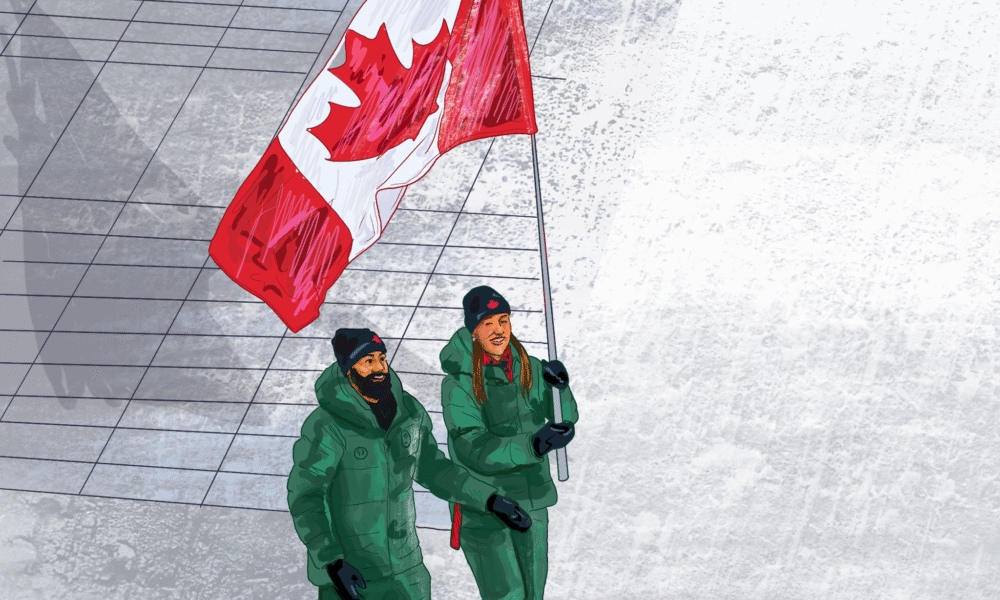
The American-Canadian sporting rivalry is another affair to watch, as Trump has spent the last year and a half provoking and intimidating his northern neighbour. Former New Democratic Party Member of Parliament Charlie Angus said that “we’re looking at a next-door neighbour who makes increasingly unhinged threats towards us. So to go to international games and pretend that we’re all one happy family, well, that’s gone.” After the intensity of last year’s 4 Nations Face-Off hockey final, which saw Canada defeat the U.S. in overtime amidst Trump’s invasion threat, all eyes have been on men’s and women’s hockey in Milan, a sport that is central to Canadian identity. Both the women’s and the men’s gold medal games saw the Americans defeat the Canadians in overtime, which clearly landed well in the White House.
The competitive nature of international sport makes it a useful tool for nationalist actors. There are implicit Darwinian notions of physicality, fitness, and competition in sports, indicating how sports can serve as propaganda to convey ideas of national superiority. With today’s Great Powers approaching foreign policy through conquest and coercion, the mood of national confrontation hangs over the fragile international liberal order. One could argue that sport is an important avenue for nations to exert their competitive energies—after all, the ice rink is preferable to the battlefield. But as hard power politics become increasingly legitimized, international sporting competitions will offer important opportunities for nations to display their might and defeat their rivals.