


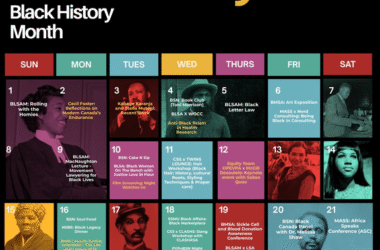
On the evening of Feb. 18, Queer McGill hosted its second annual Black History Month event, featuring students, panellists, and representatives from various McGill organizations, centred on the celebration of intersectionality between queer and Black communities on campus.
In an interview with The Tribune, Queer McGill member Al Derviseric, U3 Arts, shared some of the initiatives and core values of the club, highlighting its important work in providing resources such as gender-affirming care, safe sex supplies, education, and outreach to McGill’s queer community.
“Queer McGill is a student service for the queer student body,” Derviseric said. “We have resources that are free or pay-what-you-can. For Black History Month, this is our second annual attempt at a panel. The goal tonight is to reach out to all sections of our queer student body.”
Derviseric stressed the importance of solidarity, intersectionality, and representation— three themes that guided the event’s agenda.
“In the panel, the idea was to highlight Black voices in our community and also to have the vendors and the panellists to talk about or sell what they do, and just to highlight some community members from the queer community. I think solidarity between all groups at the margins of society is very important. It is very important that we stand up for each other, and it’s important to achieve collectivity and collective resistance,” Derviseric said.
Organizers and attendees also emphasized the importance of creating a safe, accepting, and intellectually stimulating space for queer and Black students to come together. Miah Dionne, a M.A. student in Education and Society at McGill, expressed the importance of bringing marginalized groups together to learn from and celebrate one another.
Dionne is involved in various anti-Black racism initiatives at McGill, including the Black Student Liaison and the Branches Program for Black learners. She is also the leader of Black Students for Youth, a mentor program designed to offer a network of support systems for Black students designing their educational paths. She highlighted the value of the event in creating a space of collaboration and education for queer and Black students.
“Having the space to speak with folks is always revolutionary,” Dionne said. “We can exchange ideas, especially as someone who talks a lot about Blackness, but also learning about queerness and how being on those margins and being able to find solidarity with each other is something that is very powerful.”
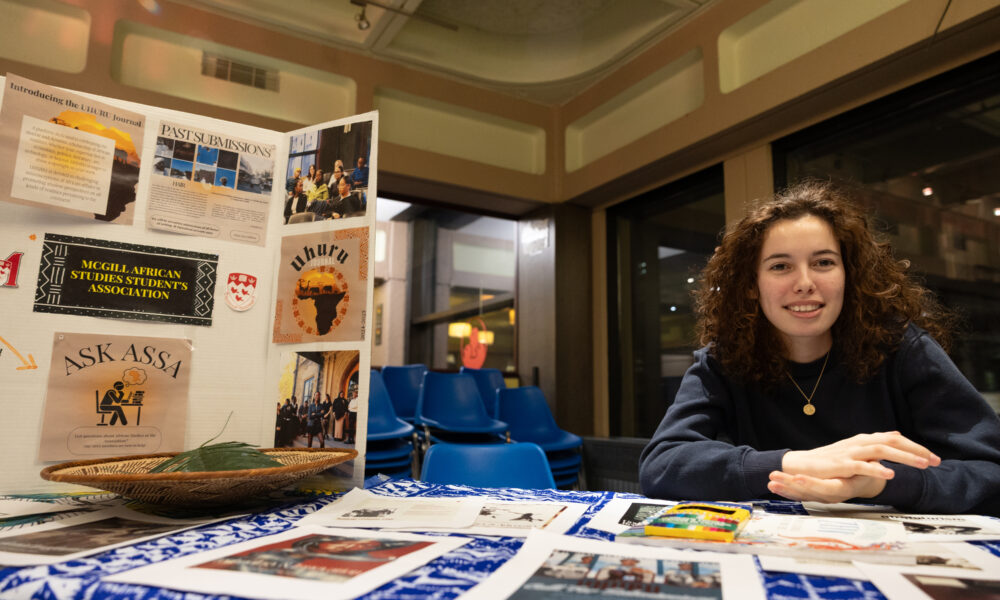
Matahilde Martial-Oger, U2 Arts, represented UHURU, the African Studies journal at McGill. Martial-Oger is a junior editor on the journal and articulated the publication’s vital role in creating an academic space for innovation and creativity surrounding diasporic African culture, politics and society.
“What we want to do is give a space for McGill students, but also people in the world because we are not just restricted to university students and certainly not to Canada […] to empower them to speak their stories, to bring an analytical and artistic personal perspective on the various topics that they want.”
Martial-Oger stressed UHURU’s vital role in fostering increased student scholarship and engagement with African Studies, pointing out its marginalized position as a field of study at McGill.
“We want to give a place to a topic that is often neglected. If we even consider the fact that African Studies is part of the Islamic Studies [department] at McGill, it speaks to that issue,” Martial-Oger said.
UHURU’s upcoming issue is focused thematically on Afrofuturism, which Martial-Oger described as a unique and forward-looking lens through which African Studies can be engaged.
“Afrofuturism is a cultural, artistic, and political movement that seeks to reimagine, reconsider, reframe African history, cultural movements, and future through a more futuristic lens, a more optimistic one as well,” Martial-Oger said. “It kind of reaches into science fiction, it has its own look that is very bold, it stands out, mixing tradition with also a futuristic sense.”
By showcasing intersectionality and solidarity between Black and 2SLQBTQIA+ students on campus, the event reaffirmed that true inclusion rests in shared learning and mutual empowerment—a vision that Queer McGill and its collaborators continue to bring to their events.
Interested students can visit Queer McGill’s Facebook and Instagram to learn more. UHURU is currently accepting submissions for their upcoming issue. More information about the journal can be found on their website.