
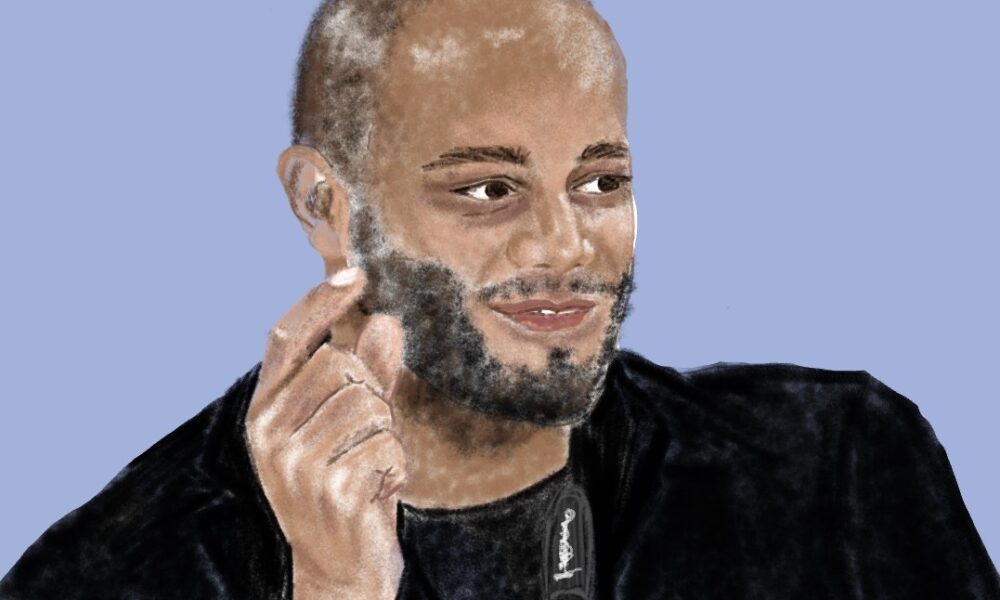



On Feb. 17, Sport Lisboa e Benfica (S.L. Benfica) hosted Real Madrid CF in Lisbon for the first portion of a two-leg Union of European Football Associations (UEFA) Champions League playoff. Real Madrid’s Vinicius “Vini” Jr. opened the scoring in minute 50 of the game before running towards the corner flag to celebrate—an action that Benfica fans and players alike did not take well.
Benfica fans threw objects onto the pitch towards the celebrating Madrid players in addition to making monkey gestures at Vini, and several Benfica players attempted to confront him, including winger Gianluca Prestianni. Prestianni got in Vini’s face and covered his mouth with his shirt before saying something that left Vini incensed. This led to Vini running straight towards the referee, exclaiming that Prestianni had just made a racist remark. Unfortunately, without Prestianni admitting to the remark, there is no evidence that can be used to ban him, and to this day he maintains his innocence. Instead, he reportedly told investigators he used an anti-gay slur—as if that is any more acceptable.
After the game, Benfica Head Coach José Mourinho went on the offensive and implied both that Vini may have lied and that he was at fault for the racist abuse he received.
“He should have […] not messed with 60,000 people in this stadium,” he said in a post-game interview.
Mourinho then went on to make comments suggesting that Benfica as a football club could never be racist because their greatest player ever—Eusébio da Silva Ferreira—was Black.
Eusébio was Portuguese by way of the nation’s colonization of Mozambique. He played in Portugal while the nation functioned as a brutal right-wing dictatorship under Antonio Salazar. Eusébio scored plenty of goals for both club and country and thus was well liked in Portugal and is looked upon favourably. However, he still dealt with racism both at an individual and systemic level. Eusébio never spoke openly about racism during his playing days, as Vini has often spoken to the press in Spain about the racism he faces in opposing stadiums. One must imagine that had he been outspoken as Vini has been, he would have most certainly been targeted even further by racists in a similar manner to Vini.
Mourinho’s comments highlight a certain colonial logic: Conform or be at fault for the racism you are faced with. It is the same logic we often hear when folks try to explain why they do not like immigrants. Oftentimes it is grievances over immigrants not speaking the same language, or complaints that immigrant communities still maintain their own culture. The concept is known as respectability politics: If you assimilate to and imitate the dominant group, then you earn your dignity. In Vini’s situation, this logic places the blame on him for celebrating rather than on Prestianni or the numerous fans in the stands making racist gestures.
In a similar vein, Manchester United and INEOS Chemical Group Owner James Ratcliffe went after immigrants in an interview with Sky News, suggesting that they are invading the United Kingdom and blaming them for societal problems the nation faces. There is a certain irony to a British man saying his nation is being colonized and the colonization is causing larger societal issues when three of the UK’s largest immigrant groups in recent years are folks from India, Pakistan, and Nigeria—all of which are former British colonies.
Ratcliffe’s reasoning for his anti-immigrant stance both in his initial statements and in his so-called ‘apology’—that felt more like an explanation—is that he feels immigrants are a burden on the UK economy despite the amount of money they generate for his various businesses. Ratcliffe has since explained that the ideal immigrant is one who generates economic growth.
Despite the differing context, the backwards idea both Ratcliffe and Mourinho push remains the same: Basic dignity for immigrants and people of colour is not a given and it must be earned by following the ideals of those in charge. This implication from two of the sport’s most influential figures is extremely disheartening and a reminder of how much progress is needed. Not only should governing bodies like UEFA take action against perpetrators like Prestianni, but there ought to be punishment for anyone who insinuates that racism can be justified because of the victim’s behaviour.