
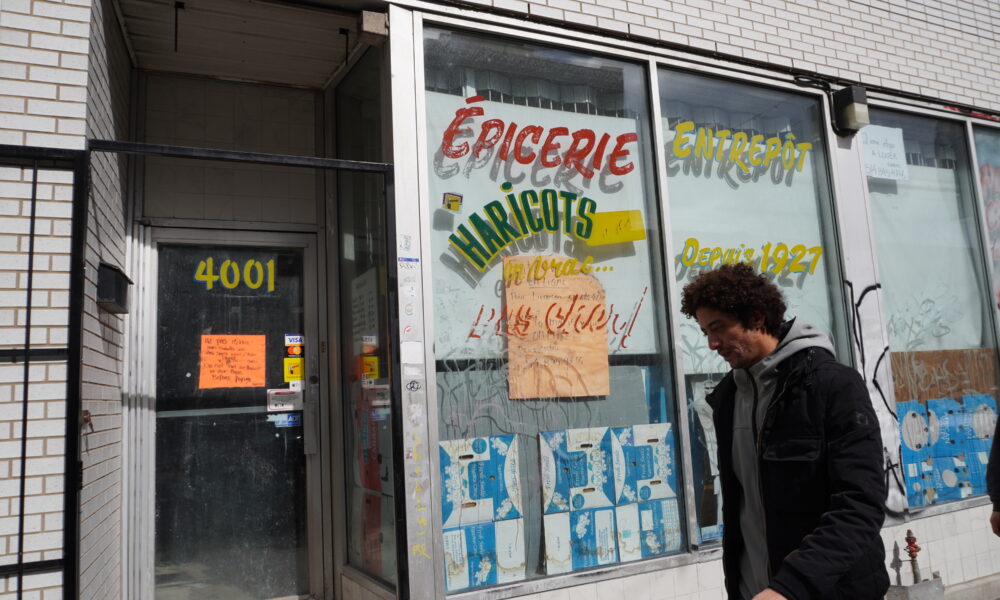



A recent Concordia University study revealed that 20 per cent of Montrealers cannot reach a quality grocery store within a 10-minute walk, a number that rises to nearly half the population when the diversity of food options is considered. These gaps are most pronounced in neighbourhoods such as Montréal-Nord, parts of western and southwestern Montreal, and suburban areas, where residents must rely on public transit or cars to access basic necessities. At the same time, Quebec is facing rising housing costs and unprecedented demand for food banks, with more residents turning to them for assistance, as demand is expected to rise by approximately 26 per cent in the next three years. For a city that presents itself as accessible, this reality points to an apparent failure: Access to healthy food remains uneven and dependent on income. Montreal must introduce targeted solutions to improve access to healthy food for everyone—not only those who can afford the time, transportation, or proximity required to obtain it.
Montreal often defines itself as a walkable, bike-friendly city where residents can easily move from point A to B. However, this vision of accessibility assumes mobility and resources, that residents can easily walk long distances carrying groceries or use a combination of cycling and public transit to meet their transport needs. This is not a neutral assumption. For many, particularly older adults and individuals with limited mobility, access to food is directly constrained by distance, travel time, and physical effort. As transit costs rise across Canadian cities like Montreal, low-income residents are left with fewer means to access essential goods.
These accessibility gaps are further intensified by Montreal’s broader cost-of-living crisis. Rising housing costs are placing increasing pressure on household budgets, with the Tribunal administratif du logement (TAL) recommending a 3.1 per cent increase for 2026, having suggested a 5.9 per cent increase in 2025—rates among the highest in two decades. Such rent hikes force many residents to make difficult trade-offs between housing and basic necessities.
Rising costs are also pushing employed and unemployed Canadians toward food banks, as one in four now experiences some form of food insecurity. As a result, demand for food banks has increased by 61 per cent since 2019, and according to Food Banks Canada’s HungerCount 2025 report, monthly visits reached nearly 2.2 million in March 2025. In this context, food accessibility cannot be reduced to proximity.
Access to food should not depend on how far someone can travel, how much they can carry, or how much of their income remains after paying rent. In a city that claims to be accessible, this is not a minor gap waiting to be filled; it is a systemic failure to address the needs of residents. This reality is most visible in suburban and low-income neighbourhoods, where residents already face longer distances to grocery stores and must rely on transportation, making access to food even more dependent on financial means. In this sense, food accessibility in Montreal is not evenly distributed—it is structured by income and geography.
The city must address this issue not only by prioritizing residents’ proximity to grocery stores, but by recognizing that food access is equally a question of urban policy and affordability. This could take the shape of horticulture plots and collective gardens, a model already proving to be effective in Rivière-des-Prairies–Pointe-aux-Trembles, a borough where much of the population lives more than 500 meters from the nearest supermarket. The city should further strengthen this effort by expanding subsidized neighbourhood food markets and mobile grocery programs in underserved areas, bringing affordable produce directly to residents who live far from full-service supermarkets. Ensuring access to healthy food is a basic responsibility in a city that claims to serve all of its residents.