


















Our solar system has existed for roughly 4.5 billion years—a long time, especially given that humans have only walked the Earth for the last 300,000 years. To gain an understanding of the solar system as a whole, scientists often follow clues that offer insights into the history of the universe.[Read More…]
Articles by Emma Gillies
The wonderful world of plant communication
Animals are not the only organisms capable of communication: Plants, too, are remarkably adept at exchanging information and sharing resources. By releasing volatile organic compounds (VOCs) into the air or secreting chemicals into the soil, plants can communicate with one another, transport water and nutrients to nearby companions, protect themselves[Read More…]
AUS Legislative Council condemns award given to McGill professor
The Arts Undergraduate Society (AUS) Legislative Council convened on Jan. 29 to discuss several issues, including a controversial award given to a McGill professor, expanding the Arts Undergraduate Improvement Fund (AUIF) budget, and the AUS elections. The meeting opened with the Motion Regarding Condemnation of McGill Faculty of Arts Promotion[Read More…]
The mental impacts of physical injury
When I was 16, my dream was to play soccer and run track at university, and perhaps even at the professional level. At the time, sports were my social life, my confidence booster, and my joyful escape from the stress of academics. But adolescent dreams die hard. In my third[Read More…]
Dumpster diving
Canada produced 25 million tonnes of waste in 2016, ranking as one of the highest per-capita waste generators in the world. The non-residential sector, which includes industry and institutions such as universities, produces the majority of this waste. In the past year alone, McGill’s downtown campus has generated 1,454 tonnes[Read More…]
Electric impulses help paraplegic patients walk again
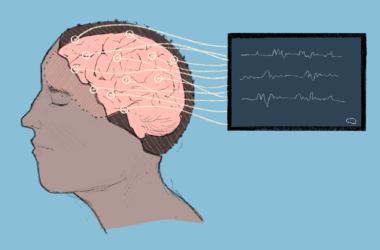
Three paraplegic patients with chronic spinal cord injuries are now able to walk again thanks to new Swiss neurotechnology and a multidisciplinary team that includes two McGill graduates. The STIMO (STImulation Movement Overground) study published in Nature this month, proposed a new technology to accelerate recovery from spinal cord injuries. This new[Read More…]
Living in a high-tech sci-tech world
The McGill Office for Science and Society hosted the 2018 Trottier Public Science Symposium on Oct. 29 and 30, where academics discussed information technology and its implications for humanity. Human history is punctuated with moments which completely redefined technology, the latest being the Fourth Industrial Revolution. Beginning during World War[Read More…]
The psychology of fear
For some, Halloween means curling up on the couch and watching a favourite horror movie. The resulting jump scares, hellish demons, and bloody deaths provoke an emotion we are all too familiar with: Fear. “Fear is an emotional state—the unpleasant feeling of being afraid—that emerges when we perceive an imminent[Read More…]
Montreal’s wood fireplaces get smoked out
In 2011, Montreal was ranked as the city with the second-worst air pollution in Canada. Sarnia, Ontario, a place otherwise known by the nickname ‘Chemical Valley’, came in first place. It’s no secret, then, that Montreal is a polluted city—thankfully, policymakers are trying to address the problem. On Oct. 1,[Read More…]
New cities don’t mean new homes
In the past 20 years, hundreds of new cities have sprung up around the world. Some are new political centres, others are aspiring trade hubs or green cities. But, whether it’s Astana, Putrajaya, or King Abdullah Economic City, the reason is the same: To increase economic growth. Surprisingly, though, many[Read More…]
Sounds fishy: Omega-3s and the fish reduction industry
Omega-3s have a storied reputation in the nutrition world. Studies claim that the fatty acids found primarily in fish can help fight inflammation, improve brain health, and may even prevent heart disease. Since 2002, the American Heart Association has recommended two servings of fish a week, or, for those who[Read More…]
World Cup sees injuries increase among young Montreal soccer players
Whether you celebrated France’s win or are recovering from Germany’s early exit, there’s no denying that the 2018 FIFA World Cup had its fair share of momentous upsets, brilliant goals, and stirring controversies. For young soccer enthusiasts, the global tournament that comes around only once every four years is an exciting time. Yet,[Read More…]
The DRAW Project: Delving into Montreal’s weather history
Step aside, Old Weather, eBird, and Galaxy Zoo—there’s a new citizen science project on the block, and its name is DRAW. DRAW, which stands for Data Rescue: Archives and Weather, allows anyone to explore Montreal’s weather history and contribute to important scientific research. And to make the project even more[Read More…]
The McGill Tribune Podcast – Interview with primatologist Colin Chapman
Staff writer Emma Gillies discusses primate conservation and its human component with Colin Chapman, professor in McGill’s Department of Anthropology
Ask a Geologist: How do islands form?
Earth’s surface is constantly changing due to a number of natural processes: Rivers transport sediment, glaciers carve valleys, and colliding tectonic plates build mountains. One of the planet’s most impressive talents, however, is the formation of islands. In recent decades, various new islands have popped up. The island of Nishinoshima[Read More…]
Immortality in the natural world
Harry Potter fans know that Fawkes the phoenix’s fiery demise wasn’t the end of him; he was simply reborn from the ashes. Phoenixes, of course, are mythical creatures. Immortality in real animals is likely the stuff of fantasy. Yet, as it turns out, biological immortality only refers to creatures that don’t[Read More…]
How many people is too many people?
There are currently 7.6 billion people on Earth. The United Nations (UN) projects that the planet’s population will increase by one billion within the next 15 years. By 2100, over 11 billion people could be inhabiting the planet. The concept of overpopulation is not new. Thomas Malthus, an 18th century[Read More…]
Uncoiling the accuracy of DNA ancestry tests
DNA ancestry tests from services like 23andMe, AncestryDNA, Family Tree, and MyHeritage are becoming increasingly popular methods of delving into our genetic histories, often at steep prices. While their methods used to retrace an individual’s ancestry may vary, each compares the genomes of their customers using DNA databases. Ancestry tests[Read More…]
Awe-inspiring Canadian whales
Marine biology fans celebrated World Whale Day on Feb. 18, commemorating the curious creatures and raising awareness for their protection. Whales play a vital role in the oceans’ functioning and carbon storage. Unfortunately, these mighty ecosystem engineers are threatened by whaling, habitat loss, and pollution. Canada’s coastlines are home to[Read More…]
The value of coding in the job market
As students feel increasingly threatened by what McGill Principal Suzanne Fortier has described as an in-coming “Technological Tsunami,” computer programming is an attractive option for students looking to learn a new skill or to strengthen their resume. Top Universities, a worldwide university ranking site, labelled coding as one of the essential[Read More…]
Closing the gender gap with Women & Science
Feb. 11 was the United Nations International Day of Women and Girls in Science, and to celebrate the occasion, the Montreal Science Centre hosted Women & Science, an event designed to encourage young women and girls to pursue careers in science and technology. Even in 2018, there is a prevalent[Read More…]
Reducing chemical waste through sustainable ketone-making
Pharmaceuticals, agrochemicals, and plastics all owe their existence to chemical synthesis. Ketones, a functional group with a central carbon double-bonded to an oxygen, are an important ingredient in a wide range of useful chemicals. Unfortunately, their synthesis is energy-intensive and requires many steps, creating significant chemical waste. Bruce Arndtsen, a[Read More…]
Soup and Science casts McGill researchers in the spotlight
From Jan. 15 to 19, the annual Soup and Science lecture series featured professors eager to present their research to students and spectators. The McGill Tribune reports: Assistant Professor Thomas Preston Department of Atmospheric and Oceanic Sciences Emma Gillies Contributor On Jan. 16, Assistant Professor Thomas Preston from the Department[Read More…]
Bomb cyclone rings in the New Year
On Jan. 4, 2018, much of the American and Canadian East Coasts were hit with chilling temperatures, snowy conditions, and hurricane-force winds. Iguanas fell from trees in Florida, Boston’s streets flooded with icy water, and parts of New Brunswick saw more than 50 centimetres of snow. The culprit was a[Read More…]
AstroMcGill talk sheds light on the Big Bang
The universe is comprised of billions of galaxies—encompassing all of space, all of time, and all of its contents. It all started with a Big Bang 13.8 billion years ago. On Nov. 16, particle physicist and cosmologist Oscar Hernández spoke about the Big Bang at AstroMcGill’s event Where, When &[Read More…]
The rise of invasive species denialism
Recently, dozens of opinion articles have appeared in the media—and even in scientific journals—that deny the risks that invasive species pose to the environment. These arguments claim that the field of invasion biology is biased and unscientific. Anthony Ricciardi, professor in McGill’s School of Environment, is addressing this issue. Invasion[Read More…]
Five spooky animals to keep you up at night
Halloween and creepy creatures go hand in hand, but there’s more to the animal kingdom than the generic vampire bat or black cat. Here are five spooky animals to get you in the Halloween spirit: Tufted deer Found in the mountainous forests of China, Tibet, and Myanmar, the tufted[Read More…]
Skepticism in climate science: Reasonable or regressive?
Ninety-seven per cent of scientists agree that humans contribute to climate change. Patrick Moore, a co-founder of Greenpeace, falls into the other three per cent. “Even if we are causing [climate change], it’s hardly anything,” Moore said in an interview with The McGill Tribune. He describes himself as a “sensible[Read More…]
‘Big Brother’ now a tool to study linguistics
After moving to a new place, some people’s accents change readily while others stay more or less the same for the rest of their lives. McGill University linguist and Assistant Professor Morgan Sonderegger recently spearheaded a study that explores the science behind accent dynamics. Some studies on accents have analyzed[Read More…]
Why McGill should extend its shuttle hours
Home to the Faculty of Agricultural and Environmental Sciences, which offers majors such as Bioresource Engineering, Nutrition, Environmental Biology, and Agronomy, the Macdonald Campus is a small slice of McGillian greenery on the waterfront of Ste-Anne-de-Bellevue. However idyllic this setting may seem, as a student at the Macdonald campus it[Read More…]
Zoos: Prisons or protection?
Animal lovers everywhere can relate to the excitement and wonder associated with going to the zoo. However, many are also dismayed by the small enclosures and the often oppressed and miserable-looking animals trapped inside. Not surprisingly, animal welfare organizations, such as PETA, have spoken out against zoos, condemning their push for[Read More…]
Environment and society unite to address sustainability at student-run panel
On Jan. 17, World Wide Fund for Nature (WWF) McGill and the Arts Undergraduate Society Environmental Council (AUSEC) hosted a panel discussion titled Society & The Environment: A Multidisciplinary Perspective. Leacock 26 was packed as students gathered to see experts discuss the current ecological crisis—but as the name of the[Read More…]
In search of a sustainable, nutritious diet
What is the perfect human diet in terms of nutrition and environmental impact? According to McGill’s School of Dietetics and Human Nutrition Professor Dr. Timothy Johns, finding the right balance is the key. Johns, an ethnobotanist and nutritionist, said that humans are omnivores by nature. “We’re adaptable, but it’s not[Read More…]
The ACL tear: An athlete’s worst nightmare
When former McGill Martlet Volleyball player Charlotte Clarke went up for a hit during a match, she wasn’t too worried about how she was going to land. But when she came down on one leg, her teammates heard a crack. “It was excruciating,” Clarke, U3 Arts, said. “The pain [made[Read More…]