





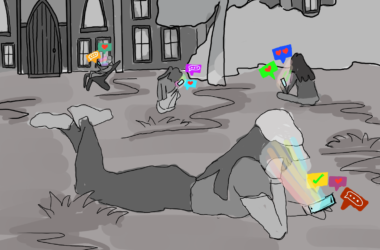






















A timid McGill student observes a group of classmates talking and laughing, and wishes to join them. As she contemplates whether to approach them, she remembers words of encouragement from a therapist: “You will make friends, you are kind and fun. People like you more than you think.” After recalling[Read More…]
Articles by Margaret Wdowiak
Meeting the wonderful members of the human microbiome
Microbes are often perceived as dangerous nuisances responsible for fatal diseases like tuberculosis. Yet, despite the negative connotations attached to their colloquial name, “germ,” trillions of harmless microbes live on our skin and within the human body, and help us survive and thrive. Lactobacillus: The plastic maker Lactobacillus is a family[Read More…]
Fact or Fiction: Does money really buy happiness?
Many communities continue to live traditional lifestyles detached from money-based markets. Yet contrary to popular belief, they lead fulfilling lives and their mental well-being is comparable to individuals living in money-fueled societies. This prompts the age-old question of whether money truly buys happiness. In recent decades, people with more money[Read More…]
A walk a day keeps the doctor away
Every year, McGill students curse the campus terrain as they trudge up the hill towards the Life Sciences Complex. However, the health benefits of climbing up the hill are abundant. Research has shown that for those able, walking reduces the rates of cardiometabolic diseases like diabetes, heart attacks, and strokes. [Read More…]
Disappearing giants: How warming oceans are suffocating large fish
Since 1981, the mean global ocean temperature has risen at an average rate of 0.18 degrees Celsius per decade. This has had serious impacts on the health of marine species; as oceans warm across the world, fish that are unable to cope with climatic changes, such as cardinalfish, are disappearing[Read More…]
When the world of dinosaurs was rocked, so was the climate
As tropical forests are cleared for agriculture and coral reefs overheat from rising temperatures, thousands of species vanish into oblivion, unable to survive the rapid climatic and environmental changes of the Anthropocene—the age of the sixth mass extinction. The Anthropocene epoch is an unofficial unit of geological time used to[Read More…]
Plastic planet: Challenges in creating a greener world
With every passing day, the Earth takes another step towards becoming a plastic planet. Plastic has infiltrated every habitat across the globe, from the high seas to the soil beneath cities. In an effort to address the gargantuan problem of plastic pollution, Prime Minister Justin Trudeau and the Liberal Party[Read More…]
Gliding, bat-winged dinosaurs surprise scientists
When most people picture flying dinosaurs, they picture beasts like pterodactyls and the pterosaurs. Although iconic to fossils of the Jurassic period, these flying reptiles were not dinosaurs at all, but instead a distant dinosaur cousin called archosaurs that flapped their forelimbs to achieve flight. However, scientists have recently found[Read More…]
The mental gymnastics of mid-semester motivation
McGill students are tired. Slouching into the tenth week of online classes in tandem with the flurry of midterm essays and assignments, many students are struggling to maintain their academic motivation amid the COVID-19 pandemic, and it shows. Motivation is the process that initiates and maintains goal-oriented behaviours. There are[Read More…]
MUHC to begin trial of ciclesonide for alleviating COVID-19 symptoms
While the race for a COVID-19 vaccine continues, scientists around the world are exploring the possibility of repurposing existing drugs to effectively treat COVID-19 patients. Recently, researchers have seen a number of breakthroughs. One of these successes is dexamethasone, a corticosteroid hormone with anti-inflammatory and immunosuppressive properties. The conclusions of[Read More…]
Creating the baby zoomer generation
Zoom, a company that would have been unknown to many this time last year, has become a mainstay in our everyday lives. The COVID-19 pandemic transformed this little-known video conferencing application into a multi-billion dollar company, and for good reason: It offered an effective and simple video-call platform for workplaces[Read More…]
A new approach to addressing urban homelessness
The homelessness epidemic continues to affect over 235,000 Canadians each year, most of them in major cities. Despite some efforts from municipal governments and charitable organizations to address the staggering number of unhoused Canadians, this figure has continued to rise annually since the late 1980s. However, a new study published[Read More…]
The science of tear gas
In an effort to dismantle protests, police departments across the U.S. and Canada, including in Montreal, have taken violent measures to repress civil demonstrations. From rubber bullets to water cannons, police units and municipal governments have been criticized for what many are calling the use of “excessive force” to disperse[Read More…]
Understanding the psycho-social effects of social distancing
At the start of each school year, McGill’s campuses bustle with life. Separated friends reunite, while eager newcomers explore the grounds in awe. However, with McGill’s announcement that the Fall 2020 semester will proceed remotely, the usual energy of campus life is anticipated to be changed drastically. Remote semesters are[Read More…]
COVID-19 pandemic spells trouble for wildlife
A jaguar prowls the deserted streets of a small town in Colombia. It turns, catching the scent of two hunters in the distance, but it’s already too late: They shoot before it can flee. Many animals have suffered a similar fate, according to conservationists, since the beginning of the COVID-19[Read More…]
The changing nature of sea ice
Over the last few decades, climate change has profoundly changed the shape and movement of the layer of sea ice covering the Arctic Ocean. As a result of a warming climate, melting sea ice has become more mobile. A new study conducted by McGill’s Department of Atmospheric and Oceanic Science[Read More…]
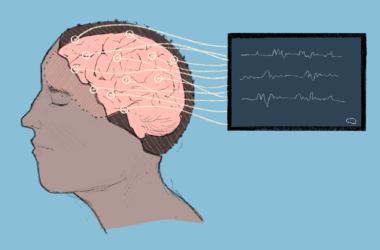
How inattention-hyperactivity affects the brain
A new study published in The Canadian Journal of Psychiatry sheds light on the relationship between brain development and behavioural disorders such as inattention-hyperactivity disorder, a condition similar to Attention Deficit Hyperactivity Disorder (ADHD). “The term inattention-hyperactivity, as defined in this study, refers to a set of behaviours such as fidgeting and[Read More…]
A new treatment for Alzheimer’s
Alzheimer’s disease currently affects around 44 million people worldwide. The disease destroys cells in the brain, inducing symptoms such as memory loss, mood swings, poor judgement, and a shortened attention span. The number of Canadians suffering from this debilitating illness is rising, but no cure or treatment currently exists to[Read More…]
Montreal start-up Aifred Health is applying AI to mental healthcare
Mental health treatments for conditions such as depression are currently based on an arduous ‘trial and error’ process. Matching people with the right care is difficult: An individual experiencing depression might consult different specialists who may recommend various different kinds of treatment, none of which could actually work. Aifred Health,[Read More…]
The Internet bands together to save Earth’s forests
Many consider online influencers and the YouTube community to be a toxic cesspool of negativity. However, YouTubers Jimmy Donaldson, known by his online name MrBeast, and Mark Rober are challenging this view by bringing internet celebrities together to make the world a better place through their TeamTrees campaign. Donaldson and[Read More…]
Racialized people receive lower quality mental health services
Over the last few years, campaigns such as Bell Let’s Talk and a greater representation of mental health have increased awareness of and reduced stigma associated with accessing mental health services. Despite these steps forward, many people of colour still have trouble accessing quality services. Sommer Knight, a graduate student[Read More…]
Fact or Fiction: The impact of hunting on animal populations
Hunting has often been suggested as an effective means of controlling animal populations. Yet, hunting can be beneficial in some instances and harmful in others. Hunting can actually help fund conservation: In the US, hunters generate millions of dollars for conservation efforts through excise taxes and licence fees. In Sub-Saharan[Read More…]
World Oceans Day highlights pressures on marine environments
On June 8, humans dumped 13,000–15,000 pieces of plastic into the ocean. At the same time, we were celebrating United Nations (UN) designated World Oceans Day, which raises awareness about oceans’ importance to humanity. It also connects people worldwide through social media, encourages participation in partner organizations, and inspires year-round[Read More…]
The fatal consequences of turning the clocks back
Every spring, millions of sleep-deprived Canadians are prompted to wake up an hour earlier, all the while cursing the person who invented daylight saving time. Few people probably imagine that one man’s love of bugs could have disturbed the life of so many individuals on an annual basis. In 1895,[Read More…]
Real phones have curves
Imagine never having to worry about small pockets again, instead you can just fold your phone over and over until it is a quarter of its original size. New technological advances and insights into graphene could make that future a reality. Recently, tech giant Samsung unveiled its new foldable phone,[Read More…]
Freedom is worth more than a billion dollars
Canadians typically enjoy high living standards yet tend to suffer from weaker social support networks than countries such as Mexico where, despite having much lower standards of living on average, residents often live in very tight-knit communities. According to a new study conducted by a pair of researchers from McGill[Read More…]
Males more sensitive to painful memories than females
Stereotypes may lead many to assume that women are more sensitive than men. However, recent findings on pain challenge conventional assumptions regarding the way men and women experience pain. A recent study conducted by researchers from McGill and the University of Toronto exploring the role of memory in the transition[Read More…]
Starting the year with the right appetite
Many New Year’s resolutions are set with the assumption that healthy habits and better grades are somehow distinct. However, there are many healthy energy boosting foods like nuts, salmon, eggs, mushrooms, and spinach that can help students lead both healthier lives and achieve greater academic success. Nuts Nuts require no[Read More…]
Tracking ‘Jaws’
Many lives could have been saved in the movie Jaws if only the town had an effective way of tracking the shark terrorizing their waters. Analysis of environmental DNA, or eDNA, is a revolutionary new technique that enables scientists to follow marine animals, no matter their size. eDNA refers to the genetic material,[Read More…]
T-cells take the wheel
In recent years, modern targeted cancer treatments such as chemotherapy, radiation, and surgery have become better at effectively treating the disease. However, these methods continue to be invasive for patients, as they essentially involve racing to kill cancerous cells faster than healthy ones. Fortunately, discoveries in the field of immunotherapy—using the[Read More…]
The evolving coverage of depression and suicide in the media
In 2017, Netflix released the series 13 Reasons Why, sparking a media frenzy about the show’s portrayal of suicide. In a recent study, Robert Whitley, an assistant professor in McGill’s Department of Psychiatry, investigated the Canadian media’s coverage of 13 Reasons Why. Collecting data from 20 Canadian news outlets, Whitley’s team[Read More…]