

Antoine – BSc, Honours Biology Dear Bio, If you’re into bio, you’d better learn to love DNA. Breathe it. Dream about it. Because everything comes back to DNA. What’s the reason behind ‘phenomenon X?’ A gene. ‘Phenomenon Y?’ Another gene. Are you curious about the composition of a microbial community?[Read More…]
Articles by Michelle Yankovsky
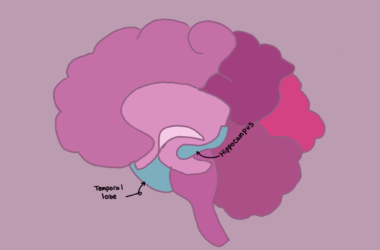
Alzheimer’s explained: Addressing medical advances and common misconceptions
Alzheimer’s disease (AD) is a progressive neurodegenerative disease that affects memory, thinking, and eventually grows severe enough to interfere with daily life. AD is the most common cause of dementia, an umbrella term that encompasses many different symptoms of cognitive decline. While AD is still categorized as an incurable disease,[Read More…]
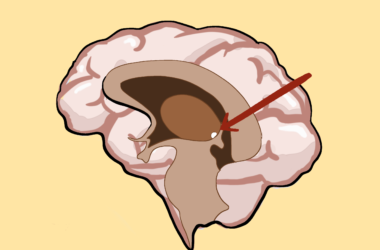
How a tiny brain region is shaping the future of major depressive disorder research
Warning: This piece mentions suicide. The habenula is a tiny structure buried deep within the brain, composed of two distinct subregions—the medial (MHb) and lateral habenula (LHb). Although small, it is a critical hub for regulating mood, motivation, and reward processing. Because of this, researchers have begun to link abnormalities[Read More…]

McGill researcher Danielle Berbrier investigates new therapeutic for women with PCOS
Polycystic ovary syndrome (PCOS) is a disease characterized by excess hormone production from the ovaries, resulting in irregular menstrual cycles and fertility issues. PCOS affects around one in ten women, making it one of the most common endocrine disorders among women of reproductive age. Beyond its relationship to menstruation and[Read More…]

Available but not accessible: Clinicians highlight gaps in mental health service delivery
Conversations surrounding mental health (MH) have increased dramatically in recent years, with many institutions promoting wellness and expanding volumes of resources. However, the presence of services alone does not guarantee accessibility, particularly for immigrants, refugees, and socioculturally diverse communities, who often face barriers due to language, financial constraints, and increasing[Read More…]
‘Not enough:’ How racial invalidation impacts the mental health of multiracial individuals
Despite facing unique forms of discrimination, multiracial people remain largely overlooked in research on the intersection of racism and mental health. Multiracial people not only experience racism from strangers, but also from within their own families—a phenomenon known as intrafamilial racism. This, in turn, is a risk factor for poorer[Read More…]

How systemic barriers hinder the integration of African immigrants in Quebec’s labour market
Immigrants contribute significantly to Canada’s socioeconomic growth in undeniable ways, yet many of them are excluded from job opportunities for reasons unrelated to their qualifications. A complex interplay of racial discrimination, social isolation, and systemic inequalities shapes the experiences of Highly Skilled African Immigrants (HSAIs) joining the workforce. This raises[Read More…]

A diabetes peer mentorship program launches for First Nations youth
Diabetes is often framed as a purely medical condition, managed through medications, blood sugar monitoring, and lifestyle changes. For many Indigenous youth in Canada, however, history and culture shape how they experience the condition. The enduring impacts of colonialism, intergenerational trauma, and the healthcare system’s failure to provide culturally sensitive[Read More…]

Do good, feel good: Volunteering and its potential benefits to youth mental health
What if youth engagement in civic activities—volunteering, activism, and advocacy—did more than help communities? What if it also improved the mental health of volunteers? While traditional approaches to mental health include psychotherapy, cognitive behavioural therapy, and pharmacological treatments, some McGill researchers are exploring how civic involvement can contribute to positive[Read More…]

How aspects of body image may predict self-injury in university students
Content warning: Self-injury Nonsuicidal self-injury (NSSI) remains an urgent and often overlooked mental health concern, and one that demands greater attention from universities worldwide. As many as 44 per cent of those who engage in NSSI in adolescence continue to do so when they start university, and eight per cent[Read More…]

Trust your gut: How your gut microbiota uses the foods you eat to prevent disease
Hidden deep within the human digestive tract lies a dynamic and complex population: The gut microbiota, a community of over 100 trillion microbial cells that influence the body far beyond digestion. Consisting of bacteria, viruses, eukaryotes, and archaea, a diverse microbiota has been shown to have many beneficial health effects,[Read More…]

Could personalized interventions transform eating disorder care?
Eating disorders (EDs) are serious and prevalent conditions that can impact all aspects of one’s life. However, treatment remains difficult to access as a result of high costs, long waitlists, and geographic limitations. But what if just one encounter could significantly improve cost-effectiveness and long-term outcomes for individuals living with[Read More…]
Exploring the role of virtual family participation in adult intensive care unit rounds
Family engagement in patient care is an essential aspect of adult intensive care unit (ICU) practice. The approach includes family members in multidisciplinary care rounds, allowing them to contribute to medical decision-making while being present for their loved ones—yet systemic and individual-level barriers often get in the way. But what[Read More…]

Investigating the link between sex-dependent gene expressions and major depressive disorder
Why do women experience major depressive disorder (MDD) at nearly twice the rate of men in the post-puberty stage? During this critical stage, MDD manifests in a sex-specific way in its prevalence, symptomatology, and treatment responses when comparing males and females. In a recent publication in Brain, Behaviour, and Immunity,[Read More…]
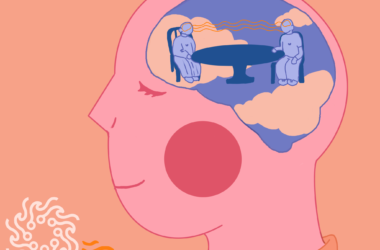
CogSURF connects minds, empowering the next generation of cognitive scientists
The Cognitive Science Undergraduate Research Forum (CogSURF), Montreal’s first undergraduate-led conference of its kind, will host its inaugural event on Feb. 27 at the University Centre. This event aims to showcase undergraduate talent and break down the barriers to open science for undergraduate students across Montreal. With over 340 registrations,[Read More…]

Black History Month panel investigates representation in genetics research
On Feb. 12, McGill’s DNA to RNA (D2R) initiative hosted a webinar in honour of Black History Month. Led by Mariloue Daudier, Senior Advisor, Equity, Diversity and Inclusion for D2R, the session explored the opportunities and challenges faced by Black individuals in genetics research. The webinar featured three guest speakers[Read More…]

Should consent for examinations under anesthesia be obligatory?
In recent years, the practice of obtaining consent from medical patients, particularly when conducting examinations under anesthesia (EUAs) of the sensitive pelvic, rectal, or prostate regions, has gained increased attention. While the United States has seen significant media coverage and regulatory changes on this issue, Canada continues to lag behind.[Read More…]
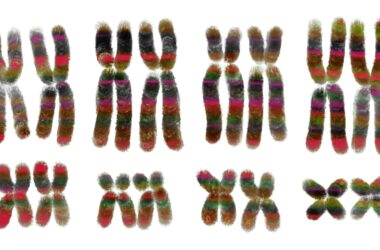
When a DNA test doesn’t go the way you expected…
Imagine taking what appears to be a harmless DNA ancestry test, expecting to uncover more information about your heritage, only to be met with the discovery that your assumed parent is not biologically related to you. Direct-to-consumer DNA tests—such as those provided by 23AndMe and Ancestry—typically provide three pieces of[Read More…]

The power of persuasion for driving vaccination against COVID-19
“Let’s get back to normal” was a phrase that circulated the globe at the height of the coronavirus (COVID-19) pandemic. To some, getting vaccinated to accelerate a return to normalcy was a no-brainer, but others felt various degrees of hesitation. Still, experts estimate that the COVID-19 vaccine prevented nearly 19.8[Read More…]

Exploring Montreal’s bilingual identity
Living in a vibrant and multicultural city such as Montreal exposes us to a variety of languages each day. Montreal’s linguistic mélange encourages us to consider how these different languages impact our perception of one another’s languages, and the key factors in this process. In a study conducted in Montreal,[Read More…]