
Trigger warning: This piece contains mentions of sexual violence.
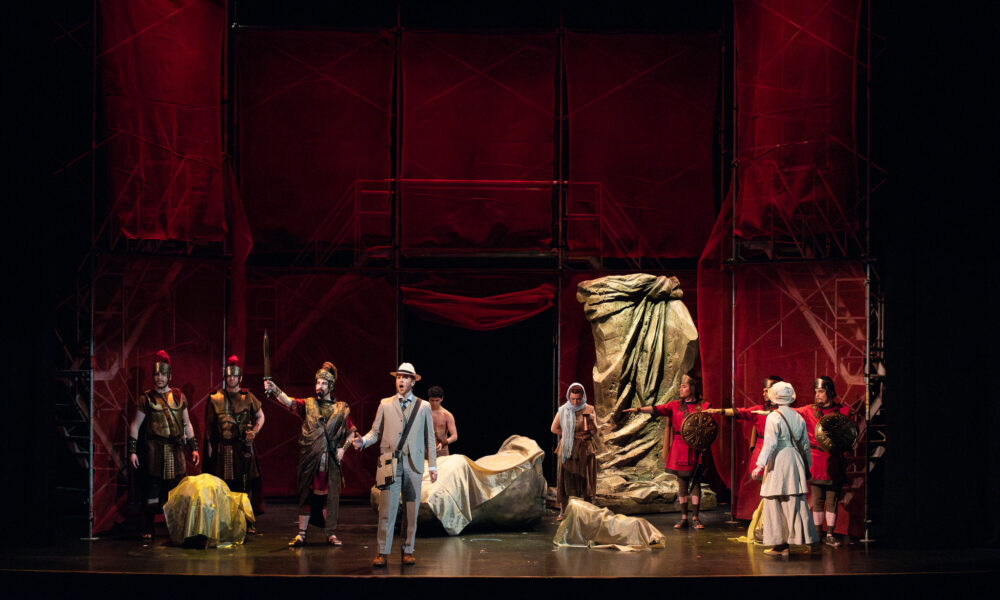
The famed red curtain rises on a scene of violence and destruction. Soldiers surround the shattered remains of a colossal statue as the opera’s narrators introduce the chaos of the present moment. On Jan. 30, Opera McGill and the McGill Symphony Orchestra premiered Benjamin Britten’s The Rape of Lucretia, directed by Patrick Hansen, to thunderous applause in the historic Monument-National.
Set in ancient Rome, the story centres on the fiercely devoted love between Collatinus (Tristan Pritham, U3 Music), a Roman soldier sent away to fight, and Lucretia (MacKenzie Sechi, PG Artist Diploma in Performance), his loving wife who longs for his return. Her faithfulness inspires jealousy among the other soldiers, eventually spurring Tarquinius, the prince of Rome, to test her chastity and, in a horrifying act of sin, sexually assault her.
The tale is narrated and commented on by the two figures of the Male Chorus (Fletcher Bryce-Davis, MMus 1), and the Female Chorus (AJ Gauger, MMus 2). Drawing on a tradition stemming from ancient Greek theatre, they are removed from the plot and embody the voice of morality sorely lacking from the tragedy.
As a chamber opera, the work allows for intimacy between the group of 11 characters and the chamber orchestra conducted by Stephen Hargreaves. The small ensemble conveys all of the dramaticism while highlighting the psychological aspects of the plot through focused attention on individual melodies. Strings and harp accompanied scenes of care and friendship in Lucretia’s home, while highly percussive instrumentation heightened the soldiers’ brutal bickering. The lighting design reinforces this contrast, illuminating domestic scenes in soft blue tones and casting the military ranks in stark red. When Tarquinius entered Lucretia’s home, Britten and the lighting broke down this contrast with percussive and nonmelodious writing framing a harshly lit home, elevating tension and marking the destructive nature of the act.
Portraying such a horrific tale on stage is a difficult task for anyone, but especially for a young cast of university students. Cast members Sechi and Pritham explained how they approached and portrayed the opera’s heavy content.
“We definitely had several meetings about intimacy and about […] subject matter,” Pritham said in an interview with The Tribune. “Most of the rehearsals were actually closed, which is kind of rare for us.”
While music students may watch other productions’ rehearsals, closed rehearsals for this opera allowed the cast to grow comfortable with one another and work through the scenes without added pressure. Sechi emphasized the importance of forming a sense of camaraderie before navigating the assault scene.
“We started with a really light-hearted approach so that we would be able to just laugh, […] because obviously it’s a really difficult scene to navigate,” Sechi said. “It was very lighthearted and fun so that we could find intimacy and connection in that way before moving into something so horrible.”
The fight between Lucretia and Tarquinius was violent and dramatic, culminating in the act of rape. The audience was blinded by a bright light placed centre stage behind the characters as Tarquinius undid his attire. This choice forced the audience to look away from the brutality, communicating the act without relying on gratuitous portrayals of violence.
The aftermath of the crime focused largely on Lucretia’s psychological state rather than on plot-driven action. Revenge was not carried out, nor was anger expressed through battle. Instead, Sechi’s deep, lamenting voice shifted the typical emphasis on plot to her emotions. Britten’s choice to write Lucretia as an alto not only made her voice stand out against her soprano and mezzo entourage but also conveyed the depth of her grief.
The opera ends without offering a reason or justification for the chaos it depicts. The question, “Is this it all?” haunts the final scene through its endless repetition. The Romans and Choruses sing together in a beautifully stirring display of solidarity, yet none can find meaning in the painful injustice, forcing audience members to confront the horrors head-on. The delicate yet impactful presentation of this harrowing tale revealed the maturity and talent of the young performers, entrancing the audience through beauty and terror.


