
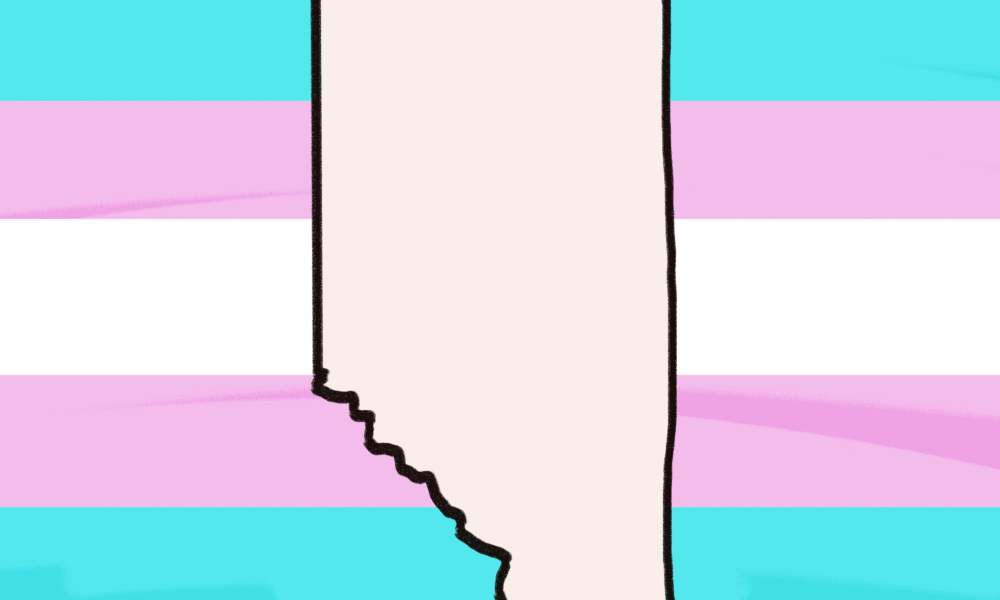

In December 2024, the Legislative Assembly of Alberta passed the Health Statutes Amendment Act, officially known as Bill 26. This act restricts minors’ access to gender-affirming care (GAC), including prescriptions for puberty blockers and hormone therapy. In response, Egale Canada and Skipping Stone initiated litigation against the Government of Alberta over the constitutionality of Bill 26. In June 2025, the Court of King’s Bench of Alberta granted an injunction, effectively pausing Bill 26’s enactment.
In November 2025, the government introduced Bill 9, which used the notwithstanding clause to override the Charter of Rights and Freedoms. The injunction was ultimately removed in December 2025. Since then, Trans Rights YEG has created a petition to be brought into the House of Commons. The Tribune outlines how Bill 26 affects trans youth disproportionately, explaining how the petition may reverse the proposed legislation.
What is Bill 26?
Bill 26 is an Alberta law that amends the Provincial Health Agencies Act as well as the Health Professions Act by introducing regulations for new and existing provincial health organizations.
Celeste Trianon, an activist in Montreal known for her documentation and tracking of anti-trans legislation, considers this law unconstitutional. In a written response to The Tribune, she stated how Bill 26 signals to trans youth that they are second-class citizens in Alberta, and that they do not have the same rights to care as other Albertans.
“It’s simple, they’re constitutionally protected rights!” Trianon wrote in relation to GAC. “This includes the right to life, liberty, and security of the person, to be exempt from cruel and unusual treatment, and to be treated equally under the law. This also includes, for trans youth themselves, to be treated under the principle of the ‘best interests of the child,’ the governing principle of family law across Canada.”
What does Bill 26 do?
Under this bill, minors in Alberta cannot access GAC, including puberty blockers, Hormone Replacement Therapy (HRT), and gender-affirming surgeries. Trianon insists the ban does long-lasting damage to the minors affected.
“These bans do not protect [trans youth]. Countless instances of research and the Alberta Court of King’s Bench have held that such bans create irreparable harm—up to and including suicide. And in many cases, these consequences are lifelong, both physical and psychological,” Trianon wrote.
According to a study by the Trevor Project, an organization founded in 1998 to aid 2SLGBTQIA+ youth, anti-trans legislation—like that limiting access to GAC—increases suicide rates in trans and non-binary youth by 72 per cent. HRT has been found to decrease suicidality by over 67 per cent, showing this form of GAC to be crucial to supporting trans youth—a demographic where close to 49 per cent experience suicidal ideation.
What will the petition do?
With their petition, Trans Rights YEG is attempting to stop the continued implementation of Bill 26. The petition has already reached its goal of 500 signatures, but is still continuing to accept signatures until it is brought before the House of Commons. If successful, it will ensure trans youth in Alberta have access to GAC once again. Anyone who is a resident in Canada can sign the petition.
Trianon joined Trans Rights YEG in support of this petition. She insists that the passing of this petition is essential to stopping Bill 26’s drastic negative effects.
“Kids will die. Families will be split apart. People will suffer. And the consequences will be unquantifiable,” Trianon said. “Few times do governments decide to actively destroy the lives of a few people, but the consequences will certainly be intergenerational.”