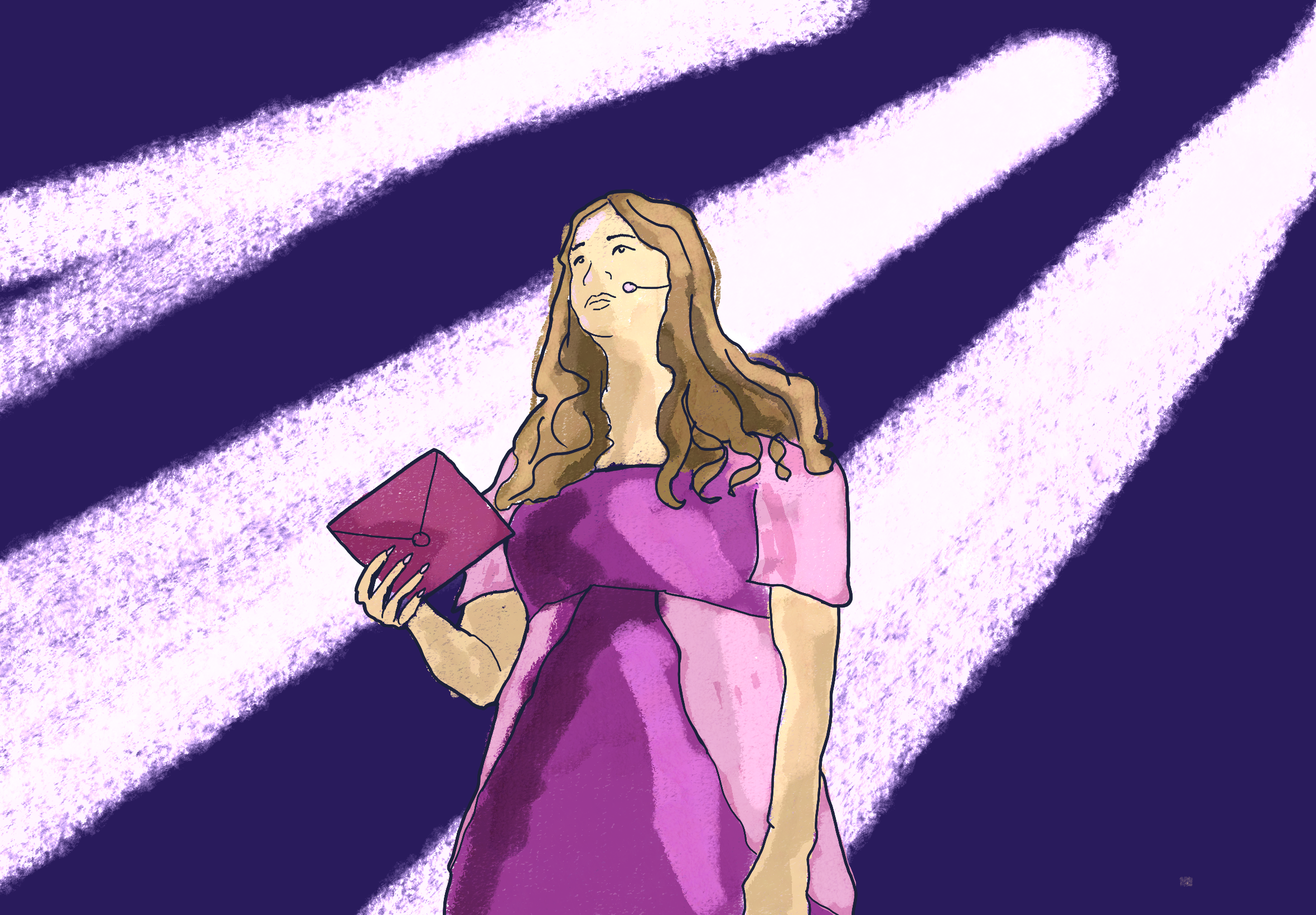


From Jan. 24 to Jan. 31, the McGill Arts Undergraduate Theatre Society (AUTS) staged Natasha, Pierre, and the Great Comet of 1812, a musical originally created by Dave Malloy, as their annual performance. The show reinterprets a 70-page excerpt of Leo Tolstoy’s War and Peace, set in 19th-century Moscow, as the characters experience love, jealousy, heartbreak, familial obligation, and societal expectations. AUTS director Milan Miville-Dechene explains that even though the story spans 200 years, the musical explores themes that remain deeply relevant.
The show follows the countess Natasha (Claire Latella, U1 Music) and her cousin Sonya (Miranda De Luca, U3 Education) as they arrive in Moscow, awaiting the return of Prince Andrey Bolkonsky (Chris Boensel, U2 Arts), Natasha’s fiancé, who has been sent off to war. One night at the opera, the rogue Anatole (Frank Willer, U1 Science) sweeps Natasha off her feet. Convinced they are in love, Natasha breaks off her engagement and makes plans to elope with the charming Anatole, whom she has known for just a few days. When others discover their plans, Pierre (Sam Synders, U4 Arts), Andrey’s best friend, steps in to prevent the disaster.
Théâtre Plaza was the perfect venue for this show, with its moody, atmospheric lighting and spacious interior. The actors used the balcony and floor as part of the set, physically and metaphorically engrossing the audience in the story. The lighting reflected the musical’s numbers distinctively—when the characters were partying at the club, the lights switched to green and purple, reminiscent of hazy modern clubbing.
Natasha, Pierre, and the Great Comet of 1812 embodies the most extravagant and outlandish aspects of musical theatre, perhaps most notably by constantly breaking the fourth wall, made easier thanks to the confines of the intimate venue.
From the first musical number, “Prologue,” the cast interacts directly with the audience by making eye contact and chanting the lyrics “Gonna have to study up a little bit / If you wanna keep with the plot / ‘Cause it’s a complicated Russian novel / Everyone’s got nine different names / So look it up in your program.” Complete with designated interactive seating, a few audience members were brought up to the stage and spun by various characters.
Some cast members elaborated on how they connected with audience members and handled the show’s fourth-wall breaks.
“It’s definitely intimidating because […] I love to connect with a scene partner, so having to connect with an audience member who is like ‘I’m not in this right now’ is definitely different, but so much fun,” De Luca said in the interview with The Tribune.
Later, maracas were handed to attendees, inviting them to join the live orchestra. The setting and the story are removed from modernity, a fact the musical itself embraces, blending story and reality and enticing the audience to join the colourful world of Moscow.
The cast’s performances were also remarkable for their ages. Latella dazzled with her singing, especially in her solo “No One Else.” Complemented by her dynamic acting, she brought the wide-eyed, romantic young girl to life. Though Mary, Andrey’s sister, is a relatively minor character, Ariel Goldberg (U0, Arts) conveys Mary with her abusive father’s impossible whims through vocal performance, imbued with a slow, mournful quality. Mary and Natasha’s dissonant harmony in “Natasha & Bolkonskys” perfectly conveys their apprehension and clash of personalities. Willer, on the other hand, exudes Anatole’s effortless charm and suavity from his first moment on stage, making the audience feel Natasha’s immediate infatuation.
Ryan Jacoby’s (U1, Science) performance as Dolokhov embodies what made this musical so special. The delicate balance between the fun, theatrical humour and the grounded dramatic emotions epitomizes the quick-witted humour of the show.
The company numbers were among the most impressive, featuring elaborate choreography, precise synchronization, and stellar vocal harmonies from the entire cast. The ensemble was integrated into the musical, with their presence—or absence—noticeable in the musical numbers. With the entire company on stage, it was easy to feel the chemistry among the cast, which translated into a natural camaraderie among their characters.


