
A research team led by Professor Lyle Whyte and post-doctoral fellow Jacqueline Goordial from McGill’s Department of Natural Resource Sciences has explored using low-cost, low-mass, and currently-available microbiological instruments to detect signs of life in astrobiological missions on other planets. Published in the December 2017 issue of Frontiers in Microbiology,[Read More…]
Author: Sihara Wickremasinghe

McGill recognized as number two school for efforts in sustainability
McGill continues to hold the title of the second most sustainable university in Canada, as reported by Corporate Knights magazine, which rates organizations across the country by their sustainability. McGill earned a total score of 75 per cent on Oct. 30, which was based on 13 environmental indicators including the number[Read More…]

A McGill Student’s Daily Journey in Wintertime
Shaky Beginnings

Deceptive Add-Drop

Mice @ McGill
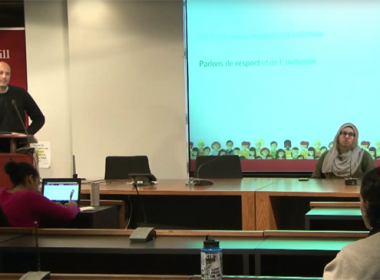
McGill holds forum to discuss inclusivity and respectful debate on campus
On Jan. 24, the Principal’s Task Force on Respect and Inclusion in Campus Life held an open forum for students, faculty, and staff to voice their opinions and suggestions regarding campus inclusivity. The task force, which was announced in an email on Oct. 25 2017, is mandated to hold consultations[Read More…]

New SSMU researcher being hired to investigate McGill military research
The Students’ Society of McGill University (SSMU) has begun the hiring process for a new staff position that will investigate and report on research into military technology carried out in McGill’s laboratories. The Harmful Military Technology Researcher will work for an hourly wage on average six hours a week reviewing[Read More…]
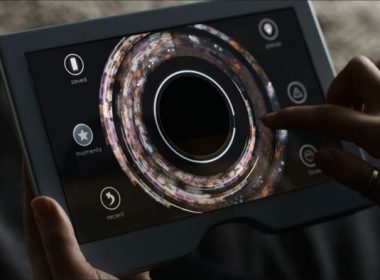
The science of “Black Mirror”
Charlie Brooker’s harrowing British sci-fi series Black Mirror returned to Netflix with six new episodes exploring multiple technologies of questionable ethics. From the digital uploading of human minds to predictive neuroscience technology, the show’s fourth season illuminated some frightening, futuristic concepts. But with real-life advancements in brain imaging, artificial intelligence, and[Read More…]
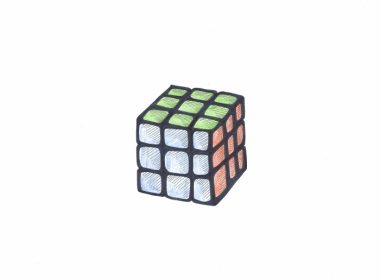
How to solve a Rubik’s Cube using math
Although at first glance just a colorful and simple game, the Rubik’s Cube has been used in both competitions and mathematical research. The puzzle’s main objective is to recreate the original positioning (one color per side) by rotating the cube’s six faces. Originally called the ‘Magic Cube’ by its Hungarian[Read More…]


