Latest News

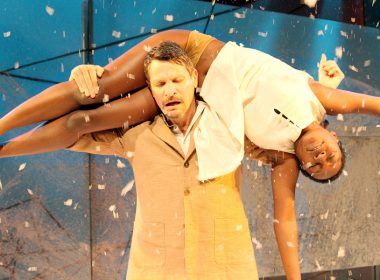
Considerate yet passionate, Innocence Lost questions whether our judicial system prizes efficacy over justice. (Liam Maclure / McGill Tribune)
a, Arts & Entertainment

A long and torturous path to justice

Minute misfortunes, cringing incompetence, and wanton, inexplicable malevolence—that’s all one needs to hang a boy.

Steven Truscott’s case is a black stain on Canadian history. In response to the violent rape and murder of a child—12-year-old Lynne Harper—our neighbours, our courts, and our society took the life of another. Just 14-years old at the time, Truscott became in 1959 the youngest Canadian sentenced to death. That this was commuted to life imprisonment, and the executioner’s noose stayed, is hardly comforting. Truscott would have to wait until 2007—when the errors of the initial case could be brought to light—to be acquitted of the charges.

The Centaur Theatre/National Arts Centre co-production of Innocence Lost: A Play About Steven Truscott, written by Beverley Cooper and directed by Roy Surette, is an accomplished telling of the events surrounding Harper’s murder and Truscott’s trial. Cooper’s script rightly reflects the pain experienced not just by Truscott, but also the Harper family and the small, tightknit community of Clinton, Ontario in which the tragedy took place. This attentiveness, coupled with Surette’s even-handed and empathetic direction, makes for a production that is provoking without moralizing, inquisitive rather than inquisitorial, and very, very much alive.

This care is evident in the meticulous construction of an idyllic community, a space that is pristine, protected, perfect—a space without evil. The same care can be seen in the slow fragmentation of this safety, as Harper’s disappearance becomes a morbid, unimaginable discovery in the bushes, and as the community slowly turns to chew out and digest one of their own. The innocence that is lost is not merely Truscott’s—the story is very much about the suffering of a town and country.

Cooper merits praise for her dexterity in navigating such a horrible event, one in which various parties have incalculable emotional stakes. Many of the lines are narrations, breathlessly relaying facts to keep the audience informed of all relevant detail, but the cast handles the task, which could easily sink into tediousness, with livid yet restrained passion. The rest of the script dives deep into intersubjective experiences, whether it’s the gossipy neighbour, the traumatized classmate, or the cop that’s out for blood. Here, we see glimpses of what a clinical court document or aseptic news clipping could never reveal. The best moments of the production capture a back and forth of this dualism, a fusion of cool facts and heated humanity.

Technical elements also complement the respect and restraint which characterizes this production. James Lavoie’s tiered set design, replete with miniature houses, exhibits the power of subtlety. The same can be said for Luc Prairie’s lighting, though it is appropriately dramatic at select points, such as during Truscott’s appearance at the Supreme Court of Canada. The video projection which accompanies several scenes may easily have slid into uncomfortable sentimentality in less accomplished hands, but George Allister and Patrick Andrew Boivin’s design is compelling and effective without being self-indulgent.

Liam Maclure / McGill Tribune

Distinguishing themselves among a versatile and accomplished cast, most of whom play multiple roles, are Fiona Reid and Allan Morgan. Both veteran actors in Canadian theatre, Reid and Morgan’s talent is evinced by the range and depth of nuance in their characterizations. Each role inhabited is made unique, and even the briefest cameo, in the hands of Morgan, could become the most memorable performance of the night. As the guiding spirit for the audience, Sarah (Jenny Young) is a formidable presence. Young invests the role with both vulnerability and strength, making for an imminently relatable character that helps the audience through the wrenching story. The tightly-wound and immaculate production nevertheless saw a number of minor line mishaps on opening night—such things are, however, unlikely to mar future performances.

The subtle movement from ‘innocent until proven guilty’ to its terrifying inverse speaks to the injustice of Truscott’s case. Lines like “He’s got to be guilty! There’s too much at stake!” exhibit just why the conviction became one of the most infamous ‘miscarriages of justice’ in Canadian history. Yet there’s no condemnation or accusation in this production, no single ‘ah-ha!’ moment that the viewer can point to as the source of all wrong. There’s no target for one to strike with the red-hot poker of vengeance, nothing that can be used to console oneself with the thought that ‘if we stop that, we can prevent it from happening again.’ Instead, Truscott’s story is one overflowing with sadness, helplessness, and frustration. Though we may not answer this question, the fact that Innocence Lost asks it at all is important: What made us, governors and participants in our cherished democracy, turn so eagerly to condemn this boy?

Innocence Lost runs until Feb. 24 at the Centaur (453 Saint-François- Xavier). Student admission $26.

a, Arts & Entertainment

Humanity on trial in Kafka’s Ape

What makes a human being, human? What makes an ape, an ape? Is it at all possible to draw a conclusive line between these two animal species in order to define one as superior to the other? These are some of the central questions at play in Kafka’s Ape, a performance now playing at Infinithéâtre. The show is based on Franz Kafka’s short story, A Report to an Academy, and was adapted and directed by Guy Sprung.

In A Report to an Academy, published in the war-ravaged Germany of 1917, an ape is captured in the jungles of Africa by a European hunting expedition. The ape, realizing that only by imitating the bizarre behaviour of his captors can he have any chance of escaping the confinement of his cage, strives to repress his ape identity, and take on a human one. His captors deem his efforts successful, and the metamorphosed ape is accordingly celebrated as a unique variety act all over Europe.

In Guy Sprung’s adaptation, the ape, named Redpeter, culminates his parallel journey from ape to man as a distinguished member of the private security industry, a euphemism for his engagement as a mercenary with a major privatized military company. Sprung’s contemporization of Kafka’s story posits the world-wide expansion of this industry as the appalling zenith of the human species’ relentless desire for wealth and success. In the Director’s Note addressed to the audience, Sprung warns us that “Redpeter has been assimilated into one of the most heinous occupations the Homo sapiens has embraced on its evolutionary journey, that of privatizing the killing and the subjugating of other human beings—for profit.”

Montreal actors Howard Rosenstein and Alexandra Montagnese play the parts of Redpeter and his ape-wife, and have both undergone intensive instruction by movement coaches Anana Rydvald and Zach Fraser, in order to correctly imitate the apes’ natural motions. Thus, just as Redpeter had to repress the ape within himself to become human, the actors have had to undertake a similar obscuring of their instinctive human movements and behaviours. The important difference is, of course, that for Rosenstein and Montagnese their transformation is transient, confined to the limits of the play.

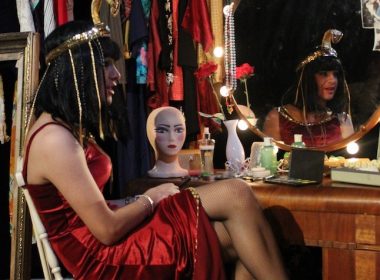
Set and costume designer Ariane Genet de Miomandre, and make-up designer Vladimir Alexandru Cara, make the actors’ transformation from man to ape complete. The overall effect is not only highly convincing, but unnerving: Redpeter emerges as a character in which the boundaries between ape and man have become alarmingly unstable.

Metamorphosis, a common topic for Kafka, thus operates at many different levels within the play: at one level, as described, a man plays an ape who transforms into a man. But the metamorphosis doesn’t stop there. Not only does the ape have to transform irreversibly from his natural animal self in order to take on a human identity, but subsequently, to be considered a successful member of the species of Homo sapiens, the ape has to distort the very human nature he has attained, and consciously flout fundamental principles of humanity.

The irony of this last transformation is painfully obvious: in documenting the ape’s journey, it is not the superiority of the human race that is revealed, but its immorality, its inhumanity.

Infinithéâtre’s production of Kafka’s Ape runs until Feb. 17 at Bain St. Michel (5300 St-Dominique). Student tickets $20.

a, Arts & Entertainment

Babette Mangolte bends time to her will

“Is he allowed to cross the boundary?” I ask French-American artist and filmmaker, Babette Mangolte. I’m referring to the man with the wayward look in his eye who has snuck over the boundary to get a closer look at her pictures.

“What?!” Mangolte exclaims, as she grabs my arm with a look of shock on her face (as much shock as I can discern from behind her charismatic John Lennon-esque sunglasses). Apparently, the boundary is there for a reason.

Mangolte’s newest exhibition at the VOX gallery features an assortment of installations from the ’70s to the present. In Looking and Touching (2007), the boundary creates a forced distance between the viewer (who is behind the boundary) and a variety of black-and-white framed photographs that hang on a faraway wall. From a distance, the viewer sees 46 photos of New York City life in the ’70s, from dance and theatre performances to city scenes.

One is not, however, limited to the role of a spectator. On the viewer’s side of the barrier rests an elongated table, strewn with smaller, delicate versions of the wall photos and their negatives. These tiny table photos evince the process of selection in film photography, with the viewer free to touch and inspect the photos as they search for the accompanying framed versions on the wall in front of them. Such a setup encourages both a theatrical and inclusive understanding of photography.

The viewer can question the photos from afar while still engaging with them up-close. The boundary is physically there, but the fourth wall seems somewhat broken. This unique interaction demonstrates how distance informs the construction of the image.

Indeed, distance, space, and perception are all major themes in Mangolte’s work. Buildings appear groundless, movement appears static, people appear positionless.

But perhaps more than anything, her pieces document a bygone era while remaining relevant. Videos of New York City in the ’70s play, contextualizing her work: the sights and sounds of the city accompany viewers as they walk around the room. The videos capture a moment, Mangolte remarks, that was less hectic: “people were not rushing around with their smartphones.” Though those times are notably different from today, portraits of Mangolte’s neighbours, friends, and family manage to connect the viewer with fellow faces, despite the layers of years between the photo and the viewer.

Mangolte’s newest piece, Hommage to the Colour Green (2013), includes digital photos from around the world that portray varying shades of green in the hopes of documenting changes in tones which may result from climate change. Unlike her other works, these images are bright, sharp, and mostly devoid of people. Similarities exist within her work, with an apparent focus on the themes of time and change: “I am fascinated by images of what could vanish,” says Mangolte. Though the wilderness is disappearing, and the Earth is continuously changing (she mentions Montreal’s relatively temperate past winter), Mangolte’s photos are neither stark nor violent, grandiose nor haunting, but rather purposefully ordinary and plain. Peaceful hues and gentle countrysides span the walls, whilst still acting as a prescient warning and a taste of foreshadowed nostalgia.

As a whole, Mangolte’s exhibition allows us to look into the past, present, and future. Through her black-and-white photos and green landscapes, Mangolte allows us to embrace art as a form to analyze the world that once was and the world that we are creating.

Babette Mangolte’s exhibition is on display until April 20 at VOX (2 Ste-Catherine St. Ouest). Free admission.

Ginger Baker, looking as offputting as ever. (sxsw.com)
a, Arts & Entertainment

Rhythmic Ruin: The ups and downs of Ginger Baker

“This film is about Ginger Baker, a man who stands for something in life that probably most of you do not. Love and appreciate—no matter how awkward this character may appear to you.”

From the opening scenes of the film, Johnny Rotten, the infamous Sex Pistols lead singer, cautions viewers about the brilliant but self-destructive force of nature they are about to witness. Jay Bulger’s immensely entertaining ‘rockumentary,’ Beware of Mr. Baker, chronicles the prolific life and career of legendary British rock drummer Ginger Baker, most commonly known as a member of the ’60s blues rock supergroups Cream and Blind Faith.

From an early age Baker realized that he had been blessed with the rare gift of natural time. Though he started out as a jazz drummer, Beware of Mr. Baker documents Baker’s career progression from jazz, to rock, to African rhythms, in an endless quest to follow “the groove.”

This rhythmic journey spans over five decades and takes him across the world, leaving England for Hawaii, Jamaica, Nigeria, Italy, the U.S., and South Africa. Along the way he collaborates with talented and influential people, including Fela Kuti, the revolutionary Nigerian musician and activist.

So, why beware of this Mr. Baker? Baker’s drug abuse, penchant for violence, excessive and compulsive behaviour, terrible attitude, and skewed moral compass garner him a long list of enemies, ruined relationships (including four wives, each younger than the last), deportation from multiple countries, and an equal proportion of highs as lows.

In the film Baker—now 73, and appearing to have mellowed with age—calmly recounts incidents, such as when he pulled a knife out on his fellow band member Jack Bruce during a live performance, or when he offered a line of coke to his then 15 year-old son, Kofi.

Ginger Baker’s life story is riveting, and Beware of Mr. Baker tells it through the use of various interviews, concert clips, animations, old footage, and an amazing soundtrack intercut with thunderous drum solos that would get any music lover’s heart pumping. Bulger succeeds in providing a convincing portrait of Baker as an unrivalled pioneer of rock music, and the best drummer of all time.

Throughout the movie viewers sense that the director and a majority of the interviewees are closeted Ginger Baker fanboys, all impressive names in their own right: Charlie Watts (Rolling Stones), Eric Clapton, Nick Mason (Pink Floyd), Carlos Santana, Neil Peart (Rush), Lars Ulrich (Metallica), and Stewart Copeland (The Police), amongst others. They acknowledge Baker’s plethora of faults, but in the end are willing to overlook them in light of his aweinspiring talent and rhythmic genius.

However, one gets the impression that none of the interviewees truly knew the real Ginger Baker, and no genuine attempt was made to delve further into his psyche. This is partly perpetuated by Baker himself, who tries to keep the audience at arm’s length. When asked whether he would consider himself a tragic hero, Baker curtly tells the documentarian to “stop trying to be an intellectual dickhead.”

Ultimately, Johnny Rotten says it the best: “How can you question it, when the end results are that perfect?”

Beware of Mr. Baker opens Feb. 8 at Cinema du Parc (3575 Avenue du Parc). Under 25 tickets $8.50.

The Sound City Studios helped launch the careers of many, including Neil Young and Fleetwood Mac. (www.collider.com)
a, Arts & Entertainment

A golden-toned eulogy to a place where history was made

Waves of progress often sweep away the obsolete from society without a second thought, but Dave Grohl makes Sound City Studios a rare exception. In his first film, the Nirvana drummer and Foo Fighters front-man turns his sights to a musical landmark whose greatness few, apart from hardcore rock ‘n’ roll fans, would have understood prior to this project. Sound City chronicles the rich history of the eponymous studio that brought together four decades of musicians on the outskirts of Los Angeles.

Sound City was first conceived by Grohl in 2011, when the studio decided to call it quits after a 42-year run. Hearing the news, he talked to its manager about buying their custom- made Neve recording console for Studio 606, his personal studio.

The transaction was completed, but salvaging the machinery alone did not satisfy Grohl. He felt that there was a story to be told about the studio and its role in the greater context of rock ‘n’ roll, so he assembled a cast that could help him do it justice.

Enter the heroes of Sound City Studios: Neil Young, Fleetwood Mac, John Fogerty, Tom Petty, Rick Springfield, REO Speedwagon, Rage Against the Machine, Queens of the Stone Age, Weezer, Nine Inch Nails, renowned producer Rick Rubin (looking like he never left Woodstock), and the studio’s loyal staff. There is a genuine excitement and candid quality in the musicians that talk about their Sound City experience.

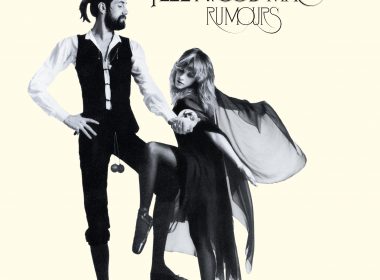
Many bring up the friendliness of the staff and the family-like atmosphere that developed in the studio. In several cases, the recordings done there were followed by a huge commercial breakthrough for the artists. Had it not been for Sound City, Mick Fleetwood never would have heard a tape by Buckingham Nicks, the dating duo he recruited to Fleetwood Mac that would help launch them to superstardom.

No musician felt shy about calling Sound City an absolute dump. It’s located in a dingy row of industrial warehouse spaces, and the interior area is equally unappealing. Very little had been altered since 1969, including the tasteless brown shag carpet on the wall. The only times the walls saw improvements was when another gold or platinum record was put up.

As Studio Manager Shivaun O’Brien puts it, “Sound City was a place where real men went to make records.”

The essence of Sound City is its appreciation of the lost art of analog recording. It is refreshing to hear Grohl, Young, and many of the other featured artists speak so affectionately of the recording process on the studio’s Neve console. The documentary expertly highlights the fact that while digital recording may provide convenience and opportunities for sound manipulation, it cannot reproduce the pure cohesiveness and authenticity of its analog counterpart.

Although Sound City is a documentary, Grohl still delivers a strong performance. He is constantly overflowing with zeal for the studio and revels in the scope of its effect on the rock community. Somehow, it’s satisfying to watch him jam out with many of the artists he interviewed (and a surprise guest legend) while recording on the rebuilt Neve console. Those tracks have been released on an album accompanying the documentary called Real to Reel.

Grohl delivers in his first documentary and benefits from its all-star cast. Neil Young famously proclaims in the 1979 song “My My, Hey Hey” that “It’s better to burn out than to fade away.” By creating Sound City, Grohl ensures that one of the more prolific sites in rock ‘n’ roll history will burn out brilliantly.

Sound City is playing until Feb. 7 at Cinema du Parc (3575 Avenue du Parc). Under 25 tickets $8.50.

a, Arts & Entertainment, Music

Richard Thompson: Electric

The title of Richard Thompson’s new release, Electric, hints at vitality and novelty from one of the British Isles’ best guitarist/songwriters. Forty-five years into his career, Thompson still succeeds in rendering spirited ballads, oscillating from heartfelt to ornery. Whether you are a longtime admirer, or a newcomer to his funky guitar and eclectic songwriting, Thompson’s latest release promises something for everyone.

Following the Grammy nomination of his last release, Dream Attic, Thompson has widened his range in Electric from the rushed and upbeat tempo of the opening track “Stony Ground”—whose very first tones are proof of Thompson’s legendary guitar riffs—to the more calming and relaxed “Salford Sunday.” Thompson’s trademark lyrics— poignant, yet slightly bitter— are catchiest in “Good Things Happen to Bad People.” The album is a testament to Thompson’s versatility and his unique satirical view of the most ordinary emotions.

While he may not have achieved the same level of fame as his contemporaries, Thompson has always avoided being flashy. He recently joked that with this album he may have invented a new ‘folk funk’ genre. This is not difficult to believe. His folk rock funk has both Celtic and blues undertones, which makes him stand out from the conventional rock ‘n’ roll scene. Electric lives up to this style and is a true Thompson classic, reminiscent of his days as a member of Fairport Convention and the brooding dulcet duets with his ex-wife, Linda Thompson.

a, Music

Tegan and Sara: Heartthrob

After spending a decade in the music industry, and crafting six albums that have cemented the band as a powerful indie-rock duo, Canadian twins Tegan and Sara decided to take the plunge into the world of pop by recruiting producer Greg Kurstin (Ke$ha; Katy Perry). Replacing guitars with synth-pads, simple refrains with stadium-filling anthems, Tegan and Sara create a new sound that aggressively fuses conventional pop with an indie rock edge. Enter Heartthrob.

This genre departure is a natural evolution for Tegan and Sara, who started exploring new areas last year through collaborations with Morgan Page and Tiesto. Now 32 years old, their maturity is delivered through reflections on passion. For the first time, Tegan and Sara explore erotic themes with “Closer,” an intense number about sex and all its tribulations. Look to “I Was a Fool” for the classic Tegan and Sara love ballad, albeit updated with a pop ambience.

For every moment spent reflecting on regret, there is an equal and opposite moment spent thriving in an electrical, euphoric universe, making Heartthrob Tegan and Sara’s most polished and balanced record. This new sound is undoubtedly more commercial, but it’s also deeper, catchier, and overall better than anything Tegan and Sara have accomplished before. For those new to the band, there has never been a better opportunity to give the duo a chance. This departure for Tegan and Sara will attract even those who remotely enjoy pop—whether they’d like to admit it or not.

a, Music

Portage and Main: Never Had The Time

Well, it’s February: the Monday of months. The nasty hangover after the wild weekend that is Winter Break. For those that could use some sort of pick-me-up, Portage and Main’s new album Never Had The Time is just what the doctor ordered. It offers a smooth respite from the grey Canadian winter, going down like hot chocolate with a dab of peppermint. This Vancouver six-piece’s sophomore effort is a ten-song album spearheaded by the vocal harmonies of chief songwriters Harold Donnelly and John Sponarski.

Fans of Wilco, Neil Young, and The Band will enjoy the rootsy sounds of Never Had The Time, which has been well received since its release last week. Portage and Main has performed at North by Northeast, Canadian Music Week, and other renowned Canadian music festivals.

The album is strong as a whole, but the song to be whistling to until the ice thaws is the title track, “Never Had The Time.” The vibrato- heavy pedal steel guitar glides through the background of the mix, and weaves in and out with a huge organ that manages to stay consistent with the volume and dynamics of the vocals. At no point does the listener find himself distracted by a specific instrument. Congratulations are in order for keyboardist Georges Couling, who produced and engineered the album.

This record is simple, but in no way minimalist—there’s a lot going on with the various instruments in each track, but Never Had The Time will never overwhelm the listener.

Alice Englert as Lena Duchannes. (www.fanpop.com)
a, Arts & Entertainment

Supernatural creatures are beautiful too

Beautiful Creatures, a soon to- be-released fantasy flick, depicts the turbulent love story of Lena Duchannes (Alice Englert) and Ethan Wate (Alden Ehrenreich), as the teens navigate Lena’s family of witches (or ‘casters’, as they prefer to be called), and the inhabitants of their close-minded Southern town.

According to Emmy Rossum, one of the film’s stars, Beautiful Creatures portrays “females in the Duchannes family as having all the power,” while also hinting at a “girlpower battle” between her character and Lena, the focus of the movie. Rossum says this is what ultimately sets the film apart from others of its genre. Adapted from a successful trilogy of teen novels, Beautiful Creatures is a re-imagining of the classic star-crossed lovers tale.

Rossum says she “gravitate[s] toward strong female characters,” as she was raised by a single mother. Having been cast in “good girl roles as a teen,” she became tired of trying to fit the mould. Playing glamourous, supernatural Ridley Duchannes was a chance for Rossum to explore new waters, and a significant departure from her most prominent role to date: the down to earth Fiona Gallagher in Showtime’s gritty dramedy series Shameless.

Alden Ehrenreich, who was scouted at age 14 by Stephen Spielberg at a Bat Mitzvah, tells the Tribune that Beautiful Creatures is a fresh take on the ubiquitous teen fantasy flick.

“You need a device that brings it down to a human level, to a human understanding,” Ehrenreich says. “To me, the humour keeps the film grounded in a more relatable reality.” His co-star, newcomer Zoey Deutch, singles out the film for its unique portrayal of men.

“I don’t know who came up with this idea that it’s not sexy or cool for men to be vulnerable … but Alden plays it so well,” Deutch says.

Recently, comparisons have been made between Beautiful Creatures and Twilight, since both began as successful young adult books, and feature passionate love stories with supernatural elements.

In response to these claims, Ehrenreich says, “It’s the same demographic and the same audience base and the same genre, but I haven’t seen the Twilight movies so I don’t know how similar they actually are.” He adds that he hopes people feel even “a fraction of the enthusiasm” for Beautiful Creatures as that shown for the Twilight franchise. Alice Englert, daughter of New Zealand director Jane Campion, agrees.

“I understand why the comparisons are being made. It’s very natural, because it’s such a new genre to have such a large audience,” Englert says.

Beautiful Creatures was also a chance for many of its young cast to learn from some of Hollywood’s strongest actors; Emma Thompson, Jeremy Irons, and Viola Davis also star in the film.

“The older actors that we worked with were just so nurturing and open to teaching us everything they knew. It was the greatest acting class watching them work,” says Thomas Mann, star of last year’s Project X.

Is there a franchise in the works? Rossum hints that the actors are all “signed for sequels.”

“If people embrace the series and want it to continue, I would love to reprise the role,” Rossum says.

Beautiful Creatures hits theatres Feb. 14.

Dianna Ros fought hard to bring the Martlets back in the fourth quarter. (Remi Lu / McGill Tribune)
a, Sports

Streak snapped: Martlets fall to Concordia

The Martlets entered Love Competition Hall on Friday evening in support of Shoot for the Cure— a fundraiser for breast cancer research— in the annual “Pack the House” game. McGill was looking to extend their seven game winning streak into February against the Concordia Stingers. However, despite a strong showing by point guard Diana Ros and forward Mariam Sylla, the Martlets fell to the Stingers 71-66 for the first time since November.

The first quarter was quite competitive, as both teams appeared evenly matched. Concordia had made tremendous adjustments since the last time the two rivals met, when the Stingers were blown out 75-44. On the other side of the court, McGill played with tenacity on offence, crashing the offensive boards, and running the floor every chance they had. The quarter finished an even 16-16.

While the Martlets focused on pushing the tempo in transition and pounding the ball down low to star rookie Sylla, the Stingers sniped from beyond the arc. Concordia’s shooters recorded an outstanding 61.5 per cent field goal efficiency from three-point range in the first half.

The second frame, however, was all about Ros, as the secondyear point guard put on a clinic. She scored the first five points for the Martlets and scored he remaining 10 points in the second quarter, including an ankle-breaking crossover on a Stinger defender. She teamed up with Sylla to put the team up by seven at the 7:09 mark.

Unfortunately, Ros was the lone bright spot for McGill in the second. The team proceeded to collapse, allowing Concordia to come roaring back with a barrage of threes. The Stingers entered halftime with a 42-34 lead.

Remi Lu / McGill Tribune

“[In the second quarter], we slowed the pace down [and] started walking,” Martlets Head Coach Ryan Thorne said. “And then, [Concordia] was able to do different things; they ran a good ball screen action, got some open shots. We didn’t play it properly, so they got good looks out of it, and that was it.”

McGill unravelled further in the final half, as Concordia came out of the locker room on fire. The Martlets continued to struggle to defend the three-point shot, and could not convert on offence. McGill’s turnovers added to their troubles, and they trailed 61-45 by the end of the third quarter.

The Martlets huddled up before the start of the fourth, when Coach Thorne helped his team regroup.

“Coach just [told] us that we had to communicate; that we have to play with more character, and that we are better than what we are doing. Everyone got pumped up and we started to do what we do best,” Sylla said.

This motivation appeared to work its magic, as McGill played with incredible energy in the final quarter and got back to what gives them offensive success—namely, their inside-out passing, transition baskets, and offensive rebounds.

The hard work paid off, as the Martlets made a comeback behind Sylla and veteran forward Helene Bibeau. Following an 18-2 run, Sylla put McGill up by one with three minutes remaining in the game. Ultimately, Tamara Pinard-Devos and Kaylah Barrett kept composure down the stretch for Concordia, and helped the Stingers seal the 71-66 victory.

Despite Friday’s loss, the Martlets remain in first place in the RSEQ, with a conference record of 8-3. However, Coach Thorne does not want McGill’s position atop the standings to affect his team’s approach.

“We won the conference last year, so we’ve had a target [on our backs] since the season started,” he said. “We have to take the approach, which is to go out there and play everyone as tough as we can. … We’re going after another championship.” Ros added that the team will continue to work hard before the playoffs.

“We’ve been working since the beginning of the season [to stay] first,” she said. “We’ve been here before so we just want to stay here and work as hard as we can [to] have home court advantage [in the playoffs].”

The Martlets battle Laval on Feb. 7 in Quebec City, before returning home to play UQAM on Feb. 9. The RSEQ playoffs begin at the end of February.

Read the latest issue

Read the latest issue