Latest News

a, Student Life

Newly opened Indian restaurant does it right

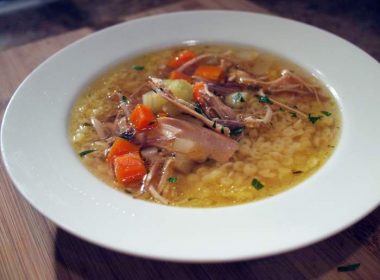
There are few places in Montreal that will satisfy your cravings for wholesome Indian food, and fewer still that are competitively priced, and right in your own backyard. Namaste Montreal – a new Indian restaurant on Milton – meets all three of these requirements.


Healthy recipes:

All of Namaste’s dishes are made fresh daily without preservatives, without artificial colours or flavours, and without cornstarch. Every dish is made with a healthy conscience by minimizing oils and maximizing flavour. All dishes on the restaurant’s menu is homemade, and offer satisfaction for vegetarians, carnivores, vegans, and those with a sweet tooth. Whether you’re a spice junkie, or prefer your Indian food slightly on the milder side, the conscientious staff will cater the dishes to your taste.


Cheap prices:

Namaste Montreal offers its fare at a reasonable price. A hearty portion of either Channa Masala (chickpeas cooked with onions, garlic and ginger in a tomato curry) for Dhal Makani (spicy lentils cooked in a rich creamy sauce) costs only six dollars; the non-vegetarian meals, including Butter Chicken and Lamb Curry, run for only seven or eight dollars. Or, try a Biryani—vegetables or chicken layered with basmati rice and baked to perfection.


Classic favourites:

The items on Namaste Montreal’s menu are limited but they don’t disappoint.Top off your meal with classic Indian breads like naan or roti, a healthy serving of rice, and or a serving of cooling Raita, a gently spiced yogurt dish with cucumber chunks. But make sure to save room for the grand finale! Finish your meal off with the sweet taste of traditional Rasgullas or Gulab jamun for just one dollar accompanied by a perfect cup of Masala chai. Namaste’s focus on these signature dishes ensures that you get the freshest meals, made with care.


Quick service:

Hungry and on the run? Try one of their amazing Samosas for only a dollar! Just don’t tell anyone in Bronfman that you’ve been straying. What’s more, you can always top off their samosa with a ladle-full of channa masala for only three dollars—the perfect snack on a busy day.


The final verdict:

Namaste Montreal opened just a few weeks ago and is ready to serve you. Let your senses be pampered with the delicate blend of Indian spices embellishing a warm and cozy atmosphere. The inviting red walls and friendly staff will make you and your friends feel right at home in this little pocket of authentic Indian culture, amidst the chill of the Montreal winter.


Located at 212 Milton, on the corner of Sainte Famille.

Hours: 11:00 a.m. – 9:30 p.m.

Telephone: 514-660-1822

https://www.facebook.com/NamasteMontreal

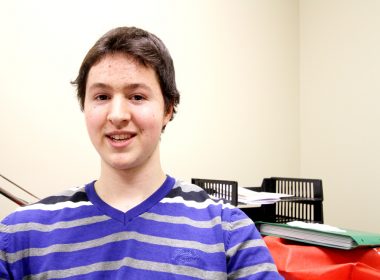
Pierre-Luc Bacon. (Alexandra Allaire / McGill Tribune)
a, Student Life, Student of the Week

Student of the Week

This week’s student was nominated for his tireless efforts to provide the city of Montreal with free Wi-Fi

Q: If you could change one thing about Montreal, what would it be and why?

A: [I would want to] make it friendlier for bikes, and make it easier in the winter. Some cities in Denmark and Norway are very friendly for bikes, and it’s just a normal thing to ride your bike in the winter. Here, car drivers are very aggressive, and [a cyclist is seen as] a weird guy.

Q: What kind of work do you do with the robotics research lab at McGill?

A: It’s called the Reasoning and Learning lab. So we don’t actually do robotics directly, but the stuff we develop can be applied to robotics. In my case, that’s my primary interest, but I work from more of a theoretical point of view.

Q: Where did you do your undergrad, and why did you decide to pursue your master’s degree at McGill?

A: I did my undergrad at McGill … because to me, they had the best computer science program. I wanted to focus more on the theoretical aspects of computer science rather than the practical side.

 Q: You work with a company called Ile Sans Fil; what is its main goal?

A: Really what we want to do is make the internet more accessible to people in the public space. We see Wi-Fi as a way of bringing people together as well, and even as a vector for art.

Q: What’s the nature of your involvement with the organization?

A: I’ve been the president [of Ile Sans Fil] since last April. It’s been in Montreal since 2003. The goal [is] basically to spread free Wi-Fi over the city. And initially, in 2003 up until 2010, it [was] entirely volunteer-based. The service grew quite quickly, up to a point where it was completely unmanageable for volunteers to provide support for [users]; so in 2010, we hired a director, and from that point, the organization changed quite a lot. And we’ve hired two more people, so now it’s a three person, non-profit company. We have pretty cool projects actually, that we’re going to announce. [Last October] we announced a partnership with the city to install WiFi hotspots in cultural places [like] museums and theatres.

Q: What kinds of places use Ile Sans Fil?

A: Ile Sans Fil is not in all the cafés, but I can say for sure that because Ile Sans Fil was there so early, it kind of made it the norm to provide free WiFi in Montreal. I think it’s because of Ile Sans Fil that now, you can get free WiFi. If you go to other cities in the world, most of the time, you have to pay crazy fees just to get basic internet access. Right now [in Montreal], it’d be impossible, I think, for a café to ask the users to pay for [internet], because of Ile Sans Fil.

Q: So Ile Sans Fil was basically the first organization to do this in Montreal?

A: Yes. Ile Sans Fil [also] developed our own technologies, and that set of technologies [is used] by other cities in the world. It was pretty early technological stuff; [in] 2003, WiFi was just starting.

Q: When did you get involved in the organization?

A: During my first year at McGill, in 2008. I became Secretary in 2010, and President in 2012.

Q: What’s your secret talent?

A: I’m very good at making circuit boards spark fire.

Q: Name one book you think everyone should read.

A: I think everybody should read “Le Monde du Sophie.” I think people tend to think that philosophy is not very useful. It’s a good book to make you realize that philosophy’s something you kind of need for everyday life.

Q: What’s your least favourite sound in the world?

 A: I hate the sound of cars. That’s an easy answer. I bike a lot, and I guess I kind of hate cars. I think that we should have fewer cars, especially in cities like Montreal. It’s a very bike friendly city, but it could get better.

Q: What’s your biggest pet peeve?

A: I don’t like the Bixis in the streets. They’re very unpredictable. I think it’s a nice project, but there are a lot of people that use those bikes who aren’t very careful about [other] people.

Q: What’s your go-to way to warm up on cold days like the ones we’ve had this week?

A: Just jump on my bike.

a, Science & Technology

Communication critical step in combating tropical disease

For Greg Matlashewski, a McGill professor and former chair of the department of microbiology and immunology, branching out from the lab and into the field had many positive results for his work regarding treatment for visceral leishmaniasis.

Visceral leishmaniasis, transmitted by sandfly bites, is one of many neglected tropical infectious diseases. Also known as ‘kala azar,’ it is characterized by high fever, substantial weight loss, enlargement of the spleen and liver, as well as anemia. The disease severely compromises the immune system, leaving patients with little resistance to fight off other infections. When left untreated, visceral leishmaniasis is almost always fatal.

There are an estimated 360,000 new cases of visceral leishmaniasis each year worldwide; and 70 per cent of all cases in the world are focused in northern India, Nepal, and Bangladesh. This concentration of visceral leishmaniasis is correlated to the extreme poverty of this area. Poverty has caused malnutrition, rendering locals much more susceptible to the disease. Sandflies, too, are highly common in the area and are attracted to these villages’ mud huts.

Matlashewski’s research on leishmaniasis was originally focused in the lab; however, he wanted to see to it that his work was both relevant, and had an impact on people’s quality of life . “Tens of thousands of people are dying from the disease,” he said, “and yet, there is an excellent treatment for it.”

Working with partners at the World Health Organization (WHO), Matlashewski discovered that although the best available treatments for visceral leishmaniasis may be present at the primary health care centres only several kilometers away in afflicted areas; these are of limited value if people with visceral leishmaniasis remain undiagnosed in the villages and uninformed of the available treatments.

“It’s not a matter of cutting edge science, but rather a question of getting into these villages, and identifying and treating the people to bring the case load down….We need to make sure people know about the available drugs.”

In order to address these problems, Matlashewski took a two-year leave of absence to work for the WHO, and lead a leishmaniasis elimination program as part of the Special Programme for Research and Training in Tropical Diseases.

The program focuses on actively finding cases of leishmaniasis in endemic villages through the use of Accredited Social Health Activists (ASHAs). ASHAs are women who live in the village and are largely responsible for maternal and childhood health. The program works to train these women to identify those with chronic fever and make sure they are diagnosed. Informative posters are also being placed in villages in order to increase community awareness of the disease, its treatment, and the diagnosis available.

Despite a need to improve communication within villages about this disease, the treatment available is very promising. The cure rate for visceral leishmaniasis is over 95 per cent, with a single dose of liposomal amphotericin B (AmBisome). What’s more, patients only require a single treatment—there is no need for a course of pills.

According to Matlashewski, eliminating the disease is a feasible target. It is no longer a question of developing or improving treatment, but rather one of improving communication and education.

“One of the largest problems that the program faces is the massive scale of this disease. The pilot project alone consists of up to 500 villages—to deal with the disease would require reaching tens of thousands of villages.”

Nonetheless, the work of the leishmaniasis elimination program has taken many positive steps towards eliminating the disease in the future.

“If we just stay in the laboratory, there is little impact. I wanted to make a difference; it’s as simple as that.”

a, Science & Technology

Fear of vaccination breathes new life into virus

Poliovirus has been eliminated in most of the developing world. Its eradication has been primarily due to the Global Polio Eradication Initiative (GPEI), a multilateral proposal passed by the World Health Assembly in 1988. However, three countries—Afghanistan, Nigeria, and Pakistan—stand between the GPEI and its goal of making polio the world’s second eradicated virus.

The Global Polio Eradication Initiative is an international health initiative 20 years in the making. The project involves tens of thousands of vaccinators scouting people door-to-door in villages in developing countries—many of which are highly inaccessible and dangerous. Equipped with little more than GPS systems, vaccinators must navigate the shifting political landscape of the developing world in search of the disease.

The biggest challenge ahead for the GPEI lies in the recent rise in local resistance to vaccination efforts. The gunning down of nine vaccination workers in Pakistan’s largest city in December 2012 resulted in the suspension of the GPEI’s vaccination campaign and its 225,000 workers—a tragedy for which Taliban-linked militants are largely thought to be guilty. As political pressures mount, vaccinators are missing key opportunities to improve the situation. The success of the campaign relies on the crucial dry season—the next two months— during which the virus is weakest and spreads least effectively.

Poliovirus primarily affects children under five years of age. The virus enters the body through the mouth and multiplies in the intestinal tract. It is then shed into its surroundings through feces. Once in the environment, polio can spread rapidly through communities, hitting those with poor hygiene and shoddy sanitation infrastructure the hardest.

Most infected people have little to no symptoms, so cases often go unrecognized. However, in its most severe occurrences, poliovirus can lead to infantile paralysis and degenerative crippling through inflammation of the spinal cord’s grey matter and the death of motor neurons.

While there is no cure for polio, the vaccination is over 90 per cent effective. If such efforts are halted, it will become increasingly difficult to contain the disease. The more time that is lost in the GPEI campaign, the more likely it is that polio will spread back out into other areas of the world—reversing any efforts made by this worldwide program. Furthermore, steps need to be taken on a global scale to prevent the re-emergence of mutated vaccine-derived polioviruses that may be prevalent in small numbers.

Resistance to vaccination efforts stems from a variety of reasons. Attitudes of distrust and skepticism towards Western immunization workers are prevalent among many Islamic militant groups and the general public following the CIA’s hepatitis vaccination campaign ruse. Last year, the CIA sponsored a widespread vaccination effort against hepatitis in a failed attempt to collect DNA from children living in Osama bin Laden’s compound in northern Pakistan as confirmation of his whereabouts. Not only did the CIA fail to obtain DNA samples, but it also fostered a lack of trust amongst Pakistanis and vaccination workers.

Extremist groups also crudely associate polio workers with the devastating U.S. drone strikes responsible for killing civilians, giving rise to anti-West sentiments that may continue to lead to violent attacks, like last month’s shootings.

Efforts are further impeded by widespread rumors adopted by parts of the Muslim community, such as suspicion that the vaccine contains pork or is being developed to sterilize Muslim girls. These rumors are based on inaccurate scientific information. For example, the sterilization myth was based on the vaccine containing trace amounts of estrogen, which they believed would have negative health impacts. However, the concentration of this hormone is too low in the vaccine to cause medical problems.

Yet the skepticism of the public towards these vaccination attempts is not unfounded historically. The chemical company Pfizer tested its meningitis antibiotic Trovan in remote communities in northern Nigeria in 1996, resulting in the death of 11 children. As a result, the Boko Haram, an Islamic militant group, has publicly opposed vaccinations in Nigeria.

Resistance among the public to vaccination has mounting consequences. Nigeria is presently the only country in the world for which the year-to-year incidence of polio is rising, but Pakistan could soon face a similar fate if its the vaccination program is not resumed.

Vaccination campaigns are trying to integrate the distribution of mosquito nets and vitamin supplements into their program in an attempt to regain favour with the general public; but a final eradication of Polio hot-spots in some of the poorest and most remote pockets of the developing world will prove no easy task.

a, Opinion

Letter to the Editor

Much has been written about the faculty of arts proposal to enhance the connection between research and undergraduate teaching by increasing the proportion of courses taught by professors who devote their careers to advancing their disciplines, as well as increasing the availability of teaching-assistant support to professors and students.

These objectives have long been part of the strategic plans of the university and the faculty, going back to the Provost’s 2006 White Paper (Strengths and Aspirations).

Some of the reaction to these realignments has tended toward the apocalyptic. But let us keep things in perspective. Arts students will experience many benefits by reallocating resources to teaching assistantships: more financial support for graduate students, smaller conference sections, better undergraduate student access to certain courses, and more time for professors to have substantive interactions with students.

All of which students have told us, repeatedly, that they want.

Discussions about these objectives go back to 2008. In 2010-2011, the faculty held important consultations with students, including a Town Hall—in which the issue of diminishing teaching-assistant support came up frequently—and a Dean’s Working Group on Academic Program Delivery that included students and consulted widely.

The student press reported on both at the time.

At the first meeting with the Chairs of arts departments on Sept. 2, 2012, I indicated that the faculty would make progress on these strategic priorities. I outlined the importance of the objectives and outlined some initial thoughts on how to achieve them at the first Faculty Council meeting of the year on Sept. 25, 2012. I reported on it again during the Nov. 20 Faculty Council meeting, and met the VP Academic of AUS on Dec. 6 to discuss the proposal in more detail.

I suggested it would be valuable to hold an AUS Town Hall on the topic. I again updated the Faculty Council on the proposal on Jan. 15, 2013—which seems to be when people began to pay attention. Rather than a sudden announcement of something new, my discussion on Jan. 15 was an update of a lengthy process of discussion and consultation.

Contrary to conventional wisdom, the faculty of arts teaches a large number of low-enrolment, even under-enrolled courses. In 2011-12, the faculty offered 443 undergraduate courses (excluding such things as reading courses) with 20 or fewer students, representing 37 per cent of all its courses that year. More surprisingly, the Faculty offered 230 courses (about 20 per cent) with 10 or fewer students.

Here’s my question: could the faculty free up resources by teaching 100 fewer small or under-enrolled courses? I asked Associate Dean Gillian Lane-Mercier to consult with each teaching unit in search of an answer.

To be sure, there are consequences to offering fewer lower-enrolment courses. One scenario could be that the faculty offers 100 fewer courses with enrolments below 10, which would result in the displacement of about 550 students to the faculty’s remaining 1,100 courses (which would raise the average size of those courses by 0.5 students).

Many have asked about the message the faculty is sending to potential students. I think the message is this: that when the faculty of arts promises prospective students that they will be taught by some of the world’s leading experts in their fields, we are able to honour that promise by having those experts in undergraduate classrooms.

a, Opinion

Letter to the Editor

Universities are not easy to run. Administrators are constantly under pressure to make ends meet. To balance the budget sheet they must pay thousands of salaries, manage millions of dollars in infrastructure, fundraise, lobby and beg to pay for it all. In an age of austerity, this is unimaginably harder. All this considered, to make the budget work, should the administration be squeezing SSMU for every last penny? I say no.

Between cutting paycheques and writing letters to bureaucrats and donors, sometimes the administrators need to pay attention to students. Most universities leave it up to students to collectively organize in student-run spaces. They allow students to collectively levy a fee, and create a union which runs services and funds clubs. In the best of times, these unions are the centre of student life—a fond memory for alumni and a pull for potential students. They run essential services like childcare for young parents seeking an education and a stable future, and student clubs for marginalized students seeking a safe, familiar, and comfortable space. Although our dear SSMU isn’t omnipresent—and thankfully so—it provides great happiness and stability to many students, and by extension makes everyone’s lives better, including those of the admin. So what’s the problem?

The administration has been charging SSMU a ridiculous, almost debilitating amount of rent for the Shatner building. Read the past budgets on the SSMU website; hundreds of thousands of dollars [Ed. note: $210,000.00 in 2011-2012] have been sucked out of SSMU’s meagre budget for rent (one of the lowest budgets of any student union) into the dwindling coffers of McGill. While it is understandable that McGill needs money, it is wrong to take it from students. At this moment, our SSMU execs and the admin are in confidential negotiations to decide on the terms of the lease.

SSMU shouldn’t be praised by students in its handling of the lease. It hasn’t been doing the best job raising awareness about the most important issue facing its existence. Whereas it should be making public demands, staging rallies, and writing to alumni, the execs sit and quietly negotiate. Most students have no idea that SSMU’s ability to function is at stake. Almost none know about the negotiations and fewer, not even me, can name what our core demands are.

The lease is the sacred, long term document which decides how much SSMU will have to pony up to exist. Other universities charge basically nothing to their student unions. So should McGill.

Jimmy Gutman, Arts Senator

a, Opinion

Cuts and an inconsequential conversation

At the beginning of last term, I wrote that this year would—hopefully—be free of the sort of acrimonious student politics that characterized 2011-2012 at McGill. Recent events have put the lie to that hope. While much of the attention on campus is currently centred around The Daily’s fee referendum, a more important set of controversies goes directly to what sort of education we will have as this university moves forward.

In December, the Parti Québécois (PQ) government suddenly announced a retroactive $124 million budget cut to provincial universities. The province-wide cut will take about $19 million out of McGill’s annual budget, and is reportedly just the first of several more cuts. The announcement of these cuts prompted vague, generalized outrage from the student body, with some of those more receptive to the proposed tuition increases—which the governing PQ rolled back—launching into full ‘told-you-so’ mode. What was most interesting to watch was the reaction of the one group that can be counted on to have a strong opinion about any issue inside the Roddick Gates, regardless of importance: the so-called “campus radicals.”

To their credit, they were similarly outraged by the cuts, but oddly enough, they targeted this outrage not at the PQ government, but at the James Administrative building, staging a largely satirical protest asking Heather Munroe-Blum and the rest of the McGill administration to go on a general strike to protest the cuts. The protest, which as usual involved an attempt to enter the Board of Governors meeting underway at the time, can only be described as profoundly non-constructive. Participants quoted in media accounts admitted that the real purpose was to make some sort of high-concept ironic observation on structures of pedagogical authority—or something like that.

Even looking past the satirical conceit, the campus Left had no new ideas to offer in response to this highly unexpected cut. The usual slogans abounded; re-evaluating priorities, something about how caring about the university’s global reputation is bad, and some other oblique thing about cutting the salaries of a certain administrative bogeyman—or in this case, woman. Formal student and campus organizations thankfully responded with more coherent expressions of dismay.

Just as students returning from winter break were coming to terms with this budget ‘adjustment’—if they had spent even a moment during break thinking about anything related to the university aside from exams and marks—the administration announced another set of cuts: this time to 100 courses, all small selections in the Faculty of Arts. Here the outrage was similarly swift, sharp, and seemingly justified. The Dean of Arts claims that these cuts are completely unrelated to the reduction in the annual budget from the province, which is likely true only because the alternative involves the administration telling a lie that would make it look far worse, from a PR perspective, than the truth.

These cuts, which would reduce the number of upper-level courses available to students, are undeniably troubling. Again, they provoked a predictably nonconstructive response from the campus left. Arts Senator Jimmy Gutman, for example, alleged that these cuts were to “punish” course lecturers for forming a union. This accusation was not actually substantiated by anything, but was accompanied by the claim that the cuts were a step down the road to the elimination of any personalized education at the university.

As we move forward, we’ll see whether or not there is anything that can be done to avert the negative effects of either set of cuts. The arts cuts, if truly unrelated to the provincial budget reduction, are a stunning example of administrative incompetence from both a quality of education and public relations perspective. The provincial budget cut, however, speaks to many things; the shortsightedness of most of the tuition protesters, the duplicity of the PQ, and a broken clock moment for those in the student movement who shrank back from the support of Marois and decided to continue fantasizing about the total smashing of the state. Their rigid ideological consistency, for once, resulted in nothing more substantial than the very smug, very satisfying ability to say, “told you so.” Unfortunately, it seems that this is the most substantive thing anyone has contributed to this debate.

a, Opinion

Zero Dark Torture?

In an Academy Award season mostly bereft of controversy, Zero Dark Thirty has filled the void with its brutal and frank depiction of torture. The film, a dramatization of the American military operation that killed Osama Bin Laden, was written based on conversations with people who had first hand knowledge of the events in question. Condemnation of the movie has come from many different angles, the vast majority of which has coalesced into variations on the issue of torture.

The first point of criticism centres on the contention that the movie’s torture scenes are not grounded in actual events, and give viewers the misleading impression that torture was partially responsible for finding Bin Laden. While this is a vital point of historical debate, there simply isn’t enough proof to support any one position. A few U.S. Senators, led by John McCain, have claimed to have seen confirmation that torture played no role in catching Bin Laden. Others, like former CIA director Michael Hayden, have said that torture was involved. Much of the evidence that would illuminate the matter is classified information, and thus, the question remains unanswerable at this time.

A more interesting criticism, which is a permutation of the first, is that the use of these torture scenes endorses torture. Viewers see a key detainee tortured, leading to his supplying testimony that eventually led to the location of Bin Laden. It was thought that upon being shown a utilitarian value to torture, the public will begin to perceive it as an important and legitimate tool to be used by the defence community. While this is possible, I think that this criticism ultimately misses a far more important point.

Criticism of torture can reside on two different levels: moral and utilitarian. Although both play into this discussion, the moral issue is typically considered much more important. If torture is inherently wrong, which most would concede, any potential utility it may have is a moot point. Any other conclusion would go grossly against the basic principles of justice. Comparably, denying people the right to ‘habeus corpus,’ or being able to search a suspect’s property without a warrant may have utilitarian value if the principal desired result is to obtain a conviction. However, because these actions would be moral wrongs, law enforcement officials are not allowed to engage in this behaviour. Similarly, even if torture can garner useful information, itself a contentious proposition, the gross moral wrong it creates means that it should not be practiced.

Back to the movie: if the above is true, the movie cannot be said to endorse torture. The viewers see despicable acts being carried out against the detainee, and the moral wrong is clear in this unjustifiable violence. The fact that the detainee eventually gives the torturers information is then seen as an ends reached through decidedly improper means.

Besides this philosophical interpretation, the movie itself addresses much of the criticism lodged against it. Yes, the detainee does share information, but he does so outside a setting of torture, baited by the promise of good treatment and a decent meal. Also, after the successful raid against Bin Laden’s compound, the main character, a CIA officer, breaks down into tears—seemingly overwhelmed by the pointlessness in expending so much time and effort into achieving this goal.

I do not see the movie as endorsing torture, but rather, presenting an imperfect history of regrettable and despicable actions carried out in the name of finding justice for victims of 9/11. Surely, these dark moments of American history should not be glossed over. The movie provides an excellent forum for debate, and a way to re-examine preconceived notions of the ongoing war on terror.

a, Behind the Bench, Sports

SSMU drops ball, should have dropped puck

“The winters of my childhood were long, long seasons. We lived in three places—the school, the church, and the skating rink—but our real life was on the skating rink.”

Last week, the Students’ Society of McGill University (SSMU) held a week of events to better inform McGill students about the province in which they study. Possibly due to time constraints, or a fundamental misunderstanding of what really makes this province tick, they left out one of the main pillars of Quebec’s cultural history: the game of hockey, and specifically the Montreal Canadiens. The excerpt above is from Roch Carrier’s legendary The Hockey Sweater—which can be seen on the back of Canada’s five-dollar banknote—is a testament to the central role of hockey in Canadian culture, and particularly that of the Quebecois identity.

Maybe hockey wasn’t included because it isn’t political, and that’s what we all want to learn about, right? Forget that due to the move from the World Hockey Association to the NHL of the Quebec Nordiques in 1979, the province had two professional teams whose fanbases were largely divided along geographic, political, and linguistic lines. The infamous “Good Friday Massacre” between the ‘Nords’ and the ‘Habs’—in which numerous line brawls erupted during a playoff game—was a violent microcosm of the province’s larger divisions. The game has sometimes become so political that former Bloc Quebecois leader Gilles Duceppe campaigned for the establishment of a Quebec international hockey program to compete against Canada at the Olympics.

One highlight of the schedule was a session about the student movement—I imagine only first years might attend, as I’m pretty sure we all know enough about that—but how about the riots of March 1955 when Montrealers took to the streets to protest the suspension of Canadiens—and Quebec hero—Maurice Richard? The timing of the riot during the Quiet Revolution was symbolic of an emerging idea concerning a secular, nationalist Quebec, and it took on racial overtones, as rioters claimed Richard was discriminated against by NHL President Clarence Campbell based on his French-Canadian heritage. Richard was Quebec—every hockey-playing child in The Hockey Sweater wore his signature number nine­—so it’s no wonder Quebec history textbooks devote pages to his significance.

Some might say that one cannot understand politics simply by analyzing the importance of sport. Those people are correct. It is problematic, however, that many of our understandings of “Quebec” are purely based in politics of sovereignty and language. SSMU should have recognized that understanding a place has much to do with culture, and that often, what unites populations is specifically the apolitical. It might seem that there are no similarities between a Francophone from Shawinigan and an Anglophone from Montreal West; but ask them whether Scott Gomez should have been bought out or if Alex Galchenyuk is the future of the Habs, and you’ll find that those nearly irreconcilable differences melt faster than you can say “René Lévesque.”

If a ‘poutine crawl’ were your choice of cultural immersion for the week, then ask yourself, “Where do most Quebeckers eat their poutine?” At hockey games, of course. Take any town in Quebec, from Gatineau to Abitibi, Shawinigan to Rimouski, and you will undoubtedly find an arena with a minor hockey game, and a pub showing RDS coverage of the Canadiens. Each of those establishments will likely smell like gravy, cheese curds, and fries. Gatineau’s Robert Guertin Arena, home of the Quebec Major Junior Hockey League’s Gatineau Olympiques, serves little other than poutine, hot dogs, Pepsi, and Molson beer. It’s about as Quebecois as Celine Dion eating maple syrup.

In all fairness, kudos to SSMU for recognizing an opportunity for education, and seizing upon it. That being said, if you want a real cultural experience, go to a hockey game. That’s about the most Quebecois thing you can do.

a, Sports

Superbowl Preview

49ers

Offence

All the talk surrounding the San Francisco 49ers is focused on quarterback Colin Kaepernick—and rightfully so. The 2011 second round pick has sent former starter Alex Smith to the bench, just like Tom Brady did to Drew Bledsoe back in 2011. When Kaepernick beat Brady in Foxborough in Week 15, it vaulted the young quarterback into the national spotlight and had most observers pining for a Super Bowl rematch of that Monday night thriller. However the Baltimore Ravens had something to say about that; we will instead be treated to Ray Lewis’ dance one last time.

For the 49ers to come away victorious in Super Bowl XLVII, Kaepernick will have to play like a star. However, there are two players on San Francisco’s offence who must also come up huge in order to win this game: Frank Gore and Michael Crabtree. Neither are sleepers by any means; the former is a Pro Bowl running back, while the latter is a wide receiver who caught 85 balls for 1,105 yards and nine touchdowns. If the 49ers win on Super Bowl Sunday, expect both players to have put up big numbers.

Part of what makes Kaepernick such a threat is the fact that San Francisco has numerous playmakers in the running and passing game. When opponents focus on shutting down those playmakers, Kaepernick breaks off highlight-reel runs. But when opposing teams put the pressure on Kaepernick, he finds his stars, like Gore and Crabtree, for big gains.


Defence

With the narrative set on Colin Kaepernick, it’s easy to forget that the 49ers’ brand, for the better part of a decade, has been its stout defence. 2012 has been no different, as the San Fran D boasts no less than six Pro Bowlers. No doubt that they’re incredibly upset that they couldn’t play in Honolulu.

Three linebackers, both safeties, and a lineman got the invitation—over half of the team’s starting eleven. As you can tell, the defence is just as much of a threat as the Kaepernick-led offence, and has an equal chance to make a game-changing play in the Super Bowl. At the very least, their defence is capable of controlling the field position game—which could make the difference in a tight contest.


X-factor

David Akers. He fits in perfectly to the x-factor mould, due to his exceptional talent, but suffering through a struggling season. Akers holds 10 NFL records over his 16 year career, including six Pro Bowl nods.

However, this season has not been his greatest—hitting only 69 per cent of his kicks, despite having an 81 per cent career success rate. His lowest came on Nov. 25 against the Saints where he went 1-3 with a long of 27 yards and a blocked 33 yard attempt.

Which Akers is going to show up on Sunday? The one who can kick 63 yards, or the one who can’t hit 30? The answer is unclear at this time, but it will factor into the final score immensely. If Akers brings his A-game, this one is a lock for the Niners.


Ravens

Offence

For years now, the Ravens have created an identity as a ‘ground-and-pound’ team that is more than satisfied to play a smash-mouth brand of offensive football. Led by pint-sized dynamo Ray Rice—who compiled his fourth consecutive 1000-yard season—the Ravens are committed to wearing opposing defences out behind an offensive line that averages at 6’5 and 325 lbs. This unit combines veteran grit and savvy with youthful athleticism and sheer power, and has manhandled opponents at the line of scrimmage in the playoffs. What separates them from the rest of the pack, however, is the emergence of Joe Flacco as an elite quarterback. Flacco has shed the dreaded label of “game manager” and has morphed into a confident and mistake-free gunslinger. Flacco, unlike his 49ers counterpart, is a proven commodity in the playoffs, and has shown the poise necessary to handle big time situations—just ask the Denver Broncos secondary. Flacco’s weapons complement the ground game, as receiver Torrey Smith stretches the defence, and Anquan Boldin and Dennis Pitta control the middle of the field.


Defence

The Ravens’ defence, for the past decade, has wreaked havoc and caused nightmares around the league. The team didn’t live up to this mantra during the regular season, as stalwarts Ray Lewis and Terrell Suggs both missed extended periods of time; subsequently, the defence struggled to stop opponents. However, with the two of them healthy, Baltimore has allowed the fewest points per game in the playoffs, a sign of a unit peaking at the right time. The line is stacked with space-eating goliaths, like Haloti Ngata, who will attempt to clog any running lanes. Behind them is a feared linebacking crew that is led by perennial pro-bowlers Lewis and Suggs. Ed Reed, who still has a knack for coming up with the game changing play when his team needs it most, leads the secondary. The question will be whether the defence can handle Colin Kaepernick in the read option scheme. Kaepernick is still raw in many senses—inexperienced for the pressure that will be thrown at him from all directions. Yes, he may break off a few long runs or string together a few nice passes, but this defence is aggressive, mobile, and smart; therefore they are well equipped to shut Kaepernick down.


X-factor

Ray Anthony Lewis. Could it be anything or anyone other than Ray-Ray? Following the announcement of his upcoming retirement at season’s end, the Ravens have rallied around their unquestioned leader and are the hottest team in football. Lewis has played his entire career with a chip on his shoulder, and the rest of his team has adopted this mindset—playing as though it’s them against the world. The Ravens bleed black and purple because of Lewis and his will to win. Some may call it dumb luck that has guided the Ravens this far, while others may say destiny. To me, it seems like the stars have aligned around #52, and they will only settle once he ends his career hoisting the Lombardi Trophy.


Super Bowl predictions

Name: Jeff Downey

Position: Sports Editor

Prediciton: San Francisco 34, Baltimore 27


Name: Steven Lampert

Position: Sports Editor

Prediciton: Baltimore 24, San Francisco 21


Name: Adam Sadisnky

Position: Managing Editor

Prediciton: San Francisco 27, Baltimore 23


Name: Elisa Muyl

Position: Editor-in-Chief

Prediciton: Baltimore 100, San Francisco 5


Name: Andra Cernavskas

Position: News Editor

Prediciton: San Francisco 31, Baltimore 24


Name: Earl Zuckerman

Position: McGill Athletics Communications Officer

Prediciton: San Francisco 31, Baltimore 24


Name: Josh Redel

Position: SSMU President

Prediciton: San Francisco 24, Baltimore 20

Read the latest issue

Read the latest issue