Latest News

a, News

International Aboriginal rights discussed at McGill

From Sept. 24-28, McGill hosted its second annual Aboriginal Awareness Week (AAW). This year’s AAW included a variety of events celebrating Aboriginal culture and history, as well as educating attendees on issues of Aboriginal identity and rights.

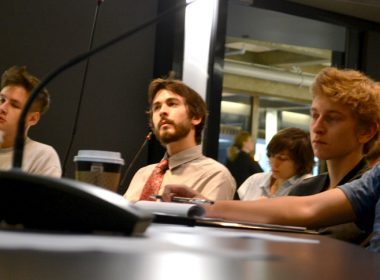
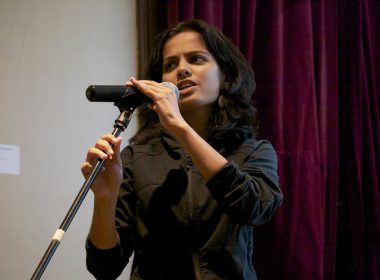
Events were held throughout the week, featuring two dream catcher-making workshops, film screenings, and talks by prominent leaders of the Aboriginal community.  One speaker, Ellen Gabriel, spoke on Tuesday in the SSMU Building on international Aboriginal rights issues.

Gabriel is a long-time Aboriginal rights activist who has dealt with every level of government, from local to international, in support of Canada’s Aboriginal people. Most notably, Gabriel was chosen by the Oka community to represent them during the highly publicized Oka Crises of 1990, when a land dispute between the Quebec town of Oka and a group of Mohawk people escalated into a violent conflict.

Gabriel’s talk touched on many issues facing the Aboriginal community. These issues include self-determination, violations of human rights, land and resource disputes, language rights, and intellectual property rights.

Although the United Nations (UN) has been a centre for discussion on dealing with such problems, Gabriel said it has not proved to be a successful forum.

“The problem is the UN has not come up-to-date with how to allow Indigenous people to participate,” Gabriel said. “We’re considered civil society players or stake holders, when really, [looking] at the UN Declaration of Rights for Indigenous people, [we would like to see] our rights of self-determination addressed.”

Gabriel stressed that it is up to Aboriginal people to determine their future.  She argued that decisions are made for the Aboriginals rather than by the Aboriginals. According to Gabriel, Canada has been especially poor at working with Aboriginal communities to address these issues.

“I’m sorry to tell you [but] Canada is losing—or has lost— its reputation [as] a supporter of human rights because of infractions against Indigenous people—not just here in Canada, but for its actions abroad as well,” Gabriel said. “[The Harper government] has been especially difficult to deal with.”

Allan Vicaire, Aboriginal Awareness Week coordinator, attended Gabriel’s talk, and said that her topic is important for Aboriginal issues at both the national and international levels.

“The UN Declaration of Indigenous Rights is important,” Vicaire said. “It sets a standard for how states must uphold Aboriginal rights.”

Vicaire was very pleased with Gabriel’s speech and Aboriginal Awareness Week as a whole. He said it had exceeded his expectations.

“There are many people who attended across faculties,” Vicaire said. “When we can get people who aren’t from a humanities and arts background [to] learn about Aboriginal peoples, then we are reaching out to the broader community. To me, that’s success.”

a, News

What happened last week in Canada?

Justin Trudeau to run for leadership of Liberal Party

Last Wednesday, reports surfaced that Justin Trudeau is to announce his bid for the leadership of the Liberal Party of Canada at a press conference today. The son of former Prime Minister Pierre Elliott Trudeau, Justin Trudeau has held a seat as the Member of Parliament for the Montreal riding of Papineau since 2008.

The previous leader of the Liberal Party, Michael Ignatieff, resigned from the position following the May 2011 federal election, when the Liberals won the fewest seats in the history of the party. Since then, Interim Leader Bob Rae has assumed the position.

Earlier this year, Trudeau said he was not interested in the leadership position, citing his young family as the reason for his hesitation. However, Trudeau told the press in July that he would reconsider his candidacy and make an announcement at the end of the summer.

A poll conducted by the National Post revealed that a federal election held today with Trudeau in the leadership position would result in a Liberal Party win with 39 per cent of the popular vote. The results indicate that the current official opposition, the New Democratic Party (NDP), would fall back into third place.

With the leadership race set to begin on Nov. 13, the next leader of the Liberal Party will officially be announced on April 13, 2013.

Margaret Wente faces allegations of plagiarism

The CBC announced last Tuesday that they would be suspending Globe and Mail columnist Margaret Wente from the media panel of the popular radio show Q, due to allegations of plagiarism in her columns.

On Sept. 18, Carol Wainio, a blogger on the website “Media Culpa,” published an analysis of a 2009 Wente column, in which she highlighted the piece’s alleged transgressions. The allegations spread quickly through Twitter and other social media.

Globe and Mail Editor-in-Chief John Stackhouse announced last Monday that “appropriate action” has been taken against Wente, although the details of the disciplinary action remain private.

Last Tuesday, Wente defended herself in the Globe and Mail, acknowledging that she had plagiarized a sentence from another journalist’s column, but arguing that it had been unintentional. She further stated that she is not a serial plagiarist and is often a “target for people who don’t like what [she] write[s].”

Wente is the winner of several media awards, including the National Newspaper Award for column writing, and has worked as a columnist for the Globe and Mail since 1992.

Quebec introduces electronics reclycing fee

Starting Oct. 1, retailers in Quebec will add new fees to the sale of electronics as part of a provincial plan to pay for the recycling costs of the appliances. This Environmental Handling Fee (EHF) could cost more than $40 for one product, but will vary depending on how much the product costs and how difficult it is to recycle.

The money raised through this fee will go to the Association pour le Recyclage des Produits Electronique du Quebec (ARPE), where it will be used to fund a new Quebec-wide recycling program. With the implementation of this fee, Quebec joined seven other Canadian provinces that have already adopted an EHF, including Ontario and British Columbia.

While the fee currently applies  only to televisions, cell phones, printers, and laptops, it will be extended to other electronic products in July 2013. Some storeowners are handing out fliers to explain the EHF to consumers.

The Enbridge pipeline: B.C. concerned for environment

In a pre-election address this past Friday, British Columbia Premier Christy Clark announced that she plans to inform the Alberta government that B.C. is firmly opposed to putting its environment at risk for the sake of the Enbridge Northern Gateway pipeline.

If constructed, the Enbridge pipeline would transfer raw bitumen from the Alberta tar-sands across British Columbia to Kitimat, B.C. From there, the bitumen would then be loaded onto oil tankers and transported to China, where it would be refined.

Tensions between B.C. and Alberta have risen recently regarding this controversial pipeline project, which has heavy support from both Stephen Harper and Alberta Premier Alison Redford. Many British Columbians, however, have expressed deep concerns about the environmental risks.

Although Clark’s stance against the Enbridge pipeline has hardened over the past few months, her government has never announced official opposition to the pipeline—a fact that has sparked much criticism towards the current B.C. Liberal government.

This past summer, Clark outlined five conditions that the Alberta government must meet in order for B.C. to approve the pipeline project, which include environmental protection measures and a share of the economic benefits.

Over 6,000 want Rona Ambrose to resign

Last week, an online petition calling for the resignation of Minister of State for the Status of Women Rona Ambrose went into circulation. The petition is a response to Ambrose’s support of M-312, a controversial, private-member abortion motion that was defeated in the House of Commons on Thursday.

Had M-312 passed, it would have reopened discussion about when a fetus becomes a legal person. Though Ambrose’s vote does not make it clear whether she is pro-life or not, it has sparked debate over whether one can be supportive of women’s rights and also oppose abortion.

Organizations such as the Abortion Rights Coalition of Canada (ARCC) have publicly demanded that Ambrose resign.

“It’s her job to represent the interests of women, to defend women’s rights, [and] promote women’s equality,” Joyce Arthur, ARCC executive director, said. “We feel she [has] betrayed the women of this country.”

Supporters of M-312 also deliberately went against Prime Minister Stephen Harper’s wishes to leave the abortion issue closed, resulting in rumours of a Conservative Party rift.

By Friday afternoon, the petition had amassed over 6,000 signatures. To date, Ambrose has rejected all calls to step down.

Students learned about summer opportunities. (Sarah Papadopoli / McGill Tribune)
a, News

Arts Internship event highlights students’ work abroad

Last Thursday, the faculty of arts hosted its ninth Annual Internship Event with presentations by nine McGill students—all of whom dedicated their time gaining and applying their skills in various unconventional settings this past summer. Held in Leacock 232, the event was attended by students, staff, and internship award donors.

Dean of arts Christopher Manfredi provided an introduction to the speeches. Interns who spoke at the event revealed a great range of experiences—their work locations included India, Hong Kong, and New York, and their areas of study spanned many fields within the faculty of arts. Between speeches, a short slideshow presentation informed arts students of the internship application and scholarship process, as well of the various resources available to them online.

Karina Perez Jvostova, U3 arts student, spent three months in Panama City. There, she interned with the United Nations World Food Program. Jvostova worked for the Unit of Information and Knowledge Management on a project organizing its online library.

Throughout the three-month span of her internship, Jvostova was able to recognize the significance of her work, as well as the impact it had on the project.

“People there acknowledged your work, [as well as] how important you were for them,” Jvostova said.

A little closer to home, U3 student Emma Stanton spent her time working with Pueblito Canada, a non-governmental organization (NGO) based in Toronto, Ontario.

(Sarah Papadopoli / McGill Tribune)

“For over 35 years, Pueblito has been helping the children of Latin America by strengthening communities, safe-guarding rights, and providing the essentials for education, nutrition, and health,” the organization says on their website.

Stanton’s internship was extended from three months to four, and within that time she had direct access to the NGO’s board of directors—a privilege normally exclusive to board members.

“One of the board members—I think he was one of the former presidents of the board—asked me to attend a meeting [and] to observe the conversation about changing funding models in Canada,” Stanton said. “That was … my memorable moment.”

The interns’ presentations were followed by a reception, where attendees were given an opportunity to speak directly with past interns and ask them questions. Audrey Rooney, U1 environment, attended the event with the hope of learning more about the internship options available, and the logistics of the application process.

“It was [informative] in terms of examples of what we can do,” Rooney said. “[It lacked information] in terms of how to apply, but I guess that’s [available] on the website.”

Rooney said that attending the event has kept her interested in applying for an internship in a foreign country in the near future.

Jvostova, who was enthusiastic about her experience, encouraged students not to be shy about applying.

“A lot of people were scared about applying because of [language] skills,” Jvostova said. “[In my case], it wasn’t that important since [I was] working with the UN.”

With regards to the application process, Jvostova asserted that it is not complicated.

Stanton also offered some advice to prospective interns.

“Sit down for an hour and think about what you’re truly interested in,” she said. “[In the past] I have had friends who got jobs in what they think they wanted to do, and did not enjoy themselves. Stick to what you truly want to do—not because it’s a resumé builder, but because you’re into it.”

a, News

McTavish Reservoir will be renovated

Beginning Oct. 9, the McTavish Reservoir on Rutherford Park behind McGill University will undergo major renovations, including an overhaul of the surrounding tank and water mains. The repairs, which will cost $16.4 million, are scheduled for the period of 2013-2014 ,and will be conducted by the City of Montreal.

The reservoir on Pine Avenue and Doctor Penfield Avenue provides drinking water to 500,000 Montrealers in seven boroughs in the city. Leaks in the pipes, which are over a hundred years old, have caused damages to McGill property in the past few years. Last fall, a leak in a 16-inch main pipe at the entrance of the pumping station in the reservoir sent thousands of gallons of water down McTavish Street, flooding Service Point, McLennan Library, and Wilson Hall.

According to Doug Sweet, director of media relations at McGill, both McGill and the Royal Victoria Hospital have seats at the stakeholders’ table and will be working with the City of Montreal to ensure that services continue to be delivered despite potential disruptions in access and high noise levels.

“We have been disseminating information to our community as it is received through our Building Directors,” Sweet said. “The City has also been advised of McGill activities or events that will have to be considered in their planning. This includes residence access, athletics activities, exams, etc.”

Sweet noted that the university will remain informed if there are changes in access or parking in the area.

“A project of this size and scope is bound to be disruptive to some at some point,” Sweet said. “Our goal, of course, is to try to do what we can to minimize the disruption. It’s important, overdue work, and needs to be completed as soon as possible.”

Project Phases

Phase 1: From October to December, Pine Avenue will be closed between McTavish Street and Doctor Penfield Avenue. The entrance to the Hospital’s third parking lot will be blocked. Two-way traffic will be allowed on McTavish and Doctor Penfield.

Phase 2: From December to March, Doctor Penfield will be closed between McTavish and Pine. Two-way traffic will be allowed on Pine Avenue.

Phase 3: From April until next August, the eastbound part of Pine will be closed from Doctor Penfield to Durocher.

The event provided a venue for dialogue. (Michael Paolucci / McGill Tribune)
a, News

Innushkueu women speak out against Plan Nord at Concordia

Tears and laughter found their space in a discussion titled “Defending the Land: Indigenous Women’s resistance to Plan Nord and community violence.” The event, held last Friday, was hosted by Concordia University’s Centre for Gender Advocacy’s Missing Justice campaign.

Plan Nord is the provincial government’s plan to develop northern regions of the province. It involves exploring the largely untapped resources of northern Quebec, according to the Quebec government’s website.

“The North’s mining potential affords us an opportunity to capitalize on the development of the emerging countries by ensuring the responsible development of the territory’s resources,” reads a message from former Quebec Premier Jean Charest on the government website.

Friday evening’s event gave three Aboriginal women the chance to speak out and educate the Montreal community about what is happening in Northern Quebec from their perspective.

Monica van Schaik, one of the event’s organizers, said she helped to plan the discussion because she is concerned that Plan Nord is not something that the citizens of Montreal know enough about.

“I just think it’s something that just wasn’t being talked about enough [and] wasn’t being talked about in our schools in Montreal,” von Schaik said. “We decided to plan this event because it’s happening here, and it’s our own government, and it’s just something we wanted to raise awareness about.”

Ellen Gabriel, a human rights advocate and former president of the Quebec Native Women’s Association, discussed how Plan Nord and mining activity affect Aboriginal women in particular.

“Mining companies come in and look at Aboriginal women as if they can violate them,” Gabriel said. “It has to stop. Mining activity is probably one of the worst personal abusers of human rights.”

Gabriel added that violence against Aboriginal women occurs five times more than it does against any other group of women.

The other two speakers were Élyse Vollant and Denise Jourdain. Both women walked from Sept-Iles to Montreal for Earth Day earlier this year, according to van Schaik.

Vollant—an Innushkueu from the North Shore community of Uashat mak Maliotenam—was one of 12 women who were arrested after participating in a blockade on route 138 in protest of Plan Nord last March. At the event, she discussed her personal struggle against Plan Nord.

“After the blockade, I was imprisoned,” Vollant said in French. “There were accusations that I had destroyed the territory. It was Hydro-Québec that destroyed the community.”

Her main concern was for the children of the northern communities.

“Today, what we are trying to do is for the future generation,” Vollant said. “The march was really for the children.”

Jourdain, who spoke next, is a member and community organizer of the Innushkueu community of Uashat mak Mani-utenam, and was also arrested following the blockade. The activist said that she has been participating in blockades and demonstrations since she was 13 years old.

Jourdain spoke of the land she remembers from when she was a child, and how it is now under threat from the Quebec government. She also spoke out against the Quebec government’s offer of $80 million to Indigenous communities as compensation. The compensation is being destroyed for approximately $1.25 a day per person.

“This money means nothing to us,” Jourdain said. “Quebec and the federal government do not respect our Indigenous rights.”

Jourdain concluded her discussion in tears.

“There is no law that will require the government to repair the damage they do to mother Earth,” Jourdain said.

A handful McGill students attended the event, including SSMU VP External Robin Reid-Fraser. She explained that she was not at the event to represent McGill, but out of her own person interest.

“Some Indigenous groups are kind of on board with [Plan Nord], and really that’s not the case across the board, “ she said. “So I felt like it was really important to come and hear what these other groups are saying—the ones that really do see a kind of problem with this kind of [project].”

a, Opinion

To move forward, CLASSE must condemn violence

If you left home on the rainy afternoon of Sept. 22 and found yourself confused amidst a reiteration of the student protests that reached their height in May, you certainly weren’t alone. Many Montrealers were puzzled by the Saturday protest—after all, hadn’t the newly-elected PQ just rescinded the tuition increase after months of unrest?

The demonstration, organized by Coalition Large de l’Association pour un Solidarité Syndicale Étudiante (CLASSE), was both a celebration of the hike reversal and a call for a move toward free education—the student group’s ultimate goal.

The issue of the tuition increase may have been settled, but only for the time being. A minority Parti Québécois government is hardly a model of political stability, and the party has already discussed indexing tuition to the cost of living. CLASSE’s demonstrations for free education, even on the heels of what many consider to be a huge victory, is hardly misguided.

What concerns this Editorial Board most, however, is not the timing of the protest, but the reports of violence committed that day.  Among other physical confrontations, rocks were hurled at police, and protestors hit and chased cruisers along Peel Street. These actions are unacceptable in a civil, peaceful society. We understand that police are—in many cases—the first to aggress, by kettling protestors and employing dispersal tactics which compromise participants’ safety. Violent reaction is unwarranted on both sides, but a special onus lies on CLASSE, especially because achieving its goals requires that it win the approval of the greater public.

The central problem lies in the way CLASSE has dealt with violent confrontations and damage to property in its demonstrations. Though it was forced to issue a statement condemning “deliberate physical violence against people, except in cases of legitimate defence,” during strained negotiations with the government in early April, the group does not systematically condemn violence. More specifically, no statement was issued following the protest on the 22nd, and the group failed to provide authorities with a street route of the protest.

This is not surprising—anti-police sentiment still dominates much of the group’s rhetoric, and perhaps with reason, since police often do react to protests with unnecessary violence.  Although peaceful protests are often co-opted by more radical and violent groups, failure to condemn acts of aggression and separate themselves from those who commit these acts means CLASSE is permitting them to happen. If CLASSE seeks legitimacy, it needs to rise above this, even if it’s not ‘fair’ in light of police reaction. Groups looking to affect change need to hold themselves to a higher standard.

Above all, CLASSE struggles most with its public image. The student group cannot possibly achieve free tuition without the support and approval of the greater Quebec public. Improving its publicity can only begin with a separation of its vision and activism from hooliganism and violence. Contrary to its portrayal in the national media, CLASSE’s membership is incredibly principled—their belief in the merits of free education stem from a well thought-out ideological stance on how to improve society. They are hardly whiny, entitled teenagers, as they are often portrayed in the national media. Their perseverance these past months has more than demonstrated this commitment and idealism.

Now that the tuition hikes are repealed, many expect greater stability in Quebec, and this is why violence is so much more delegitimizing for CLASSE. The Tribune acknowledges the important role a group like CLASSE plays in Quebec society, particularly in its contribtions to the national debate on education. While the feasibility of free post-secondary education is hardly undisputed, it is undoubtedly an ideal worth aspiring to.  Rights to civil and peaceful protest, in all its forms, must be actively protected. Violence, however, has absolutely no place in this process. To strengthen its image and broaden its appeal—two goals it must achieve to ultimately change policy—CLASSE must condemn all acts of violence committed at its demonstrations.

a, Opinion

Why are American universities so expensive?

We have seen over the past year  in Quebec that the issue of university tuition can be incredibly polarizing. Indeed, in much of the debate over the recent planned tuition hikes, anti-hike activists drew ominous comparisons not only with the higher rates in the rest of Canada, but with the comparatively astronomical sticker prices in the United States. The average cost (tuition and fees) of attending an American four-year private university is $27,293, with ancillary fees adding almost another $10,000.

While private American universities certainly represent the highest end of the tuition spectrum, universities overall in the United States are expensive compared to other developed nations. However, it bears noting that the astronomical figures often quoted in the public debate can be misleading; unlike in Canada, the sticker price of tuition is not paid by most students in the U.S. Indeed, while the list price has risen well past the rate of inflation nationwide, the average actual price paid by students—across all types of universities—has actually stayed steady over the past 10 years, growing from $12,650 in 2001-2002 to $12,950 this past year.

However the discrepancy between this supposed sticker price and the actual price paid by students by no means signifies that the American university system is working. Rather, the extremely inefficient scaling of tuition is merely a manifestation of the system’s dysfunction. This price discrimination is examined under the Bennett Hypothesis, named after the Reagan-era Education Secretary William Bennett.

Emerging in the late ‘80s, the Bennett Hypothesis posits that increases in federal aid are far from making college more affordable. Instead of increasing accessibility by making more aid available to those who need it, increases in aid actually drive up the cost of tuition. Universities have raised their tuitions beyond the rate of inflation, confident that federal aid would cushion the increase.

While the theory has since been controversial and is supported by inconclusive empirical evidence, studies have demonstrated that increases in tuition are not simply redistributive from richer students. At least at the top end of American universities—highly ranked private institutions—increases in federal student aid have been met with increases in tuition totalling more than just the amount of additional federal aid.

Another explanation for skyrocketing university tuitions is the dogged competition for students that universities engage in, year after year, for the highest scoring applicants. This competitive pressure is not misplaced in the realm of education. However, consumers—parents and prospective students—choose universities based on the very definition of imperfect information. University ranking systems, including the oft-quoted U.S. News and World Report ranking, contribute to this. U.S. News tends to take into account input statistics like entering SAT scores and spending per student, in addition to the rather nebulous concept of ‘prestige,’ which counts for anywhere from 22 to 25 per cent of an institution’s score. This is all instead of looking at what happens to students after their four-year stay at these institutions.

[pullquote]The complexity of the issue makes addressing the cost of a university education…an issue far too complex to receive serious treatment.[/pullquote]

This would not be so bad if universities did not have an incentive to blatantly game this sort of system. Many institutions, looking to vault their way upwards in the rankings, but without  having any Ivy “prestige” to trade on, have begun an arms race to attract the supposed ‘best and brightest,’ with fancy dorms, nicer buildings, and sports like squash. This behaviour is rewarded in several ways. Firstly, as earlier noted, the U.S. News rankings take into account selectivity, which means that convincing more students with higher SAT scores to even fill out an application to the university raises one’s ranking. Nicer buildings and dorms mean that you’re spending more money per student. Another notch upwards in the rankings.

This extravagant spending puts the burden of higher tuition on less affluent students. Many institutions in or near the upper tier today seem to have made this transition: George Washington University, Boston University, and New York University have all, over the course of a decade,  put themselves in the same conversation as the Ivy League and other established elite institutions, largely on the back of this tuition-fueled push.

A number of international think tanks have proposed solutions. A study by the Organization for Economic Cooperation and Development (OECD) earlier this year suggested income-contingent loans as a solution to ensure access, advocating for moderate tuition levels in combination with means-tested grants. At the same time, a paper by the American Enterprise Institute suggested seriously rethinking the cost structure at American instructions—reducing the amount of tuition-funded research, downsizing under-enrolled departments, and trimming administrative bloat.

Perhaps the biggest problem facing American universities today is that this analysis provides only a snapshot of the forces pushing tuition up at the high end. Gone unmentioned are the inflated cost structures of American universities at every level, and the effects of student debt at the back end. It is undoubtedly complex and multifaceted. On some level, the complexity of the issue makes addressing the cost of a university education—beyond small-bore campaign sloganeering about interest rates on a small number of government student loans—an issue far too complex to receive serious treatment from American politicians. If anything, that should be the cause for real worry.

a, Opinion

Letter to the Editor

In his recent article, “Moral superiority and student politics,” Abraham Moussako argues that students have no duty to participate in campus politics. I’d like to refute that idea by arguing that judgements about the duty to participate are necessarily made in reference to particular facts about a particular issue.  In other words, we can’t make blanket statements about the moral status of political participation.

To illustrate this point, let me offer the following two examples:

Imagine that the administration decided to stop admitting women, non-whites, and handicapped people to the university, citing the reason behind this policy as the (supposedly) inferior mental capacities of these groups.  Obviously, the campus would be in an uproar, and I think even Mr. Moussako would agree that we all would have a duty to rally in support of our friends and colleagues.

Conversely, imagine that McGill decided to increase Heather Munroe-Blum’s salary by one penny.  In this case, I think even the scariest of McGill’s radicals would probably not even bat an eyelash.

What I’m trying to get across by these two examples is that you need to take into account the particulars of the issue when you make judgements about the necessity of getting involved.  In his article, Mr. Moussako does make a slight concession to this idea: he says while some issues are too insignificant to get worked up about, others do have relatively important consequences.  However, he also says we need not worry about these other, significant issues because they are “complex, morally ambiguous matters of economics and politics.”

Frankly, I’m puzzled by the idea here that we can ignore a duty we find difficult to fulfill.  To be sure, many of these issues require a lot of thought in order to wrap your head around them.  However, if they’re important enough, I think we’re still obligated to take a stance on them.  As Mr. Moussako emphasizes, it need not be one stance in particular.  However, it should at least be one informed by careful thought, and maybe even a conversation with someone you disagree with.

a, Opinion

Letter to the Editor

As a known student radical and victim of police brutality, I find Abraham Moussako’s Guest Column (“Moral superiority and student politics”) generally callous and presumptuous. In particular (and more relevant to my critique), I found the text personally offensive.

In his recent opinion piece, he looks down upon the complex dynamic structure of our highly politicized campus, and offers a theoretical account so divorced from reality that it could only have been published in the McGill Tribune.

If pressed to do a genuine analysis of his major argument, it would go something like this: Moussako attempts to understand the conflicts on campus that appear to disrupt the naturally peaceful social structure of campus. He projects the cause of this on the invasive “campus radicals” who he then accuses of participating in what he calls a “stark, good vs. evil viewpoint that would make Rumsfeld and company proud.”

I can’t imagine what made Moussako write that. Rumsfeld famously ignored the unknown knowns (the subconsciousness) in his speech about the known knowns. He also lied about WMDs in Iraq, and is an international war criminal. The connection seems tenuous to me. Maybe Moussako hasn’t interrogated his hidden assumptions, or actually investigated what drives the people he lambasts.

His division between “the university” and “the world” is arbitrary at best. It is hard to understand why we should view campus politics as separate from the politics of the world at large. The concern here is about people’s engagement in important social and political issues, both locally and globally. Campus is only part of where you can draw that out.

Assuming this premise is not wrought with unreflexive irony, we still look beneath to find that the target of his criticism is actually a straw man of the radical left campus political scene. He postulates that the goal of their presence on campus is to try to get others also involved in campus politics—like some industry bent on growth.

Finally, I want to explicitly assess Moussako’s claim that “there is no moral virtue to campus politics.” I will offer a short list of facts on which I find would be an ethical abomination not to take a moral stance. If you subscribe to Moussako’s false dualism, then maybe no point on the list could be considered to be relevant to the university; but I will leave all this for the reader to decide:

First, Professor Gregory Mikkelson was beaten with a nightstick and pepper sprayed in the face by the riot squad while on his way to retrieve his daughter from the nursery on Nov. 10th, 2011.

Next, A CEGEP student named Francis Grenier was playing the harmonica just across the street from the Schulich School of Music on Mar. 7th, 2012, when a flashbang grenade thrown by the police obliterated his eye.

Finally, police kicked my [expletive removed] and smashed my arm in April—which required multiple surgeries to set. If I said I was scrapping with the Pigs at the time, I would be lying. I was hit from behind, and then kicked repeatedly when I was down.

I am not preaching of any logical relations that these situations necessarily show, but a sympathetic reader should continue reading. If your heartstrings were pulled a little by any of this, even better. For everyone left over, I’m not really sure what I can do for you.

Even if you stand ideologically opposed to those who fought in the 2012 Quebec student strike, you should respect that they struggled and suffered for our tuition refund, rather than cling to a $254 cheque from the armchair of analytic certainty.

Ultimately, Moussako attempted to make a “politically neutral” analysis, not realizing that he can only do so by never acknowledging the sacrifice of his dissenting colleagues—many of whom were pepper sprayed and risked being beaten by standing firm in protests. Why did they risk it again just to picket a few classes and talk to you about tuition hikes? These dedicated people went back to the streets when strike vote results sided with the status quo. On the side of the police and the tear gas.

If Moussako’s goal was to side with power, then he succeeded. By examining “campus radicals” through his own preconceived notions, he doesn’t seriously consider what the actual concerns are for these people. Instead, he trivializes the struggles and experiences of those who confronted real violence trying to have their voice heard.


a, Opinion

Letter to the Editor

I write this fully admitting that I am a bit of a nerd: I grew up listening to the radio. Mostly I enjoyed the National Public Radio (NPR) in the States, but at the ripe old age of five,   I also happily proclaimed to my dad that our local Oldies station was my favourite. That was the ‘90s. Yet in the age of iPods, YouTube and torrents, I still listen to the radio.

In the past few years, studies conducted in Europe have revealed that radio listenership has actually increased over the past 30 years. According to one study, conducted by the United Kingdom’s Radio Advertising Bureau, listening to the radio might actually make people happier than watching TV or surfing the web. This may be because the voice on the radio provides a sense of companionship, and listeners can still be productive and do other things while they listen.

Beyond companionship, however, the popularity of radio is on the rise because programmers filter content in an age in which anyone can have their very own studio at home, thanks to Garageband. This is a facet of radio that is more valuable than ever before. In 2008 alone, over 105,000 full-length records were produced in the United States, compared with one-quarter of that in the early 2000s, according to Neilsen Soundscan. Sure, there is Pitchfork and other music reviews, but wading through them is time consuming, overwhelming, and, quite frankly, mostly pretentious dribble. Why not let the radio DJ—your new music critic friend!—play you a selection of only the best and most interesting tunes, allowing you, in turn, to decide what you like?

Other forms of media, such as social networking and blogging, complement and enhance radio, rather than replace it. Beyond simply calling in to hear a request, listeners can interact with programmers on their Facebook or Twitter pages in real-time.

Although geographically separated, many listeners can communicate at once. For example, CKUT, McGill’s campus-community station, has a “Clip of the Week” feature on the main page of its website, which enhances the listening experience by highlighting segments of a show you might not normally listen to. CKUT’s Campus Mixtapes (campusmixtapes.org) allows CKUT DJs and McGill students to curate digital mixtapes, which can be in turn, shared on Facebook.

Online archives mean you can always go back and hear a show later, no matter where you are in the world. Beyond music, campus community radio stations in Canada provide a home for many different community voices to express themselves, that don’t otherwise have the opportunity. Also, by tuning into the news and culture programs, you’re likely to learn a little something about your city and your world that you might not have known before.

My love of radio inspired me to get involved with CKUT on literally the first day I arrived in Montreal. CKUT has been a media mainstay in Montreal since its founding 25 years ago, and is still relevant to campus and the greater community. I think it will continue to be for at least another 25 years.

Carol Ellen Fraser

Full disclosure: Carol Ellen Fraser is an elected student representative to and current Chair of the CKUT Board of Directors. To learn more about CKUT,  visit their website at ckut.ca

Read the latest issue

Read the latest issue