Latest News

News

Council endorses MUNACA on behalf of students

Sam Reynolds
Sam Reynolds

SSMU’s endorsement of MUNACA, Teaching Assistants’ contract negotiations, and a proposal to replace tenants of the Shatner cafeteria were on the agenda at the  first SSMU legislative council of the year, held last Thursday.

The Association of Graduate Students Employed at McGill (AGSEM) presented on Teaching Assistants’ ongoing contract negotiations with McGill and were invited back to speak at additional councils.

During the meeting, SSMU announced its intention to seek new tenants for the second floor cafeteria of the Shatner Building. Potential tenants include Lola Rosa, Burritoville, Green Panther, and Thali.

“This was a perfect opportunity to go for smaller businesses that are more student-friendly,” Shyam Patel, VP Finance and Operations, said in a follow-up interview.

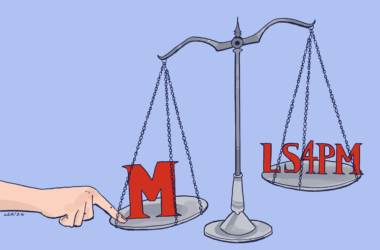
The Society also passed a resolution in support of MUNACA and a speedy resolution of the strike. This differs from the SSMU executive’s previous endorsement of the union via email and on its website; the motion now backs MUNACA on behalf of the Society’s entire membership.

There seemed to be tension between the promises of transparency and consultation—two buzzwords frequently used by the current executive—and the importance of a speedy resolution to the strike. Motions were made to table the resolution until subsequent legislative meetings, citing insufficient student consultation. This was countered by representatives from the faculties of Engineering and Medicine, among others, whose constituents have been particularly affected by the strikes in terms of research, labs, and their graduation schedule.

“We did not table this motion because we believed that it was more important [to pass it, given] the time constraint, but I believe that more extensive student consultation would [result in] a more well-rounded resolution,” Arts Councillor Isabelle Bi said in a follow-up interview. She’d been in support of gathering more information on student support for MUNACA. She also thought  representatives of MUNACA and the McGill administration should have been invited, as with the AGSEM representatives, before passing the resolution.    

Within the resolution was a clause devoting SSMU’s research resources “to gathering and compiling information relevant to the strike.” According to VP External Joël Pedneault, this will involve researching and gathering information on McGill’s budget, which he maintains will be beneficial for SSMU’s constituents in the long run.

“There’s not a lot of coherent information out there about what real financial pressures McGill is facing,” Pedneault said. “I think that’s something that could be really valuable to have a very nuanced [and] detailed understanding of.”

The researcher is a permanent staff member who normally works on “the political issues of the day,” said Pedneault. “If there were no MUNACA strike … he would be working on an external policy related to government policy on post-secondary education, which ties into what financial pressure McGill faces.”

The debate eventually ended and the resolution passed in what Pedneault called a symbolic gesture. Councillor Bi disagreed with the urgency of the resolution’s passing.

“[The] SSMU executive has already discussed and delivered a public statement about MUNACA … [That] is enough for us to wait two more weeks and really talk to our constituents and individual respective legislative councils and get a broader sense of [where] students stand on this issue [before passing the resolution].”

This concern regarding insufficient consultation is salient as this resolution speaks for all of SSMU’s membership. Both Pedneault and Bi recognized this and spoke out in favour of increased consultation.

“Constituents should talk to their representative honestly and frankly … if there’s enough evidence [that students do not support the resolution], we can bring this up again in a different council.” Bi said. “I encourage everyone to write in: for, against, neutral … just so we can get a clear student message about this strike.”

“This is still a discussion. I don’t think the motion was intended to put a period at the end of a sentence,” Pedneault said. “If people disagree with [the resolution], then that’s a discussion that needs to happen. The forums we have for that are Council & the General Assembly.”

This year’s first General Assembly will be held Monday, Sept. 26.

News

Brian Topp vies for NDP leadership

ipolitics.ca

On September 12, NDP President Brian Topp launched his campaign for leadership of the New Democratic Party of Canada.  Topp’s announcement kick-started the leadership race to select a Leader of the Opposition, who will be elected at a leadership convention in March 2012.

Topp graduated with a BA from McGill ’83 and chaired an NDP campaign in 1988. After a few years in Saskatchewan’s provincial politics, he returned to the federal stage, most recently serving as Jack Layton’s Senior Advisor during the 2011 election campaign. This past June, Topp was elected party president.

Topp’s background shows his skill at organizing on both the party and government level, explained Richard Schultz, Chair of the McGill Department of Political Science and an expert in Canadian politics.   

“Topp seems to have incredible experience in terms of not just the backroom of the NDP but also working with the government, in particular the government of Saskatchewan,” Schultz said. “More so than Pierre Trudeau or Brian Mulroney [at the time of their election as party leaders], he’s familiar with how decisions are made and the difficulties of making decisions.”

Jimmy Gutman, U1 Canadian Studies, is a member of NDP McGill and noted that although Topp has demonstrated strong leadership in the past, his position in the race is hard to evaluate without knowing who he is running against.

“He had support one time and he might have it again,” Gutman said. “But we don’t have all the names yet, so it’s hard to give a holistic judgment of the leadership race.”

For Schultz, Topp’s lack of experience within the House of Commons as an elected Member of Parliament is a drawback.

“My preference is for people to have been elected and served in the House of Commons before becoming party leader,” Schultz said. “Like in the case of Trudeau or Mulroney, the impression that you don’t have to be a Member of Parliament [to be party leader] suggests that parliament is not that important, and I think parliamentary experience should be important.”

To fill the power vacuum left by Layton, an ideal candidate for the NDP would need to be fully bilingual and appeal to the average voter, both Schultz and Gutman said.

“The ideal candidate also has to have the skin of a crocodile, because the Conservatives are nasty fighters,” Schultz added. “Already, they are trying to label Topp as a tool of the union movement and to portray him as a man who represents only minority interests. [The next NDP leader] will need to be thick-skinned and willing to fight hard.”

In the interim, the main challenge for the NDP will be avoiding polarization within the party. The leadership contest could potentially lead to party members differing in their policy suggestions.    

“The key thing for a political party in the opposition is that it not be taking three or four positions on any one issue, because the government would pounce on them and show that they’re divided and not capable of governing,” Schultz said. “So it’s going to be very important for them over the next six months to be as coherent and united as possible. In the House of Commons they’re going to have to speak as much as possible with one voice.”

McGill alumnus and recently elected NDP MP Matthew Dubé acknowledged the need for party unity during the leadership race.

“I think that at the end of the day, our goal is to make sure that, rather than be something divisive, this is a discussion of ideas,” he said. “No matter which candidate you support or who endorses who, everyone’s goal is to form an NDP government in four years.”

News

Mob squad, MFLAG mobilize at union rally

Students and faculty members grabbed placards and joined MUNACA at the intersection of McGill College and Sherbrooke on Friday morning in what was the largest and loudest rally to date.  The protesters, who occupied half a block of McGill College, chanted and cheered while speakers addressed the crowd from a stage.

MUNACA’s President, Kevin Whittaker, was joined by a representative of the McGill Faculty Labour Action Group (MFLAG), who told MUNACA workers, “You are truly indispensable.”

After a strike mandate from their members, which passed with an overwhelming 88 per cent, MUNACA joined the Public Service Alliance of Canada (PSAC), an umbrella labour union, under a service contract and began the strike on Sept. 1.  David Kalant, Vice President of Finance for MUNACA, cites PSAC’s support as indispensable to the strike. “We’ve been, up until recently, a completely independent union and we really thought we didn’t have the strength to make a major push for what we think is fair, even to support a strike if necessary,” he said.

Members of the Mobilization Committee, also known as the ‘Mob Squad,’ an informal organization of students whose mandate is to support mobilization efforts on campus, were also in attendance.

“We’re primarily interested in defending student rights, but that encompasses, in our view, solidarity with workers,” said Niko Block, campaign coordinator for SSMU and member of the Mobilization Committee. “We just want to do enough damage to the McGill name, we want to do enough damage to the McGill brand, that they will start to realize it’s no longer in their interest either [to withhold from MUNACA’s demands].”

Should the strike stretch into the coming months, continued Block, the Mobilization Committee would continue their support of MUNACA through various demonstrations.

Students weren’t the only non-MUNACA members in attendance.  MFLAG, whose members cheered alongside MUNACA staff and students, is made up of approximately 40 faculty members who banded together two weeks ago in an organized effort to show support for the strikers.  “We’re going to show our coworkers that we stand with them and they have a right to a fair and just contract,”  said Derek Nystrom, an Associate Professor in the English Department whose research has been affected by the strike. The McGill administration maintained in an email to the student body that MUNACA’s package is, altogether, similar to that of support staff at other universities in Quebec.

Michelle Hartman, a member of MFLAG and an Associate Professor of Islamic Studies, began the semester by teaching a first-year seminar course off campus in an effort to avoid crossing the MUNACA picket lines, an action that she and the chair of the Islamic Studies department had believed to be acceptable under McGill’s legislation. Her salary was threatened by the administration and as a result she returned to teaching her class on campus.

“The Dean of Arts…said to me directly, that if I was saying that I would not cross a picket line to teach a class, it meant I was not crossing a picket line for any reason, therefore I was not performing my academic duties and I would not be paid,” said Hartman.

Christopher Manfredi, Dean of Arts, responded to Hartman’s case by citing the University Policy on the Non-Performance of Academic Duties During a Legal Strike, which stipulates that Professors must fulfil all of their academic duties during a strike in order to receive their full salaries.

“With respect to teaching, professors cannot work around this rule by moving their courses off campus during a strike,” said Manfredi in an email.  He added that students in classes being taught off campus had been unable to return to campus in time for other classes.

A communiqué was issued to all academic staff this week on behalf of Provost Anthony Masi stating that “the University has an obligation to deliver classes in a location that is least disruptive for students” and that off-campus locations would not be covered under McGill’s insurance policy, increasing the risk for students.

Allegations of scab workers on campus surfaced last week. According to MUNACA President Kevin Whittaker, a report by officials from the Quebec Labour Commission, who are investigating the use of casual employees to replace MUNACA workers, will be released at the end of the week.

“That report has been submitted to the labour board and it should be brought to us by Friday.”

Student Life

Engineers without borders

In 2000, two engineering undergraduates finished their studies and asked themselves “What do we do now?” But the most important question to them was, “how can we put ourselves to good use in order to serve society?” Out of these questions, and the burning desire to do something other than an office job, Engineers Without Borders (EWB) was created. Students across Canada are now involved in this organization, which aims to improve the lives of rural Africans by taking action in Africa and in Canada. Students are at the core of the operation, bringing innovation, energy, and motivation to drive change. Students are also crucial in uniting the organization’s two parts: the African part and the Canadian part. Their experiences shed some light on the strength of the connection between McGill students and many rural Africans, young and old, who fight hard to finish basic schooling all while earning money for their families by harvesting and selling vegetables. The following are stories from this summer’s Junior Fellows.


Bailey Greenspon, U3 International Development Studies, Youth Leadership, Ghana

After telling my friend that I had spent the summer in Ghana, he asked me whether my parents lived there or if I was doing voluntourism. Why were these my only two options? People often dump on development and its workers. I can understand why, and I even used to do it, until I went to Ghana and became a development worker myself. While I may not object to many development organizations, I’ve discovered that we really don’t know much about anything: we in the West can’t figure out what actions are right and which are wrong.

 This past May as I was settling down in the northern village of Sagnarigu and becoming familiar with the Dagombas, my host family. I felt that women were subjugated in Ghana, and I saw an unequal division of labour and submissiveness. Naively, I assumed this meant that Ghanaians were wrong and Canadians were right. Female empowerment was black and white. Thinking it was my duty to enlighten my new friends, I tried to start conversations with my host sisters about the issue I saw. I wanted to rock their worlds. As it turns out, my sister Illy changed mine. I asked her why she wasn’t looking for a husband yet at the age of 20 and she explained that women who are dependent on their husbands are, in so many words, screwed. I squeezed her hand, overjoyed to hear these wise words. Illy is studying for her hairdressing certificate so she can open a small business. That way, when she gets married she can be self-sufficient. Confused, I asked why she still cooks for her older brothers but won’t eat with them. Illy laughed the question off; it was irrelevant. Illy has taught me that empowerment isn’t as simple as freedom versus servitude. Being a married woman in Ghana won’t deny all tenets of feminism. Trying to understand and operate in another culture, I then realized, would be over my head.

 At times I wanted to quit development forever. Not knowing what to do can become haunting. In July, I was interviewing Fati. She was about 40 years old. Her kids were everywhere. She invited the translator and I into her hut, hiding from the burning midday sun. I wanted to know how an Engineers Without Borders program had affected her, and how her husband felt about her business. The translator shook his head. Her husband was dead. Instinctively, I apologized in Dagbani. We went outside and I could see that the compound was falling apart.  Ghanaians normally disguise poverty behind such a high wall of pride and dignity. During two months in Ghana I had not seen such obvious signs of poverty as a collapsed roof. I moved on, asking if she increased rice production in the last year. She pointed to her leg. The translator told me it had been causing her too much pain to farm. She described the symptoms and it sounded like arthritis. I felt tense. She said something, and the translator laughed, shaking his head. I pushed to find out what she said, and finally the translator relented. “She wants medicine. She asks that you should send medicine from your place.” I asked what kind of medicine. They didn’t know, just something to make the pain go away. I reminded myself that this isn’t sustainable; that at EWB we don’t do handouts. Overcome with guilt and confusion, I ended the interview abruptly and returned to my compound, where my host sister had prepared lunch.

 I spent three months in Ghana and all I learned is that I know nothing. It now seems silly to think that I could decide that this NGO is good while that student trip is bad. All we can do as a society is keep asking questions, always being critical, and push the right people to be just as critical, so we can get things right.


Vivian Mau, U3 Bioresource Engineering, Water and Sanitation, Malawi

I am sitting in the back of a pickup truck riding along a dusty dirt road winding its way up the mountains to bring me to Chikwina, my host village. Once I arrive, I familiarize myself with the place where I will be living and working from May to August. Brick houses with thatched roofs are spread along the hillsides of the mountains. Maize and cassava fields line the valleys where streams run. Electricity only reaches a handful of households, and safe drinking water is only found in boreholes. The main dirt road cuts across this setting, connecting to the main market, the elementary school, the church, the football pitch, and the health clinic. I came to this community in Northern Malawi with an objective: to understand what really happens on the ground when Community-Led Total Sanitation (CLTS) is implemented.  CLTS is used mainly in rural areas in Asia and Africa to motivate communities to take action against the spread of diarrheal diseases, which leads to millions of unnecessary deaths every year.

Maria, who spends her summers harvesting and selling tomatoes and cabbages, is risking death from poor sanitation. The community where she lives has already come a long way in preventing the spread of diarrheal diseases, which spread when humans come in contact with feces through contaminated water or food, or through flies carrying germs from the feces to the food. Latrines can stop humans from accidentally ingesting these germs and becoming sick. Maria’s family has a latrine, as do all her neighbors. But latrines are not enough; washing hands after latrine use is a crucial step. Without running water, they need to construct a simple facility using a bucket and a cup to scoop water and wash their hands. These are rare in Maria’s home, her school, or the market where she sells her vegetables. If you ask her about hand washing, she will explain its importance. Des
pite this knowledge, few people use these facilities.

Maria and the average student have something in common. If we substitute using latrines with brushing teeth, and washing hands with flossing regularly, her story is more familiar. Brushing teeth is simple, but flossing is a different story. Usually after visiting the dentist you are able to floss a little more regularly, but the new habit is easily forgotten. It’s different, it’s time consuming, and many people wonder if it will make a difference. For Maria, using the hand washing facilities is the same thing: not part of her routine, time consuming, and not obviously beneficial.

The challenge in this community is to help Maria and her friends, family, and neighbors to adopt this new behavior. At the center of this problem are individuals’ decisions. More money going to dentists will not make you floss regularly, so why would simply investing more money into the development sector close the gap in sanitation?


Pascal G. Richard, U3 Bioresource Engineering, Agriculture, Ghana

Arriving in a rural village in Northern Ghana, I was overwhelmed by the heat and the sun, but mostly by the food. Almost all the meals are corn-based, protein is scarce, and there are no opportunities to eat between meals. I figured this would be manageable, but that was before I tried farming. In the savannah of West Africa, farming is at the center of people’s livelihoods. It is engrained in the culture by tradition, and forced upon them by the need to feed onself.

There is one growing season, the end and beginning which are dictated by the rains. Not many farmers are able to build up their savings, and most of the season’s harvest is eaten or sold at the local market. At the end of the dry season, when last year’s supplies are running low, there is less food to come by and more work to be done. People grow lean and alert, aware of the hardships ahead. Some rely on God, but most pick up their hoes and plough the fields tirelessly. As Abass would say, “it’s not easy.”

Abass is my best friend in the village. He gave me a small plot which I dedicated to yams and soybeans. The farming would often make me weak and dizzy from hunger. Abass completed junior high school, a level very rarely obtained in the village. It is his dream to move on in his studies, but the fees for senior high are out of reach. What’s more, it is now his son’s turn to go to school.

For most men like Abass, the rainy season arrives at a time when money is scarce. This means that farmers can not hire tractors, buy fertilizers, herbicides, and seeds. At first glance, this problem could be solved by a small loan at the beginning of the farming season that would be paid back upon harvest. In Canada, banks lend more money to farmers than to anyone else. But we have tractors and we have insurance. In Ghana, yields are as unpredictable as the rains upon which they depend. Access to technology and the best agricultural practices is limited. Banks are not ready to commit to uncertainty and so they prefer to abstain from lending to farmers.

Some local private entrepreneurs saw this challenge as an opportunity; they tried to make a profit by providing ploughing services to farmers in exchange for part of the harvest. For each acre ploughed at the beginning of the season, the farmer must pay a 100-kilogram bag of maize. The surplus bags can then be kept for consumption or, if the yields were good, sold to the same company who will transport them to processing.

This summer, I worked with two local agriculture businesses providing this service. Supporting the private sector in agriculture links farmers to a market, providing them with the help they need to escape subsistence farming and food insecurity. My role was to find out what  the challenges were which prevented the companies from investing more in their farmers.

In Canada, it can be easy to demonize the private sector, but in rural Ghana, agribusinesses have an incentive in seeing farmers increase their production. Donor funding is easy to spend, especially in NGO projects where the staff is only accountable to the donor, and not to the farmers. With the help of businesses, people like Abass might be able to save enough money, enabling him to plough and plant without a loan, and maybe even to send his children, or himself, to school.


News

Powwow promotes cultural understanding

Ryan Reisert

A lively combination of drumming, dancing, and booths adorned with native art drew a large crowd to Lower Field on Friday.

“I was just coming from my bio lab, and I heard all of the music, so I came by to check it out,” said Kevin Dick, a U1 biology major making his way through the festivities.

The spectacle was McGill’s tenth annual powwow, an event put on each year by the school’s First Peoples’ House to educate McGillians about Canadian aboriginal heritage.

“I think it’s perfect,” Dick said of the event. “It’s a good way to get people out [and] introduce them to this type of culture.”

This year’s powwow was part of a broader, week-long project: the university’s first ever Aboriginal Awareness Week (AAW), which ran from Sept. 12 to 15.

Aboriginal Awareness Week is intended to provide greater opportunities for non-aboriginal students to learn about and engage in aboriginal traditions.

According to the Arts Undergraduate Society, the focus of the week was to showcase First Nations cultures and values in a manner that encouraged collaboration with partners in the community.

“This week-long event also stems from a broader effort to increase both understanding of and appreciation for aboriginal perspectives and values in higher learning institutions,” read a promotion in last week’s AUS listserv.

Paige Isaac, co-ordinator of the First Peoples’ House and chief planner for the project, stressed the importance of the aboriginal community’s presence on campus for more than just one day a year.

“With four days of events, we wanted to target the whole campus to learn about different issues other than just dancing and singing,” Isaac said.

All events were free and open to the public, and included two nights of music and spoken word from aboriginal artists, a stone carving workshop, a media panel on representations of aboriginals in public spaces, a book reading by broadcast journalist Waubgeshig Issac, as well as a closing feast. The finale was a  powwow on lower field.

Supporters of the project included the First Peoples’ House, the Social Equity and Diversity Education Office (SEDE), the Office of the Dean of Students (represented by the Aboriginal Outreach Coordinator) and the Office of Sustainability at McGill.

“The school has always been very open and well-receiving of our people,” said Lance Delisle, the powwow’s MC. “Every single year it’s very well received and that attests to McGill University and exactly what type of school this is: very diverse and open to new ideas.”

The First Peoples’ House plans to keep the momentum of Aboriginal Awareness Week going with a series of monthly events. The next one will be held in October.

“We want to meet as many students as we can and we want everyone to share and learn and engage,” said Isaac.

News

Interview with MP Matthew Dubé

politwitter.ca

The McGill Tribune sat down with Matthew Dubé, who found himself thrown into Ottawa’s political arena after his surprise victory in last May’s election, to discuss Jack Layton’s legacy and the future of the NDP.  A former McGill student, he spent the summer between his constituency and Ottawa, preparing for the first session of Parliament which opened this week.

What was it like working with Jack Layton? How will Jack’s vision and values continue with the party?

One of the great things I’ll always remember is how he treated everyone with the same sort of respect, and as someone who’s younger than the average politician, I really saw that. In the first conversation I ever had with him, before I was even a candidate, I got to speak to him for a good 15 minutes. For a leader of a federal party, that’s precious time. At the same time, you know he left us with a great project to continue with. None of us expect to fill his shoes and I don’t think any of us want to either, we have to take our own shoes and continue on the path he set us on.

How does the NDP feel about the Conservatives’ renewal of their anti-terrorism legislation?

First of all, we find the comments Stephen Harper made on The National referring to “Islamicism” as a major threat to Canada absolutely shameful. Security is important for the NDP, but at the same time there’s nothing indicating that we’re at risk in any way and right now people’s priorities are issues like the economy, especially job creation and security. We feel these security issues are non-existent and it’s divisive politics, plain and simple. The Omnibus Crime bill, jokingly referred to as the Big Brother Bill, is problematic and illustrates that Conservatives’ priorities are out of whack.

Have you formally endorsed an NDP leadership candidate?

For myself I think that it’s a bit early to say. Leadership was obviously on people’s minds [at the NDP’s general caucus] in Quebec City. We are potentially going to be supporting different candidates but no one has a problem with that. From feedback I’ve been getting in my riding there’s a lot of hope in Quebec that Thomas Mulcair will present himself as a candidate. As for my own personal endorsement, I’m definitely going to see once all the candidates are there and official, and I can make the decision then.

What do you see as challenges for the NDP stemming from the Leadership race?

At the end of the day our goal is to make sure that rather than be something divisive that this be a discussion of ideas. Lots of candidates do have connections to Quebec, which is a natural consequence of the breakthrough that happened in this province in the last election. Thomas Mulcair and Brian Topp, like Jack Layton, are McGill graduates. I compare the process to a family debate at the dinner table about politics. It can get heated at times and not everybody necessarily agrees 100 per cent but at the end of the day it’s shared values, it’s a family and we definitely want to be in government in four years so we’re all going to work together.

Do you feel you and your peers’ electoral success says something about youth empowerment and breaking out of the mould that young people, especially those who want to get into politics, find themselves in?

People had some reservations about the number of young people who got elected—and that’s fair.  At the same time [we younger MPs know] that we’re hard workers, that we can have just as much a say and impact as someone from another generation. At the end of the day, it’s up to us to show that to people. It never hurts to have a new set of eyes on the problems we face as a society. We want to show people that young people can people work positively in this environment and contribute in an important and positive way.

This interview has been edited and condensed.

—Compiled by Anand Bery

News

French to become a minority language in Montreal

A report published earlier this month by the Office Québécois de la Langue Française (OFQL) stated that in 20 years, French will be a minority language on the Island of Montreal. According to the report, only 47.4 per cent of those living in Montreal will speak French at home by 2031, compared with 54 per cent in 2006. Montreal’s recent influx of immigrants is likely the major factor behind the decline of the French language in the city.  However, both Premier Jean Charest and McGill Professor Charles Boberg, a sociolinguist, caution that these numbers should be taken in the context of the greater Montreal area, and Quebec as a whole.  

Boberg explained that immigration keeps Quebec’s population numbers from dropping.

“Quebec francophones, like Canadian anglophones and most western Europeans, have seen a dramatic drop in the birth rate owing to a number of social and cultural changes that have been developing since the 1960s,” Boberg said.

Booming immigration has forced Quebec to face problems of integration, and encouraging immigrants to speak French is a top priority for the Quebec government and the OFQL.  

 According to several Montreal residents, this policy appears to be working. An IT consultant for Accenture, the world’s largest consultancy firm, works almost exclusively in French while speaking her native Tamil at home.  

“I was brought up speaking Tamil and English at home, but I went to French school and learned French,” the consultant, who wished to remain anonymous, said. “Now I teach French and all my nieces and nephews speak French, because … the younger generation is speaking French.”  

However, this move towards French is not universal. Saddiq Akbar, who works in McGill food services and owns a restaurant on Saint-Laurent, never learned French and has been getting along very well living in Montreal for the past 13 years after moving here from Pakistan.  

“It’s good to know other languages, but practically if you want a job you should know English. I own a restaurant and in four years I’ve lost business maybe two or three times because I don’t speak French. Before I came over I was worried it would be hard because I didn’t know any French but my in-laws said it was fine and it has been,” Akbar said.

Premier Charest, in his response to the study, claims that most immigrants do learn and are in fact speaking French, thanks to the Charter of the French Language instituted in 1977.  

Newcomers to Montreal tend to install themselves among others who share their language, customs, religion, and food.  On the other hand, an expanding group of middle-class Francophone families is leaving Montreal for the suburbs of Laval, the North Shore, and the South Shore.

As for the future of a French Quebec, Professor Boberg cautions that there is a big difference between the island of Montreal and Quebec at large.  

“Let’s remember that Montreal and Quebec are very different: as soon as you move a few kilometers away from Montreal, Quebec is 95 per cent francophone, and that’s not likely to change anytime soon.  The large anglo populations that were once found in the Gaspe, Quebec City, the Eastern Townships, and even the Outaouais are now effectively gone.”

News

Canadian senator and nuclear activist visits McGill

theworldmarch.org

The annihilation of the human race by nuclear war is probably not something that has been on the average student’s mind since the end of the Cold War. But according to Douglas Roche, it should be.   

Roche, a former MP, Senator, Canadian Diplomat, and anti-nuclear weapons activist, recently gave a speech at McGill as part of a speaking tour of 23 universities across Canada.  

“I want students of today’s generation to understand the nature of the nuclear weapons problem, what is being done about it, and what they can do about it too,” Roche said.   

Roche noted that the issue of nuclear weapons has fallen to the wayside, especially among those too young to remember the Cold War. He strongly emphasized that the issue of nuclear weapons is still of great importance.

“Nuclear security is as relevant today as it was in the Cold War,” Roche said. “It would be foolhardy to think that everything will be fine in a nuclear world because it very well might not be.”   

Lack of public consciousness over the issue of nuclear safety, according to Roche, could have disastrous consequences. At the beginning of his speech, Roche held up an apple and explained that an apple-sized amount of enriched plutonium was enough to cause huge destruction and an inestimable loss of life.  

He also elaborated on the theft of nuclear materials and the risk this might pose.

“However tightly nuclear materials are guarded today, they are not guarded tightly enough,” Roche said.

The event was organized by the Montreal branch of the Canadian International Council (CIC), an organization committed to bringing international issues such as nuclear proliferation to the forefront of Canadian politics.   

The event coordinator, Kyle Matthews, was delighted that the Honourable Douglas Roche had time to speak with the CIC and with students.  

“We’re always looking to bring in interesting, high level speakers … I thought it was very important that we invite him to talk about our nuclear security and safety disarmament to our membership,” Matthews said.   

While the event was designed for the general public, many McGill students attended, including Shehryar Heider, U1. Heider was not sure what to expect of the event at first, but found it informative and interesting.   

“When I looked at the notice outside, it said [the topic] was ‘Nuclear Weapons,'” Heider said. “I was pretty interested because it’s a very radical topic, especially in Pakistan, where I come from. It’s a topic that has raised quite a lot [of conversation] because we have nuclear weapons and it’s an issue that does have controversy, and I wanted to see what Douglas Roche had to say.”  

“I found the task of how to raise the issue amongst the younger generation important,” Heider added. “We should know the kind of dangers that are associated with nuclear weapons.”  

Roche was enthusiastic about speaking to students.  

“I’m happy to speak at McGill,” Roche said, adding that he hopes students came away with “a better understanding of the danger the world faces with the continuation of nuclear weapons and how the movement to abolish nuclear weapons is gaining strength in the world.”

Opinion

Montreal’s fine arts

Imagine strolling through campus on your way to the studio for CERA 335, Introduction to Ceramics, in a blissful jaunt that stirs your creativity with each step, making you wish you were already sitting at the pottery wheel.  You remark, “How wonderful it is that I can study fine art at such a good school!  In such a nice city!”  To experience this feeling, you’d have to be a student of Concordia University.  What’s a Redman to do, then, when he wants to step into a Bumblebee’s shoes?

 Concordia offers dozens of BFA programs, ranging from dance to film to computational arts to fibres (if rickety old textile mills stir your passions) to, yes, ceramics.  Our neighbour to the east, UQAM, similarly offers graphic arts and design majors.  In fact, Montreal’s arts culture seems to surround the McGill campus.  Five minutes down Sherbrooke to the west is the Musee des Beaux-Arts, a veritable hotbed of permanent and temporary art, ranging from Greek vases to pieces by Yoko Ono; for the modern art purveyor, the DHC/ART Foundation for Contemporary Art lies just five minutes into the Old Port.

The vibrancy of the Montreal art scene outside of McGill is no accident.  Just look at the Quartier des Spectacles.  The city’s newest quarter sports opera halls, bars, cinemas, museums, and libraries, spanning more than ten blocks and three metro stations.  You can do anything from attend the largest jazz festival in the world, to sit on a park bench and watch denizens run through multicolored fountains on the new Place des Arts plaza.  While McGill keeps turning a blind eye to the creative arts, the city of Montreal is picking up the slack.  The magnitude of the $120 million Quartier even breaks the current international trend.  The U.S. National Endowment for the Arts barely gets $150 million per year for the whole country, and even Holland, once the most supportive arts society in the world, is now cutting its subsidies in half.

Most would be surprised to know that McGill had a Fine Arts program 60 years ago.  But true to McGill’s research focus, details of the Fine Arts program are scarce, like a ghost fleeing campus memory with haste. Tracing my way through a maze of obituaries online, one of the few places where records of McGill’s BFA still exist, I tracked down a graduate from as late as 1949. At long last, I found a Gazette article from 1965 in a tangled cobweb of cyber archives.  The pure BFA was terminated in 1952, and thereafter a revamped Art History department kept some studio courses. Even then, the aim wasn’t vocational training. Rather, for the students to judge and study creativity, they needed some understanding of what being creative entailed. If you can find the date of the final moratorium for the fated McGill studio arts, email me—it seems to have vanished into thin air.

Instead of being disappointed with McGill’s lack of Fine Arts courses, this seems the perfect reason for indulging in Montreal’s offerings.  Stay a while after graduating.  Take up mural painting (legally, of course).  Independent art schools are numerous in the city’s downtown. Montreal’s proclivity for enhancing the arts seems boundless, and you don’t have to worry about whether you’re a Redman or a Bumblebee to explore the finer sides of Montreal living. 

Opinion

The Tribune’s GA endorsements

McGill Tribune

Resolution regarding democratic reform of the SSMU Board of Directors—YES  

The SSMU Board of Directors is the highest decision-making body at SSMU and must consist of only Canadian citizens or permanent residents. This motion would increase the Board of Directors from seven people to 16, and give more power to the legislative council, who are currently underrepresented on the board. Due to the intricacies of Quebec’s liquor laws, this would also allow the SSMU to retain its liquor license. The Tribune fully endorses this motion in favour of representation, so show up to the GA, vote, and get the job done.

Resolution regarding accessible education—YES, with reservations

The Quebec government has announced tuition increases of $325 annually over the next five years for Quebec residents, and will soon announce the increases for out of province students. SSMU is currently mandated to actively oppose all tuition hikes and actively promote accessible education. The Tribune endorses this motion and its long-term goals, but encourages  SSMU to investigate and support alternative funding models, including a more extensive financial aid fund for students most affected by the increased tuition. Although aiming for free post-secondary education is a noble cause, it might be unrealistic given the tuition trends across the province. The Tribune hopes that the aims of this motion are attainable in the long term, but recognizes that other solutions may be better for current students.

Resolution regarding the Sustainability Assessment—YES

This motion mandates that SSMU update the Sustainability Assessment annually. The assessment will include, among other things, an overview of green student groups’ projects, evaluation of the year’s progress, and recommendations for the following year. This assessment was performed in 2008, but has not been updated since then. The Tribune endorses this motion and sees it as a vehicle for transparency between students and sustainability efforts on campus. Turnover is inherent in a campus community, and an annual sustainability assessment which provides reports on past projects and future goals will undoubtedly prove useful for future McGillians.

Resolution regarding reappointments—YES

This motions argues that students should be represented on the consultation committee for reappointments of the provost, deputy provost, and vice principle, and that SSMU should employ all measures at their disposable to change McGill’s policy on the reappointment committee. As it stands, student representatives are only involved in the initial appointment of these members. Students are represented in the appointment and reappointment of faculty deans, and for good reason—all of the above positions affect student life. Therefore, students should be consulted in the case that a member may  not warrant reappointment. For the love of student-consultation, the Tribune fully endorses this motion.

Resolution regarding labour disputes—YES, with reservations

This motion would mandate SSMU to extend and modify its current policy of standing in solidarity with  workers on campus. The updated policy would require SSMU to collect varied perspectives on campus union strikes, disseminate this information to the student body, and support workers in their strike. The Tribune endorses the SSMU’s support of campus unions and its collection and dissemination of much-needed information regarding disputes. It is in the best interests of students to be well informed of campus workers’ disputes. While the SSMU may counter information brought forth by the administration—as was the case at the start of the   MUNACA strike—students deserve an unbiased account of these disputes. The Tribune is concerned that SSMU’s blanket statement on all future labour disputes could cause conflict. Although many students support the MUNACA strike, this may not be so in the case in future disputes.

The Tribune is glad to see that students have put forth motions more serious than installing a stripper pole in Gerts or holding a bake sale to rescue AUS from its debts.

The SSMU General Assembly will be held at 4:30 on Monday, Sept. 26 in the Shatner Ballroom (third floor, SSMU building).

Read the latest issue

Read the latest issue