Latest News

Features

JOKE ISSUE: Frosh will be booze free in future

Frosh will go alcohol-free this Fall as part of a series of massive changes which are the result of a decreasing interest in getting shitfaced. Students’ Society Vice-President Internal Alex Brown said, “It’s really too bad that it’s come to this, but incoming students just don’t want to party.”

The decision was made after several focus groups were conducted by Student Services to assess what first years thought about Frosh. An overwhelming majority of the students surveyed said they “didn’t like the taste of beer,” and “would rather stay home and read” during their first week in residence.

J. R. Polver, a U1 engineering student, said he is happy about the upcoming change to Frosh.

“Frosh really sucked for me. I wanted to sit on lower field and play name games, but the leaders were trying to make us sing profanities and consume alcoholic beverages quickly.”

Incoming VP Internal Tom Fabian sympathized with Frosh leaders, saying, “I love Frosh, and I love the way it’s been run thus far. It’s too bad the new wave of students are total squares and can’t appreciate what Frosh leaders are doing for them.”

In the past, Frosh has consisted of binge drinking, chanting, pub crawls and alcohol-related sports events. Starting this year, Frosh will focus on team-building exercises like trust falls and red rover. The administration is concerned that Frosh leaders may try to smuggle alcohol into the event, but many are confident that it will be a smooth transition. To enforce the strict zero-tolerance alcohol ban, McGill security has been supplied with 9mm revolvers and have been instructed to “shoot first and ask questions later.”

An unnamed source from McGill security said, “this system may seem harsh, but it will ensure everyone has a good time at Frosh and help natural selection when it comes to Frosh leaders.”

SSMU President Ivan Neilson could not be reached for comment.

Joke

JOKE ISSUE: Grillz come to McGill

The McGill administration has announced that McGrills – grills shaped like the word McGill – will be available at the McGill Bookstore, effective immediately.

In an interview with the Tribune, Vice-Principle (University Services) Jim Nicell was excited by the grills, which he hopes will boost student pride.

“We want the students to have the chance to express their school pride in a less conventional way than, say, a T-shirt or a sweatshirt,” said Nicell, teeth glittering with what he later explained was a beta model. “This is also a great way of infusing some much-needed bling into the McGill student body.”

Grills, a type of gold jewelry that fit over the wearer’s teeth, are a conspicuous part of hip-hop culture, sported by legends such as Flava Flav, Nelly, and Lil’ Jon. Nelly once wrote a hit single in tribute to the growing fad, unsurprisingly called “Grillz.” Even stars far from the hip-hop scene – Travis Barker of Blink-182 and Marilyn Manson, to name a few – have been known to sport grills.

The launch is part of a larger initiative to bring the production of McGill products in-house. The initiative began with the internalization of coursepacks in early 2009.

“McGill has been very efficient in manufacturing and distributing its own coursepacks,” said Deputy Provost (Student Life and Learning) Morton Mendelson. “So we figured that we might as well produce other things.”

The students who have decided to pioneer the purchase said that they could not be happier with their decision.

“I have never really felt cool before,” said Matt Parker, U4 engineering. “But as I soon as I bought myself a pair of these bad boys, there was just no turning back. I had to practically fight my way out of a group of girls throwing themselves at me.”

Parker noted that this trend has become most popular among engineering students, many of whom were behind the design and production of McGrills.

While some students enjoy the aesthetic appeal, others wear them as a powerful political statement.

“I see them as a way of reclaiming my voice,” says Sarah Dartmouth, U2 women’s studies. “Although the patriarchal society has long silenced me, wearing [McGrills] allows me to emphasize both the power of my words and the institution that has helped empower me.”

McGrills can be purchased at the Mcgill Bookstore for $4.99. The current model is gold-painted plastic, but bookstore employees have suggested that a newer, sparkly version embellished with cubic zirconia will be available by late April.

Editorial, Opinion

EDITORIAL: Quebec should leave religious paranoia to the French

There are many areas in which France is worth emulating. The French have impressive universal health care, a generous day care system, and they enjoy a high standard of living. But unfortunately, the Parti Québécois and certain elements of Quebec society seem hell-bent on copying one of the worst aspects of French culture: religious paranoia.

One hundred Quebec intellectuals – including two McGill professors – recently signed a petition to ban public servants from wearing religious symbols, such as the hijab, yarmulke, or cross. According to The Gazette, the PQ has also been pushing for a “charter of secularism” that calls for reforms similar to the petition.

Such a ban would trample Canadians’ right to individual expression. It would take Quebec down the road of what Montreal lawyer and McGill law professor Julius Grey has termed “secular radicalism.”

Such a proposal acts on a skewed assumption that a religious symbol somehow impedes public servants from doing their job or changes others’ perception of them. Most religious symbols are discrete, personal expressions of faith that have no bearing on an individual’s professionalism. Religious expression has become a ridiculous bogeyman – Quebec’s government services are wholly secular, and a ban on religious symbols would “address” a problem that doesn’t exist.

The Liberal Party of Quebec has responded by tabling Bill 94, which would require government employees as well as anyone receiving a provincial service to have his or her face uncovered. The bill amounts to a ban on religious face coverings such as the niqab in hospitals, the education sector, and social services.

Although the niqab is a religious symbol, we feel that banning provincial employees from wearing it seems sensible. As an employer, the Quebec government has the right to set reasonable guidelines on dress and uniforms. The Tribune feels that an uncovered face is an appropriate standard for the province to demand of its employees.

But prohibiting citizens from wearing face coverings while using all public services seems unnecessary. Persons wearing niqabs would have to unveil themselves whenever public officials decide that face-to-face contact is required to further the interests of “security, communication, or identification.” Requiring unveiling for “communication” purposes is too vague and is a problematic standard. It’s understandable why a covered face can be an impediment to security or identity, but a piece of fabric doesn’t impede communication.

Furthermore, there are approximately 25 women in Quebec who wear the niqab, according to Maclean’s. Therefore, this bill is a sweeping overreaction to a small issue. Deal with religious accommodation cases on an individual basis, instead of unnecessarily banning the niqab from all facets of provincial government.

Arts & Entertainment, Music

RETROSPECTIVE: Jimi Hendrix 1942-1970

Even though he died 36 years ago yesterday, his music is among the most timeless and influential ever produced. Jimi Hendrix arguably changed the electric guitar sound more than any other guitarist in history. He was the guitar player who brought deft use of overdrive, feedback and the wah pedal to the masses and following in the footsteps of Eric Clapton’s days with Cream and John Mayayll’s Bluesbreakers, was among the first to swear by the Marshall Stack (amplifier) to give him one of the loudest, most blistering guitar sounds to accompany his legendary playing technique.

Hailing from Seattle, Jimi Hendrix moved to New York City in the mid-1960s to establish himself as a musician. He played as a rhythm guitarist in a number of local outfits, many of which he was kicked out of, being that even his rhythm playing would overshadow the band’s lead guitarist. He was finally noticed by Animals bassist Chas Chandler in 1967, convinced to form a group and start recording in Britain and rocketed to stardom thereafter with back-to-back-to-back top 10 singles in the UK. Though he only released three studio albums before his untimely death in 1970, well over 50 albums of live dates and unreleased studio material were mastered and released posthumously. The volume of work he generated in the realms of psychedelic, prog-metal (in its earliest form) and blues exceeds what any other rock guitarist (with the ostensible exception of Frank Zappa) has accomplished in such a brief span of time.

Noteworthy albums: Band of Gypsies (live recording), Electric Ladyland, South Saturn Delta, Are You Experienced?

Joke

JOKE ISSUE: Former U.S. vice president takes advantage of new healthcare system

Dick Cheney was arrested yesterday afternoon for shoplifting at Walgreen’s in the Georgetown neighborhood of Washington, D.C. Police stated that Cheney thought he could now get over-the-counter medication for free. Cheney allegedly had eaten too much pizza on Saturday night, and was experiencing some mild heartburn when he decided to go to the local pharmacy.

Adding confusion to the situation is the widespread rumour that Cheney had his heart removed in 2002, shortly before the Iraq War. This makes heartburn improbable. However, Dr. Oz clarified the situation, saying that “heartburn is actually due to acid in the stomach, and unrelated to the actual heart.” It is still unclear if Cheney has a heart, although recent reactions to healthcare reform would suggest that he does not.

“Democrats are really misleading the country,” Cheney said in a statement from an undisclosed location, “They’re advocating for free healthcare, but I can’t even get my Pepcid AC for free. It’s not fair that I’m not fully covered.”

Last week, President Obama signed legislation that would guarantee healthcare to nearly all Americans. The bill does not make many provisions for people who already have healthcare, nor does it impose cheaper prices on prescription and over-the-counter pharmaceuticals.

It is still unclear why Cheney, who receives health insurance from the U.S. government and has a six-figure income, felt the need to steal inexpensive medication. He did not seem to grasp the irony of the situation, although his publicist said that it will be explained to him eventually.

Because of his age, Cheney will not face criminal charges. However, police are worried that this attitude will spread across the country. Many senior citizens have been known to go to Canada expecting free medication, so Canadian pharmacies must take precautionary measures.

A Walgreen’s spokesperson said that the recent health care reform has confused consumers. One elderly man in Evansville, Ohio, tried to get all of his past prescriptions reimbursed, including his children’s polio vaccines from 1964. Teenagers in Huntville, Alabama, recently raided a health clinic, demanding to see physicians for no particular reason.

A White House spokesperson said that clarifications will be made to the general public to avoid further confusion. Nancy Pelosi is said to be drafting such a document, along with other corrections to the bill.

Opinion

MY POINT … AND I DO HAVE ONE: Crazy like a fox

Thanks to the great privilege afforded to me by living north of the 49th parallel, I find the American right really funny. The Bill O’Reillys, the “These Colours Don’t Run” American-flag T-shirts, and everything Fox News has to offer are far more entertaining and, frankly, far less disingenuous than the earnest approach to conservative ideas put forward by the “liberals” of the Democratic Party or our own Conservative Party of Canada.

Of course, every time I visit our neighbours to the south, I am faced with the painful reality of how unfunny the American right really is: as it turns out, close to half of the voting population thinks they’re being serious.

At the same time, I’ve never had the same tongue-in-cheek admiration for Canada’s brand of self-proclaimed “straight talk” reactionaries. Mostly, they just aren’t funny. When Bill O’Reilly wants to be homophobic, he hosts a show about “Hollywood’s radical homosexual agenda.” The O’Reillys of the world firmly understand their mission as appealing to an already-established, hate-based populism.

However, Canada’s reactionaries like to play the victim, mostly because they have failed as pundits of hateful garbage (see the complete financial collapse of the Western Standard and the pending financial collapse of the National Post). In playing the victim, they create a new market and make massive profits, as human rights lawyer – and certainly no radical – Pearl Eliadis pointed out in a recent article in Maisonneuve. She cites the examples of Mark Steyn, Barbara Amiel, and Ezra Levant, who were taken to human rights commissions over their hateful and hate-inciting writings, and became martyrs for the cause of speaking without consequence. I don’t say free speech, because they are welcome to believe that, as Steyn wrote, if we continue our current, allegedly too-liberal immigration policy, “the cities of the Western world will be filling up with sheep-shaggers” and tell their friends and family about it. No one is trying to police others’ thoughts. But, when Barbara Amiel chooses to sign her name to the statement that “Normally a people don’t willingly acquiesce in the demise of their own culture … but you can see how it happens. Massive Muslim immigration takes place,” there are definite consequences. Just as there were for Ernst Zundel and James Keegstra for attaching their names to statements on the evil Jewish conspiracy to defame the otherwise impeccable memory of Hitler. Yet somehow Steyn, Amiel, and the unimpressive Ezra Levant have become heroes for the cause of “free speech” in a country that has had anti-hate crime legislation on the books since the 1940s.

Now the “free speech” reactionaries are up in arms again over Ann Coulter’s recent speaking tour in Canada. Coulter represents Fox News for me more than any of the other sirens of stupidity: when she speaks, I first tend to laugh. Then I realize that not only might she take herself seriously (which is doubtful), but she is actually taken seriously by a large segment of the American population. And apparently some Canadians, too. I then become profoundly depressed.

Recently, Ann “Kill their [Muslim] leaders and convert them [Muslims] to Christianity” Coulter came on a multi-city speaking tour of Canada. At the University of Western Ontario, an early stop, Coulter was asked by a young Muslim student how she should get around should the government follow Coulter’s insane advice and place every Muslim on the infamous “No-fly List.” Coulter told the hijabi-clad student to “take a camel.”

So the University of Ottawa’s provost – doubtlessly under pressure to cancel Coulter’s upcoming lecture but refusing to do so in the interest of free speech – warned Coulter that hate speech can lead to prosecution in Canada. Students came to protest loudly, and the otherwise supporter-less reactionaries who organized the event chose to shut it down, citing the “attack on free speech” committed by those holding signs and yelling outside the venue.

And of course, Ezra Levant – whose every venture except playing the victim has failed miserably (lawyer, publisher, etc.) – was rewarded with a long op-ed piece in the Ottawa Citizen on the “venom” of human rights advocates. And Coulter can return once again to the hateful populism of Tea Party America and be greeted as the hero of a “free speech” controversy that was engineered from the very beginning.

Arts & Entertainment, Film and TV

FILM: The truth will set you free?

In The Last Kiss, a Hollywood remake of the 2001 Gabriele Mauccino film L’Ultimo Baccio, Zach Braff finds himself almost-30 and on the verge, looking dazedly around in the suspended moment before he walks quietly into baby-and-coupledom for the rest of his life.

Michael is a 29-year-old stuck in a happy yet mediocre life, with “no more surprises.” He is well employed and waiting the birth of a child with his girlfriend of three years, Jenna. All is well until his eye is caught by the sexily immature Kim, played by Rachel Bilson of The OC fame, who is a politically correct and less-shocking college coed instead of a high school student as in the movie’s original version. The mediocre and mundane lives of a host of connected characters surround Michael, including Jenna’s parents and Michael’s three close friends. The result is the interweaving of three characters in wildly different stages of life, whose problems are suspiciously similar. Everyone is in a deteriorating relationship, and the movie operates unconsciously on a sense of morbid curiosity from the audience.

Although the movie may point out that wisdom does not necessarily increase with age, the players in this ensemble drama seem to prove otherwise. Perhaps it was her comfort and admiration for director Tony Goldwyn, whom she has known since he was 10, but Blythe Danner as Jenna’s philandering and aging mother gave the strongest performance by far. The wife trapped in a marriage with an unappreciative husband is not a new story character, but Danner offers a simple and honest portrayal that smartly avoids histrionics. Her passive-aggressive husband Stephen, played by movie veteran Tom Wilkinson is the other strong characterization. Stephen’s confrontation with Michael over the sexual betrayal of his daughter Jenna is the focal scene of the movie. Michael laments his prestructured life, but vows that Kim is his “last kiss.” Stephen then becomes the bullhorn for the movie’s message, that “what you feel only matters to you!” The older, seemingly wiser man explains that it is what you do to the ones you love that matter, not the feeling itself. How do you show your love? By telling the truth.

The moral of the story: the truth will set you free. It is a fitting one; the American response to the movie’s real European origins, yet it is also the key difference that illustrates why the first try was worth it and the second just a stale copy. Even though a new movie with Zach Braff at a standstill in his life with a great soundtrack to accompany it initially conjures Garden State: the Sequel, the most telling comparison for The Last Kiss is its true parent, L’Ultimo Baccio. In many respects The Last Kiss is so similar to L’Ultimo Baccio that it is not so much a remake as a mere repackaging. Dialogue is almost word for word in the majority of the scenes. The difference is in the ultimate message- the Italian L’Ultimo is more cynical, and therefore more honest, managing to be more entertaining in the same go.

Goldwyn tries too hard to dress to impress, so the film’s reality is thwarted by a desire to shoot a symbolic birds-eye-view of Zach Braff curled around a doormat that says HOME on it – an image that you may have seen in the movie’s trailer. The movie is slow-moving, trying to express visually what it could be doing emotionally, trying too hard as well to aim for the loftier moral that love needs work. The edge that made L’Ultimo work was precisely that it did not try to deny that truth is overrated and often ignored and that in the end, sexual desire is the real catalyst for relationships – both their beginnings and endings.

The Last Kiss tries to be profound amongst the profane and silly. It tries to be a mirror to reality, but by doing so it fails to be nothing more than a string of soap opera vingettes that the audience watches from afar. It is decent entertainment fare, as are soap operas, but the success of the movie will be most affected by the movie’s unsure footing in any genre of experience. Too much of a cold relationship wake-up call for a date movie, too silly in parts to be a gritty drama, too much a cinema verité attempt to be a comedy – the movie is difficult to digest. One leaves the theatre as uneasy as every character in the movie is in their twisted personal relationships.

Now playing at Paramount Montreal, Cavendish and Marché Central, among others.

Opinion

RIGHT MINDED: Free speech in Canada

Ann Coulter is a bit of a troublemaker, isn’t she?

I’ve always had a love-hate relationship with the firebrand conservative columnist. A strong advocate for small government, Coulter is also an unapologetic advocate for Western society’s ethics. She decries the silencing tendencies of political correctness and never gives in to moral relativism. She thinks that you’re wrong and she’s right. Really, though, we all think that way, and it’s nice that someone is actually willing to say it.

Still, I grew up in a tight-knit family headed by a spiritual and respectful grandmother. My family has always valued politeness to a degree that I find refreshing. Indeed, politeness is one of those stereotypical Canadian values that I’m glad we picked up from our British cousins. So even though I admire Coulter’s feistiness, I find that in her quest to outdo her left-wing adversaries she can be rude and hyperbolic. She has a talent for colourful quotes, to say the least.

It has been interesting to watch the firestorm of controversy erupting over Coulter’s cancelled speech at the University of Ottawa. It all began with a small-minded letter from University of Ottawa Vice-President Academic and Provost François Houle. He warned Coulter that “Canadian defamation laws … limit freedom of expression and may differ somewhat from those to which you are accustomed.”

Then there was the protest. A boisterous crowd went mad outside the lecture hall where Coulter was scheduled to speak. Acting on the advice of police and security officials Coulter and the event’s organizers decided to cancel the talk.

There’s been plenty of commentary about the cancellation, and it’s been fascinating trying to decipher Canada’s concept of freedom of expression.

Dare I say these un-Canadian words, but our American neighbours seem to have the right idea on freedom of speech. They don’t have agencies ready to impose lifetime publication bans on those who say what they wish. In Canada, truth doesn’t seem to matter when you’re dragged in front of a human rights commission for saying something the government considers out of line. Here, for speech to be free it seems it must fulfill the legally imposed requirement of being “polite” and “politically correct.” As long as you say something relatively agreeable, you’re welcome to your two cents.

Ann Coulter, who isn’t polite, was told by the provost that she didn’t have the right to say what she wanted. He told her that “what may, at first glance, seem like unnecessary restrictions to freedom of expression do, in fact, lead not only to a more civilized discussion, but to a more meaningful, reasoned, and intelligent one as well.”

Congratulations, Canada: in order to publicly express an opinion, we have to make sure we are civilized, reasoned, and intelligent. I like reason and intelligence as much as the next person, but speech shouldn’t have to be civilized, reasoned, or intelligent to be legal. Speech is an inherent right – to paraphrase Trudeau, the state has no business in the words of the nation.

This attitude of free speech as a privilege and not a right permeates our student culture. This attitude led to the angry reaction of protestors who caused Coulter’s speech to be cancelled. This attitude led to pro-life activist Jose Ruba, at our own university, getting yelled down by protestors whose sole intention was to silence his “Echoes of the Holocaust” presentation.

Hypocrisy permeates these restrictions. Just last year, George Galloway, a strongly pro-Palestine British member of parliament, was determined inadmissible by a border services officer on the grounds that his activities violated Canada’s Anti-Terrorism Act. Galloway had, in the past, provided Hamas – which Canada considers a terrorist organization – with financial aid.

Despite this damning evidence, the federal New Democratic Party painted the move by Border Services as a violation of Galloway’s freedom of speech. Then last Thursday, the NDP complained that the government had allowed a conservative like Coulter to enter Canada and “preach hate.”

Financier of terrorists? No problem for the NDP. Outspoken conservative? Get her out of my country. Seems like a double standard to me.

Opinion

COMMENTARY: Reflections of a veiled Egyptian muslim

Throughout my short life, friends and colleagues have often asked me why I wear a veil when I travel abroad, and why I choose to hold on to my Islamic values and Egyptian traditions. For some of them, this is something quite odd and surprising.

I came to Canada a couple of years ago to pursue my PhD at McGill. With my Islamic veil and values, and my Egyptian traditions, I have been welcomed with respect, support, appreciation, and encouragement from my neighbours, colleagues, professors, university, the government, and the whole community in Quebec and Canada. Almost everyone who knows me is aware that I don’t drink alcohol, I don’t eat pork, I return home before 9 p.m., I can’t be alone with a man in a closed area, and I don’t talk to men on the phone unless it is for work or an emergency. It is simply my identity, something that I am proud of, and everyone accepts me and respects me just the way I am.

That’s why two weeks ago, I was shocked to read about the Egyptian Muslim girl who was asked to leave a French-language school after refusing to remove her niqab. I was shocked not by the incident itself, but by the reaction of the girl, who filed a complaint with the Quebec Human Rights Commission, as she felt that her freedom of religion had been violated, according to CBC News. Is this a logical reaction? I am not sure. I am neither “with” nor “against” her decision. I am neither attacking nor judging. I am not an Islamic scholar, yet I am an Egyptian Muslim and fully aware that in Egypt the niqab is controversial. The need for a niqab is not clearly stated in the Qur’an and the Sunna. This is why opinions on the niqab have always been varying and always will be.

Sheikh Mohammed Metwally Shaarawy, a renowned Egyptian Islamic scholar, emphasized that the “Niqab is a virtue, not an obligation.” In October 2009, Sheikh Tantawi, Egypt’s highest Muslim authority, asked a girl to remove her niqab while he was visiting Azhar University. Subsequently, Egypt’s minister of higher education, Hany Helal, decided to ban the niqab in Egyptian public universities. The need for a niqab is a debatable area full of questions marks.

Throughout my journey, I have come across minorities complaining about the values of foreign cultures, including the Canadian culture. Personally, this has always annoyed me. If you are rejecting these values and can’t get along with them, this means they don’t suit you. So why have you made this choice to come here? It was your decision, not an obligation. Is it logical to come to a foreign country and start criticising the way people live? To keep complaining about them? To try to impose your own ideas from your own single perspective? Don’t you think that such an attitude is unfair to others who have welcomed you in their homeland?

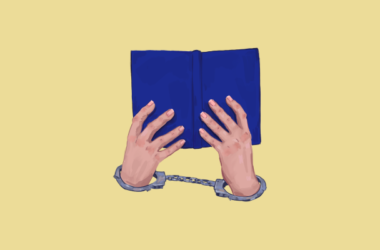
On the other hand, I also find it totally unfair when women wearing a niqab are thought of as oppressed or pictured as locked in prisons, like the cartoon on CBC News two weeks ago. All the people I have met wearing a niqab are highly educated people. It was their own decision, initiating from deep faith, something they felt would bring them closer to God and Paradise. Nobody has the right to judge others except God because He is the only one who knows their intentions.

A few years ago, during a conference I attended in Turkey, I was invited to visit Fatih University. At the main gate of the university, the security officer informed me that I had to remove my veil as per the university regulations. I politely thanked the officer for the information and left. Life is always based on choices, compromises, and decisions. It was my own decision to wear the veil and my own decision not to remove it. My understanding is that rules and regulations have been created so that people abide by them. Allah says what can be translated into: “O believers, obey God, and obey the Messenger and those in authority among you. If you should quarrel on anything, refer it to God and the Messenger, if you believe in God and the Last Day; that is better and fairer in the issue.”

It is vital to define our comfort zone within the laws that govern the community in which we live together with the values and moral codes we bring along as part of our personality and heritage. With reasonable compromises, we can accommodate each other. This is how we can co-exist with respect and harmony. And this is my vision of both world peace and inner peace.

Opinion

FRESH HELL: Losing your student ID

Being a student sucks sometimes. Crazy stress, daily intellectual calisthenics, and intense sleep deprivation are all part of the day-to-day routine. By now, you’re probably used to the stress – you may even enjoy it on some level. Still, many of you, like me, have likely been wishing for a lighter course load since you started learning fractions, or at least for a break from homework that didn’t coincide with getting a summer job.

Luckily, I got such a break this semester. Thanks to some transfer credits, I’ve had a light course load, which I thought would be paradise. I thought I’d have the free time to do everything I wished I had done in past school years. In some ways, the reduced course load was great. But not being a full-time student changed my life in a way I hadn’t anticipated. I lost a part of my identity and I had no idea how to fill the void.

Chances are that this will happen to you in a few months (or a few years). You’ll enter the real world where, at least for a little while, you’ll work during the day and come home at night to watch TV and make dinner. (Or, you’ll move back in with your parents and experience a weird Twilight Zone version of high school.) It’ll be disconcerting, but a bit of aimlessness and confusion is warranted after 17 years of tightly regimented time.

Even if you have great plans for post-grad, organizing your life is difficult when you can no longer claim that you’re a student. Outside of school, no one forces you to think. I underestimated the power of an intellectual environment to make me want to read and engage with ideas that were not my own. Most people’s minds are occupied with their finances, their relationships, and their health. There isn’t a lot of room for McLuhan if you’re barely making ends meet, or if you’re focussed on becoming a CEO. The masses aren’t forced to think, because it doesn’t necessarily benefit them to do so. This is probably why the Twilight movies grossed more than just the combined allowances of all 11-year-old girls.

Not having to think about complicated ideas made me question the mundane with the alarming frequency of a Jewish grandmother. Things like whether buying organic dryer sheets was necessary, and whether it reflected on my character that I part my hair on the right. These inane questions were an attempt to fill the gaps in my self-conception. I am now the kind of person who buys organic dryer sheets. This articulation of values (however small) is the valuable product of less stress and more free time. It isn’t revelatory, but it’s an easy way to start rebuilding your identity.

Many people use their jobs to fill this identity gap, and for people in careers they enjoy, this seems logical. I am a doctor or I am a welder are very similar to I am a student. By this logic, the identities of people in jobs they dislike must be incredibly volatile, abjectly negative, or defined entirely by another aspect of their personality. I only worked 20 hours a week and was surprised by how soon and how frequently all three of those descriptions applied to my perception of my identity.

Obviously, there are preexisting parts of identity that remain once studenthood is gone – your ethnicity, your religious beliefs, even your sports affiliations probably won’t change once you leave school. But your identity will be scrambled. After over a decade of rigorously scheduled time in an intensely intellectual environment, the relatively free time of the real world is dumbfounding. On the upside, though, you’ll be able to address questions you may have neglected in the past (whether you buy organic or non-organic dryer sheets, for example), and it’s my optimistic suggestion that this leads to a happier and more cogent selfhood.

Read the latest issue

Read the latest issue