Latest News

Science & Technology

Black History Month Blood Drive calls attention to a more diverse blood supply

Every February, people across Canada participate in Black History Month events and festivities that celebrate the contributions and accomplishments of Black people in Canada.

“It is important to acknowledge the experiences and contributions of Black people, especially considering the reality of anti-Blackness in society. So having this small opportunity in the form of a month of celebration and honouring is the minimum of what we should be doing,” Shanice Yarde, McGill’s Equity Education Advisor specializing in Race and Cultural Diversity, said in an interview with The Tribune. 

Across the sciences, researchers celebrate Black History Month to consider more closely Black people’s contributions to new technologies and innovations.

“Black History Month is important because the world must know Africans’ stories, understand their struggles, their aspirations, and the most important factors that shaped their destiny,” Wendell Nii Laryea Adjetey, assistant professor of post-Reconstruction U.S. and African Diaspora history at McGill, said in an interview with The Tribune.

One of the significant Black History Month events that occurred this February was the 15th annual Montreal Black History Month Blood Drive. This event took place on Feb. 10 at the Comité d’Éducation aux Adultes in Montreal’s Little Burgundy neighbourhood. 

Co-organized by two non-profit organizations, Héma-Québec and the Black History Month Round Table, the event aimed to support people with sickle cell anemia, educate Black communities on the importance of donating blood, and encourage Black communities to donate compatible blood.

Sickle cell anemia is an inherited red blood cell disorder that affects hemoglobin—a protein that carries oxygen throughout the body. Patients with this disease require regular blood transfusions.

The disease disproportionately affects Black people and has been historically understudied. Statistics have shown that around one in 13 babies of African descent are born with sickle cell trait, meaning that the baby carries one copy of the sickle cell gene passed down from one parent along with a normal hemoglobin gene from the other parent.

“Healthy red blood cells are round, and they run through your [blood vessels]. When you have sickle cell anemia, your red blood cells are [crescent-shaped] instead of round,” Josée Larivée, a Héma-Québec spokesperson, said in an interview with The Tribune.

Due to the abnormal shape of red blood cells, these cells can get stuck and block blood flow when travelling through blood vessels. As a result, pain and complications such as infection, lung disease, and stroke may arise.

People with sickle cell anemia often require blood transfusions to remove abnormal red blood cells and replace them with healthy ones, thereby reducing the incidence of complications.

“We try to encourage blood donations from Black people, but blood has no colour. A white person can donate blood to a Black person as long as they have the same blood type,” Larivée explained. 

However, certain blood types are unique to specific racial and ethnic groups. Although blood types fall into four major groups—A, B, AB, and O, some patients require an even closer match than the main blood types. 

Individuals who receive frequent blood transfusions, such as those with sickle cell anemia, need to receive the most compatible blood possible. Therefore, a diverse blood supply is vital to ensuring patients of all ethnicities receive the blood they need when they need it.

Unfortunately, Black communities donate blood at substantially lower rates than white communities. The reasons for this phenomenon are multifactorial, one of which is systemic racism

During the 80s and 90s, Canada and Quebec blamed African and Haitian communities for the presence of HIV and AIDS in Canada, claiming they brought it in by donating blood. Those who were born in certain African countries were banned from donating blood until 2016. 

“Black History Month is an occasion to open the conversation with people from the Black community because we need to enrich our blood supply in Quebec. Our blood supply has to reflect who we are in Quebec,” Larivée said. 

Science & Technology

Type 2 diabetes: A cellular miscommunication issue?

On Feb. 22, the Research Institute of the McGill University Health Centre (RI-MUHC) presented a lecture from members of the RI-MUHC community, as part of their ongoing Distinguished Professors Lecture Series. This month’s distinguished professor was Guy Rutter, a professor of Medicine at the University of Montreal and researcher specializing in type 2 diabetes, a disease that affects more than 10 per cent of the global adult population.

For people with diabetes, their body is unable to properly metabolize glucose, a type of sugar. 

After eating or drinking carbohydrates—a nutrient found in sugary or starchy foods—beta cells in the pancreas sense an increase of glucose in the bloodstream. In response, they release a hormone called insulin. Insulin allows cells to uptake and breakdown glucose, thereby lowering blood sugar levels. 

“It’s either the destruction or the failure of [beta] cells to respond appropriately to an elevation of blood glucose which underlies all forms of diabetes mellitus,” Rutter explained in the lecture. 

The impacts of unmanaged diabetes are serious. An insufficient insulin response underlies chronic high blood glucose, which can damage small blood vessels, causing nerve damage and kidney disease.   

In type 1 diabetes, beta cells are destroyed in an auto-immune reaction that typically begins in childhood. In type 2 diabetes, however, beta cell mass is not strongly reduced. Instead, a complex interaction between environmental factors and genetic predispositions to the disease hinder insulin release. 

Rutter’s research centres on the islets of Langerhans, clusters of cells found in the pancreas that release metabolic hormones—including insulin—into the bloodstream. Beta cells are one variety of cell found in these islets.

Recent research shows that beta cells function as fuel sensors, continually monitoring and responding to their own energy levels. The more glucose present in the blood, the more fuel in the form of ATP molecules will be produced in the beta cell. 

“[A high ATP level] is essentially used as a signal,” Rutter said. This signal opens voltage-sensitive calcium channels, flooding calcium into the beta cell. This influx of calcium is what triggers the release of insulin

Rutter and his team identified deficiencies in various steps of this process.

“The transporter [protein], which will allow glucose into the [beta] cell is more weakly expressed,” Rutter said. In addition, certain proteins which are absent in the mature beta cell remain present, disrupting normal cellular processes. 

“So you have a cell which is becoming much less specialized for ATP synthesis and detection and becoming much more run-of-the-mill,” Rutter added. 

Rutter also investigated newly described differences in the way beta cells communicate with each other. 

“Why do we have pancreatic islets? Why are they always about the same size—about 1000 cells give or take? And that’s the same whether you’re a mouse or a horse or a blue whale,” Rutter wondered. “There’s something special about the size, and there’s something special, perhaps, around the interactions between cells.” 

Rutter and his colleagues have identified leader, hub, and follower beta cells. When an islet encounters glucose, a wave of insulin is released. Leader cells start this wave, hub cells propagate it, and follower cells follow suit. 

By precisely destroying leader cells, Rutter stopped islets from producing insulin responses, even if a majority of beta cells were left undisturbed. 

Islet connectivity is also diminished in type 2 diabetes: Diabetic mice showed a loss of coordinated islet dynamics which was largely restored after they underwent vertical sleeve gastrectomy, a weight loss procedure. 

“[In type 2 diabetes], you don’t lose many beta cells—no more than 25 per cent. [But] if you’re losing a particularly important 25 per cent, that may have consequences for the overall secretion of insulin,” Rutter said. 

Currently, treatment of type 2 diabetes involves lifestyle changes along with medications and continual blood glucose monitoring.

“But none of these [medications] address the progressive loss of the function of the entire cell,” Rutter said. “If we can understand [genetic] variants […] we may have alternative new ways to personalize new drugs.”

Science & Technology

Black joy: A key to Black maternal health and well-being

On Feb. 21, McGill’s Equity, Diversity, Inclusion and Anti-Racism Standing Committee (EDIAR-SC) and the Department of Global and Public Health co-organized an engaging Black History Month event titled “Joy, Liberation, and Vitality in Black Maternal Health.” 

This event was led by Ijeoma Nnodim Opara, a prominent Detroit-based physician and global public health expert. Recognized for her impactful work during the COVID-19 pandemic, she founded Opara Equity and Justice Labs and co-chairs the End Race-Based Medicine Taskforce

Beyond her medical roles, Opara is a proud mother, dancer, and advocate for joy, justice, and liberation for Black communities worldwide.

Opara started the talk with a song titled “Peace Like a River.” This song belongs to a genre of music called African American spirituals, which enslaved African people created in North America between 1619 and 1860.

“African American spirituals contained our stories, our pain, oppression, suffering, grief, and trauma,” Opara said. “They also contained our resistance, protest, faith, hope, love, and joy.” 

To exemplify the trauma and suffering Black women have undergone, Opara delved into the health disparities among pregnant Black women.

“It is no secret that the United States is a deadly place to be a pregnant women. Of all high-income countries, the United States has the worst statistics in maternal and infant health,” Opara said. “Black women are three to four times more likely to die from pregnancy-related complications than white women, regardless of income and education levels. In some states like New York, the numbers are up to 12 times.”

Black women are also disproportionately affected by maternal morbidity—unexpected outcomes of labour and delivery—such as high blood pressure and anxiety, which can result in significant short- or long-term consequences to their health and well-being.

“Black women are set to experience higher rates of severe maternal physical and mental morbidity due to inadequate prenatal and postpartum care,” Opara said.

Although Black women deserve to receive high-quality, culturally centered, and respectful care that meets their physical, emotional, and social needs, their health has long been compromised by systemic racism and implicit bias among healthcare professionals. 

A large majority of Black women report having had negative experiences with health care providers. They are twice as likely as white women to report that a healthcare provider ignored them or refused a request for help in a reasonable amount of time. The mistreatment and disrespect Black women have persistently encountered, in turn, have fueled a deep mistrust of healthcare institutions and undermined their relationship with maternity care.

Subsequently, Opara moved on to talking about the reproductive justice movement, which is more expansive, intersectional, holistic, and less individualistic compared with the reproductive rights movement. This movement was created by a collective of Black women to posit reproductive justice as a human right that analyzes power systems, centres those who are the most marginalized, and addresses intersecting forms of oppression.

“This movement fights for the right to have a child, the right to not have a child, and the right to parent a child,” Opara said. “It also fights for the necessary enabling conditions to realize these rights.”

Due to Black women’s racist and traumatic experiences, Opara also emphasized spiritual nourishment, also known as Black joy, to fight against the negative stress. 

“Black joy is how we love ourselves and each other. Our joy enables us to ground ourselves in the ever ongoing history, grapple with the challenging present, and access a future that celebrates our continued existence, thriving, and abundance,” Opara said. “Joy is an act of resistance. It is the choice we make every day.”

Black joy is a way of resting the body, mind, and spirit in response to devastating and life-altering experiences. It is believed to be one of the keys to Black maternal health and well-being.

To holistically improve Black maternal health, practicing Black joy must be present alongside policy changes to address the social factors impacting Black women’s health, particularly racism, income, access to health services, and education.

Student Life, Student of the Week

Student of the Week: Azure Dumas Pilon

Between classes, extracurriculars, and internships, third-year law student Azure Dumas Pilon’s schedule is jam-packed. However, she has found solace in her busyness, along with other students such as Thomas Roussel, BCL/JD ‘23, Zakaria El-Hannach, U3 Engineering, and Kamil Chaoui, L2, as a member of McGill’s Francophone debate club

Dumas Pilon’s previous debating experience in CEGEP at Brébeuf’s debate club pushed her to get involved. After becoming a member of the club in 2021, she soon became aware of its unclear structure.

“We [Dumas Pilon and Roussel] gravitated towards the club de débat francophone at McGill to continue this passion,” Dumas Pilon explained in an interview with The Tribune. “The club existed, but unofficially and it was very nebulous. It was confusing. Who ran the club? What was going on? […] It was really disorganized.”

Interested in the organization’s potential, Dumas Pilon and her friends worked to remodel its structure and make it an official club. The club, which currently is an interim Students’ Society of McGill University (SSMU) club, hopes to gain full status and benefit from the accompanying privileges. With the support of the Faculty of Law and alumni, the club has twice hosted its own competition, the Coupe Laurier, the latest of which was held in the offices of Dentons law firm. 

The club plays an important role in McGill’s extracurricular environment, offering a place where both experienced and novice debaters and native and non-native French speakers can meet and practice debating. To that end, the club partners with other francophone initiatives on campus, such as Eloquentia Montréal

“We try to be inclusive, and I think that having a francophone space to do that is also very beneficial not only to McGill’s francophone community because it gives us a place to meet [….] It’s also a place where we have […] English-speaking debaters who will come to practice with us to improve their French, or English-speaking students who want to learn French,” Dumas Pilon explained. “After our practices, we go for a drink, or we have wine and cheese evenings, we have Christmas evenings where we make little gingerbread houses and have fun together [….] It’s really a great opportunity to learn French, to practice your French, or even just to exchange with people who have a similar background or a similar culture to [one] another.”

As part of the Ligue de débat universitaire et collégiale (LiDUC), the club also brings participants across different universities and CEGEPs together around a common passion. This exposure helps members foster a community and establish contacts across the province. As this appreciation for debate transcends disciplinary boundaries, Dumas Pilon mentioned her connections with students in medicine at the Université de Laval, or in law at the Université du Québec à Montréal, among others.

“These contacts can also be beneficial to my professional network. And it’s people you know who have something in common with you. So I think there are all kinds of people, many advantages to the club, then it depends how you want to interact with the club,” Dumas Pilon said. 

Despite her busy schedule, Dumas Pilon manages to remain grounded by balancing out her commitments. 

“I’m a big believer in balancing your academic, extracurricular, professional, and personal lives. And if you don’t take time in your personal life, all the other spheres of your life are going to be unbalanced and you’re not going to be able to perform as you should,” Dumas Pilon reflected. 

This introspection also pushed the law student to consider what motivates her interest in law. Volunteering at McGill’s Legal Information Clinic and giving back to the community are crucial aspects of her goals. 

“It’s about giving back to the community with the privilege I have. If I didn’t do that, I wouldn’t feel good about my studies,” she said. “I wouldn’t feel good on a daily basis because I’d feel like I was only benefiting from my studies for myself. So for me, it was a personal realization to work on. But what’s important to me? Where am I going to put my time?” 

*Interviews were translated from French by the author.

McGill, News, Private

AMUSE condemns McGill’s decision to abolish Floor Fellow position as of Fall 2024 semester

On Feb. 15, McGill called Floor Fellows to a Zoom meeting during which the university informed them that the Floor Fellow position was going to be abolished, effective next semester. While McGill claims that the decision was made with the best interest of students in mind, the union that represents Floor Fellows—the Association of McGill University Support Employees (AMUSE)—has spoken out against McGill’s decision to remove the position, arguing that Floor Fellows serve a critical and irreplaceable role at the university.

McGill’s 65 Floor Fellows are upper-year students who serve as a live-in support system for first-year students living in McGill’s residences. Graeme Scott, Vice-President Floor Fellows for AMUSE, told The Tribune that Floor Fellows are trained to help students navigate acclimating to university, as well as a variety of difficulties and emergencies that students may face, such as recognizing and responding to self-harm signs and mental illness, administering naloxone, and knowing how to recognize signs of overdose and intoxication. 

“Beyond that, we’re also trained in […] supporting students who are racialized, supporting students who are dealing with any manner of discrimination or difficulty living in this residence system,” Scott said.

Scott also explained that Floor Fellows help first-year students navigate McGill’s and Quebec’s resources and systems. They check in with their residents at least every two weeks, either by conversation or text, to make sure they are doing well and feel supported.

In a statement to The Tribune, McGill Media Relations Officer Frédérique Mazerolle explained that McGill came to the decision to get rid of the Floor Fellow position after conducting a “departmental review” of services provided by Student Housing and Hospitality Services (SHHS). Mazerolle went on to state that the university will be increasing the number of Residence Life Facilitators—a position that is also held by students but is not live-in—to compensate for the lack of Floor Fellows. Residence Life Facilitators are currently responsible for organizing events and supporting residence councils, among other duties. Finally, she shared that security will be “enhanced […] with additional roaming patrols during the night and weekend hours.”

Scott stressed, however, that the peer support role Floor Fellows play cannot be filled by increased security, especially when it comes to situations where students may be breaking certain building rules or regulations.

“Floor Fellows, approaching that situation as peers, actually have a lot of very constructive ways to go about dealing with those situations that are unfortunately, not available to protection patrollers or security, who are not peers and who do not live in [residences],” Scott said. “That’s not to denigrate those services, but it’s just to do with the nature of our position.”

The end of the Floor Fellow position will not only impact students living in residence, but also those who rely on being a Floor Fellow as a way to afford university. As part of the job, Floor Fellows are provided lodging in residences and a meal plan.

“I have multiple friends who are probably going to have to go into debt to pursue their degree now,” AMUSE President Harlan Hutt said. “Not to mention, because of the timing of this announcement, they’re probably going to have to take on debt in terms of their housing, because a lot of the housing […] that’s available [now] is going to be on the more expensive end, because a lot of the cheaper […] housing has already been scooped up.”

Scott explained that AMUSE has received testimonies from many current and former McGill students in the week following the announcement.

“People saying, ‘My Floor Fellow stopped me from dropping out,’ ‘My Floor Fellow provided this tremendous difference in my life.’ And in some cases, people saying, ‘My Floor Fellow’s actions saved my life or a friend’s life,’” Scott said.

Sam* is one of the students who has been profoundly impacted by their experience with their Floor Fellow.

“I’ve played the violin almost my entire life and brought my violin with me here, and [my Floor Fellow] happened to also be a violin player,” they detailed. “She encouraged me to audition for student orchestras [….] On top of that, when [it was] time for me to choose my major program […], [she was] the one who suggested to me the physiology and mathematics program which I am now part of, after listening to my interest area of math and biomedical sciences. In my honest opinion, I don’t think I would be where I am in my undergraduate journey without [my Floor Fellow].”

*Sam’s name has been changed to preserve their confidentiality.

McGill, News

RadLaw and LS4PM panel tackles global solidarity across Palestine, Sudan, and Congo

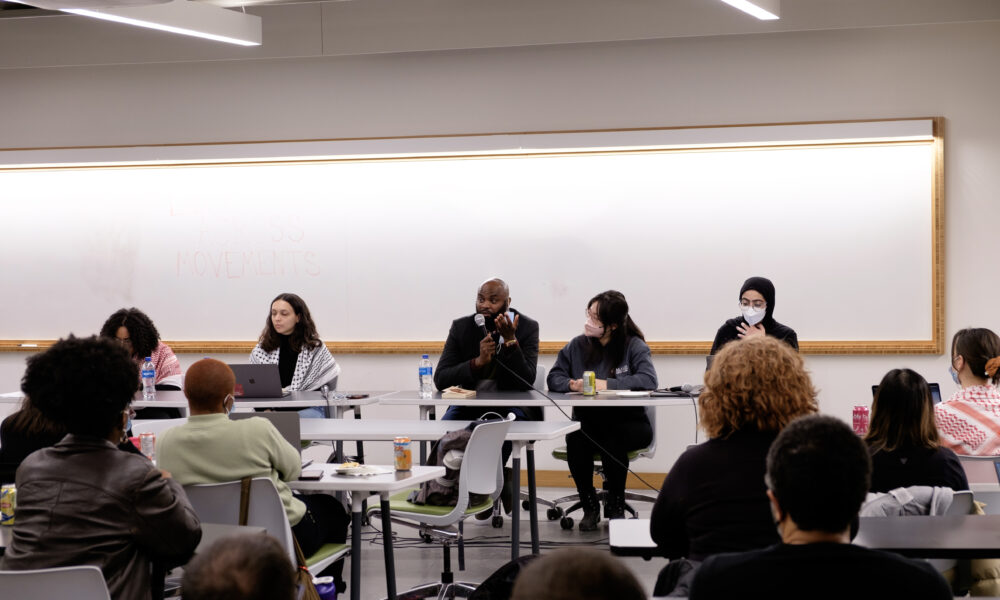
RadLaw McGill and Law Students for Palestine at McGill (LS4PM) hosted a community panel called “Liberation Across Movements: Palestine, Sudan, and Congo” on the evening of Feb. 24 in the New Chancellor Day Hall at the McGill Faculty of Law. The event rose out of a recognition of the need for solidarity amid the ongoing atrocities unfolding in Palestine, Sudan, and the Democratic Republic of the Congo (DRC).

The bilingual event featured three community speakers who did teach-ins on each respective conflict, followed by a discussion and audience question period. 

RadLaw and LS4PM member Fatima—a third-year Law student and first-generation Canadian from South Lebanon whose ancestors are from occupied Palestine—facilitated the event. It featured Duha Elmardi, a Sudanese organizer from the volunteer-based Sudan Solidarity Collective, Reem Said, one of the founding organizers of Montreal’s chapter of the Palestinian Youth Movement, and Patrick Mbeko, a Canadian geopolitical analyst of Congolese origin and author of many works specializing in Central Africa. 

The event began around 6 p.m. with a land acknowledgment by Fatima, who highlighted the importance of solidarity with Indigenous resistance and the role of pervasive anti-Blackness. 

“Anti-Blackness is a global issue with regards to systematic erasure of Black bodies, and the valuation of who’s deemed worthy of sympathy,” Fatima said.

Fatima encouraged the audience to engage with Quid Novi, the student-led journal at McGill’s Law School, where Black law students recently made a statement on the interconnectedness of Black and Palestinian liberation struggles. 

Next, each speaker provided the most critical context or background of their respective conflict. 

Mbeko stated that the spillover of the conflict in neighbouring Rwanda in 1994 led to the first and second Congo wars in 1996 and 2003, respectively, resulting in the death of over six million people. He noted that while this conflict continues, Western powers exploit the mineral-rich eastern region of the DRC.

“It reminds us what is happening today in Palestine. Where they say, we want a humanitarian pause but refuse a permanent ceasefire while people are being murdered. It’s the same logic that is being applied to the DRC today,” Mbeko said.

Following Mbeke, Said spoke, situating the ongoing atrocities in Palestine within the larger historical conditions of the region and highlighting the role of geopolitical interests that have led to the ongoing siege beginning Oct. 7. 

“We must understand Palestine through a materialist framework,” Said said. “That means that the genocide that we’re witnessing today is happening because of historical struggles over land and resources, and this is related to imperialist interests, and geopolitical goals in the region.”

Then, Elmardi provided an overview of the events and conditions leading up to the ongoing war in Sudan when fighting broke out between the Rapid Support Forces (RSF) and Sudanese Armed Forces (SAF) in the capital, Khartoum. Elmardi noted that the war began on April 15, 2023, but is rooted in the National Islamic Front’s coup in 1989, as well as colonial legacies from British rule. Khartoum remains an active warzone, there is a media blackout and a lack of domestic accountability

“There was a lot of coverage because they were evacuating all of the diplomats, NGO workers, and foreigners in the country,” Elmardi said. “As soon as the evacuations ended it’s no longer mainstream and very difficult to find news about Sudan.” 

The discussion then turned to a question-and-answer period. All three speakers highlighted how the conditions under which genocide and colonialism in their respective countries have unfolded should act as a guide for solidarity. 

“The imperialists are united, and so the people that are living under imperialism must unite as well,” Said said. 

Mbeko underscored the level of humanity required in maintaining solidarity across movements, and in determining how we articulate and defend ourselves. 

“Everyone needs to understand what is happening. I said it earlier, but today, I feel Palestinian, I feel Sudanese, I feel Quebecois, I feel whatever you want. I am a citizen of the world and I refuse the categorizations that the media presents us, because they are a part of the same imperialist system.”

*Mbeko’s quotes have been translated from French by the author.

This piece was updated at 4:57 p.m. on Feb. 27.

McGill, News

McGill sues Quebec over tuition hikes, cites discrimination and lack of consultation

On the morning of Feb. 23, McGill announced that the university has filed a lawsuit against the Quebec government over tuition hikes. These mean that new out-of-province students attending anglophone universities in Quebec will pay roughly 30 per cent more than in previous years. This announcement came alongside the news that out-of-province applications to McGill dropped by over 20 per cent this year. Concordia, which also saw a significant decline in applications, filed a separate suit over the tuition hikes the same day. 

In the suit, the university claims that the tuition hikes are discriminatory, as they target anglophone students; that they constitute an overreach on behalf of Quebec’s Minister of Higher Education, Pascale Déry; that they were instituted without proper consultation with universities; that they are “a disguised and illegal tax” created without the permission of the National Assembly; and, finally, that as an obstacle to accessing education across provinces, they create an unconstitutional barrier to interprovincial trade.

In an email to The Tribune, Media Relations Officer Frédérique Mazerolle pointed out that the university’s concerns about the tuition hikes have been echoed by the committee in charge of advising the Minister of Higher Education and the Minister of Education on issues surrounding the accessibility of education.

“The government’s own Comité consultatif sur l’accessibilité financière aux études, composed of representatives of government and French-language universities and [CEGEPs], who said that the decision risks compromising access to a quality education and depriving Quebec society of potential talent. Therefore, the Committee ‘strongly urges the government to reconsider this decision.’”

Gregory Kelley, a member of the Quebec National Assembly who represents the Jacques-Cartier electoral district, which includes Macdonald Campus, spoke with The Tribune about the implications of the tuition hikes and of McGill’s lawsuit. Kelley, who is a McGill graduate, celebrated the university’s decision to “fight against something that they see as being unjust,” but wishes it had not come to this.

“I think that it’s […] extremely frustrating to see that McGill and Concordia have to go to the courts, because this can easily be avoided by just not having this policy in place at all,” Kelley said. “But it is a little bit of the style of the current government. If we look at Bill 40, the challenge to the school boards thing, again, there was no need to have a court battle over the constitutional rights, the English-speaking community to manage and control its own school boards.”

Kelley also spoke to the lack of consultations carried out prior to the tuition hikes being announced.

“Some of the principals of our institutions have learned about this announcement through a tweet,” Kelley said. “From what I understand, the consultations that were being done beforehand were more directed towards developing a francisation plan, which McGill and Concordia and Bishop’s were all about working on. And then all of a sudden they hear this different announcement come from the CAQ [Coalition Avenir Québec] government that took them completely off guard [….] It just so goes again that the CAQ was sort of making things up on the back of a napkin.”

Students’ Society of McGill University (SSMU) Vice-President External Liam Gaither believes that the university’s decision to sue was a predictable one. He emphasized, however, that he thinks the decision is less about its students and more about protecting its own financial viability. 

“I think that it [the lawsuit] will certainly put the question to students and whether they want to participate in activist mobilizing against tuition hikes, and my response to that is, I think both things have to happen in tandem,” Gaither said to The Tribune. “We can’t just let the university handle this on our behalf, because the university actually does not represent us; they represent themselves [….] This is a move to protect the university’s bottom line, more so than the affordability of education for students in Quebec.”

Gaither pointed out that the student body has been grossly overlooked throughout negotiations over the tuition hikes. He urges the creation of a “roundtable-style consultative body” as discussions continue. 

McGill, News

McGill sues Quebec over tuition hikes, cites discrimination and lack of consultation

On the morning of Feb. 23, McGill announced that the university has filed a lawsuit against the Quebec government over tuition hikes. These mean that new out-of-province students attending anglophone universities in Quebec will pay roughly 30 per cent more than in previous years. This announcement came alongside the news that out-of-province applications to McGill dropped by over 20 per cent this year. Concordia, which also saw a significant decline in applications, filed a separate suit over the tuition hikes the same day. 

In the suit, the university claims that the tuition hikes are discriminatory, as they target anglophone students; that they constitute an overreach on behalf of Quebec’s Minister of Higher Education, Pascale Déry; that they were instituted without proper consultation with universities; that they are “a disguised and illegal tax” created without the permission of the National Assembly; and, finally, that as an obstacle to accessing education across provinces, they create an unconstitutional barrier to interprovincial trade.

In an email to The Tribune, Media Relations Officer Frédérique Mazerolle pointed out that the university’s concerns about the tuition hikes have been echoed by the committee in charge of advising the Minister of Higher Education and the Minister of Education on issues surrounding the accessibility of education.

“The government’s own Comité consultatif sur l’accessibilité financière aux études, composed of representatives of government and French-language universities and [CEGEPs], who said that the decision risks compromising access to a quality education and depriving Quebec society of potential talent. Therefore, the Committee ‘strongly urges the government to reconsider this decision.’”

Gregory Kelley, a member of the Quebec National Assembly who represents the Jacques-Cartier electoral district, which includes Macdonald Campus, spoke with The Tribune about the implications of the tuition hikes and of McGill’s lawsuit. Kelley, who is a McGill graduate, celebrated the university’s decision to “fight against something that they see as being unjust,” but wishes it had not come to this.

“I think that it’s […] extremely frustrating to see that McGill and Concordia have to go to the courts, because this can easily be avoided by just not having this policy in place at all,” Kelley said. “But it is a little bit of the style of the current government. If we look at Bill 40, the challenge to the school boards thing, again, there was no need to have a court battle over the constitutional rights, the English-speaking community to manage and control its own school boards.”

Kelley also spoke to the lack of consultations carried out prior to the tuition hikes being announced.

“Some of the principals of our institutions have learned about this announcement through a tweet,” Kelley said. “From what I understand, the consultations that were being done beforehand were more directed towards developing a francisation plan, which McGill and Concordia and Bishop’s were all about working on. And then all of a sudden they hear this different announcement come from the CAQ [Coalition Avenir Québec] government that took them completely off guard [….] It just so goes again that the CAQ was sort of making things up on the back of a napkin.”

Students’ Society of McGill University (SSMU) Vice-President External Liam Gaither believes that the university’s decision to sue was a predictable one. He emphasized, however, that he thinks the decision is less about its students and more about protecting its own financial viability. 

“I think that it [the lawsuit] will certainly put the question to students and whether they want to participate in activist mobilizing against tuition hikes, and my response to that is, I think both things have to happen in tandem,” Gaither said to The Tribune. “We can’t just let the university handle this on our behalf, because the university actually does not represent us; they represent themselves [….] This is a move to protect the university’s bottom line, more so than the affordability of education for students in Quebec.”

Gaither pointed out that the student body has been grossly overlooked throughout negotiations over the tuition hikes. He urges the creation of a “roundtable-style consultative body” as discussions continue. 

Hockey, Sports

Black Ice: The absented presence of Black Canadians in hockey

Who invented the slapshot? If you answered Bernard Geoffrion of the Montreal Canadiens in the 1950s, you are mistaken. The correct answer is Eddie Martin of the Halifax Eureka in 1906. Who was the first goalie to drop to a knee in order to stop a puck? If you thought it was Ottawa Sentator’s Clint Benedict you are again, incorrect. It was actually Henry Franklin. Now, as you might be tempted to open another tab on your computer to Google “What league were the Halifax Eureka in” or “Henry Franklin hockey,” pick up a copy of Black Ice: The Lost History of the Colored Hockey League of the Maritimes, 1895-1925 by Darril Fosty and George Fosty—it will likely save you some time. 

The Fosty brothers’ 2007 book delves into the history of the Coloured Hockey League of the Maritimes (CHL). Founded in Halifax, Nova Scotia, the league was organized by Black Baptists and Black intellectuals in 1895 and became a driving force in the push for equality for Black Canadians. However, like much of Black history in Canada, the CHL is purposefully erased from Canadian historical memory to serve white supremacy. 

“As [many] Black Canadian scholars argue, Black people are an absented presence in Canada,” Debra Thompson, a professor in McGill’s Department of Political Science, explained. “Black people are absented or purposefully erased from Canadian history, but also present in that so much of Canadian history is about presenting Canada as being the Promised Land.” 

Vinay Virmani––a producer working with UNINTERRUPTED Canada––embarked on Black Ice, the documentary, drawing on the Fosty brothers’ book. Charles Officer, a Canadian documentary filmmaker who passed away earlier this year, reached out to Hubert Davis to suggest he take on the project. Davis, an alumni of the McGill varsity basketball team, did not have a background in hockey, however, he viewed directing Black Ice as a “Trojan horse.” Davis hoped to use hockey as a catalyst to explore the Black experience in Canada, by delving into the history of the CHL and its descendants, alongside gathering testimonies from both current and former hockey players in Canada. 

The documentary focuses on the CHL and the Black community that lived in Africville, where one of the teams––the Africville Seasides––were based, until the city of Halifax forcibly relocated its residents and destroyed the community’s infrastructure in the 1960s.  

“[The people who lived there] have such love for this place and this idea of community, […] I feel like that was something that kind of got lost in the Black experience in Canada,” Davis told The Tribune. “When things dispersed, like when people had to leave for economic reasons or systemic racism […] I think they lost some of that identity of who, or what, community builds […] [W]hen you look at a lot of other cultures that have been able to keep that intact, they still have this sense of belonging and place and I think we, unfortunately, lost that in Canada.”  

The documentary highlights how white Canadian media undermined Black hockey culture and the quality of play in the CHL to maintain white dominance of the sport, despite the CHL’s success. The CHL, achieving great popularity in the late 1800s and early 1900s, consistently attracted more than 100 fans to its games and generated sufficient gate revenue to compensate its players. Hoping to gain access to part of the revenue, white teams in Halifax requested to play exhibition games against CHL teams, breaking the colour barrier. However, cartoons in the Sydney Post portrayed Black players as violent, unsportsmanlike, and unskilled, leading to a diminished interest among white fans in paying to see them play. 

Understanding the history of systemic racism and its active role in belittling the skill of Black hockey players spoke to Davis’ goal of fleshing out the historical context in which racist incidents occur today. 

“It’s really hard to understand a problem without having a bigger context,” explained Davis. “[When] you [go] back and look at the history of hockey, [you see the] Black experience has always been tied to hockey [and] you realize how ridiculous the whole thing is. How absurd it is [to claim] Black people don’t belong in hockey when they are some of the pioneers of the sport.”

Yet, as highlighted through testimony from players such as Blake Bolden and Akim Aliu, systemically racist perceptions of Black players as being “uncoachable” continue to strip Black players of opportunities to excel. 

“When I started reading the stories about some of the current-day players, what was going on with them, I was still a bit taken aback,” Davis continued. “I was a little bit shocked at just how brazen some of the incidents were and how, and [….] it seemed like it was kind of glossed over a lot of times.” 

While on an individual-team basis, the Montreal Canadiens and the Toronto Maple Leafs demonstrated support for the documentary, Black Ice has largely been neglected by the mainstream professional hockey community. Davis explained in taking on the project, some hockey insiders warned him that the documentary would likely not go over well with the National Hockey League (NHL). 

“As a documentary filmmaker, to make something that is specifically about a sport and then be told what you should or shouldn’t say is always a very curious thing to me,” Davis said. 

However, given the NHL’s unwillingness to collaborate with the Hockey Diversity Alliance––an organization that many of the players in the film are members of––on a number of fronts, their lack of acknowledgment of the documentary itself is unsurprising. 

While the sport is moving in a better direction in terms of inclusivity, Thompson explained that practices of predatory inclusion are commonplace in hockey. The term predatory inclusion, as popularized by Keeanga-Yamahtta Taylor in her book Race for Profit, is used to describe instances when marginalized communities are included in spaces they were historically excluded from on exploitative and predatory terms. While Taylor uses the term to describe the way in which Black people were included into the real estate market after explicitly racist housing policies came to an end, Thompson explored how it can be applied to hockey. 

“In the film, I use predatory inclusion to talk about the ways that Black people are so frequently included in these institutions, often for-profit […] [in ways] that are ultimately quite harmful,” Thompson said. “Nobody ever asks what happens after we are included, what are our lives like? What violence do we face? What if being included is itself violent, dangerous, predatory, exploitative?” 

Many point to the NHL’s “Hockey Is For Everyone” campaign as an example of the hypocritical nature of rhetorics of inclusion in hockey. However, Thompson believes that initiatives like these can be reconceptualized in a more positive light. 

“In another interpretation of [Hockey Is For Everyone], it can be seen as a normative assertion,” Thompson said. “In order to make that normative assertion, more genuine and less hypocritical, what we want to see from leagues from institutions for organizations is a genuine, concerted effort to ensure that teams are not racist, that these environments are not harmful for Black folks and other people of colour.” 

For Thompson, this more hopeful conception allows for a symbiotic relationship between initiatives at the professional level and their realized impact at the youth level. 

“We see youth leagues that are not toxic, and that are promoting the same kind of egalitarian values that the leagues are promoting at the other end. That’s kind of the hopeful thing,” Thompson said. “Things can be hypocritical and hopeful at the same time.” 

To draw out this connection, the documentary spotlights Seaside Hockey, a local youth hockey program in Toronto named after the Africville Seasides. The program was co-founded by Kirk Brooks, his son and current Arizona Coyotes skill development coach Nathaniel Brooks, and former NHL player, Anthony Stewart. In the documentary, Kirk discusses his relationship to hockey and the mission of Seaside. 

“What I loved about [Kirk] is that he was like this representation that the Black experience in hockey has always been present,” Davis explained. “He grew up playing hockey, it’s part of his life and he had always known about the Coloured Hockey League so none of these stories were a surprise to him [….] Going back to Herb Carnegie and Willie O’Ree and all these [players], there’s always actually been a presence. Not all of them are well known or famous, but a lot of them have been behind the scenes and I think Kirk represented that.”

For Davis, gaining insight into those with generational knowledge about the Coloured Hockey League, including interviewing descendants of former players, provided him with a “certain kind of pride.” Despite tackling harrowing stories of racism told by a number of former and current players including Saroya Tinker, Wayne Simmonds, Willie O’Ree, and Matt Dumba, Black Ice illustrates this very pride felt by many players by putting their love for hockey on display. 

“I didn’t play hockey and by the end of the documentary, I kind of wish that I had,” reflected Thompson. “Black Ice really captures the complexity of Black livingness because in a world that focuses so much on Black death, and destruction and domination, to emphasize that like we are here, we’re still here, we’re still doing this and there are beautiful things that remain about this incredible game.” 

Black Ice will be screened at Taverne 1909 near the Bell Centre on Feb. 20 at 6:00 p.m.. Tickets can be reserved online free of charge.

Read the latest issue

Read the latest issue