Latest News

a, Football, Sports

Point counterpoint: Manning vs. Brady

This weekend’s AFC Championship game pitted the Denver Broncos against the New England Patriots. The two squads are led by NFL icons Peyton Manning and Tom Brady, respectively. Although the Broncos defeated the Patriots and are headed to the Super Bowl, the question of who will leave a stronger legacy is still up for debate. This week, two contributors weigh in on the debate between the two future Hall-of-Famers.


Manning

Though it needs no reminder, the current season Peyton Manning is coming off of has been nothing short of astonishing considering his advanced age and his supposed fragility, having undergone four neck surgeries. The four-time (soon to be five-time) MVP anchored what was statistically the greatest offence in the history of the NFL. The Broncos recorded a whopping 606 points which topped the amount put up by the Tom Brady and Randy Moss-led New England Patriots (589) that went undefeated in 2007. On top of that, Manning surpassed Drew Brees’ mark for most passing yards in a single season (5,477), and Tom Brady’s mark for most touchdown passes thrown in a single season (55). Manning also became one of only six players to throw seven touchdown passes in a single football game.

This season included, Manning now sits at 64,964 career passing yards and 491 career passing touchdowns. Presuming he sticks around the NFL for a few more seasons, it’s only a matter of time before he surpasses Brett Favre’s illustrious records.  Favre took 302 career games just to achieve those records. Manning is on the verge of breaking them with only 240 career games under his belt. It’s worth noting that the greatest passer rating Tom Brady ever recorded was 117.2 in the aforementioned undefeated season with superstar receiver Randy Moss.  Peyton Manning owns two of the five greatest passer ratings ever recorded in the NFL, one of which was higher than Brady’s best.

Of course, we could talk about Manning’s lack of Super Bowl wins and relatively mediocre post-season playoff record compared to that of Brady’s, but the reality is that football is a team sport, one in which the quarterback has to rely on his defence to come out on top and win the big one. Brady would probably be the first person to tell you that it takes help, and even a bit of luck to get the job done. Needless to say, he won three Super Bowls playing alongside elite defences and the golden foot of some guy by the name of Adam Vinatieri. Brady does have a significantly better head-to-head record, but that doesn’t change the fact that Manning has more fourth quarter comebacks, more game-winning drives, and has the more recent Super Bowl victory between the two. Brady is clutch, but he hasn’t quite delivered the goods when it’s mattered most, coming up short in five playoff games despite being favoured for the past 11 he’s played in.

While neither quarterbacks have performed their best on the big stage these last few years, the clock is slowly running out on both of their careers.  Without a doubt, Brady is spectacular in his own right, but with that being said, I’d be hard pressed to find a better all-around player under centre than Peyton Manning.

Dan Gilbert

Brady

When it’s all said and done, Tom Brady and Peyton Manning will likely go down as the two greatest quarterbacks to ever play in the NFL. The debate will never cease as to which of the two has the rightful claim to be deemed the greatest of all time; however, when it comes to a lasting legacy on the game of football, Brady’s is one that Manning will never be able to surpass.

Resorting to a numbers debate in this matter would be futile, with both quarterbacks tallying up staggering career statistics. While Manning will undoubtedly finish with higher totals in most categories, passing yards and touchdowns don’t determine legacy. Records are made to be broken, and it is only a matter of time before another quarterback throws for more touchdowns, or more yards in a season. Peyton Manning is arguably the greatest regular season quarterback of all time; but unfortunately for Manning’s legacy, the regular season isn’t what matters.

Ask any player, any coach, or any team owner, and they will tell you that their one and only goal is to win. As Herm Edwards once famously said, “You play to win the game!” Ultimately, the lasting legacy left by these two living legends will boil down to winning.

With three Super Bowl victories and five AFC Championships, Tom Brady’s legacy will go down as one of the—if not the single—greatest of all time. After all, when you are a die-hard fan of a team, you don’t remember the year when they went 13-3 in the regular season, but lost in the divisional round; you’ll remember the season when your team went to the biggest stage in sports and took home the Lombardi trophy. It’s that moment that lives on in your memory; it’s that moment that you’ll tell your kids about.

Throughout his career, Brady has time and time again performed better than Manning when it has mattered the most. With a .720 winning percentage in the playoffs compared to Manning’s .426, as well as a .775 regular season winning percentage  vs. Manning’s .696, Brady comes out on top.

For 14 years in the league, Brady has consistently led his team to championship games and Super Bowl appearances. With that being said, if you had to choose one quarterback to build a team around, or one quarterback to be the face of your franchise and lead the team to the promised land, Brady is your man.

As the 199th overall pick, Brady has defined his career as one of the most clutch performers in NFL history. While Brady’s numbers speak for themselves, his lasting legacy—the legacy that will overshadow that of Manning’s—is that of the greatest winner in all of football.

— Drew Allen 

Editors’ pick: Manning

Although Tom Brady has more Super Bowl titles under his belt, Peyton Manning’s continued dominance in the record books cannot be matched. The notion of Brady being unflappable when it matters most has waned. While both players will go down as two of the greatest quarterbacks in NFL history, it is Manning who will likely leave the greater legacy.

a, Arts & Entertainment, Music

Bruce Springsteen—High Hopes

Bruce Springsteen has spent his career using extraordinary elements to spice up the seemingly mundane. Be it through the illumination of small-town New Jersey life through deceptively sparse poetry, or the energizing of simplistic song structures with larger-than-life guitar riffs, Springsteen has often found a way to milk material to its maximum potential. On his latest release, High Hopes, he tries applying the same treatment to a group of unreleased songs with the aid of longtime Rage Against the Machine guitarist Tom Morello and some considerably ornate-sounding instrumentation—but the seasoned formula falls well short of yielding its past fruition.

One particularly egregious example is the new recording of “The Ghost of Tom Joad,” on which he combines the aesthetics of his stripped-down original with those of the manic Rage Against the Machine cover. Though the symbolism of Morello and Springsteen recording the song together lends the track a nicely sentimental touch, it’s too musically incongruous to retain the power of either version. Morello’s flashy guitar playing stands out uncomfortably against Springsteen’s typically raspy vocals, and the guitar solo ending the track verges on self-parody.

There’s quite a bit of material on here that stayed previously unreleased for good reason. The repetition throughout album closer “Dream Baby Dream” feels tedious almost immediately. The extraneous Shakespeare references on “Frankie Fell in Love” suggest a nervous high schooler struggling to use his book smarts to impress at a party. Though High Hopes has moments that work, such as when Springsteen sings accompanied only by the percussion and Morello’s heavily processed chords, they are too few and far between to make the album an enjoyable listen. Springsteen will need to try harder if he has ‘high hopes’ for recording relevant music again.

a, Arts & Entertainment, Music

The Pixies—EP-2

Last Monday The Pixies released their new album, EP-2, apparently as a second park to their album of September 2013, titled EP-1. This new release seems to complete a transition from the band’s old alternative rock style to true blue hard rock—their new sound is now well-developed, with many moods across four daring tracks. The band has musically grown a lot since their formation in Boston, 1986, and their irresistible energy carries them through yet another magnificent and unique album.

Instruments you will hear in this album include vibrant, gritty electric guitar (heavy on the feedback); on-point, fast-paced percussion; and glittering electric sounds. In EP-2, the band takes full advantage of their talented vocalist, Black Francis, to experiment with some scream-o elements in the first track. While the style of this album may be different for the Pixies, they once again summon their uninhibited energy,  for which their tried and true fans love them.

The trajectory of the album is strong right from the first track, “Blue Eyed Hexe,” which is clean with a pure hard rock sound. On the second track, the band retains the same vibrant energy, with more of a contemplative and curious tone that the Pixies often achieve through thoughtful lyrics and the distortion of sounds. On the third track, their passion reaches a plateau, curling and bouncing around a beautiful, unrequited love song called “Greens and Blues.” The album ends with a song called “Snakes” that is more reminiscent of their older music.

In short, this album is quite different from anything else the Pixies have written, but faithful fans and new recruits will love the old-time Pixie energy.

a, Opinion

The most wonderful time of the cinematic year

There is a buzzing excitement that accompanies otherwise regular movie outings during this time of year. The experience becomes fraught with glowing expectations, brought on by compulsive IMDb-monitoring, the constant bombardment of film posters, and the onset of awards season.

Just last week saw the announcement of the 2014 Oscar nominees, the same week during which the Golden Globes and the Critics’ Choice awards took place.

The excitement is accompanied by an uneasy trepidation for all of us who grow too easily attached to certain films or actors and take a certain loss or lack of nomination as a sign of great injustice. Such is the inevitable disappointment of the awards season.

Between the saddening absence of Woody Allen and the frustrating grand total of one non-white Best Actress winner, I try very hard throughout the year to pass the award shows off as trivial; subjective; wastes of time. As Allen is quoted as saying in the film “Woody Allen: A Documentary,” “I think what you get in awards is favoritism. I mean, people can say ‘my favourite movie was Annie Hall,’ but the implication is that it’s the best movie. And I don’t think that’s possible—I don’t think you can make that judgment.”

Allen’s movies, including Annie Hall, have won wide acclaim from viewers and shows, yet he appears adamant about refusing acceptance of any kind of award.

Despite the shortcomings of the various awards, with each new year, I find myself excited to watch the shows all over again, eager to try and predict the recipients of various accolades.

My excitement begins in the early months of fall, when the first batches of good movies begin to roll into  theaters. This excitement builds until the holiday season, which commonly sees the greatest number of “the good movies,”—films made with critical acclaim and awards in mind—in comparison to the largely critically underwhelming releases of the spring and summer.

I find the awards to serve many purposes: a second vacation from the burden of already knee-high readings assigned, a distraction from the bitter weather; an antidote to my homesickness for the West Coast.

But to be more honest, I love following the awards shows because they are the perfect entertaining conclusion to an entertaining year—a grand finale to months and sometimes years of dedication that go into making two hours of whatever heartbreaking, surreal, exciting, or sobering narrative ends up on our screens. The shows are potent in their glamour and exclusivity, both of which draw so many of us to observe and admire, as if we can imagine ourselves seated across from teasing hosts, handsome announcers, and celebrated entertainers. It’s a bright, grand end to the year. And although the Best Picture award may not accurately describe its recipient, its announcement is a satisfying conclusion to a long year of movie-going—and a fitting prelude of things to come.

a, Basketball, Behind the Bench, Sports

Standing up and speaking up

“Republicans buy shoes too.” Those words came from the mouth of one Michael Jeffrey Jordan, after he declined to endorse a black Democratic candidate for a North Carolina Senatorial election in 1990. More recently, Jordan’s one-time Chicago Bulls teammate Dennis Rodman made headlines following his third visit to North Korea to promote Basketball Diplomacy with Supreme Leader Kim Jong-un. Jordan refused to use his enormous cache as a popular athlete to take a political stance because he wanted to ensure greater sales of his sneakers. Rodman, who has unprecedented access and influence over Kim, did not wish to bring up the starvation or labour camps that exist in the authoritarian regime, citing his friendship with the ruler. In both cases the athletes erred. Despite the fact that both Jordan and Rodman have and undoubtedly should have the right to stay above the political fray, athletes have a platform to affect change and should use that ability to influence society for the better.

A common fear that arises with professional sports franchises is that athletes who choose to express their views will create distractions from the team and suffer a drop in performance by overtly speaking their mind. Chris Kluwe, a former NFL punter, alleged that he was released because of his activism—not from an inability to do his job which his former team, the Minnesota Vikings allege. Kluwe was not infringing upon any of his teammates or playing poorly. Rather, he was simply using the platform he had to bring about positive social change.

As the late Nelson Mandela once said, “sport has the power to change the world.” Then Springboks rugby captain François Pienaar showed the leadership to join with Mandela and unite a nation divided by a legacy of apartheid. Pienaar believed that athletes have a responsibility, and he utilized his influence without being a distraction. In some cases, words don’t have to be used. Following the 200m sprint final at the 1968 Olympic Games in Mexico City, John Carlos and Tommie Smith raised their arms in unison as a form of protest during the civil rights movements. The backlash was fierce for both, who were booed while leaving the podium, yet the impact they had with that simple gesture was to bring awareness to a very important and contentious issue at the time.

By virtue of their success and widespread coverage, athletes are given a gift. Simply put, when athletes talk, people listen. When they act, people watch and then follow. Yes, an athlete’s primary focus should be on honing their craft and attempting to achieve success on the field or on the court. But athletes are also role models to millions of children who grow up wishing to be just like their favourite player. Heck, they are even role models to adults who would do anything for their team. If professional athletes are able to raise awareness on topics or exert influence to better society should they not do so, and in turn, encourage the rest of us to speak our mind and fight for what’s better?

Dennis Rodman was entitled to his choice when he refused to bring up North Korea’s problems with its leader just as Carlos and Smith were entitled to theirs. Carlos and Smith had the courage to stand up and speak up, something that hopefully more athletes, given their gift, will do too.

a, Opinion

Water under the bridgegate

In our time of disillusionment with public figures, it can seem of no surprise when politicians put their personal interests ahead of the interests of the people that they are representing.

This is what happened in the so-called “bridgegate” scandal, when New Jersey Governor Chris Christie’s administration inconvenienced thousands of  commuters in order to exact revenge in a petty political squabble.

Similar issues were revealed in the ongoing Canadian Senate expenses scandal, which concerns the decision  by Mike Duffy and several other senators to claim  expenses for which they were not eligible. In the case of the Duffy expenses, the prime minister’s office has been dogged by questions over payments made  to Duffy equal to the amount in claimed expenses he was forced to pay back.

As with their counterparts in New Jersey, here, senators showed a complete disregard for their constituents’ interests in order to put money in their own pockets. However, the lack of accountability displayed by those involved in the Canadian senate expenses scandal, and the subsequent refusal to comment on their evident mistakes, represents not only an indifference towards the public, but also towards the public’s perception of their actions and towards the right of the press to make their indiscretions known.

In New Jersey, the scandal began with series of lane closures last year on the New Jersey approach to the George Washington Bridge. It is no surprise that such a vindictive act would attract immense attention from the media. Christie and his administration attempted to conceal their connection to the scandal; it was not until the press dug up incriminating emails, such as the infamous message sent by one of Christie’s aides, one of which stated, “Time for some traffic problems in Fort Lee,” that Christie and his aides were conclusively linked to the incident. The leading theory suggests that the staff orchestrated this traffic jam as retaliation against the mayor of Fort Lee (the city on the New Jersey side of the bridge) for withholding a political endorsement.

Similarly, on this side of the border, a senator claiming illegitimate expenses was bound to attract attention from the media and incur widespread uproar from the public.  However, despite ample proof, Stephen Harper and the senators involved in the scandal remained aloof and refused to accept responsibility for their wrongdoings.

In a CBC interview, Jonathan Kay of the National Post, who has spent significant time reporting both in the U.S. and in Canada, stated, “the degree to which public servants in the U.S. feel that they have a responsibility to answer questions of the press is staggering compared to in Canada.” Indeed, Stephen Harper has been harshly criticized for his refusal to answer questions posed by reporters on the topic of senate expenses.  If government officials embroiled in such scandals deny the media’s questions, how can we expect to hold them accountable?

Both scandals are indefensible breaches of political power. However, once the American politicians involved in the bridgegate incident were exposed, they were at least able to take some responsibility for their mistakes regardless of the questions that remain about Christie’s involvement. In Canada, considerations of the public’s right to information regarding its government are less respected, and Canadian officials casually deny the public information about government for no other reason than to protect their own political agendas. Christie, at least, had enough regard for his public image to answer reporters’ questions for several hours, and apologize for the scandal.

What Harper and other Canadian politicians fail to realize is that, by managing political upsets with a degree of maturity, and by assuming responsibility for their actions, mistakes are likely to be forgotten much more quickly. Attempts to conceal the truth and divert the public’s attention only heighten frustrations and drag out the duration of the scandal. Harper and the senators involved in the expense scandal should take note of Christie’s handling of the bridgegate incident and respect the requests of the press, so that they may be held accountable for their mistakes.

a, Arts & Entertainment, Film and TV

Falling in love with Her

Is it possible to fall deeply in love with your talking operating system? Spike Jonze makes us believe so.

In Jonze’s most recent film Her, broken-hearted writer Theodore Twombly (Joaquin Phoenix) lives an introverted life balancing between work, video games, and occasional dates since his wife Catherine (Rooney Mara) left him. He repeats this despondent and solitary routine, only invigorated by fortuitous encounters with his friend Amy (Amy Adams). Weary and unable to connect with anyone, he decides to take home a new talking operating system who calls herself Samantha (Scarlett Johansson). Charmed by the plot, the movie captivates in the same way that the operating system captivates Theodore.

Director Spike Jonze, famous for other wacky and eccentric projects, offers a love story unlike any other. The futuristic depiction of Los Angeles is conceivable—utopian-like and non-violent. This portrayal is rare in science-fiction movies, which is why it’s even more original. Indeed, the people are nicer, calmer; and the technology is so advanced that it eases life dramatically.  Phones read newspapers, classify mail, organize daily routines, and eventually fall in love with you. But to what extent is our technology going to guide our life? And is it necessarily a good thing? Jonze answers these questions with his unique trajectory and sense of humour.

Starting out by taking over Theodore’s technological life, the voice begins to reveal more and more personality—first as a friend, and later as a lover. Samantha has charisma, personality, and mostly, is aware of her situation. She understands how different she is from a real human being and covets a body of her own. The romance between Theodore and Samantha echoes the isolated relationship people share with their own technological devices, which disconnect them from the real world. Jonze critiques our reliance on technology today by presenting their love affair in as humanlike  a way as possible.

The acting reaches our core and demands empathy for the unique couple. Phoenix is absolutely alluring as he embodies this morose and passionate man. Johansson is simply beautiful. She gives her best performance to date using only her voice, with an exactitude and sexiness that instantly enthralls. The chemistry is so intense that it made me deeply care and root for the lasting of their relationship. Moreover, Amy Adams also deserves acclaim for her performance as Theodore’s longtime friend. She gives a truthful and raw acting performance that once again showcases her talent during what has already been a strong year for her.

The cinematography is just as impressive as the acting in this film. Jonze transports us from beginning to end through this universe with clear images, stunning shots of the city, and an uncanny way of filming his lead actor using mainly close-ups. He forces us to connect with Theodore in the same way he did with Samantha, and we enjoy being part of their relationship.

The writing also impresses and seduces the audience. Jonze uses a lot of poetry and other delicate phrasings that flow gently, and are delightfully intoxicating us. Johansson grants us her voice, but also pleases our senses with song. The intimate moments that we share with the couple makes us, in an absurd but comfortable way, also fall in love with her—or at least with the pair of them together.

Spike Jonze brings us into a dreamy, tender, and fascinating dimension with this very original love story. He took home the award for best screenplay at last week’s Golden Globes, and is now nominated for best original screenplay at the Oscars, which he also deserves. Her is a poem where the acting supplies the rhymes; writing,  verses; and the cinematography, the pace.

a, Martlets, Men's Varsity, Sports

Sports briefs – Jan 21

Martlet Hockey

The McGill Martlets hockey team took down the Carleton Ravens 3-1 Saturday for their 38th consecutive regular-season win. The top-ranked squad never trailed during a game that saw them outshoot the Ravens 52-20. Gabrielle Davidson, who leads CIS in goals, opened the scoring halfway through the second period, potting her sixteenth of the year on the power play. Katia Clement-Heydra and Chelsey Saunders also scored for the Martlets. McGill’s goaltending was solid, as Tayler Hough and Brittany Smrke combined for 19 saves. The two split time, each playing about half of the game in a move that was planned beforehand. In the Martlets second game in the nation’s capital, Davidson tacked on four more goals to bring her season total to 20 against the Ottawa Gee-Gees in a 5-2 victory. McGill (13-0) hosts Ottawa on Jan. 24 in the second half of this home and home.


Swimming

McGill’s swimmers headed to Laval for the fourth leg of the University Cup. The team finished third in the event behind Laval and the powerhouse Université de Montréal, who dominated the event. McGill’s only gold of the day came on the backs of the women’s 4x100m medley relay team of Taryne Landry, Valerie De Broux, Adriane Lui, and Katie Caldwell. The four combined for a time of 4:16.07 and edged out Montreal’s first team by 0.67 seconds. Landry and De Broux each also picked up a silver medal in the 4x100m freestyle relay. The Redmen were slightly less successful, placing second in both the 4x100m medley relay and 4x100m freestyle. Freshman Rhys Johnson also managed a silver medal in the 200m backstroke, finishing with a time of 2:07.78. The team heads to Sherbrooke next for the RSEQ Championship, which starts on Feb. 7.


Track and Field

McGill’s track and field athletes headed up to Quebec City for the annual Laval Rouge et Or invitational meet on Saturday. Sophomore jumper Caroline Tanguay continued garnering golds as she posted  a height of 1.68m in the high  jump. Tanguay also tallied a silver in the pole vault after clearing 3.40m. On the Redmen side, pole vaulter Maxime Beaumont-Courteau and high jumper Hau Xu also won golds. In addition, both 4x200m relay teams also medalled with the Redmen earning silver and the Martlets getting bronze. The squad returns home this week for the 19th annual McGill Team Challenge, which has been billed as the largest indoor track and field meet in Canada. The events will take place from Jan. 24-25 in the Tomlinson Fieldhouse and will serve as an important test  to see where the squads are at this point in the year.

a, Arts & Entertainment, Music

Switchfoot—Fading West

With a rich catalogue of intricately-written songs and a 2011 Grammy Award for Best Rock Gospel Album in their back pocket, this Alternative Rock band from San Diego has delivered yet another brilliantly uplifting album. Right from the get-go, the thundering beat of the opening track, “Love Alone is Worth the Fight,” draws you immediately into the airy, stadium-sized songs that this album has in store for the listener.

However, it’s not all thumping beats; “Slipping Away” provides a slower, yet bubbly experience in which frontman Jon Foreman’s raw vocals demonstrate the lost and ‘lonely’ lyrics of the song. “Saltwater Heart” is somewhat reminiscent of The 1975’s work, with a definitive beat backing the driving 1980s synthesized sound behind multi-layered vocals. “All Or Nothing At All” is an exciting, head-bobbing track with synthesizers and guitars a-plenty, that, with the help of striking echoing vocals, is a testament to the band’s Christian roots; they want to live as either righteous beings, or not at all. It’s a simple yet gripping song that provokes existentialist thoughts on life itself.

This theme recurs throughout the album, with the opening track initially asking the question, “Is it fear that you’re afraid of?” Switchfoot then guides the listener on an 11-song journey through existence, love, and the importance of “being” as something we use to shape ourselves. It is “through the open door that we find what we’re made of.” The band drops the overwhelming question on the listener: “What are you waiting for?”

They then invite you to figure it out through self-realization and experiences. This album is an experience in itself, one that invites you to let the band tell you, “Life is short / We don’t’ care so let it out.” Fading West is a fantastic, exhilarating, and extremely well-made piece of work. You should do just what they say: listen to it, invest in it, and take from it all, or nothing at all—it’s your choice.

a, Arts & Entertainment, Theatre

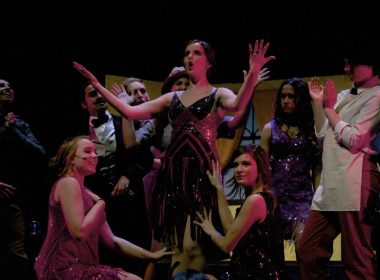
Opera McGill opts for relocation in Shakespeare adaptation

A Midsummer Night’s Dream, Shakespeare’s oft performed comedy of love, magic, and misunderstanding, was written more than 400 years ago and adapted by English composer Benjamin Britten in the 1960’s as an opera, which will be the format by which Opera McGill performs the story in their upcoming main stage production.

When taking on such a well-known classic it is always a challenge to make it feel fresh and original, but Caitlin Hammon—masters student, soprano, and portrayer of Helena in Opera McGill’s show—feels confident that their version will live up to that challenge, especially thanks to director Patrick Hanson’s bold decision to relocate Britten’s Shakespearian opera to pre-First World War India.

“There’s a few mentions of India that the fairy Tytania makes in the original play,” explains Hammon. “So [Hanson] kind of took that and ran with it [….] The fairies are all Indian deities, and the lovers are like British colonial royalty.”

Although the Athenian forest of Shakespeare’s script is replaced by an Eastern locale, Hammon believes that the production will retain its original magical feel.

“There are some absolutely beautiful moments, especially with the fairies,” she says. “It’s set to be  very ethereal and heavenly, and it’s really nice.”

Hammon is also particularly excited about the visual aspects of the production. All inspired by the Indian theme, the sets and costumes promise to dazzle the eye. The elaborate two-storey set is currently under construction, and it will include, among other wonders, a forest that lights up and a giant tree that the characters will be climbing during their performance.

The orchestra will be formed by musicians from the Schulich School of Music.

“We have the McGill Symphony Orchestra playing and they’re really doing a remarkable job. It’s really one of the best student orchestras we’ve had in a while,” says Hammon.

Not to be forgotten is the talented ensemble of voices that the opera format promises. Now in its 58th year of operation, Opera McGill is a prolific institution that is currently in the midst of an all-Shakespeare season. It staged an adaptation of Julius Caesar earlier this year, and is preparing a Romeo and Juliet adaptation for March.

When describing the sound and style of the upcoming production, Hammon is adamant that A Midsummer Night’s Dream will feel much more modern than what someone would typically envision.

“It’s not what you’re used to hearing if you flip on the radio and hear some guy singing opera in a strange language,” she assures me. “When a lot of people think of opera they’re thinking about things written in the 1800’s, but this is what we would consider contemporary.”

Anyone who may be hesitant or intimated about venturing out for a night at the opera should also know that this production is in English, and that there are projections above the stage with subtitles in both English and French to make sure that audience members can follow.  As Hammon explains, this won’t be a traditional opera.

“I’ve sat through rehearsals and rehearsals and rehearsals already and I’ve been entertained the entire time that I’ve been watching it,” she says. “If someone has never been to an opera before, I would really recommend this one to them because it’s very accessible, lighthearted, and fun.”


A Midsummer Night’s Dream will be performed at 7:30 p.m. from Jan. 29—Feb. 1 in Pollack Hall. Student tickets are $25.

Read the latest issue

Read the latest issue